Author: Admin

  • Understanding Washington Vehicle Manufacturer License Bond Requirements

    If you’re building cars, trucks, or motorcycles in Washington State and planning to sell them directly to the public, there’s a good chance you’ve come across the term “vehicle manufacturer license bond.” It might sound like just another piece of red tape, but this bond plays a key role in protecting your customers and keeping your business in good standing. Let’s walk through everything you need to know, minus the confusing legal speak.

    What Is a Washington Vehicle Manufacturer License Bond?

    Think of a surety bond as a three-way promise. You, the vehicle manufacturer (called the principal), commit to following state laws and regulations. The state of Washington (the obligee) requires you to post this bond before you can get or renew your manufacturer license. The bonding company (the surety) backs you up financially if you break that promise. It’s not insurance for your business—it’s a safety net for the public and the state.

    In plain terms, this bond guarantees that if you engage in dishonest or unlawful practices, there’s money set aside to make things right. For the Washington Vehicle Manufacturers License Bond, that’s about making sure you handle things like vehicle titles, warranties, and consumer transactions honestly.

    Why Does Washington Require This Bond?

    Washington, like many states, wants to keep the automobile marketplace fair. When a manufacturer builds a vehicle and sells it to a dealer or directly to a consumer, a lot of money changes hands. The bond ensures that if you fail to deliver a vehicle with a clear title, don’t honor warranty obligations, or violate state dealer laws, the affected party can seek compensation. It basically weeds out bad actors before they cause harm, and it gives the Department of Licensing an extra layer of enforcement.

    A Simple Analogy

    Imagine you’re renting an apartment. The landlord asks for a security deposit. If you leave the place trashed, they use that deposit to fix things. If you leave it spotless, you get the deposit back. A surety bond works similarly, except the “deposit” isn’t paid upfront in full. Instead, you pay a small percentage, and the bonding company covers the full amount if you default—though you’ll have to pay them back later.

    Who Needs a Washington Vehicle Manufacturer License Bond?

    You’ll typically need this bond if you manufacture motor vehicles in Washington and sell them within the state. This applies to:

    • Passenger car manufacturers
    • Motorcycle and scooter builders
    • Truck and bus manufacturers
    • Companies that assemble vehicles from kits or modify vehicles to a degree that they’re considered “new” manufacturers

    If you’re only a dealer or a repair shop, you don’t need this specific bond—you’ll have other bonding requirements. It’s the act of manufacturing and selling that triggers the requirement. When in doubt, check with the Washington State Department of Licensing (DOL) or your business advisor.

    How Much Coverage Is Required?

    The bond amount for a vehicle manufacturer in Washington is set by state law. While requirements can occasionally change, the standard bond amount is typically $25,000. It’s not a one-size-fits-all scenario forever, but that’s the baseline most manufacturers will work with. The state sets this figure to reflect a reasonable level of consumer protection without putting an excessive burden on legitimate businesses.

    What does that $25,000 mean? It doesn’t mean you need to pay $25,000. It’s the maximum amount the bonding company will pay out in the event of a valid claim against your bond. You’re only out-of-pocket for the premium, which is a fraction of that amount.

    How Much Does the Bond Cost?

    The price you’ll pay depends mostly on your personal credit and financial history. If your credit score is strong and your business finances are in order, you could pay as little as 1% to 3% of the bond amount annually. On a $25,000 bond, that translates to roughly $250 to $750 per year. If your credit has some dings, the rate might be higher, but most manufacturers can get bonded through a specialized surety agency.

    Several factors influence your exact premium:

    • Personal credit score and history
    • Business financial statements and years of operation
    • Any previous bond claims or legal issues
    • Your industry experience and reputation

    Even if you’ve hit a rough patch financially, there are bonding programs that work with subpar credit. You’ll just pay a bit more. It’s still far less expensive than paying the full bond amount out of pocket.

    How to Get Your Washington Manufacturer Bond

    Securing the bond isn’t complicated if you know the steps. Here’s a straightforward path:

    1. Confirm the Exact Requirement

    Contact the Washington State Department of Licensing or visit their official website. Ask for the current bond form and amount needed for a vehicle manufacturer license. You don’t want to guess and wind up with the wrong bond.

    2. Apply with a Reputable Surety Agency

    You’ll fill out a short application that asks for basic personal and business information. Many agencies offer online applications that take just a few minutes.

    3. Get a Quote and Pay the Premium

    Once you’re approved, you’ll receive a quote. If you accept, you pay the premium, and the surety company issues the bond document.

    4. File the Bond with the State

    You’ll send the original bond to the Department of Licensing along with your license application or renewal. Keep a copy for your records. Once the state has the bond on file, your license can move forward.

    What Happens If a Claim Is Filed Against Your Bond?

    Let’s say a customer believes you sold them a vehicle with a hidden defect and refused to honor the warranty. If the state or another party files a claim against your bond, the surety will investigate. The investigation determines whether the claim is valid and meets the bond’s conditions. If it does, the surety may pay out up to the bond amount.

    But here’s the critical part: unlike insurance, you’re fully responsible for reimbursing the surety for every penny they pay out. Plus, you’ll owe any legal costs involved. A claim can strain your finances and make it much harder to get bonded in the future. That’s why it’s so important to operate transparently and address customer complaints before they escalate.

    Staying Compliant and Avoiding Issues

    Nobody wants a bond claim. Here are some practical ways to keep your bond clean and your business reputation strong:

    • Keep detailed records of every vehicle you manufacture or sell, including VINs, titles, and warranties.
    • Communicate clearly with buyers about what’s covered and what’s not. Misunderstandings often lead to disputes.
    • Understand Washington’s manufacturer and dealer laws thoroughly. Ignorance is rarely an acceptable defense.
    • Address complaints promptly. If a customer raises an issue, try to resolve it directly before they turn to the bond as their only solution.
    • Renew your bond on time. If your bond lapses, your license can be suspended, and you’ll have to jump through hoops to reinstate it.

    Common Questions About the Washington Vehicle Manufacturer License Bond

    Is this bond the same as insurance?

    No. Insurance protects your business from losses like fire, theft, or liability. A surety bond protects the state and your customers. If a claim is paid, you must repay the surety.

    Can I use a bond from another state?

    No. Each state has its own bond form and requirements. If you’re manufacturing and selling in Washington, you need a bond written specifically for the Washington State Department of Licensing.

    Does my credit score really matter for a bond?

    Yes, but it’s not the only factor. Surety companies use credit as a gauge of financial responsibility. Even if your score needs work, you can likely get bonded through a high-risk program, though the premium will be higher.

    How long does the bond last?

    Most vehicle manufacturer bonds are continuous until canceled. You’ll need to pay the premium each year to keep the bond active. If you stop manufacturing or your license lapses, you should still keep the bond in place for a while to cover any claims that might arise from past sales.

    Wrapping It Up

    A Washington vehicle manufacturer license bond might feel like just another bureaucratic demand, but think of it as a sign of trust. It tells the state and your customers that you’re serious about playing by the rules and standing behind your products. By understanding what the bond does, how much it costs, and how to keep it in good shape, you can focus on what really matters—building great vehicles and growing your business. And if you ever feel unsure about the process, a quick chat with a knowledgeable surety professional can make everything clear.

  • Understanding Seattle’s Side Sewer Contractor Registration and Liability Requirements

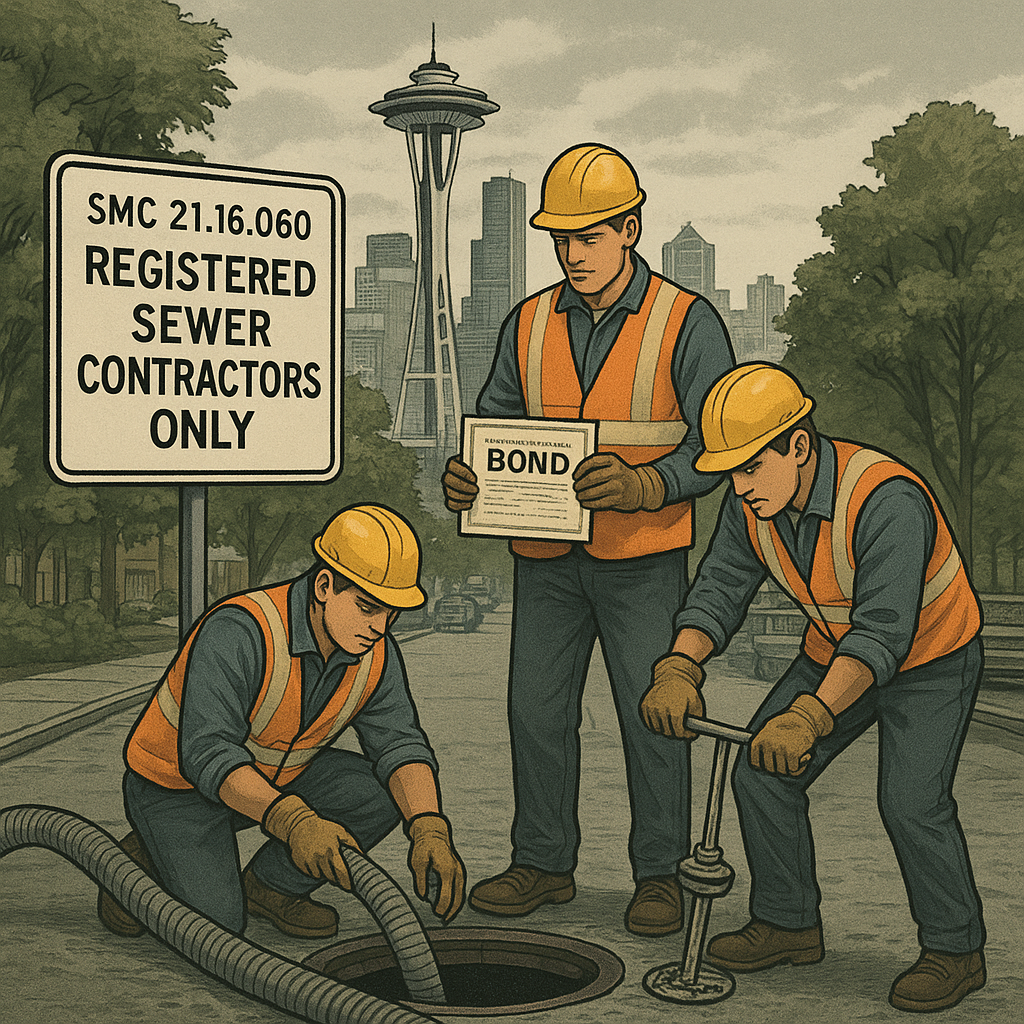
    If you’re a homeowner dealing with a backed-up drain or a contractor looking to perform sewer work in Seattle, you’ve probably stumbled across a few terms that feel like a foreign language. Side sewer contractor registration, SMC 21.16.060 bond, third-party liability — it can quickly make your head spin. But here’s the good news: understanding these requirements doesn’t have to be painful. Let’s break it all down in plain English so you can stop worrying about red tape and focus on getting the job done right.

    What Exactly Is a Side Sewer, and Why Does Seattle Care So Much?

    Think of a side sewer as the private driveway that connects your house to the public road — except it’s underground, and instead of cars, it carries wastewater. Your side sewer runs from your home’s plumbing system out to the city’s main sewer line under the street. Everything that goes down your drain or toilet travels through this pipe. If it breaks, clogs, or collapses, it’s your responsibility to fix it, not the city’s.

    Seattle cares deeply about side sewers for two big reasons. First, a failed side sewer can send raw sewage into the environment, polluting local waterways. Second, improperly done repairs can damage public streets, sidewalks, and even neighboring properties. That’s why the City of Seattle has strict rules about who can touch these pipes. You can’t just hire any handyman with a shovel — you need a registered side sewer contractor who understands the local codes and carries the right insurance and bonds.

    Seattle Side Sewer Contractor Registration: The Foundation of Everything

    In Seattle, performing side sewer work without proper registration isn’t just a bad idea — it’s illegal. Under Seattle Municipal Code (SMC) 21.16.060, contractors must register with the city before they can obtain permits for any side sewer construction, repair, or replacement. This registration acts like a seal of approval. It tells you that the contractor has met the city’s baseline requirements for competency, insurance, and financial responsibility.

    Why does this matter to you as a homeowner? Hiring an unregistered contractor might save you a few dollars upfront, but it opens the door to massive risks. If something goes wrong — say the contractor accidentally ruptures a gas line or damages your neighbor’s property — you could be left holding the bill. Worse, the city can issue stop-work orders and fines, leaving your yard torn up and your sewer still broken.

    How a Side Sewer Contractor Gets Registered

    Contractors don’t just fill out a quick online form and call it a day. The registration process involves proving they have the right experience, insurance, and bonding. They need to show a valid City of Seattle business license, general liability insurance, and the all-important side sewer contractor registration bond. The bond is often the piece that confuses people the most, but it’s actually a brilliant consumer protection tool. Let’s dig into that.

    The SMC 21.16.060 Bond: Your Financial Safety Net

    When a contractor registers for side sewer work in Seattle, they must secure a surety bond in the amount set by the city. This is often referred to as the SMC 21.16.060 bond because that’s the code section that mandates it. Imagine the bond as a pot of money set aside specifically to protect you (and the city) if the contractor breaks the rules.

    Here’s how it works. A bond involves three parties: the contractor (the principal), the city (the obligee), and the bonding company (the surety). If the contractor does shoddy work that violates city codes, abandons a job, or causes damage they refuse to fix, an affected party can file a claim against the bond. The bonding company then investigates and, if the claim is valid, pays out up to the bond’s limit. But here’s the kicker: the contractor has to repay the bonding company every penny. That’s a powerful motivator to do things by the book.

    Think of it like a security deposit on an apartment. The landlord holds it just in case you punch a hole in the wall. You’re going to try very hard not to punch that hole because you want your deposit back. The bond works the same way—it encourages contractors to follow the rules or face financial consequences.

    Third-Party Liability: When Bad Sewer Work Ripples Outward

    Side sewer work isn’t done in a vacuum. A contractor might be digging right next to your neighbor’s foundation, under a public sidewalk, or near a busy street. One small mistake can cause damage to people or property that have nothing to do with your sewer project. This is where third-party liability kicks in.

    In the context of Seattle’s requirements, third-party liability coverage protects anyone who isn’t the contractor or the homeowner hiring them. Picture this scenario: a contractor’s excavation collapses a section of the public sidewalk, injuring a pedestrian. Or maybe they accidentally cut an underground power line, shutting down electricity for the whole block. Without proper liability coverage, those injured parties could come after the homeowner’s insurance — or worse, the homeowner’s personal assets.

    Seattle’s registration process requires contractors to carry general liability insurance with sufficient limits to cover these nightmare scenarios. Combined with the bond, it creates a double layer of protection. The insurance handles bodily injury and property damage to others, while the bond adds an extra layer of accountability for code violations and substandard work.

    Does the Bond Replace Insurance?

    This is a common point of confusion. The short answer is no — the bond and insurance serve different purposes. A contractor’s general liability insurance typically covers accidental damage and injuries that happen during the job. The bond, on the other hand, is more about guaranteeing that the contractor complies with specific laws and performs the work properly. If the contractor installs the wrong type of pipe that doesn’t meet Seattle’s standards, you’d likely turn to the bond. If a backhoe smashes through your garage wall, you’d rely on the insurance. They complement each other, but both are essential.

    What Homeowners Should Ask Before Hiring a Side Sewer Contractor

    Now that you know the mechanics, how do you protect yourself in the real world? The best defense is asking the right questions before you sign any contract. You wouldn’t hire a surgeon without checking their credentials, and your sewer line is arguably just as vital to your daily comfort.

    Here’s a quick checklist to keep handy:

    • “Are you a registered side sewer contractor with the City of Seattle?” Ask to see proof. You can also verify directly with the city’s permitting office.
    • “Can I see your bond certificate?” Legitimate contractors can produce this on the spot. Make sure the bond amount matches what Seattle requires.
    • “What kind of general liability insurance do you carry, and what are the limits?” A reputable contractor will be proud to show you their coverage.
    • “Have you handled projects like this in Seattle before?” Local experience matters because codes and soil conditions vary wildly from one city to another.
    • “Do you pull the necessary permits, or is that my job?” A registered contractor should manage the permit process. If they suggest skipping permits, run far away.

    The Real-World Ripple Effect of Following the Rules

    It’s tempting to view registration, bonds, and insurance as just more bureaucratic hoops that make projects more expensive. But let’s flip the perspective. These safeguards exist because real people have been left with devastating repair bills and legal nightmares. Imagine saving $2,000 by hiring an unregistered contractor, only to face a $30,000 claim when they accidentally flood your neighbor’s basement with sewage. That’s not a hypothetical situation — it happens more often than you’d think.

    Seattle’s system creates a framework where everyone knows the rules and has skin in the game. Homeowners get peace of mind. Contractors operate on a level playing field. The city protects its infrastructure and environment. And if something does go wrong, there’s a clear path to resolution without needing to sue everyone in sight.

    Navigating the Registration Process as a Contractor

    If you’re a contractor reading this, you already know that Seattle doesn’t make it easy — and that’s a good thing. The registration process filters out fly-by-night operators and ensures that only qualified professionals can do this critical work. You’ll need to gather your business license, insurance certificate, bond, and any other documents the city’s Side Sewer Program requires. The bond amount can vary, so double-check the latest from the city or a trusted surety bond agency that specializes in Washington contractor bonds.

    One tip that saves headaches: don’t wait until a client is desperate for an emergency repair to get your registration in order. The process can take some time, and you don’t want to lose a job because your paperwork isn’t yet approved. Also, keep your registration active. Allowing it to lapse can lead to fines and prevent you from pulling permits, effectively shutting down your ability to work legally in Seattle.

    Frequently Asked Questions About Seattle’s Side Sewer Rules

    Let’s tackle a few questions that pop up constantly in online forums and over the phone at permitting counters.

    Can a homeowner do their own side sewer repair without hiring a registered contractor? In limited cases, yes. Seattle does allow homeowners to perform work on the side sewer that serves their own owner-occupied single-family residence, but only if they obtain the required permits and pass inspections. However, this is a risky path. Side sewer work is physically demanding, requires specialized knowledge, and must meet strict codes. Most homeowners eventually find that hiring a registered professional is the safer, smarter choice.

    What happens if a contractor’s bond is exhausted by claims? If a valid claim eats up the bond’s limit, the bonding company pays out what’s owed, but the contractor is on the hook for that amount plus any additional uncovered damages. More importantly, the city can suspend the contractor’s registration until a new bond is in place. This creates a strong incentive for contractors to resolve disputes quickly and avoid claims altogether.

    Is the SMC 21.16.060 bond just for sewer contractors? Yes, this specific bond requirement is tied to side sewer contractors registered in Seattle. Other types of contractors have their own bonding requirements under different codes. Don’t confuse it with a general contractor license bond.

    Making Sense of It All: A Simple Recap

    We’ve covered a lot of ground, so let’s boil it down. If you’re doing side sewer work in Seattle — or hiring someone to do it — you must deal with contractor registration, a required bond, and third-party liability insurance. Registration proves the contractor is legitimate. The bond provides a financial remedy if they ignore the rules. Insurance shields you and the public from accidents. And all of it is governed by the same underlying goal: keeping Seattle’s sewer system safe, functional, and fair for everyone.

    Whether you’re a homeowner facing an unexpected sewer disaster or a contractor building your business in the Emerald City, taking the time to understand these rules pays off. It might not be the most glamorous topic, but when it protects your home and your bank account, it suddenly becomes very interesting.

    So next time you hear “SMC 21.16.060 bond,” you can smile, knowing exactly what it means and why it matters. That’s a superpower worth having.

  • Understanding Sewer Contractor Bonds and Liability in Redmond Washington

    If you’ve ever dealt with a clogged or broken sewer line connecting your home to the main street line, you know it’s not exactly a DIY weekend project. It takes specialized equipment, know-how, and a contractor you can trust. In Redmond, Washington, the city has put rules in place to make sure that trust is never misplaced. That’s where side sewer contractor bonds and liability requirements step in. They might sound like dry paperwork, but they’re really a safety net—both for you as a homeowner and for the community.

    Let’s break it all down in plain, everyday language. Whether you’re a homeowner curious about your rights, or a contractor trying to navigate Redmond’s rules, you’ll walk away with a clear picture.

    What Is a Side Sewer Contractor Bond, Anyway?

    Think of a bond as a promise backed by money. A side sewer contractor bond is a three-party agreement. The contractor (that’s the person doing the digging and pipe-laying) purchases the bond from a surety company. The City of Redmond is the one that requires the bond, and you, the homeowner—or any property owner—are the one who benefits if something goes wrong. If the contractor fails to meet the city’s standards or leaves a mess behind, you can file a claim against that bond to get things fixed.

    It’s easy to confuse a bond with insurance, but they’re not the same. Insurance protects the contractor. A bond protects you. If the contractor vanishes midway through a job or the sewer line they installed fails a year later, the bond is there to cover the costs of making it right—up to the bond amount set by the city.

    Why Redmond, Washington Requires These Bonds

    Redmond isn’t just being picky. Side sewer work digs into public right-of-ways, crosses under sidewalks, and can affect neighboring properties. One mistake could cause a sinkhole, contaminate groundwater, or damage the main sewer line that serves an entire block. The city needs assurance that every contractor working on a side sewer knows the local codes and will stand behind their work. Requiring a bond is the city’s way of saying, “We trust you—but we also have a backup plan.”

    By mandating the City of Redmond WA Side Sewer Contractor Performance and Warranty Bond, officials create a layer of financial accountability. Homeowners are shielded from shoddy workmanship, and honest contractors get a level playing field where everyone follows the same rules.

    The Two-Fold Protection: Performance Bond and Warranty Bond

    When you see “Performance and Warranty Bond” in the requirements, it’s actually two guarantees wrapped into one. Each serves a distinct purpose, and together they cover a contractor’s obligations from start to finish—and beyond.

    Performance Bond: Getting the Job Done Right

    Picture this: You hire a contractor to replace your crumbling side sewer. They tear up your yard, expose the old pipe, and then… they stop showing up. Or maybe they finish the job, but the work doesn’t meet Redmond’s inspection standards. That’s where the performance bond kicks in. It guarantees the contractor will complete the project according to the city’s codes and within the agreed timeframe. If they don’t, the bond can pay for another qualified contractor to step in and finish things properly. You aren’t left holding the bag, staring at an open trench for weeks.

    Warranty Bond: Standing Behind the Work

    The warranty bond takes over once the job is done. Even if the installation passes the city’s initial inspection, problems can surface later. Maybe a connection fails after six months, or the ground settles and cracks a pipe. A warranty bond covers you for a set period—often one or two years, depending on the city’s rules. This means the contractor is on the hook to fix defects tied to their workmanship or materials. It’s like a manufacturer’s warranty, but for your underground sewer line.

    Third-Party Liability: When Accidents Happen Off Your Property

    Now, here’s a piece many people overlook: third-party liability. Sewer work doesn’t just affect the property being served. A contractor might accidentally rupture a gas line, damage a neighbor’s fence with heavy equipment, or allow debris to block a storm drain and cause flooding down the street. Third-party liability coverage (often required as part of a contractor’s license or bond package) pays for damage to people or property that isn’t part of the immediate job site.

    In Redmond, this matters because homes are often close together, and underground utilities crisscross like spaghetti. The city wants to make sure that if a contractor’s mistake harms a neighbor or public property, the injured party doesn’t have to fight through a messy lawsuit without compensation. The bond and liability insurance together form a safety cushion for the entire community.

    How Homeowners Benefit from These Requirements

    You might wonder, “Do I really need to care about my contractor’s bond?” Absolutely. Here’s what you gain:

    • Peace of mind. You know the contractor is vetted and backed by a financial guarantee. If they weren’t capable or reliable, a surety company wouldn’t bond them.
    • Financial protection. If something goes wrong, you have a clear path to recover money for repairs or completion without digging into your own savings.
    • Higher quality work. Contractors who know their bond is on the line tend to be meticulous. They understand that callbacks and claims hurt their ability to get bonded again in the future.
    • A safer neighborhood. Properly installed side sewers reduce the risk of backups, sinkholes, and contamination—keeping the whole block safe.

    Imagine hiring a cheaper, unlicensed handyman who offers to do the job for half the price. They hit a high-voltage line or leave a sewer leak that saturates your soil. Without a bond and liability coverage, you could be stuck paying for all the remedy work out of pocket. Suddenly that “bargain” becomes a nightmare.

    What This Means for Sewer Contractors in Redmond

    If you’re a contractor looking to work on side sewers in Redmond, these bonds aren’t optional extras—they’re the ticket to getting a permit. Typically, the city will ask for a surety bond in a specific amount (often based on the scope of work) before issuing a side sewer permit. You’ll need to provide proof that both a performance and warranty bond are in place, along with evidence of general liability insurance covering third-party claims.

    Securing a bond isn’t as intimidating as it might sound, though. You’ll apply through a surety agency, and they’ll check your credit, experience, and business history. The premium is a small percentage of the total bond amount. Think of it as a low-cost way to build trust with customers and stand out from unlicensed competitors. Plus, when homeowners see that you’re fully bonded and insured, they’re far more likely to choose you over someone who cuts corners.

    Common Questions About Side Sewer Bonds

    Do all side sewer jobs in Redmond require a bond?

    Almost always. Even minor repairs that tie into the public sewer system usually trigger the bonding requirement. The city’s public works or permitting office can confirm the specifics for a given project, but counting on a bond being needed is the safest bet.

    What’s the difference between the bond and the contractor’s license?

    A license shows the contractor has met basic competency standards and paid the necessary fees. A bond adds a financial guarantee. You can have a license but still skimp on quality. The bond gives the city and homeowners a way to recoup losses if the contractor fails to perform.

    How does a homeowner make a claim?

    If the contractor doesn’t address the issue directly, you can contact the surety company listed on the bond. You’ll need documentation: photos, inspection reports, copies of contracts—anything that shows the work wasn’t done to code or the warranty period applies. The surety will investigate and pay valid claims up to the bond limit.

    Making Sense of Redmond’s Rules

    At first glance, terms like “Side Sewer Contractor Performance and Warranty Bond” and “Third Party Liability” feel like a thick layer of bureaucracy. But when you boil it down, these rules exist to protect everyday people from costly headaches and subpar work. They make sure that when a contractor takes on a sewer project, they’re accountable not just to you, but to the entire community.

    Before hiring a contractor (or before breaking ground yourself), always ask to see their bond paperwork and verify it with the city. A reputable contractor will be proud to show it off. After all, it’s proof that their promise to you is built on something stronger than words—it’s backed by a real financial guarantee.

    So next time you hear “bond requirement,” think of it as the city of Redmond looking out for your backyard, your wallet, and your neighborhood’s well-being. That’s something we can all get behind.

  • Understanding Washington’s Lakehaven Utility District Side Sewer Contractor Bond Requirements

    If you’re a contractor working in the Lakehaven Utility District in Washington, you’ve likely heard about the side sewer contractor bond. At first glance, it might sound like just another piece of paperwork. But understanding it doesn’t have to feel like swimming through sewer pipes. Let’s walk through what this bond is, why it exists, and how it keeps both you and the community protected—all in plain, everyday language.

    What Exactly Is a Side Sewer Contractor Bond?

    Simply put, a side sewer contractor bond is a type of compliance bond. That means it’s a promise, backed by money, that you’ll follow the rules set by the Lakehaven Utility District. Think of it like a security deposit for following the rules. If you do the job right, the bond just sits there quietly. But if something goes wrong and you don’t fix it, the bond can step in to cover damages.

    There are three parties involved in every bond:

    • The Obligee: The Lakehaven Utility District. They require the bond to protect the public sewer system and the community.
    • The Principal: That’s you, the sewer contractor. You’re promising to work according to district codes and standards.
    • The Surety: The bonding company that backs you financially if a valid claim gets filed.

    It’s not insurance for your business. Instead, it’s a shield for the district and homeowners. If a claim gets paid, you’re responsible for paying the surety back. More on that later.

    Why Does the Lakehaven Utility District Require This Bond?

    You might be wondering, “Why do I need this extra step? I do quality work.” Great question. Lakehaven Utility District serves thousands of customers in Federal Way and surrounding areas. The sanitary sewer system is complex and delicate. One poorly connected side sewer line—the pipe that runs from a home or business to the main sewer—can cause messy backups, road damage, or even contaminate local waterways.

    The bond requirement acts as a financial backstop. It encourages contractors to follow strict installation and repair standards. If a contractor cuts corners and leaves behind a problem, the district has a way to get funds for repairs without dipping into ratepayer money. Ultimately, it protects everyone: the utility, the property owner, and even the contractor’s reputation.

    Who Needs a Side Sewer Contractor Bond in Lakehaven?

    Not every handyman needs one. This bond is specifically for contractors who perform work on side sewers within the Lakehaven Utility District’s service area. Common examples include:

    • Connecting a newly built home to the public sewer main.
    • Repairing or replacing a broken lateral pipe.
    • Upgrading old clay pipes to modern PVC materials.
    • Any excavation work that touches the district’s sewer infrastructure.

    Before you can pull a permit or start digging, the district will almost certainly ask for proof of your bond. That’s because they need to ensure you’re authorized and accountable before any ground gets disturbed. If you’re unsure whether your project requires one, a quick call to Lakehaven Utility District or your surety bond agency can clear things up fast.

    How Does the Bond Work in Real Life?

    Let’s paint a picture. Imagine you’re hired to replace a side sewer line for a Federal Way homeowner. You complete the job, but a month later, the connection fails because a fitting wasn’t installed to code. Raw sewage leaks into the soil, and the district has to step in. They contact you to fix it, but you’ve moved on to other projects and don’t respond.

    Here’s where the bond comes alive. The district can file a claim against your bond. The surety company investigates. If the claim is valid, the surety pays the district up to the full bond amount—say, $5,000. That money covers emergency repairs. But here’s the key part: you are legally obligated to reimburse the surety for every penny they paid out. It’s not a free pass. Avoiding claims should always be goal number one.

    How Much Does the Bond Cost?

    The good news is that you don’t need to pay the full bond amount out of your own pocket. The bond amount is typically a fixed figure set by the district. For many Washington side sewer bonds, including those for Lakehaven, the required amount is often $5,000 or $10,000. (Always check with the district for the current requirement.)

    What you pay is a small premium—a percentage of that total amount. Premiums usually range from 1% to 5% for most contractors. So, if the bond amount is $5,000 and your premium rate is 2%, you’d pay just $100 for a year of coverage. What determines that rate?

    • Your personal credit score.
    • Your business financial history.
    • Your experience and claims history.

    Contractors with good credit often pay the lowest rates. Even if your credit isn’t perfect, specialized surety agencies can usually find a program that fits. The whole process is often quicker than you’d expect.

    Step by Step: Getting Your Side Sewer Contractor Bond

    Obtaining a Lakehaven Utility District side sewer contractor bond doesn’t have to be a headache. Here’s how the journey typically looks:

    1. Find a reputable surety bond agency. Look for one that’s familiar with Washington municipal bonds. They’ll know exactly what Lakehaven requires.
    2. Complete a short application. You’ll provide basic business and personal details. It’s often just a single page.
    3. Get a quote. Within hours or even minutes, the agency can offer a premium quote based on a soft credit check.
    4. Pay the premium and sign. Once you accept, the bond is issued. You’ll receive a digital copy and often a physical bond form.
    5. File the bond with Lakehaven Utility District. Some agencies can even file it on your behalf, saving you an extra trip.

    After that, you’re free to pull permits and get to work. The bond typically lasts one year and needs to be renewed annually. Keep an eye on the expiration date—lapsed bonds can halt your ability to work.

    Tips for Keeping Your Bond in Good Standing

    Nobody wants a bond claim. Beyond being a financial sting, claims can make future bonds harder and more expensive to get. Here’s how to stay on the sunny side:

    • Know the Lakehaven codebook. Understanding the specific standards for materials, depth, and connections prevents innocent mistakes.
    • Document everything. Before-and-after photos, inspection reports, and signed checklists can prove your work was done right.
    • Communicate openly with inspectors. If there’s a disagreement, address it head-on rather than letting it fester into a claim.
    • Resolve client complaints quickly. A small fix today is cheaper than a bond claim tomorrow.

    Remember, the bond is there to protect the community, but it also gives you a mark of credibility. Customers feel safer hiring a bonded contractor because they know there’s a financial safety net.

    Common Questions About the Side Sewer Bond

    Is this the same as general liability insurance?

    No, they serve different purposes. Insurance protects your business from accidents and lawsuits. The bond protects the district and the public from code violations or incomplete work. Many contractors carry both.

    Can I use a cash deposit instead of a bond?

    Some jurisdictions allow cash bonds, but it’s rare. A surety bond is far more common and keeps your working capital free. Check with Lakehaven directly to see if alternatives are accepted.

    What happens if my bond coverage isn’t enough for a large problem?

    The bond pays up to its penal sum. If the damage exceeds the bond amount, the district may pursue you directly for the remainder. That’s why doing quality work is so crucial—you don’t want to end up in that situation.

    How often do claims actually happen?

    Relatively rarely, because most contractors are diligent. When claims do occur, they’re often tied to abandoned projects or serious code violations. A solid process and good communication keep claims at bay.

    Moving Forward with Confidence

    Understanding the Lakehaven Utility District side sewer contractor bond doesn’t have to be complicated. Think of it as a handshake between you, the district, and the people you serve. It says, “I stand by my work, and there’s a guarantee behind it.” By securing this bond, you’re not just meeting a regulatory checkbox—you’re building trust, unlocking new projects, and contributing to a safer, cleaner community.

    Whether you’re an experienced sewer contractor or just starting out, taking a few minutes to get bonded can open doors. Reach out to a knowledgeable surety bond professional, ask plenty of questions, and tackle your next Lakehaven project with peace of mind. The sewer lines may run underground, but your reputation should always shine above the surface.

  • Navigating Bellevue’s Side Sewer Bond: Compliance for Local Contractors

    If you’re a sewer contractor working in Bellevue, Washington, you’ve probably come across a requirement that sounds a bit like insurance but works a little differently: the Bellevue side sewer bond. Maybe you’re new to the area, or perhaps you’re just trying to make sure your paperwork is rock-solid. Either way, compliance doesn’t have to feel like pulling teeth. Let’s walk through everything you need to know—in plain, everyday language.

    What Exactly Is a Side Sewer Bond?

    Think of a side sewer bond as a promise you make to the City of Bellevue. It’s a financial guarantee that you’ll do your work correctly and follow the city’s rules when you’re connecting a private property’s sewer line to the public main in the street right-of-way. The “side sewer” is the pipe that runs from a home or business to the larger sewer line under the road. When you dig into the street, sidewalk, or any public area, the city wants to be sure you’ll put everything back the way it should be—without damaging public infrastructure or leaving a mess behind.

    This bond isn’t a license, but it goes hand-in-hand with your contractor registration. It covers a specific job or, in some cases, covers you for a set period of time. If something goes wrong—like you accidentally damage the roadway, don’t restore the pavement properly, or leave an unsafe trench—the city can use the bond money to fix it. That protects Bellevue taxpayers and keeps streets safe. For you, it’s a sign of professionalism. Pulling a Bellevue WA side sewer bond shows you’re a contractor who plays by the rules.

    Why the City of Bellevue Cares So Much About Your Sewer Work

    Bellevue is a growing, bustling city. Every new apartment building, office complex, or home renovation that touches the sewer line involves digging into the public right-of-way. The city’s main concern is protecting its own infrastructure—things like asphalt streets, concrete sidewalks, curbs, gutters, and even landscaping. Repairing a botched job can cost tens of thousands of dollars, and the city doesn’t want to chase contractors for payment after the fact. The bond gives them a straightforward way to recover costs without long legal battles.

    Another big reason is public safety. An improperly restored trench can sink over time, creating a trip hazard or damaging vehicles. A poorly connected side sewer could leak and cause environmental issues. Bellevue takes that seriously. By requiring a City of Bellevue, Washington side sewer bond, they ensure that only contractors who are willing to back their work with real money are allowed to touch public property. It’s not red tape for the sake of red tape—it’s shared accountability.

    Who Needs to Post a Side Sewer Bond in Bellevue?

    You might be asking, “Does every plumber or excavation company need this?” The answer is: if your project requires a Side Sewer Right-of-Way Permit, then yes, you likely need a bond. This permit is separate from a standard plumbing permit and applies whenever your work goes beyond the property line into the public street or alley. Some typical examples include:

    • Installing a brand-new side sewer connection for a new house or commercial building.
    • Repairing or replacing a failing side sewer line that crosses under a city sidewalk.
    • Lining an existing side sewer pipe when part of the work takes place from the street side.
    • Performing any excavation within the city right-of-way that’s related to sewer work.

    If you’re just doing work entirely on private property—like fixing a toilet or re-piping inside a basement—you don’t need this bond. The threshold is the public right-of-way. A good rule of thumb: if your shovel hits city-owned ground, the city wants that bond in place. When in doubt, call Bellevue’s Development Services department. They’re surprisingly helpful and would rather clarify upfront than deal with a compliance headache later.

    The Compliance-Only Approach: What It Means for You

    The original requirement is often referred to as “Sewer Contractor – Compliance Only,” which can sound a bit cryptic. Simply put, it means the bond exists solely to ensure you comply with municipal codes, permit conditions, and restoration standards. It’s not a bond that guarantees the private property owner’s satisfaction—they have their own contract with you for that. It’s purely a tool for the city to enforce public safety and infrastructure standards.

    That’s actually good news. It narrows the bond’s scope. You don’t need to worry about a homeowner’s complaint about a muddy lawn triggering a claim on the Bellevue side sewer bond. The bond responds only when you fail to meet city requirements—like not compacting a trench properly or skipping a required inspection. This clarity makes it easier for you to stay compliant and for surety companies to issue the bond without piling on excessive costs.

    How to Get Your Bellevue Side Sewer Bond, Step by Step

    Securing the bond is usually a quick process if you have your paperwork in order. Here’s a typical path:

    1. Confirm the bond amount. Bellevue often sets a specific dollar amount, which can vary based on the scope of your project or a blanket amount for a calendar year. A common per-job bond might be $10,000 or $15,000, while an annual bond could be higher. Always check the latest requirement on the city’s website or your permit details.

    2. Reach out to a surety bond provider. You don’t have to hunt down a niche agency. Many independent insurance agents and specialized online bond services offer Bellevue WA side sewer bonds. They’ll ask for basic business information, your contractor license number, and possibly a credit check. If your credit is decent, the premium—the price you pay for the bond—is typically a small percentage of the total bond amount.

    3. Pay the premium and get your bond form. The surety will issue the official bond document, which you’ll need to sign as the principal (that’s you). They then send it to you or directly to the city. Some providers allow instant electronic bonding for smaller amounts, which can speed things up dramatically.

    4. File the bond with the city. You or your agent will submit the executed bond to Bellevue’s Development Services. They need it on file before your permit gets the final green light. Don’t forget this step—a bond sitting in your email inbox doesn’t make you compliant.

    What Does a Side Sewer Bond Actually Cost?

    Contractors are always keeping an eye on overhead, so let’s talk real numbers. The cost of a Bellevue side sewer bond is not the face value of the bond. It’s the premium, which is usually 1% to 5% of the bond amount for most contractors with good credit. So, if the city requires a $15,000 bond, your out-of-pocket premium might be as low as $150 or up to $750, depending on your credit and business history. Annual bonds cost more upfront but can save time and hassle if you do multiple jobs in Bellevue each year.

    Are there ways to keep the cost low? Absolutely. Maintaining a solid personal credit score, keeping your contractor license in good standing, and bundling the bond with other insurance through the same agency can sometimes get you a better rate. And remember, some bond providers don’t even pull credit for very small bonds, making the process even smoother.

    Real-World Example: A Simple Side Sewer Repair

    Let’s put this into a relatable scenario. Imagine you’re a local sewer contractor, and a homeowner in the Bellevue Crossroads neighborhood has a broken side sewer line that collapsed under the sidewalk. It’s an emergency repair. You get the call, show up with your crew, and realize you’ll need to cut into the public sidewalk and dig up a section of the parking strip to reach the old pipe.

    Before you can legally start that excavation, you need a Side Sewer Right-of-Way Permit and the corresponding City of Bellevue, Washington side sewer bond. You quickly contact your surety agent, who issues a $10,000 bond for a $200 premium within a few hours. The bond is filed electronically, your permit is approved, and you get to work. After finishing, you properly backfill, compact the soil, and pour a new sidewalk square. The city inspector signs off, and your bond obligation wraps up once the final inspection is cleared. If you’d skipped the bond, you risk fines, a stop-work order, and a tarnished reputation—things no contractor wants.

    What Happens If Something Goes Wrong?

    Even the best crews occasionally have a misstep. Let’s say six months after you finished that sidewalk repair, the city notices the concrete has settled, creating a dangerous lip. They check the records and see that your side sewer bond is still in effect for the warranty period. The city can then file a claim against your bond. The surety company would investigate, and if the claim is valid, they’d pay the city to fix the sidewalk—up to the bond limit. But here’s the important part: you are ultimately responsible for repaying that money to the surety, plus any legal costs. That’s why quality workmanship and thorough inspections are your best friends.

    Staying Compliant Beyond the Bond

    A Bellevue side sewer bond is your entry ticket, but compliance doesn’t end there. Make sure you’re up to date on:

    • Bellevue’s sewer connection standards and material specifications.
    • Required inspections before you backfill any trench.
    • Traffic control plans if you’re working on a busy street.
    • Restoration guarantees that often last two years for pavement patches.

    Keep digital copies of your bond, permit, and inspection reports on your phone or tablet. It streamlines communication with city officials and shows you’re a pro who respects the process. Over time, this trust can lead to faster permit reviews and smoother jobs.

    Common Questions Contractors Ask

    Can I use one bond for multiple projects?

    Yes, in some cases. Bellevue may allow an annual blanket bond that covers all your right-of-way work for a full year. It’s often more cost-effective if you’re frequently doing sewer work within city limits. Check with Development Services to see if this option fits your workflow.

    Is the side sewer bond the same as a contractor license bond?

    No. Your state contractor license bond is a broader requirement from Washington State. The Bellevue side sewer bond is a city-specific, project-focused obligation tied directly to public right-of-way work. You’ll usually need both, but they serve different purposes.

    What if I’m just doing a spot repair without full replacement?

    Any time you excavate or perform work that disturbs the city right-of-way for sewer purposes, the bond likely applies. The scope of the repair doesn’t change the fact that you’re cutting into a public street or sidewalk. When in doubt, assume it’s needed and confirm.

    Making Compliance a Breeze, Not a Burden

    Nobody starts a sewer contracting business because they love paperwork. But handling the Bellevue WA side sewer bond the right way protects your livelihood and builds trust with local authorities. It tells the city—and your customers—that you stand behind your work. With a reliable surety partner and a clear understanding of when the bond is needed, you can focus on what you do best: keeping Bellevue’s pipes flowing smoothly. So next time that permit application includes a bond requirement, smile. It’s just part of building a reputable business in one of Washington’s most dynamic cities.

  • Understanding Sewer Contractor Surety Bonds in Lake Whatcom District Washington

    Have you ever watched a crew dig up a street to repair a sewer line and wondered, “What happens if something goes wrong?” That’s exactly where a sewer contractor surety bond steps in. If you’re a contractor working in the Lake Whatcom Water and Sewer District, or you’re planning to hire one, understanding this bond isn’t just a formality—it’s a layer of protection that keeps the community safe and projects on track.

    Let’s walk through what these bonds are, why they matter in this beautiful corner of Washington, and how they quietly make everyone’s life a little easier. Think of this as a friendly chat over coffee, minus the jargon.

    What Exactly Is a Sewer Contractor Surety Bond?

    At its core, a surety bond is a three-party promise. You have the contractor (let’s call them the principal), the district requiring the bond (the obligee—here, the Lake Whatcom Water and Sewer District), and the surety company that backs the bond. It’s not insurance for you, the contractor. Instead, it’s a guarantee to the district and the public that you’ll follow the rules and do the job right.

    Imagine you’re lending a friend a valuable tool. You ask them to promise they’ll return it in good shape. But just to be safe, a trusted neighbor also shakes hands and says, “If they don’t, I’ll make it right.” That’s a surety bond in a nutshell. It’s a backstop, not a get-out-of-jail-free card.

    Why Does the Lake Whatcom Water and Sewer District Require This Bond?

    Lake Whatcom supplies drinking water to over 100,000 people. The local water and sewer district takes its job incredibly seriously—because what happens underground can ripple right into the lake. When a contractor connects, repairs, or alters sewer lines, even a small mistake can lead to messy, expensive problems. We’re talking about sewage spills, road damage, or even contamination of the watershed.

    The bond requirement acts like a safety net. It gives the district confidence that contractors aren’t just here for a quick buck. It says, “We trust you, but we also have a clear path to fix things if something goes sideways.” It’s one of those rules born from experience—after all, protective measure often come after a hiccup or two in the past.

    Third-Party Liability: Who’s Really Being Protected?

    The phrase “third-party liability” might sound like legal speak, but it’s wonderfully simple. The first party is the district. The second party is you, the contractor. The third party? That’s everyone else—your neighbors, the driver on the street, the homeowner with a basement right next to the excavation site. If your work accidentally damages their property or causes an injury, this bond helps cover those costs. It shields the public from bearing the financial brunt of a contractor’s mistake.

    Picture this: you’re replacing a sewer lateral and your equipment cracks a nearby water main, flooding a family’s finished basement. With the required sewer services contractor bond in place, the bond can respond to pay for that damage up to the bond amount. Without it, the homeowner might have to fight through a long legal process, and your business could be on the hook. Nobody wants that headache.

    Who Needs This Bond in Lake Whatcom District?

    Not every contractor working in the area will need one. The district sets clear guidelines. Typically, if you’re performing any sewer-related work that involves excavating, connecting to the district’s mains, or conducting repairs that could affect the public right-of-way, you’ll need a sewer contractor surety bond. That includes plumbers, underground utility crews, and general contractors whose scope touches sewer lines.

    It’s always smart to check directly with the Lake Whatcom Water and Sewer District before breaking ground. Requirements can shift, and you don’t want to find out you’re missing a bond on day one of a project. Often, the permit office will ask for proof of your bond along with your insurance certificates. Keep them handy.

    How Much Does the Bond Cost?

    Here’s good news: you don’t need to pay the full bond amount upfront. The district sets a required bond limit—say, $10,000 or $25,000, depending on the job scope. What you actually pay, the premium, is a small percentage of that. For a clean record contractor, that could be as little as 1% to 3% of the total bond amount. So a $10,000 bond might cost you just $100 to $300 for the full term.

    Your cost depends on a few factors: the bond amount, your personal credit score, and your business’s financial history. Surety companies look at this because they’re taking a small risk on you. Better credit often means a lower rate. Even if your credit isn’t perfect, there are options—you might just pay a bit more. The key is to shop around through a specialized surety agency. They can compare rates from multiple companies and find a fit that doesn’t break the bank.

    The Process: How to Get Bonded Step by Step

    Getting a Washington sewer services contractor surety bond doesn’t need to feel like a maze. Most contractors can secure one in a day or two. Here’s a straightforward path:

    • Confirm your bond requirement. Contact the Lake Whatcom Water and Sewer District to know the exact bond form and amount they need. Don’t guess—ask for the bond form number or a sample.
    • Gather your info. You’ll need basic business details, your license number, and sometimes a completed application. The surety company wants to know you’re an experienced, legitimate operator.
    • Request a quote. Work with a bond specialist. Provide the required bond amount and your information. They’ll run a soft credit check (don’t worry, it’s not a hard pull for your score in most cases) and present premium options.
    • Pay the premium. Once you accept a quote, you pay the annual fee—no huge lump sum equal to the bond amount. The bond gets issued immediately.
    • File the bond. The surety will send you the physical bond form. Submit the original, along with your permit application, to the district. Some agencies can even file it for you electronically.

    Renewal is easy. Typically, you’ll get a reminder before the bond expires. Keep it active without gaps—a lapsed bond can halt your job fast and might trigger penalties.

    Common Questions Contractors Ask

    Is this the same as general liability insurance?

    No, and confusing the two trips up a lot of people. Insurance covers your business for accidents and risks. A bond, on the other hand, is a guarantee of performance and compliance. If the bond pays out a claim, you’re expected to reimburse the surety company. It’s more like a line of credit with a promise attached. That’s why underwriters look closely at your financial stability.

    What happens if a claim is filed against my bond?

    Claims aren’t automatic payouts. The district or a third party must show that you violated the bond’s terms. The surety investigates. If the claim is valid, the surety pays up to the bond limit—and then they come to you for repayment. Yes, you pay them back in full. It’s a serious responsibility, so it’s always better to fix problems before they spiral into a claim.

    Can I use the same bond for multiple projects?

    Sometimes a single bond is written to cover all work you perform for the district during the bond term. But if you handle a very large project, the district might require a separate, project-specific bond. Always clarify to avoid under-bonding penalties.

    Why This Bond Is a Win for Everyone

    It’s tempting to see the sewer contractor bond as just another piece of red tape. But look at it through the lens of the Lake Whatcom community. Clean water is the lifeblood of the region. The bond helps keep standards high, making sure contractors don’t cut corners that could endanger the lake or public health. For contractors, being bonded is a badge of credibility. It tells clients, “I follow the rules and I stand behind my work.” In a competitive market, that can be the edge that wins the bid.

    Think of the bond like a seatbelt. You don’t hope to need it, but knowing it’s there makes the ride safer for everyone. The district can trust new contractors. Neighbors can sleep soundly. And you build a reputation as a professional who takes responsibility seriously.

    Keeping Your Bond in Good Standing

    Once you have your bond, a little bit of care goes a long way. Pay your premium on time to avoid cancellation. If your business structure changes—like switching from a sole proprietorship to an LLC—notify your bond agent. Sometimes a new bond is needed. Also, be aware that claims, even unfounded ones, can make future bonding more expensive. So communication is your best friend. If a minor issue arises on a job, address it with the district immediately. A quick fix today can prevent a formal demand tomorrow.

    Getting Started in Lake Whatcom District

    Ready to take the next step? The Lake Whatcom Water and Sewer District’s website or permit office can provide the current bond form and amount. Then, reach out to a surety bond agency that understands Washington’s local regulations. They’ll walk you through the rest. Many can approve and issue your bond the same day you apply.

    Protecting the lake, the pipes, and the people—that’s what this bond is all about. It might not be the flashiest part of your construction business, but it’s certainly one of the most important. So go ahead, get bonded, and dig in with confidence. The community is counting on you, and now you’ve got the safety net to match your skills.

  • Island WA Septic Tank Compliance: Contractor Bonds Explained

    Let’s be honest—most of us don’t spend a lot of time thinking about septic systems. They’re out of sight, quietly doing their job beneath the grass. But if you’re a septic tank pumper in Island County, Washington, or a homeowner hiring one, there’s a behind-the-scenes protection you need to know about: the septic tank pumper’s bond. It might sound like dry paperwork, but this bond is actually a powerful safety net. So grab a coffee, and let’s unpack what it really is, why it’s required, and how it keeps Island County’s groundwater clean and its residents protected.

    What Exactly Is a Septic Tank Pumper’s Bond?

    Think of a bond like a promise backed by money. In the simplest terms, a septic tank pumper’s bond is a three-way agreement that guarantees the contractor will follow the rules. The contractor buys the bond from a surety company. If the contractor breaks county regulations or causes damage, the bond can pay out to make things right. It’s not insurance for the contractor—it’s protection for the customer and the county.

    To make it even clearer, picture a security deposit on a rental apartment. You pay it upfront to show you’ll take care of the place. If you trash the carpet, the landlord uses that deposit to fix it. A bond works the same way. The contractor isn’t handing over a stack of cash, but they are securing a financial guarantee that says, “I’ll do my job properly, and if I don’t, there’s money to cover the mess.”

    Why Does Island County, WA Require This Bond?

    You might be wondering, “Can’t I just hire someone who seems trustworthy?” Trust is great, but septic work involves serious environmental and public health risks. A single mistake—like improper disposal of waste or damage to a drainfield—can contaminate groundwater, pollute nearby wells, and cost thousands to repair. Island County isn’t just being picky; they’re protecting everyone’s backyard, literally.

    The bond requirement is written into local and state regulations for septic tank contractors. It acts as a financial backstop, ensuring businesses operate responsibly. When a pumper carries a valid Island County septic tank bond, it signals they’ve met the county’s standards and are accountable for their work. For homeowners, that’s peace of mind. For the environment, it’s a layer of defense against costly spills.

    Who Needs a Septic Tank Pumper’s Bond in Washington?

    Not every septic professional needs the same bond, so let’s break it down. In Island County, any business that pumps, hauls, or disposes of septage must typically hold a septic tank pumper’s bond. This includes:

    • Independent septic pumpers operating within Island County.
    • Companies that maintain and clean residential septic tanks.
    • Businesses serving commercial properties with onsite systems.

    If you’re a homeowner hiring someone, asking for proof of their bond is smart. If you’re a contractor, getting bonded isn’t optional—it’s a non-negotiable part of your licensing process. The bond amount and specific requirements can vary, so it’s essential to check with Island County Public Health or the Washington State Department of Health for the most current details.

    Keep in mind that this is a compliance bond, not a general contractor license bond. It’s laser-focused on septic pumping activities and ensures adherence to health codes, disposal regulations, and proper business practices. If you’re doing other plumbing or excavation work, you may need additional bonds, but the pumper’s bond is the one that specifically covers the “dirty work.”

    How Does the Bond Work? The Three Parties Explained

    Every bond has three key players, and understanding their roles makes the whole concept less intimidating. Let’s introduce them:

    • The Principal: That’s you, the septic tank pumper or contractor. You buy the bond and promise to follow all applicable laws.
    • The Obligee: This is the party requiring the bond, usually Island County or the State of Washington. They’re the ones who enforce the rules and can make a claim if something goes wrong.
    • The Surety: The bonding company that issues the bond. They back the principal’s promise with money, but only up to the bond’s limit.

    Here’s a real-world scenario: Imagine a pumper accidentally damages a homeowner’s septic tank lid and then refuses to pay for the repair. The homeowner can file a claim against the pumper’s bond. If the claim is valid, the surety will pay the homeowner up to the bond amount. Later, the surety will seek reimbursement from the pumper. So the bond isn’t a free pass—contractors are still on the hook for their mistakes.

    How Much Does a Septic Tank Bond Cost?

    Cost is often the first question on a contractor’s mind. The good news? You don’t need to pay the full bond amount out of pocket. Instead, you pay a premium, which is a small percentage of the total bond. For example, if Island County requires a $10,000 bond, your annual premium might be around $100 to $300, depending on your credit and financial history.

    Several factors influence your premium:

    • Credit score: Higher scores often mean lower premiums.
    • Business finances: A healthy balance sheet can work in your favor.
    • Claims history: Previous bond claims may increase your rate.
    • Bond amount: The required bond figure set by the county.

    Even with less-than-perfect credit, bonding is often accessible through specialized programs. It’s a small investment for the ability to operate legally and build trust with your clients.

    Steps to Get Your Island WA Septic Tank Pumper’s Bond

    Navigating the bonding process doesn’t have to be a headache. Here’s a straightforward roadmap:

    1. Confirm your requirements. Reach out to Island County Public Health or visit their website. Make sure you know the exact bond amount and any additional forms you’ll need.
    2. Gather your business documents. You’ll typically need your contractor license number, business details, and personal identification.
    3. Apply with a surety bond provider. Many agencies offer quick online applications. You’ll provide basic info and consent to a soft credit check.
    4. Review your quote. Compare the premium and terms. Don’t be afraid to ask questions about what’s covered.
    5. Pay the premium and receive your bond. Once approved, you’ll get a bond certificate to file with the county.
    6. Renew on time. Most bonds run for one year. Mark your calendar so your coverage never lapses.

    Completing these steps keeps your business compliant and lets you focus on what you do best—serving Island County residents with clean, reliable septic pumping.

    What Happens When a Bond Claim Is Filed?

    Nobody wants a claim, but it’s important to know the process. Claims usually start with a complaint to the obligee (the county) or directly to the surety. The surety investigates to see if the claim is legitimate. If the contractor did violate regulations or cause damage, the surety may pay the harmed party. Then things turn back to the contractor: the surety will demand reimbursement for every penny paid out. This is why bonds encourage responsible behavior—you can’t just walk away from a claim.

    For consumers, this means the bond is a direct path to resolution without a lengthy court battle. For contractors, avoiding claims is the best strategy. Simple practices like documenting your work, communicating clearly with property owners, and following disposal regulations go a long way.

    Why This Bond Matters More Than You Think

    It’s easy to see bonds as red tape, but in Island County, they’re woven into the fabric of community health. When a septic pumper is bonded, they’re part of a system that protects the water you drink and the shellfish you might harvest from Puget Sound. A single broken promise can ripple outward, but a strong bond keeps those ripples from becoming waves of contamination.

    If you’re a homeowner, next time you schedule a septic pump, ask, “Are you bonded?” That simple question can save you from a nightmare. If you’re a contractor, embrace the bond as a badge of professionalism. It tells the world you stand behind your work. And in a tight-knit place like Island County, reputation really is everything.

    Frequently Asked Questions

    Is the bond the same as insurance?

    No, and this is a common mix-up. Insurance protects your business from accidents and losses. A bond protects the public and guarantees compliance. If a claim is paid out on a bond, you have to pay the surety back, whereas insurance typically covers losses without reimbursement.

    Can I get bonded with bad credit?

    Yes, you often can. Many surety companies offer programs for individuals with less-than-stellar credit. The premium may be higher, but getting bonded is still achievable.

    How long does it take to get a septic tank bond?

    Often, the same day. With online applications, you can be approved and receive your bond certificate within hours, provided you have the necessary information ready.

    Does the bond cover work in all of Washington?

    Not necessarily. While state-level bonds exist, Island County’s requirement is specific. Always check if the bond you carry meets local regulations. Some contractors carry both state and county bonds to be safe.

    Moving Forward with Confidence

    Septic tank compliance doesn’t need to feel like a maze. Whether you’re a contractor getting your footing or a homeowner safeguarding your property, understanding the Island WA septic tank pumper’s bond puts you in control. It’s a small piece of paper with a big job: keeping business honest, water clean, and communities thriving. When you look at it that way, it’s not just a requirement—it’s an investment in the place we all call home.

  • Improving Skagit County’s Sewage Systems: Key Updates for Public Health

    Have you ever stopped to think about what happens after you flush? For many homes and businesses in Skagit County, the journey doesn’t end at a city sewer line. Instead, it leads to an on-site septic system that needs regular care. And when it’s time to pump out that tank, someone has to drive up, hook up the hoses, and haul away the waste. That someone is a sewage system pumper. But did you know that in Skagit County, these pumpers must carry a special kind of financial protection called a Sewage System Pumper Bond? It’s a behind-the-scenes safety net that keeps our groundwater clean, our property safe, and our community healthy.

    What Exactly Is a Sewage System Pumper Bond?

    Let’s break it down in simple terms. A Sewage System Pumper Bond (sometimes called a Sewer Contractor Bond) is a three-party agreement. The Skagit County Department of Public Health requires it before a pumper can legally operate. Think of it like a security deposit that protects the public, not the pumper. If a contractor makes a mess—literally—this bond helps pay for the cleanup or damages.

    It’s not insurance for the pumper’s own truck or business. It’s a promise. The bond says: “I’ll do my job right, follow the rules, and if I slip up, there’s money set aside to fix the problem.” The third party in that agreement is the bonding company, which backs the pumper’s promise financially.

    Why Does Skagit County Require This Bond?

    Imagine a pumper accidentally spills raw sewage onto your property. Or worse, they dump it somewhere they shouldn’t—like a ditch that drains into the Skagit River. The mess isn’t just smelly; it’s a public health threat. Harmful bacteria and viruses can seep into drinking water sources, spread disease, and damage fragile ecosystems. That’s a nightmare for families, farmers, and wildlife alike.

    The Skagit County Department of Public Health wants to prevent these scenarios before they happen. By requiring a bond, they make sure every pumper has real skin in the game. If they break environmental regulations, the bond can cover the cost of environmental cleanup, property repair, or legal claims filed by affected residents. In other words, it’s a way of keeping our community safe without using taxpayer dollars.

    The Third-Party Liability Connection

    You might see this bond referred to as a “3rd Party Liability” bond. That simply means it protects someone other than the two main parties—the county and the contractor. That “someone” is you, your neighbor, or anyone who could be harmed by a pumper’s negligence. If a contractor’s mistake floods a basement with septic overflow, the bond is there to step in. Without it, you might be stuck footing the bill or chasing a fly-by-night company through a lengthy lawsuit.

    Who Needs This Bond in Skagit County?

    Not everyone who handles hoses needs one. The requirement applies to any sewer contractor or business pumping, hauling, or disposing of septage from septic tanks, holding tanks, or portable toilets within Skagit County. That includes:

    • Septic tank pumping companies
    • Portable restroom service providers
    • Grease trap cleaners (if they also handle sewage)
    • Independent operators who contract with the county or private residents

    If you’re hiring someone to pump your septic system, always ask: “Are you bonded and licensed with the Skagit County Department of Public Health?” A legitimate professional won’t hesitate to show proof. It’s your first line of defense against shoddy work and environmental hazards.

    How the Skagit County Department of Public Health Protects You

    The Department of Public Health doesn’t just collect paperwork. They actively monitor and enforce standards for liquid waste management. Their goal is clear: keep surface water and groundwater free of untreated sewage. They issue permits, conduct inspections, and require this bond as part of the licensing process. If a pumper violates the rules—like dumping in an unapproved location or failing to properly maintain equipment—the county can make a claim against the bond. This quickly puts money toward fixing the damage, which might include soil remediation, water testing, or even emergency medical surveillance if public exposure occurred.

    In a way, the bond acts like a silent sentry. It’s always in the background, ready to guard your family’s health. And because it’s tied to the pumper’s license, it encourages operators to stay on their best behavior. A claim could mean higher bond premiums or even losing the ability to work.

    What Does a Sewage System Pumper Bond Cover?

    The bond is laser-focused on liabilities that arise from pumping activities. Common covered scenarios include:

    • Accidental spills during pumping or transport
    • Improper disposal at unapproved sites
    • Property damage caused by negligent operation (like driving into a leach field)
    • Cleanup costs for contamination of soil or waterways
    • Legal judgments awarded to third parties harmed by the pumper’s actions

    It’s important to note that the bond doesn’t cover ordinary business risks like a broken pump or employee injuries. That’s where commercial general liability insurance and workers’ comp come in. Think of the bond as a specific safety net woven into the county’s public health fabric.

    How Much Does the Bond Cost, and How Do You Get One?

    Bond amounts are set by the county. Typically, a Skagit WA Sewage System Pumper Bond might range from $10,000 to $25,000, but you don’t need to pay that full amount out of pocket. Instead, you pay a small percentage—often 1% to 3% annually—to a surety company. Your exact rate depends on your credit, experience, and business financials. It’s a surprisingly affordable way to enter the industry legally.

    Getting bonded usually involves these steps:

    • Fill out an application with a surety bond provider.
    • Provide some basic business and personal financial information.
    • Receive a quote and pay the premium.
    • The surety files the bond directly with the Skagit County Department of Public Health.

    Many agencies can issue a bond within 24 hours, so you can get to work quickly while showing the community you mean business.

    Real-Life Examples: Why It Matters

    Picture this: a septic tank pumper in Mount Vernon finishes a job and drives off, but the hose connection wasn’t fully secure. A steady trickle of raw sewage drips along a residential street and into a storm drain. Within hours, neighbors report a terrible smell, and the county traces it back to the pumper’s truck. Without a bond, the pumper might apologize and offer to pressure-wash the street. With the bond, public health officials can bring in professional remediation teams immediately, test water samples, and ensure no long-term risk remains—all paid for by the bond funds. The pumper’s business reputation takes a hit, but the community doesn’t suffer lasting harm.

    Another scenario: a portable toilet company unloads waste into a farmer’s field, thinking it’s “just fertilizer.” The high concentration of pathogens sickens cattle and contaminates a shallow well. The bond steps in to cover the vet bills, livestock losses, and well decontamination. The farmer doesn’t have to lawyer up alone; the bond provides an avenue for compensation.

    Is This Bond the Same as Insurance?

    No, and the distinction matters. Insurance protects the business from its own losses—like a traffic accident involving the pump truck. A bond protects the public from the business’s failures. If a claim is paid out on the bond, the pumper must reimburse the bonding company fully. That’s a powerful motivator to do the job right the first time. It’s also why the county trusts bonded operators: they’ve been vetted by a surety and have a financial backstop in place.

    How You Can Support Clean Water in Skagit County

    Whether you’re a homeowner with a septic system or a restaurant owner managing grease traps, you play a part. Schedule regular pumping (typically every 3 to 5 years for households) and always choose a bonded, licensed professional. When you see a pumper’s truck, look for the county-issued decal or ask to see their bond certification. Reporting suspicious dumping or unlicensed operators to the Skagit County Department of Public Health helps keep everyone safe.

    If you’re a sewer contractor, staying bonded isn’t just red tape—it’s your badge of reliability. It tells customers you’re serious about protecting what matters: their health, their property, and the stunning natural landscapes that make Skagit County such a special place to live.

    The Bigger Picture: Public Health and You

    Every time a pump truck rolls down your road, there’s a small, invisible infrastructure of trust at work. The Skagit County Sewage System Pumper Bond connects honest business practices, environmental stewardship, and community wellness. It’s a reminder that public health isn’t just about doctors and clinics—it’s also about the systems that handle our waste quietly, 24/7.

    Next time you see that truck, you’ll know there’s a lot more to the story than meets the eye. And if you’re in the pumping business, keep your bond current, operate with care, and take pride in the role you play. After all, we all share the same water, the same soil, and the same goal of a thriving, healthy Skagit County.

  • Washington Secures Nursing Facility Residents’ Personal Funds with New Bond Policy

    When a loved one moves into a nursing facility, families trust that everything will be handled with care—especially their money. Whether it’s a small cash allowance for snacks or a monthly pension deposit managed by the staff, those personal funds matter. That’s why Washington State has tightened the rules with a new bond policy, specifically designed to protect nursing home residents from financial mishandling. The Secure Personal Funds of Nursing Facility Residents Bond, overseen by the Aging and Adult Services Administration of the State of Washington Department of Social and Health Services, adds a critical safety layer. Let’s unpack what this means in plain, everyday language.

    What Is This Bond, and Why Should You Care?

    Think of a surety bond as a financial promise backed by a powerful third party. In this case, the promise is simple: nursing facilities that handle residents’ personal money must prove they can be trusted. If a facility breaks that promise—by losing funds, misusing them, or failing to return them—the bond steps in to make things right. It’s a lot like an insurance policy, but with one big difference: the facility, not the state or the resident, pays for it, and the facility is ultimately on the hook for any payouts.

    For families, this means less worry. You can feel confident that your parent’s or grandparent’s pocket money, birthday cash, or Social Security deposit kept at the facility is not just floating around without oversight. Washington now requires nursing homes to post this bond, giving everyone a transparent, enforceable safety net.

    Who Is Protected by the Resident Funds Bond?

    The protection extends directly to nursing facility residents and their families. When a resident entrusts personal funds to a facility—often called a “patient fund account”—the bond guarantees those dollars are handled honestly. If money goes missing or isn’t paid back when the resident moves out, the bond can cover the loss. This is especially valuable for people who may not have family nearby to watch over every transaction. The bond serves as an impartial financial watchdog that works around the clock.

    It also benefits facility operators who play by the rules. By meeting the bond requirement, they signal to prospective residents and regulators that they take financial integrity seriously. It’s a badge of accountability in an industry where trust is everything.

    How Does the Bond Actually Work?

    Behind the scenes, three parties make a bond tick:

    • The principal – the nursing facility that must buy the bond.
    • The obligee – the Washington State Department of Social and Health Services (specifically the Aging and Adult Services Administration), which requires the bond to protect residents and the public.
    • The surety – the insurance company that issues the bond and guarantees payment if a valid claim arises.

    Here’s a real-world example. Suppose Mrs. Thompson has $300 in her personal funds account at a nursing home. During a routine audit, her family discovers $150 is unaccounted for. They file a complaint and submit a claim against the facility’s bond. The surety investigates. If the claim is valid, the surety pays up to the bond’s coverage limit—let’s say $50,000 in total for all residents’ claims—and then goes after the facility to recover every penny. The resident gets her money back, and the facility faces the consequences.

    Bond coverage amounts vary, but the state sets a minimum that reflects the typical balances managed by a facility. Premiums are a small percentage of that total, making it an affordable way for homes to prove their reliability.

    What Types of Funds Are Covered?

    You might wonder, “Does this cover all of my dad’s money in the nursing home?” The answer is nuanced. The bond specifically guards personal funds that the facility actively manages on behalf of the resident. This usually includes:

    • Monthly deposits from Social Security, pensions, or VA benefits that the resident chooses to keep in a facility-managed account.
    • Cash given to the facility for incidental purchases like toiletries, clothing, or beauty shop visits.
    • Gift money, holiday checks, or small personal allowances held by the nursing home office.

    It does not cover the resident’s private bank accounts outside the facility, nor does it apply to money used for room and board fees. The bond is laser-focused on the “petty cash” or personal funds that pass through the facility’s hands. This targeted protection gives families clarity: if the facility loses track of that $50 meant for new slippers, there’s a clear path to recourse.

    Who Needs to Get This Bond?

    Any licensed nursing facility in Washington that handles residents’ personal funds must secure and maintain this bond. The Aging and Adult Services Administration enforces the rule, tying it directly to the facility’s operating license. Whether it’s a small family-run nursing home or a large chain, the requirement is the same. The bond must be in place before the provider starts managing those personal accounts, and it stays active as long as they continue to do so.

    If a facility chooses not to handle personal funds at all—opting instead to let families manage money directly—they may not need the bond. But for the vast majority of nursing homes where residents rely on staff for daily financial assistance, this bond is non‑negotiable.

    How Washington’s New Policy Strengthens Protections

    While bonds for resident funds aren’t a brand‑new concept, Washington’s recent policy clarifies and reinforces the standards. The state has increased scrutiny on how facilities manage these accounts, made bond requirements more visible, and streamlined the claims process for families. The new policy also ties the bond more explicitly to the oversight work of the Aging and Adult Services Administration, giving regulators a sharper tool to hold facilities accountable.

    Why now? Stories of elder financial exploitation have made headlines across the country. Washington is determined to lead with proactive measures. By coupling mandatory bonds with regular audits and a transparent complaint system, the state is building a culture where mishandling pocket money is caught early and corrected quickly. This is a real shift from the “honor system” that existed years ago, where families had few options if cash simply disappeared.

    What This Means for You and Your Loved Ones

    Imagine you’re visiting your mom on a Tuesday afternoon. She asks you to pick up a crossword puzzle book, and you plan to use the $10 in her facility account. You hand the request to the front desk, and later, the account balance doesn’t match the receipt. Before, you might have chalked it up to a paperwork error and moved on. Now, you have the backing of a bond that says “this matters.” The facility knows that sloppy record‑keeping could trigger a bond claim, so they’re motivated to keep every dime properly accounted for.

    The bond also serves as an early warning system. Frequent claims against a facility’s bond raise red flags with regulators, potentially triggering investigations, fines, or even license revocation. This creates a powerful incentive for nursing homes to train staff, tighten bookkeeping, and treat residents’ money with the respect it deserves.

    Questions to Ask Your Nursing Facility

    Knowledge is your best defense. If you’re considering a nursing home for a loved one—or evaluating the one they’re already in—don’t shy away from asking about the bond. Here are a few conversation starters:

    • “Do you handle residents’ personal funds, and do you carry the required Washington patient funds bond?”
    • “What is the bond coverage amount, and where can I see proof of it?”
    • “How do you track deposits and withdrawals for resident personal accounts, and how often can I review the balance?”
    • “What process would I follow if I suspect an error or missing money?”
    • “How does the facility ensure staff are trained on proper handling of resident funds?”

    Legitimate, well‑run facilities will welcome these questions and provide clear answers. If a nursing home hesitates or can’t produce confirmation of the bond, consider it a red flag worth investigating further with the Aging and Adult Services Administration.

    A Promise That Keeps Families at Ease

    No one wants to think about financial missteps when a loved one needs care. But Washington’s Secure Personal Funds of Nursing Facility Residents Bond transforms that worry into a manageable, protected risk. It’s not just a piece of paper filed away in a state office—it’s a living commitment that says residents’ money is valued just as much as their health and comfort.

    If you’d like to learn more about this requirement or verify that a facility is bonded, reach out to the Aging and Adult Services Administration under the Washington State Department of Social and Health Services. They can point you toward resources, complaint forms, or the current bond filing lists. With just a little bit of homework, you can ensure that the person you love is not only safe physically, but also financially secure in their new home.

  • Washington Scrap Metal Business Bonds: Essential Guide for Auto Salvage Entrepreneurs

    Starting an auto salvage business in Washington State is an exciting venture. You see treasure in old cars—parts to recycle, metal to reclaim, and a chance to build something profitable. But before you open your doors, there is one piece of paperwork you absolutely need to understand: the Washington scrap metal business bond. Think of it as a promise you make to the state and your customers, wrapped in a financial safety net. Without it, getting your license will hit a dead end. Let’s break it all down in plain English, no confusing jargon attached.

    What Is a Washington Scrap Metal Business Bond?

    A Washington scrap metal business bond is a type of surety bond required by the state. It’s not insurance for your company, though many people mix that up at first. Instead, it’s a three-party guarantee. You, the auto salvage business owner, are the principal. The state is the obligee, and the surety company is the one backing your promise. The bond says: “We guarantee this business will follow the rules, especially around buying and reporting scrap metal. If they don’t, and someone gets hurt financially, the bond steps in to make things right.”

    In the auto salvage world, you deal with everything from catalytic converters to copper wiring and crushed car bodies. With that kind of inventory comes strict rules meant to stop theft. The bond is your license to show you’re a trustworthy player.

    Why Is the Bond So Important for Auto Salvage Yards?

    Picture this: someone rolls into your lot with a truckload of aluminum wheels they “found.” Later, it turns out those wheels were stolen from a construction site. Acting without proper care could leave you tangled in legal trouble. The scrap metal bond exists to protect the public from exactly that scenario. If a legal claim proves you knowingly accepted stolen material or broke Washington’s scrap metal laws, the bond pays out. Then, you repay the surety company every penny—so it keeps you honest.

    It also protects the tiniest details. For example, Washington requires strict record-keeping about who sold you the metal and when. Missing a signature or failing to photograph a seller could lead to a valid claim. The bond cushions the harm to victims while pushing you to operate cleanly from day one.

    Who Needs a Washington Scrap Metal Business Bond?

    You might be wondering if this applies to your small, one-person operation. In Washington, if you buy or receive scrap metal for resale—including vehicle parts, old appliances, wires, or industrial scraps—you likely need a license and a bond. Typical businesses include:

    • Auto wreckers and salvage yards
    • Vehicle dismantlers who sell parts for reuse
    • Scrap metal processors and recyclers
    • Mobile scrap buyers who pick up metal from homes or businesses
    • Any business that purchases metal for the purpose of exporting it

    Even if you only occasionally buy old radiators or brake drums from walk-in customers, you’re on the hook. Washington lumps motor vehicle parts under the larger umbrella of scrap metal licensing. So, if your primary business is auto salvage, this bond is your baseline requirement.

    The Link Between Your License and the Bond

    Applying for a business license through the Washington State Department of Licensing (DOL) or local authorities often triggers the bond demand. Without the bond on file, your application stalls. Some jurisdictions might call it a “scrap processor license” or a “secondhand property license,” but the bond requirement stays firmly in place. Always double-check your city and county rules for extra layers, but the state-level scrap metal bond is your first hurdle.

    How Does the Bond Actually Work in Real Life?

    Let’s use a simple analogy. Imagine you’re borrowing your neighbor’s power washer. Your friend vouches for you, saying, “If they break it, I’ll pay for the repairs.” Here, your friend acts like the surety company. The bond works the same way. If you damage the public’s trust—by buying stolen goods or skipping mandated paperwork complaints—the surety covers the direct financial loss up to the bond amount. But don’t mistake it for a free pass. You are legally required to reimburse the surety for every cent, plus legal fees. So a claim feels more like a high-pressure loan than a gift.

    The most common scenarios that trigger claims include:

    • Purchasing scrap metal from a minor without parental consent.
    • Failing to verify seller identification and vehicle license plates.
    • Not holding purchased metal for the required period before processing it.
    • Knowingly or negligently buying stolen property, even if you “got a good deal.”

    What Does a Washington Scrap Metal Business Bond Cost?

    Here’s some good news: you don’t pay the full bond amount upfront. The required bond amount for a Washington scrap metal business is typically $3,000, though some cities may ask for more. Instead, you pay a small premium—usually between 1% and 10% of that total. For a $3,000 bond, your yearly cost might be as low as $100 to $300, depending on your credit score and business history. That’s less than a monthly coffee budget for many shop owners.

    Factors that swing your premium include:

    • Personal credit score: Higher scores unlock the lowest rates.
    • Business financials: Established, stable businesses look less risky.
    • Your experience: Years in the salvage industry can help.
    • Any past bond claims or legal blemishes on your record.

    Don’t assume bad credit locks you out. Many surety companies offer programs specifically for imperfect credit, though the rate might climb to around 5-10%. Even then, the cost remains manageable for the protection you get.

    The Hidden Cost of Not Having a Bond

    Skipping the bond might look like a way to save a couple hundred dollars, but it’s a recipe for disaster. Operating without one can lead to immediate license revocation, heavy fines, and a closed yard. Plus, you open yourself up to out-of-pocket lawsuits. Putting up a $3,000 bond shows regulators and customers that you respect the rules. That trust often translates into more walk-in sellers and better relationships with local law enforcement.

    Simple Steps to Get Your WA Scrap Metal Bond

    Don’t let the paperwork scare you. Getting bonded is fairly straightforward, and you can often do it in a single business day.

    1. Gather your details: Have your business name, address, owner information, and tax ID ready.
    2. Request a quote: Use an online surety marketplace or contact a bonding agency that understands Washington’s specific scrap metal rules.
    3. Complete the application: You’ll answer basic questions about your background and operations. No invasive digging, just standard verification.
    4. Pay the premium: Once approved, pay the annual fee. Some companies let you lock in a multi-year rate to save a little.
    5. File the bond: The surety will issue your official bond form. Submit it to the Washington State Department of Licensing or your local licensing office as instructed.
    6. Renew on time: Keep a calendar reminder. Letting a bond lapse is just like never having it—your license can vanish overnight.

    Frequently Asked Questions (And Human Answers)

    Is the bond the same as liability insurance?

    Not at all. Liability insurance protects your business if someone slips in your lot or if you accidentally damage a customer’s car. The bond protects the state and public from you breaking scrap metal laws. You typically need both.

    Can I use cash or a certificate of deposit instead?

    Washington law does allow certain substitutes, like a cash deposit or a savings certificate, but this ties up your working capital. A surety bond costs far less and keeps your cash available for buying inventory or fixing that old forklift.

    What if I run multiple locations?

    Each location usually needs its own bond or a rider that covers all sites. Chat with your surety agent about a master bond setup to streamline things and possibly save money.

    How long is the bond valid?

    Most bonds run for a one-year term. You’ll need to renew annually for as long as you stay in business. Mark it on your calendar alongside your business license renewal.

    The Human Side: Why This Bond Matters to Your Community

    Think about the bigger picture for a moment. Metal theft hits communities hard. The catalytic converter stolen from a family minivan, the copper pipes ripped from a vacant house, the bronze plaque swiped from a park bench—these crimes depend on shady buyers who look the other way. By bonding your auto salvage business, you’re announcing that your yard is not a safe place for thieves to offload stolen goods. You become part of the solution, protecting neighbors and local businesses. That reputation can turn into your strongest marketing asset.

    Customers will trust a bonded salvage yard. When a homeowner needs to sell an old water heater or a contractor delivers a load of scrap wire, they’ll feel safer knowing you’re fully licensed and backed by a bond. Transparency builds repeat business.

    Putting It All Together

    Navigating the world of scrap metal bonds might feel like dismantling an engine without a manual, but it doesn’t have to be. Remember: a Washington scrap metal business bond is a small investment that keeps your auto salvage dream legal, trustworthy, and protected. It costs a fraction of the required amount, shields the public from shady dealings, and signals to everyone that you run a clean operation. Start your application early, ask questions, and treat the bond as the foundation beneath your business—not just another fee. With it in place, you can focus on what you love: breathing new life into old metal.

  • Understanding Seattle’s Pavement Restoration Contractor Registration Bond Requirements

    If you’re working with concrete, asphalt, or any kind of pavement restoration in the Emerald City, you’ve probably heard whispers about a “bond” you need to get. It sounds like one more hoop to jump through, right? But it’s actually a pretty straightforward piece of the puzzle that helps you operate legally and build trust with your clients. Let’s walk through everything you need to know about Seattle’s Pavement Restoration Contractor Registration Bond — no confusing jargon, just the real talk you’d get from a fellow contractor over coffee.

    What Exactly Is a Pavement Restoration Contractor Registration Bond?

    Think of this bond as a financial promise, wrapped in a three-way handshake. There’s you, the contractor (called the principal), the City of Seattle (the obligee), and a surety company that backs the bond. You’re promising the city that you’ll follow all the rules tied to your pavement restoration work. If you slip up — say, you damage public property and don’t fix it, or you fail to pay required fees — the bond is there to cover the cost. The surety company pays out first, but then you’re on the hook to pay them back. It’s not insurance; it’s more like a line of credit for your accountability.

    In Seattle, this bond is a registration requirement specifically for contractors doing pavement restoration. The city wants to make sure that anyone digging up, repairing, or resurfacing sidewalks, curbs, driveways, or roadways has some skin in the game. The bond amount is typically manageable, and it’s designed more for compliance than for punishing honest contractors.

    Why Does the City of Seattle Require This Bond?

    Seattle’s streets and sidewalks see a lot of action — rain, tree roots, heavy trucks, and constant development. When pavement restoration goes wrong, the mess isn’t just ugly; it can be dangerous. The city uses the bond as a safety net to protect public property and, by extension, every person who walks, bikes, or drives in the area. It’s a way to say, “We trust you to do the job right, but if things go sideways, the community won’t be left holding the bag.”

    Another huge reason is consumer protection. Homeowners and business owners hiring a bonded pavement contractor have an extra layer of reassurance. They know there’s a financial mechanism in place if the contractor doesn’t complete the work to code or violates local regulations. In many ways, your bond is a badge of credibility — it tells customers you’re playing by the rules.

    Who Needs to Get Bonded?

    Not every concrete or asphalt company working in Seattle automatically needs this registration bond. The requirement generally applies to contractors performing pavement restoration within the city’s right-of-way or on public infrastructure connections. If you’re patching a private parking lot, you might not need it, but if your project touches a sidewalk, curb, gutter, alley, or street — even just to restore what you cut open — the city wants you registered and bonded.

    When in doubt, ask yourself: “Am I working beyond the property line?” If the answer is yes, or if your contract involves city-owned pavement, you’ll likely need the bond. It’s wise to check directly with the Seattle Department of Transportation (SDOT) or the Office of the City Clerk, because rules can shift, and there might be different classifications for general concrete contractors versus specialized restoration teams.

    How Does This Bond Differ from a Contractor License Bond?

    You might already carry a state contractor license bond from the Washington State Department of Labor & Industries. That’s the big one covering your statewide license. The Seattle Pavement Restoration Contractor Registration Bond is an added layer, local to the city. While your state bond protects consumers and employees under Washington’s laws, the city’s bond zooms in on local regulations — things like restoring right-of-way surfaces to original condition, obtaining proper street-use permits, and meeting specific Seattle building codes. They work side by side, but one doesn’t replace the other. If you’re Seattle-bound, you’ll need both to stay fully compliant.

    How Much Does the Bond Cost, and What’s the Bond Amount?

    Here’s where many contractors breathe a sigh of relief. The required bond amount set by the City of Seattle is often modest compared to other surety bonds — think in the range of a few thousand dollars, not tens of thousands. For a typical pavement restoration contractor registration bond, you might see a penalty amount of $5,000 or $10,000. But you don’t pay that full amount upfront. The premium, or what you actually pay, is a small percentage of that total, usually between 1% and 5% for contractors with decent credit.

    So if your required bond is $10,000 and you qualify for a 2% rate, you’d pay just $200 for a year of coverage. That’s a small price to stay legal and land jobs that require the registration. Rates can vary based on your personal credit score, business financials, and claims history. Even a few credit dings shouldn’t scare you — many surety companies work with contractors who have less-than-perfect scores, often through specialized programs.

    The Step-by-Step Guide to Getting Your Seattle Pavement Restoration Bond

    Feeling ready to check this off your list? The process is simpler than you might imagine. Let’s break it down into a few easy moves.

    1. Confirm Your Exact Requirement

    Before you apply, call or visit the City of Seattle’s permitting or licensing office. Ask specifically, “What bond amount and form do I need for pavement restoration contractor registration?” Some departments have a template bond form you must use. Getting the right spec from the start saves you from having to redo paperwork.

    2. Gather Your Business and Personal Information

    Surety companies will ask for basic details: your business name, address, federal tax ID, and your own Social Security number for a credit check. They might also want to see a copy of your state contractor license and any relevant history. Think of it like applying for a small loan — transparency speeds things up.

    3. Shop Around or Use a Trusted Bond Agency

    You don’t have to marry the first surety quote you get. Independent bond agencies can compare rates from multiple markets, helping you find the best premium. Look for an agency that understands Seattle’s municipal bonds, because they’ll know the exact form the city wants.

    4. Pay the Premium and Get Your Bond Form

    Once approved, you’ll pay the premium, and the surety will issue an official bond document. This is the piece of paper you file with the city. Keep a digital copy for your records too — you never know when an inspector or a savvy client will ask to see it.

    5. File the Bond with the City

    Don’t just stuff the bond into a folder. The city needs the original, signed bond to activate your registration. Follow their submission instructions to the letter. Some agencies will even file it on your behalf, which is a nice convenience.

    What Happens If You Don’t Get the Bond?

    Skipping this requirement might seem tempting to save a few bucks, but it can unravel quickly. Without the bond, your registration application won’t be complete. You could be barred from pulling necessary permits, which means your pavement restoration project stalls before it even starts. If you proceed anyway, you risk fines, stop-work orders, and damage to your reputation. Worse yet, if something goes wrong — an improperly restored gutter causes a pedestrian injury, for example — you’d be fully liable without that surety backing. The bond isn’t just bureaucratic red tape; it’s a risk management tool for both you and the community.

    Keeping Your Bond Active and Staying Compliant

    Once you have the bond, your job isn’t entirely done. Most bonds are continuous until canceled, meaning they renew annually. The surety will send a renewal invoice before expiration. Paying it on time keeps your registration in good standing. If you let it lapse, the city can suspend your ability to work on public right-of-way projects. Also, remember that claims on the bond can hike your premium or make it harder to get bonded later. So treat every job like your reputation depends on it — because it does.

    It’s also smart to keep the city updated if your business name or structure changes. An outdated bond could be considered invalid. A quick email or call to your bond agent when things shift keeps everything aligned.

    Does This Bond Affect Your Business Reputation?

    Absolutely, and in a good way. When you tell a potential client, “We are fully bonded and registered with the City of Seattle for pavement restoration,” you’re speaking their language of trust. It signals professionalism and a commitment to doing things by the book. In a competitive market, that can be the nudge that helps a homeowner choose you over a cheaper, unbonded competitor. And think about property managers or commercial developers — they often require proof of all city-specific bonds before signing a contract. So this little piece of paper can actually open doors to better, more profitable projects.

    Common Questions Contractors Have

    We hear a few questions over and over again, and they’re worth addressing head-on.

    Is this the same as a right-of-way bond or a street cut bond? It’s closely related. Some cities use “right-of-way bond” as a blanket term. In Seattle, the Pavement Restoration Contractor Registration Bond is specific to your registration, not per project. However, large-scale street opening projects might require an additional bond. Always double-check with SDOT for project-specific requirements.

    Can I use my state bond to satisfy the Seattle requirement? No. The state bond and the city bond serve different purposes and different obligees. You need both to be fully compliant in Seattle.

    What if I’m just a subcontractor on a larger job? Even as a sub, if you’re the one performing the pavement restoration and your work touches city right-of-way, the city may still require you to be registered and bonded. The general contractor’s bond might not cover you. Protect yourself by clarifying registration responsibility in your contract.

    Wrapping It Up: A Small Step for Your Business, a Big Leap for Credibility

    Seattle’s Pavement Restoration Contractor Registration Bond probably feels like just another line item on your startup checklist. But when you dig into it, you realize it’s a tool that protects everyone — the city, your clients, and even your own business from unexpected financial hits. The premium is often surprisingly low, and the application process can be finished in a day for many contractors. By securing this bond, you’re showing Seattle that you’re serious about quality work and community safety, and that’s a story your customers will love to hear. Ready to get bonded and get back to building better streets? Your next smooth project starts right here.

  • Enhancing Seattle’s Public Spaces: Importance of Improvement Surety Bonds

    Have you ever walked through a freshly paved plaza in downtown Seattle, admired a new stretch of sidewalk in Capitol Hill, or noticed a pop-up park where there used to be an empty lot? Those transformations don’t happen by magic. They’re the result of careful planning, hard work, and a little-known financial tool called the Public Place Improvement Surety Bond. If you’ve never heard of it, you’re not alone. But this bond plays a huge role in keeping Seattle’s public spaces safe, beautiful, and welcoming for everyone.

    Let’s pull back the curtain on how these bonds work, why the City of Seattle requires them, and what they mean for contractors, businesses, and everyday residents who love this city.

    What Exactly Is a Public Place Improvement Surety Bond?

    Think of a surety bond as a three-way promise. There’s the person or company doing the work (the contractor), the government agency requiring the work (the City of Seattle), and a third party that backs the promise (the surety company). In simple terms, the bond says: “If the contractor doesn’t hold up their end of the deal, the surety company will step in and make it right, up to a certain amount of money.”

    When it comes to public place improvements, the deal usually involves building, repairing, or upgrading something that everyone uses. This could be a sidewalk, a planter strip, a curb ramp, street trees, pedestrian lighting, or even small plazas and pocket parks. The City of Seattle requires a Public Place Improvement Surety Bond to make sure these projects meet local codes, look good, and don’t become an eyesore—or worse, a hazard—down the road.

    Why the need for a bond? Because the city’s public right-of-way isn’t just a strip of concrete; it belongs to every person who walks, wheels, or bikes through it. If a contractor does shoddy work and then disappears, taxpayers shouldn’t have to foot the bill for repairs. The bond is the safety net that catches those costs.

    Why Seattle Prioritizes Bonds for Public Spaces

    Seattle is growing fast. With new apartment buildings, office towers, and revitalized neighborhoods come countless small-scale improvement projects. Each one touches the public realm in some way. A developer may need to widen a sidewalk or add a street tree as part of a building permit. A business might want to build a charming outdoor seating area that extends onto the sidewalk. Even a homeowner replacing an old driveway curb cut can trigger the need for a bond.

    In every case, the city asks a simple question: “Will this improvement endure and serve the community well?” The bond requirement is the city’s way of getting a written, financial guarantee that the answer is “yes.”

    A Safety Net for the Whole Community

    Imagine a contractor pours a beautiful new concrete sidewalk but cuts corners on drainage. A few months later, puddles form and freeze in winter, creating a slip hazard. Without a bond, the city might have to chase the contractor through legal channels or simply pay for repairs itself. With a City of Seattle WA Public Place Improvement Surety Bond in place, funds are readily available to fix the problem quickly. The bond protects everyone who steps onto that sidewalk.

    Keeping Quality Consistent Across Neighborhoods

    Seattle’s neighborhoods have distinct personalities—from the industrial-chic streets of Ballard to the tree-lined avenues of Madrona. But one thing that binds them together is a basic standard of quality in public infrastructure. The bond system helps maintain that consistency. Contractors know that if their work doesn’t pass city inspection, the bond can be called upon to cover corrections. That knowledge encourages them to do the job right the first time.

    How the Bond Process Works in Seattle

    You might be wondering, “This sounds a lot like insurance. Is it the same thing?” Not quite. While both involve risk management, a surety bond is more like a line of credit with a specific purpose. If the contractor fails to perform, the surety company pays the city, but ultimately the contractor must repay the surety. So the bond isn’t insurance for the contractor; it’s a guarantee for the city and the public.

    Here’s a quick walk-through of the typical process:

    • Project Approval: The property owner or contractor gets a permit from the Seattle Department of Transportation (SDOT) or another relevant city department for work in the public right-of-way.
    • Bond Requirement: The city notifies the applicant that a Public Place Improvement Surety Bond is needed, and specifies the required dollar amount based on the scope of work.
    • Securing the Bond: The contractor contacts a surety bond agency. The agency evaluates the contractor’s financial stability, experience, and track record. Once approved, the bond is issued and filed with the city.
    • Work and Inspection: The contractor completes the improvement. City inspectors visit the site to check that everything meets Seattle’s codes and design standards.
    • Release or Claim: If the work passes, the bond is eventually released. If it fails, the city files a claim against the bond to fund necessary repairs or completion.

    This straightforward sequence keeps the whole system moving smoothly and gives everyone a clear set of expectations.

    Who Needs a Public Place Improvement Surety Bond?

    The short answer: almost anyone making physical changes to Seattle’s public right-of-way. But let’s break it down with some real-world examples.

    • Developers building mixed-use projects that include new streetscapes, ADA-accessible ramps, or widened sidewalks.
    • Business owners creating streateries or parklets—those outdoor dining areas that became so popular in recent years. These often require bonding to ensure the structures are safe and removable if needed.
    • Homeowners doing major driveway or landscaping work that affects the adjacent sidewalk or planting strip. Even replacing a crumbling retaining wall along the street edge can trigger the requirement.
    • Utility companies or contractors who open up streets for underground work and must restore the pavement and markings to city standards.

    In each case, the bond requirement might feel like one more hoop to jump through. But ultimately it’s a form of good housekeeping. It encourages everyone to approach public spaces with the care they deserve.

    The Value of Bonds: More Than Just Paperwork

    It’s easy to get lost in the administrative language and see a bond as a bureaucratic hurdle. But if you take a step back, you realize these bonds directly shape your daily experience of the city.

    Have you ever pushed a stroller along a smooth, well-maintained sidewalk and felt a sense of ease? Have you lingered in a cozy street-side café, grateful for the extra space? Those moments don’t happen by accident. They happen because someone, somewhere, was held accountable for quality. The Seattle City Public Place Improvement Surety Bond is one of the quiet tools that creates that accountability.

    For contractors, the bond can actually be a badge of honor. Being able to secure a bond demonstrates financial stability and reliability. It tells the city and potential clients, “We’re serious about our work, and we stand behind it.” In a competitive market, that’s a real advantage.

    Common Questions About Seattle’s Improvement Bonds

    How Much Does a Bond Cost?

    The cost to the contractor (the premium) is typically a small percentage of the total bond amount—often between 1% and 3% for well-qualified applicants. The exact figure depends on the contractor’s credit score, financial history, and the size of the project. It’s not a flat fee, but it’s designed to be an affordable layer of protection for the city.

    What Happens If a Claim Is Filed?

    If the city determines that the work is substandard or incomplete, they inform the surety company. The surety investigates and, if the claim is valid, pays out to cover the correction costs. Then, as mentioned earlier, the surety company seeks reimbursement from the contractor. That back-end accountability is what keeps the whole system honest.

    How Long Does the Bond Stay Active?

    The bond typically remains in force until the city formally accepts the improvements and issues a release. This could be after a maintenance period that ensures the work holds up through a rainy season or a full year. Seattle’s climate is no joke—bonds help guarantee that new concrete doesn’t crack at the first freeze-thaw cycle.

    Weaving Public Space Improvements Into Seattle’s Future

    Seattle is a city of constant reinvention. Every new project—big or small—is a chance to weave together neighborhoods, improve pedestrian safety, and add a little more beauty to daily life. At the heart of that transformation is a commitment to doing things right. The Public Place Improvement Surety Bond is a quiet engine behind that commitment.

    So the next time you stroll through a well-kept public plaza or notice a freshly planted street tree thriving in its little plot, remember the invisible guarantees that helped bring it to life. They may not be flashy, but they’re essential to building a city that works for everyone.

    Whether you’re a contractor preparing to break ground, a business owner dreaming of a streetside patio, or a resident simply curious about how your neighborhood gets shaped, understanding these bonds gives you a deeper appreciation for the careful choreography required to enhance Seattle’s public spaces. After all, a great city isn’t just built—it’s continuously nurtured, one bonded project at a time.

  • Understanding Seattle’s Street Use Surety Bond Requirements for Businesses

    If your business is planning any work that touches Seattle’s public streets, sidewalks, or alleys, you’ve probably come across the term “street use surety bond.” It might sound like a pile of bureaucratic red tape, but it’s really just a promise—a financial safety net that protects the city and its residents. Let’s walk through what this bond is, why the City of Seattle requires it, and how you can get one without losing your mind.

    Why Seattle Cares So Much About Its Streets

    Seattle is a bustling city where construction cranes dot the skyline and neighborhoods are constantly evolving. With all that growth comes a lot of digging, building, and temporary obstructions. Think about it: utility companies need to repair underground lines, restaurants want to set up sidewalk cafes, and contractors might need a crane that blocks a lane of traffic. All of these activities impact the public right-of-way—the space we all share when we walk, bike, or drive.

    The Seattle Department of Transportation (SDOT) manages these spaces. They want to make sure that if a business tears up a sidewalk for a project, that sidewalk gets restored to its original condition. Not a patch job that crumbles after the first rainstorm, but a proper repair. That’s where the street use surety bond steps in.

    Street Use Permits: The Starting Point

    Before you even think about the bond, you need to understand the permit. Any activity that uses a public street, sidewalk, or alley in Seattle typically requires a street use permit from SDOT. Common examples include:

    • Setting up scaffolding that extends over the sidewalk.
    • Placing a dumpster in a parking lane.
    • Underground utility installation or repair.
    • Outdoor seating for a café or restaurant.
    • Temporary road closures for a block party or film shoot.

    When you apply for the permit, SDOT will evaluate your project. If your work involves ground disturbance, significant traffic impacts, or a high risk of damaging public infrastructure, they’ll likely ask for a surety bond as a condition of approval. It’s not a punishment—it’s just the city protecting itself (and ultimately, taxpayers) from shouldering the cost of a project gone wrong.

    What Exactly Is a Surety Bond, Anyway?

    Let’s demystify the language. A surety bond isn’t insurance for you. It’s a three-party agreement:

    • The Principal: That’s you—the business or contractor getting the permit.
    • The Obligee: The City of Seattle. They require the bond to ensure you follow the rules.
    • The Surety: The company that backs the bond financially.

    Here’s the key: if you fail to complete the work according to city standards, or you damage the street and don’t fix it, the city can make a claim on your bond. The surety will pay out to cover the repairs up to the bond amount. But then the surety will come to you for reimbursement. So, it’s essentially a line of credit that guarantees your performance. You’re still fully responsible for doing the job right.

    Seattle’s Specific Bond Requirements (and Why They Vary)

    SDOT doesn’t use a one-size-fits-all approach. The required bond amount depends on the scope and potential impact of your project. A small sidewalk café might need a bond of a few thousand dollars, while a major utility trenching project could require $100,000 or more. The city will tell you the exact amount once they review your permit application.

    There are a few common types of street use bonds you might encounter:

    • Restoration Bond: Guarantees you’ll restore the pavement, sidewalks, and landscaping to SDOT standards after your work.
    • Right-of-Way Construction Bond: Covers larger construction activities that dig deep into the street structure.
    • Sidewalk Cafés and Merchandising Display Bond: For businesses using the public sidewalk for tables, chairs, or product displays.

    The city’s Municipal Code (Seattle Municipal Code Title 15) is the official source for all this, but a good rule of thumb is: the more you tear up, the higher the bond.

    How Much Does a Street Use Bond Cost Your Business?

    This is where people often breathe a sigh of relief. You don’t have to pay the full bond amount. Instead, you pay a premium—a small percentage of the total. For a well-qualified business with good credit, that premium is usually 1% to 3% of the bond amount. So, a $10,000 bond might only cost you $100 to $300 per year.

    Factors that affect your premium:

    • Your personal or business credit score.
    • The bond amount and the type of work.
    • Your history of past claims.

    If your credit isn’t perfect, you can still get bonded, but the rate might be a bit higher. Some surety companies specialize in working with applicants in that situation, so don’t be discouraged.

    Step-by-Step: How to Get Your Seattle Street Use Bond

    The process is smoother than you might think. Here’s a straightforward path:

    1. Start with SDOT. Apply for your street use permit online through the Seattle Services Portal. SDOT will determine if a bond is needed and tell you the type and amount.
    2. Find a licensed surety bond agency. You can’t just walk into any insurance office. Look for an agency that writes contractor and commercial bonds in Washington state. They’ll ask for basic information about your business and the permit.
    3. Get a quote. Most agencies can give you a quote within hours, sometimes minutes. You’ll provide your business name, the bond amount, and your contact details.
    4. Pay the premium and receive the bond form. The surety will issue the official bond document, which you need to sign as the principal.
    5. File the bond with the city. This step is crucial. You deliver the original signed bond to SDOT, typically by uploading it through the online portal. The permit isn’t valid until they have the bond on file.

    That’s it. The whole thing can often be wrapped up in a single business day.

    What Happens If You Don’t Get a Bond—or Skip the Permit?

    Operating without the required bond is a gamble you don’t want to take. SDOT can issue stop-work orders, levy fines, and revoke your permit. You could even be held liable for the full cost of any damages out of your own pocket. In a worst-case scenario, the city could sue your business directly. The bond isn’t just red tape; it’s your shield against a massive, unexpected bill.

    Keeping Your Bond Valid and Avoiding Claims

    Once your bond is in place, it usually stays active for the duration of your permit, plus a period afterward during a warranty or maintenance window. SDOT inspects work like pavement patches after they’re done, often for a year or longer. If a settlement or pothole appears, they’ll notify you to fix it. Do the repair promptly, and no claim happens. Ignore it, and the claim process begins.

    The best strategy? Document everything during your project. Take photos before you dig, during the work, and after restoration. Communicate with your SDOT inspector. If you act as a responsible partner, your bond will just be a piece of paper that never gets called into action.

    Real-Life Scenarios: When a Bond Saves the Day

    Picture a small local café that wants to add four outdoor tables on the sidewalk. SDOT requires a $5,000 restoration bond. The premium costs the owner about $100. On a rainy November evening, a delivery truck clips the freshly installed railing and cracks a section of the new sidewalk. Because the café didn’t install the seating exactly to spec, the city says the damage is their responsibility. The café owner gets a few quotes, and the repair estimate comes to $4,200. Without the bond, that’s a direct hit to the bottom line. With the bond, the surety covers it, and the café can pay it back over time or arrange a repayment plan. The sidewalk gets fixed, customers keep coming, and life goes on.

    Now think of a plumbing contractor shutting down a lane on a busy arterial for an emergency sewer repair. The bond amount is $50,000. The city’s pavement patch later fails, creating a dangerous dip. The city makes a claim, the surety pays for the proper repaving, and the contractor reimburses the surety. The public is protected, and the contractor’s reputation stays intact because the problem was solved without a legal battle.

    Common Questions You Might Be Asking

    Is the bond the same as insurance?

    No. General liability insurance protects you if you cause damage to someone else’s property or injure a person. A surety bond protects the city by guaranteeing your work. They serve different purposes, and SDOT often requires both.

    Can I use a cash deposit instead of a bond?

    In some cases, SDOT may accept a cash deposit or a letter of credit. But for most businesses, a bond is far more affordable and doesn’t tie up your working capital. Always check with your permit reviewer to see if this option is available for your project.

    Do I need a new bond for every permit?

    Yes, typically each street use permit is a separate project, and SDOT will evaluate the bond requirement based on that specific scope. If you’re a contractor doing regular work in Seattle, you might be able to arrange a blanket bond that covers multiple small permits—talk to your surety agent about that possibility.

    What if my business is based outside Seattle?

    The bond requirement doesn’t care where your office is. If you’re working in the city’s right-of-way, you play by Seattle’s rules. The surety company must be licensed in Washington and the bond form must meet SDOT’s exact wording.

    A Quick Word on Working with the City

    Seattle’s SDOT has worked hard to streamline its online systems. The Seattle Services Portal is pretty user-friendly, and you can track your permit status, upload documents, and even pay fees. The staff are generally helpful if you call with questions. Just remember that permit review times can stretch out during peak construction season, so plan ahead. Getting your bond squared away early keeps everything moving.

    Wrapping It All Up

    The City of Seattle street use surety bond isn’t an obstacle designed to trip you up. It’s a collaborative tool that keeps public spaces safe and well-maintained while letting businesses thrive. By understanding why it exists, how much it really costs, and the straightforward process to get one, you’ll navigate your permit with confidence. Whether you’re putting up a sandwich board, digging a utility trench, or building the next iconic Seattle patio, that little piece of paper—the bond—ensures you’re doing your part for the city we all share.

    So take a deep breath, gather your permit requirements, and reach out to a reputable bonding agent. Your project is one step closer to breaking ground.

  • Understanding Right of Way Utility Bonds in Snohomish County

    Have you ever watched a construction crew dig up a street to install new water pipes or fiber optic cables, and wondered who makes sure they put everything back the way it was? In Snohomish County, Washington, that responsibility largely falls on a little-known but vital tool called the Right of Way Utility Bond. If you’re a contractor, a utility company, or even a curious homeowner, understanding this requirement can save you from costly headaches down the road.

    Let’s unpack what this bond is, why Title 13 SCC matters, and how it keeps Snohomish County’s roads, sidewalks, and public spaces safe and fully restored after utility work.

    What Is a Right of Way Utility Bond?

    Think of a Right of Way Utility Bond as a financial promise. It’s a type of performance security that a utility company or contractor must provide before digging into a public right of way. The right of way includes everything from streets and alleys to the grassy strips between the sidewalk and the curb. When you want to install, repair, or maintain underground utilities there, the county wants a guarantee that you’ll repair the surface properly.

    This bond works a lot like a security deposit on a rental car. You drive off with the car, and the company trusts you’ll bring it back in good shape. If you dent it, the deposit covers the repair. Similarly, the bond ensures that if the utility work damages the public right of way and the responsible party doesn’t fix it, funds are available for Snohomish County to step in and make the repairs themselves.

    Snohomish County’s Rules: Title 13 SCC

    So, where does Title 13 SCC come into play? “SCC” stands for Snohomish County Code. Title 13 is the section that covers public services and utilities. Within it, you’ll find the specific regulations for working in the county’s right of way. The code spells out the requirement for a Right of Way Utility Performance Security, which is this bond.

    The main goal of Title 13 is simple: protect the public. When a utility cuts open a freshly paved road, the patch they put in needs to be structurally sound and blend in reasonably well. Nobody wants potholes to appear six months later. The bond provides a financial incentive to get the restoration right the first time, and it keeps taxpayer dollars from covering repair costs caused by someone else’s work.

    When Is the Bond Required?

    Not every small project will trigger the need for a bond. Generally, the county requires this performance security for larger-scale work or projects that involve opening up major arterial roads. You’ll definitely need one if you’re a public utility, a telecommunications provider, or a contractor performing extensive underground installations within the county’s right of way.

    Even if you’re a subcontractor hired by a big utility, the responsibility often flows down. The county wants to know that whoever is physically doing the digging has proper coverage. Always check with the Snohomish County Department of Public Works or the permit office before you start planning your project. They’ll tell you the exact bonding amount you need to secure.

    How Does the Bond Protect Snohomish County Residents?

    Imagine a utility company installs new gas lines along a busy neighborhood street. They cut a deep trench, finish the work, and fill it back in with gravel and a temporary asphalt patch. Months pass, and that patch sinks, creating a jagged dip that rattles cars and becomes a safety hazard at night. The county reaches out to the utility, but they’ve moved on to other projects and are slow to respond.

    Here’s where the bond becomes the county’s safety net. Because the utility posted a Right of Way Utility Bond, the county can file a claim against it. The bonding company pays out the amount needed to hire a local paving contractor to properly fix the sagging trench. The neighborhood gets its smooth road back, and the county isn’t stuck with the bill. Eventually, the utility must reimburse the bonding company for the payout, which encourages them to avoid claims in the first place. It’s a clever system of accountability.

    Who Needs This Bond in Snohomish County?

    The list is broader than you might think. Here are some of the most common entities that need to secure a Right of Way Utility Performance Security under Title 13 SCC:

    • Water and sewer district contractors installing or repairing mains.
    • Natural gas companies running new service lines to developments.
    • Telecommunication firms, including fiber optic and cable internet providers, layering their networks underground.
    • Electric utility crews relocating or burying power lines in the right of way.
    • Private developers whose projects require extending utilities off a public road.

    If your work involves breaking the surface of any public street, sidewalk, or landscaping strip maintained by Snohomish County, assume you’ll need a bond. The amount will vary depending on the size and impact of your project.

    Determining the Bond Amount

    There’s no one-size-fits-all price tag. The county typically calculates the required bond amount based on factors like the length of the trench, the type of road surface, and the complexity of the restoration. For a small, short driveway culvert installation under a gravel shoulder, the bond might be modest. For a large utility project that tears up several lanes of an arterial road for a mile, the bond amount can jump significantly.

    A good rule of thumb: the bond must cover the estimated cost for Snohomish County to hire an outside contractor to completely restore the right of way if you fail to do your job. The county wants to be fully protected without spending a dime of public money.

    What Does Getting a Bond Look Like?

    Thankfully, obtaining a Right of Way Utility Bond is a straightforward process. You won’t walk into a county office and hand them a pile of cash. Instead, you work with a surety bond company or an insurance agent who offers surety bonds. They’ll ask about your business, your credit history, and the specifics of the Snohomish County project.

    The cost to you is a small percentage of the total bond amount, often called the bond premium. If you need a $50,000 bond, you might pay as little as 1% to 3% of that amount annually, depending on your credit strength and business financials. So instead of forking over $50,000, you pay perhaps $500 to $1,500 and the bond is issued. Once you present the bond certificate to the county along with your permit application, you’re cleared to start work.

    Common Pitfalls and How to Avoid Them

    Navigating the requirements can trip up even experienced contractors. One frequent mistake is waiting until the last minute. Bond companies can usually turn things around quickly, but complex projects or applicants with less-than-perfect credit might need extra time for underwriting. Secure your bond early in the permit process to avoid delaying your groundbreaking.

    Another oversight is letting the bond expire. Most Right of Way Utility Bonds run on a continuous term until canceled, but you must keep them active until the county formally accepts the restoration work and releases the bond obligation. Never cancel the bond the day you finish digging. A typical warranty period in Snohomish County might be one or two years after completion, during which the bond still needs to be in force. If you cancel prematurely, you could be in violation of your permit and face penalties.

    Lastly, always verify the exact bond form required by Snohomish County. Title 13 SCC may reference specific language that the bond must include. An independent insurance agent unfamiliar with Snohomish County’s unique requirements might issue a generic bond that gets rejected. Show them the county’s bond form or requirements sheet to make sure everyone is on the same page.

    Why This Matters to Every Resident

    You might not be a contractor, so why should any of this matter to you? Because these bonds directly affect the quality of the roads you drive on and the sidewalks your kids walk along. Before Title 13 performance security requirements were enforced, poor restoration work could leave behind dangerous conditions with no quick way for the county to fix them.

    Now, the bond gives the county leverage. It ensures that utility companies view street restoration not as an afterthought, but as a core part of their project. The result is better pavement patches, safer shoulder areas, and fewer long-term maintenance costs that would otherwise show up on your tax bill.

    Frequently Asked Questions

    Is this the same as an excavation bond?

    In many ways, yes. While terminology can vary, an excavation bond and a right of way utility bond serve the same purpose: guaranteeing proper restoration of a public right of way after digging. Snohomish County specifically uses the framework of Title 13 SCC to require a Right of Way Utility Performance Security, so if you hear either term, you’re likely talking about the same obligation.

    What if my project is only on private property?

    If you never step foot into a public right of way, you typically won’t need this specific bond. However, if your work on private land somehow connects to or impacts the public right of way (like a new driveway apron or utility trench that crosses the sidewalk), you might trigger the requirement. Always check with the county permit office.

    Can I use cash or a letter of credit instead of a bond?

    Sometimes the county will accept alternative forms of performance security, such as an irrevocable letter of credit or a cash deposit. But a surety bond is by far the most common method because it doesn’t tie up a large amount of working capital. Check the specific allowance in Title 13 SCC or ask the public works department.

    Stepping Forward with Confidence

    Navigating the world of permits, bonds, and county codes can feel overwhelming, but the Right of Way Utility Bond is really just a community protection tool dressed in legal language. It aligns the interests of utility companies, contractors, and the citizens who use Snohomish County’s roads every day.

    Whether you’re pulling together paperwork for a big infrastructure project or simply curious about the work happening outside your front door, you now have a clear understanding of why that bond exists. The next time you see a crew restoring a trench, you’ll know there’s a quiet but powerful promise behind the fresh asphalt—a promise guaranteed by the right of way utility bond.

  • Understanding Seattle’s Residential Sellers License Bond Requirements

    Thinking about selling products or services door-to-door in Seattle? Maybe you’re launching a new home security installation business, offering driveway sealing, or selling magazine subscriptions right at people’s front doors. Before you lace up your walking shoes, there’s an important piece of paper you need to understand: the Seattle Residential Sellers License Bond. This might sound like a mouthful, but it’s actually a straightforward consumer protection tool. Let’s break it down in plain English, so you can get licensed, stay compliant, and build trust with your customers.

    So, What Exactly Is a Seattle Residential Sellers License Bond?

    Imagine you’re borrowing a friend’s laptop. They ask you to leave a small deposit, just in case something accidentally goes wrong. A surety bond works in a similar way, but instead of protecting a friend, it protects your customers and the city. A Seattle Residential Sellers License Bond is a three-party promise that guarantees you’ll follow the rules when selling door-to-door. If you break those rules, the bond provides a financial safety net for anyone who gets hurt.

    The three parties involved are:

    • The Principal: That’s you — the residential seller, solicitor, or vendor who needs the license.
    • The Obligee: The City of Seattle, which requires you to carry this bond as a condition of doing business.
    • The Surety: The insurance company that issues the bond and backs up the promise with money.

    In Seattle, this bond is specifically tied to the Residential Seller’s License under the City’s municipal code. It’s not optional; if you plan to knock on doors to sell goods or services in a residential area, you must have one.

    Why Does Seattle Require This Bond for Door-to-Door Sellers?

    Picture your grandmother answering the door to a charming stranger selling a “miracle” cleaning product. She pays cash, but the product never arrives, or it damages her antique table. Without a bond, she might have little recourse. The City of Seattle created this bond requirement to stop exactly that kind of situation. It’s a shield that protects residents from things like:

    • Misrepresentation or fraud during a sale.
    • Failing to deliver goods or services after payment.
    • Violating the city’s specific rules for door-to-door transactions, such as ignoring “No Soliciting” signs or failing to give a proper receipt.
    • Not honoring the three-day right to cancel, which federal and local laws often grant consumers.

    Think of the bond as a promise wrapped in a financial guarantee. If you play by the rules, it sits quietly in the background. But if a valid claim is made against you, the bond steps in to pay the harmed consumer up to the full bond amount. It’s peace of mind for everyone who opens a door to a seller.

    Who Needs a Residential Sellers License Bond in Seattle?

    You might be wondering, “Does this apply to me?” The short answer: if you are going to conduct home solicitation sales within Seattle city limits, you probably do. The city uses the terms “residential seller,” “solicitor,” and “vendor” broadly. Here are some real-world examples:

    • A crew offering to paint house numbers on curbs.
    • Someone selling magazine subscriptions or coupon books.
    • A contractor going door-to-door offering roof inspections or repair services.
    • Charitable solicitors asking for donations (though some non-profit exemptions may apply, you still often need a different registration).
    • Individuals selling food items, like frozen meat or snack boxes, directly to homes.

    If an employee or independent contractor will be knocking on doors for you, each person who engages in those sales typically needs their own license and bond coverage. The business owner cannot just get one bond and cover everyone under it unless the city’s rules explicitly allow a master license setup. It’s wise to check with the Seattle Department of Finance and Administrative Services, but the bond itself follows the individual solicitor or vendor listed on the license application.

    How Does the Bond Actually Work If Something Goes Wrong?

    Let’s walk through a scenario. Say a Seattle homeowner pays a licensed door-to-door seller $3,000 upfront for new energy-efficient windows. Weeks pass with no contact, and the seller disappears. The homeowner can file a complaint with the city and potentially make a claim against the seller’s bond. If the claim is deemed valid, the surety company pays the homeowner for the financial loss, up to the bond’s penalty. Here’s the catch: a bond is not insurance for the seller. After paying the claim, the surety will come to you for full reimbursement, plus any legal fees. You’re always ultimately responsible for your actions. This “pay-back” feature is what keeps sellers honest — because failing to make things right can hurt your business and your wallet.

    How Much Does a Seattle Residential Sellers License Bond Cost?

    The bond amount required by the City of Seattle is typically $5,000. But don’t panic — that’s not what you pay out of pocket. The $5,000 is the maximum amount the surety will pay out if a claim arises. Your actual cost, called the premium, is only a small fraction of that total. For most applicants with decent credit, the premium might range from $100 to $250 per year.

    Several factors can influence your exact rate:

    • Your personal credit score (this is a big one).
    • Any history of bond claims or bankruptcies.
    • The surety company you choose.
    • Whether you need the bond for one year or a multi-year license term.

    Even if your credit isn’t perfect, you can often still get bonded through special programs that accept higher-risk applicants, though the premium may be slightly higher. This affordability makes the bond accessible for most startups and small businesses.

    How to Get Your Seattle Residential Sellers License Bond

    The process is much simpler than it sounds. Here’s a step-by-step roadmap you can follow today:

    Step 1: Confirm Your License Requirements

    Before buying a bond, contact the Seattle Department of Finance and Administrative Services or visit their website. Make sure you actually need a Residential Seller’s License and that you understand all forms, fees, and supplemental documents. The bond is just one piece of the puzzle.

    Step 2: Gather Your Information

    You’ll need your legal business name, physical address, social security number (for a personal credit check), and the exact bond amount specified by the city. Having your business license number handy can speed things up.

    Step 3: Apply Through a Licensed Surety Bond Agency

    You can go directly to a surety company, but many sellers prefer working with a bond agency that shops multiple markets for the best rate. The application usually takes only a few minutes online. You’ll provide your details and consent to a soft credit inquiry. In many cases, you’ll receive a quote instantly.

    Step 4: Pay the Premium and Receive Your Bond

    Once you pay the premium, the surety will issue your bond document — often the same day. You’ll get a PDF bond form that you sign as the principal. Some sureties even file the bond directly with the city on your behalf, saving you a trip to city hall.

    Step 5: Keep Your Bond Active

    Your bond has an expiration date. Mark it on your calendar. If you let it lapse, the city may suspend or revoke your license, and you could face fines. Most sureties send renewal reminders, but it’s ultimately your responsibility to stay current.

    What Happens if You Work Without a Bond?

    Knocking on doors without the proper license and bond is risky business. City enforcement officers can issue fines, shut down your operation, and even refer cases for criminal penalties. Beyond the legal trouble, an unlicensed solicitor can severely damage your reputation. In a close-knit city like Seattle, word spreads fast. Getting bonded shows you’re legitimate, trustworthy, and willing to stand behind your work.

    Common Questions About the Seattle Residential Sellers Bond

    Does the bond cover me if a customer just changes their mind?

    No, the bond doesn’t exist to cover normal returns or buyer’s remorse. It covers wrongful acts like fraud, dishonesty, or failing to comply with the law. However, you are separately required to offer the buyer a three-day right to cancel in most door-to-door sales, which is a legal obligation you must fulfill outside the bond.

    Can I use a statewide bond instead of a city-specific one?

    Seattle has its own local licensing rules, so a generic Washington state bond likely won’t satisfy the city’s requirement unless it explicitly lists Seattle as the obligee and matches the city’s bond form. Stick with a bond written specifically for the “City of Seattle Residential Seller’s License.”

    Is the bond the same as liability insurance?

    Not at all. General liability insurance protects you if you accidentally damage someone’s property or someone gets hurt. A surety bond protects the consumer from your illegal or unethical business practices. They serve completely different purposes, and both may be needed depending on your type of work.

    Making It All Make Sense: A Simple Analogy

    Think of getting your bond like putting down a security deposit for a rental apartment. The city is the landlord saying, “We trust you’ll take care of our residents, but we need a deposit just in case.” Instead of handing over $5,000 in cash, you pay a small fee to a surety, and they guarantee that deposit for you. Do everything right, and you get your “deposit back” in the sense that you never have to pay a claim. Mess up, and you’ll have to repay every penny the surety pays out. It’s an elegant system that keeps everyone accountable.

    Your Next Steps Toward a Legal, Successful Door-to-Door Business

    Obtaining a Seattle Residential Sellers License Bond might feel like just another bureaucratic hoop, but it’s actually a powerful marketing tool. When you show up at a potential customer’s door and they ask, “Are you licensed and bonded?” you can confidently say yes. That tiny phrase can turn a skeptical frown into a trusting smile, and that trust is what turns knocks into sales.

    Ready to get started? Check the latest requirements with the City of Seattle, gather your personal information, and reach out to a reputable surety bond provider. In a matter of hours, you can have your bond in hand and be one giant step closer to hitting the pavement with integrity. Your future customers — and your business — will thank you for it.

  • Bainbridge Island WA Enhances Infrastructure with Right of Way Bond

    Imagine driving through your favorite neighborhood on Bainbridge Island and noticing smoother streets, safer crosswalks, and new paths where you can walk or bike without a worry. That’s exactly the future the city is working toward. Right now, a conversation is buzzing around town about something called a Right of Way Bond. If you’ve seen that phrase and scratched your head, you’re not alone. Let’s break it all down in plain, everyday language.

    What Exactly Is a Right of Way Bond?

    A right of way bond is a way for a city to pay for big improvements on public land that we all share — think streets, sidewalks, bike lanes, and the underground pipes and wires that keep our homes running. The term “right of way” simply means the land that’s set aside for transportation and utilities. It’s the pavement under your tires, the path under your feet, and the strip of grass between the curb and the sidewalk.

    When the City of Bainbridge Island issues a bond like this, it’s borrowing money from investors, much like you’d take out a mortgage to remodel your kitchen. The city promises to pay it back over time, usually with a small property tax increase. In return, we get infrastructure that’s safe, modern, and ready for decades of use.

    Why Bainbridge Island Needs This Upgrade Now

    You’ve probably noticed some cracked sidewalks, faded bike lane markings, or spots where water pools after a rainstorm. Aging infrastructure isn’t just an eyesore — it can slow down emergency vehicles, make walking risky for kids and seniors, and even hurt local businesses when customers struggle to get around.

    Bainbridge Island is a unique community. We love our trees, our quiet streets, and our small-town character. But our infrastructure was built for a smaller, quieter era. Today, more families, cyclists, and commuters rely on these public paths every day. A right of way bond lets us tackle a whole list of needed fixes all at once, rather than patching things up year after year. This approach saves money in the long run and causes less disruption to your daily routine.

    Projects That Could Transform Your Daily Life

    So what would the bond actually pay for? While the final list depends on community input and city council decisions, here are some realistic examples of what a right of way bond often covers:

    • Safer crosswalks and sidewalks near schools and parks, making the morning walk to class much less stressful.
    • Repaved roads that get rid of potholes and ruts that can damage your car or bike.
    • Dedicated bike lanes that connect neighborhoods to downtown Winslow, so cyclists feel protected from traffic.
    • Stormwater drainage improvements to prevent flooding in heavy rain, protecting basements and yards.
    • Utility upgrades buried underground, so your internet and power stay reliable during windstorms.

    Think of it as a long-overdue refresh for the bones of our island. It’s the stuff we don’t always see but depend on every single day.

    How Does a Right of Way Bond Actually Work?

    Let’s walk through it step by step. First, the city identifies a list of necessary projects with input from residents, engineers, and elected officials. Then, the city council may decide to place a bond measure on the ballot. Voters like you get the final say — if approved, the city sells bonds to investors and uses that money to start construction.

    Over time, the bond is repaid through property taxes. But here’s an important point: because bonds are spread out over many years, the cost to each property owner is often just a modest increase. You might picture it like a group of neighbors splitting the cost of a new shared fence. When everyone chips in a little, the burden feels much lighter.

    Why Not Just Pay with the Regular Budget?

    You might wonder why the city can’t simply save up and pay cash. In an ideal world, that would work. But major infrastructure projects come with price tags in the millions, and saving that amount could take decades. Meanwhile, the problems get worse and more expensive. A bond is a tool that allows us to fix everything now, at today’s construction prices, and lock in the benefits immediately.

    Plus, bond interest rates are often lower than the rate of construction inflation. That means waiting could actually cost more in the long run. It’s like the saying goes: a stitch in time saves nine.

    What This Means for Your Wallet

    Let’s talk about the part everyone cares about — the tax impact. A right of way bond typically appears as a separate line item on your property tax statement. The amount varies based on your home’s assessed value. For a median-priced home on Bainbridge Island, the annual cost might be comparable to a few of takeout dinners per month, maybe less.

    Nobody loves paying more taxes. But consider what you’re getting: safer streets for your kids, higher property values because neighborhoods look well-maintained, and a community that’s easier to navigate for everyone, whether you’re pushing a stroller or using a wheelchair.

    How Bainbridge Island Compares to Nearby Cities

    If you look across the water at communities like Poulsbo or Bremerton, you’ll see that many Washington cities have already used right of way bonds to overhaul their aging infrastructure. They discovered that proactive investment attracted new businesses and made neighborhoods more walkable. Bainbridge Island has a chance to follow that smart path without losing the character we treasure.

    We’re not talking about turning us into a concrete jungle. It’s about touching up what already exists so it serves us better. Well-planned improvements blend with the natural beauty of the island, using native plantings in rain gardens and keeping the rural feel of our backroads intact.

    The Community’s Voice Shapes Every Step

    One of the best parts of this process is that you don’t have to just accept a plan handed down from city hall. Public hearings, neighborhood meetings, and online surveys give you a seat at the table. You can push for that missing sidewalk near the ferry terminal or advocate for better lighting on a dark stretch of road you travel often.

    Cities run on community input. When enough people speak up, the list of projects genuinely reflects what the people who live here want most. So if you’ve ever grumbled about a dip in the road or wished for a safer way to bike to the grocery store, this is your moment.

    Common Myths About the Right of Way Bond

    Let’s clear up a few misconceptions that often float around:

    • “My taxes will skyrocket.” In reality, bond payments are capped and structured to minimize impact. The increase is predictable and temporary — once the bond is paid off, that line item disappears.
    • “We don’t really need these fixes.” Walk around town with fresh eyes. Cracks and potholes aren’t just cosmetic; they can lead to accidents and costly emergency repairs later.
    • “The city can just use grant money.” Grants are great but highly competitive and rarely cover the full cost of large-scale improvements. A bond provides the reliable funding that grants can’t guarantee.
    • “This is just another government boondoggle.” With robust citizen oversight and detailed public reporting, you’ll know exactly where every dollar goes. Transparency is built into the bond process.

    Looking Ahead: A More Connected, Resilient Island

    Imagine a Bainbridge Island where a kid can ride their bike from Lynwood Center to Waterfront Park entirely on smooth, signed paths. Picture an elderly neighbor walking confidently to the farmer’s market because the crosswalks are clearly marked and well-lit. Envision emergency vehicles reaching any home quickly because roads are in excellent condition. That’s the promise a right of way bond delivers.

    Change can feel unsettling, but thoughtful investment in our shared spaces almost always pays off. It brings neighbors together, keeps our local economy humming, and preserves the quality of life that makes Bainbridge Island such a special place to call home.

    How You Can Stay Informed and Get Involved

    If this topic has sparked your curiosity, don’t let that simmer — do something with it. Visit the City of Bainbridge Island’s official website and look for the public works or capital projects page. Sign up for email updates, attend a city council meeting (many are streamed online), and talk to your neighbors. The more voices that join the conversation, the better the final plan will reflect our collective needs.

    You might even discover volunteer opportunities, like serving on a citizen advisory committee, where you can weigh in on project priorities firsthand. Democracy works best when people show up.

    When you boil it all down, a right of way bond is just a tool — a way for us to come together and take care of the roads, paths, and systems we all share. It’s an investment in safety, convenience, and community pride. And on an island as unique as ours, that’s something worth talking about.

  • Medina WA Right of Way Permit Requirements and Bond Essentials

    Planning a construction or landscaping project that touches a sidewalk, street, or planting strip in Medina, Washington? Then you have almost certainly heard the term Right of Way Permit Performance Bond. It might sound like a mouthful, but think of it as the city’s polite way of saying, “We trust you’ll do the job right—and here’s a safety net to prove it.” Whether you’re a seasoned contractor or a homeowner taking on a driveway expansion, understanding Medina’s right of way permit requirements and the bond that goes with them can save you time, money, and a whole lot of confusion.

    What Exactly Is a Right of Way Permit in Medina?

    The right of way is the public land that runs along streets, including sidewalks, curbs, gutters, planting strips, and the space right below the surface. It belongs to all of us, which is why the City of Medina carefully manages what happens there. Whenever you need to excavate, build, install utilities, or even repair a driveway approach inside that area, you must obtain a right of way permit. The permit gives you legal permission to work, but it also comes with a big responsibility: you have to put everything back exactly the way the city requires, or even better. No sloppy patches, no leftover hazards, no shortcuts.

    Why the City of Medina Asks for a Performance Bond

    This is where the performance bond enters the picture. Imagine you are at a friend’s house and borrow their expensive power tool. Your friend might say, “Sure, but if it breaks, you fix it.” The bond works the same way, except the friend is the City of Medina, and the tool is the public right of way. The city needs a guarantee that you will complete your project according to the approved plans and fully restore any part of the right of way you disturbed. If you don’t, the city can use the bond to hire someone else to clean up the mess—without costing taxpayers a dime.

    A performance bond isn’t just a formality; it’s a three-party promise. The principal (that’s you or your company) gets the permit and does the work. The obligee (the City of Medina) is protected. And the surety company issues the bond and promises to pay if the principal fails to perform. It’s a tidy little triangle that keeps everyone honest.

    Breaking Down the Medina Right of Way Performance Bond

    When the city issues your permit, they will calculate the bond amount based on the scope and potential impact of your project. A small water line repair under the sidewalk might need a bond of $5,000, while a major street-opening for a sewer replacement could require $50,000 or more. The bond must typically be on a City of Medina-approved form and remain in effect until the public works department formally accepts the restoration. That means you can’t just grab any generic bond off the internet—it needs to meet Medina’s specific language and coverage period.

    Important to know: the bond is not insurance for you. If something goes wrong and the surety has to pay the city, the surety will then come back to you for every penny, plus fees. It works like a co-signer on a loan, not like an insurance policy that absorbs the loss.

    How Much Does a Right of Way Bond Cost in Medina?

    Good news: you won’t pay the full bond amount upfront. You pay a percentage, typically called the bond premium. For most contractors and homeowners with decent credit, that percentage falls between 1% and 5% of the total bond amount. So if the city sets your bond at $15,000, you might pay somewhere between $150 and $750 to secure it. Some sureties offer flat rates for small bonds under $10,000, which can be as low as $100.

    Your credit history plays a starring role here. Strong personal or business credit can push the premium down to the lower end, while weaker credit may bump it up. The premium is usually good for one year, and if your project drags on longer than expected, you’ll need to renew the bond or obtain an extension. Many bond agencies can turn around a quote and issue the bond within the same business day—sometimes even within an hour—so you don’t have to put your shovel down for long.

    Step-by-Step: Getting Your Bond and Permit

    The process might feel unfamiliar, but breaking it into bite-sized steps makes it manageable.

    • 1. Plan and apply. Before touching a blade of grass, submit your right of way permit application to the City of Medina’s public works or building department. Include a clear description of the work, site plans, and traffic control measures if needed.
    • 2. Receive the bond amount. The city reviews your application and tells you exactly how much the performance bond must be. This decision often involves the city engineer or an infrastructure specialist.
    • 3. Purchase the bond. Reach out to a licensed surety bond provider (many independent insurance agencies offer them). Provide the bond form required by Medina, the bond amount, and some basic business or personal information. The agency will run a quick credit check and issue your bond.
    • 4. Submit the bond and pay fees. Hand over the original bond document to the city along with any permit fees. Once everything checks out, your permit is issued, and you can legally start work.
    • 5. Perform the work and pass inspection. Complete the project according to city standards. When public works inspects and signs off on the restoration, the bond obligation is released. Keep a copy of the release for your records.

    Yes, it’s an extra administrative task, but it protects your reputation and the community you’re working in.

    Real-Life Scenarios Where the Bond Saves the Day

    Picture this: you’re a homeowner replacing a failing water main that runs under the street in front of your property. You hire a contractor, get the Medina right of way permit, and post a $12,000 performance bond. Halfway through the job, the contractor cuts a corner on compaction, and six months later the pavement sinks, creating a dangerous dip. Because the bond is still in effect, the city can file a claim, repair the road correctly, and you aren’t stuck negotiating with a contractor who has moved on to the next job. The bond covers the fix, and the surety pursues the contractor for the cost.

    Another common example: telecom crews trenching through planting strips to lay fiber optic cable. Even a seemingly small trench can disturb roots, crack sidewalks, or leave utility boxes exposed. The performance bond guarantees that every inch of soil, grass, and concrete is restored to a condition the city finds acceptable—because you’ve literally put your money (via the bond) where your shovel is.

    Common Mistakes and How to Dodge Them

    Even smart folks stumble over bond details. Sidestep these pitfalls and you’ll be golden.

    • Waiting until the last minute. Bond approval can be fast, but permit processing times vary. Secure your bond early so a paperwork delay doesn’t push your start date out weeks.
    • Underestimating restoration scope. The city expects more than a quick asphalt patch. Factor in full-depth pavement repair, concrete replacement, and landscape restoration. If your work exceeds the bond’s coverage, you could face an expensive change order.
    • Letting the bond lapse. If your project stretches beyond the bond term, renew it immediately. An expired bond is the same as no bond at all, and the city can issue a stop-work order.
    • Choosing the cheapest provider without checking licensing. Always use a properly licensed surety company authorized to do business in Washington State. A non-admitted or unlicensed bond can be rejected by the city.
    • Forgetting the release. After final inspection, follow up to get written confirmation that the bond obligation is discharged. This closes the loop and prevents any surprise claims later.

    Your Right of Way Bond Questions, Answered

    Is a right of way performance bond the same thing as general liability insurance?

    No, and mixing them up can be painful. General liability insurance protects against property damage and bodily injury to third parties. The performance bond strictly guarantees completion of the contracted work and restoration. You will likely need both for a large project, but they serve entirely different purposes.

    Can I use a cash deposit instead of a bond?

    Some municipalities allow a cash bond alternative, but the City of Medina typically requires a surety bond because it provides better long-term security without tying up the city’s resources. Always check with the permit office to see if an assignment of funds is an option, but plan on obtaining a surety bond to keep things moving.

    What happens if the city has to claim against my bond?

    The city files a claim with the surety, which investigates and then pays to complete the work or fix the deficiency. After that, the surety will demand reimbursement from you, plus any legal or collection costs. A claim can also make it harder—and more expensive—to get bonds in the future, so it’s best avoided by doing the job right the first time.

    Do I need a separate bond for electrical or plumbing work inside the right of way?

    Usually the single right of way performance bond covers all aspects of the excavation and restoration. However, specialty trades might require their own permits and bonds through separate agencies. Confirm with the city whether your bond needs to cover subcontractors’ work explicitly.

    Navigating the Medina WA right of way permit requirements and the accompanying performance bond doesn’t have to feel like decoding a foreign language. At its heart, it’s a simple promise to the community that you’ll leave public spaces just as safe and functional as you found them—or better. With a reliable surety partner, a clear project plan, and respect for the city’s standards, you can turn that promise into a seamless part of your construction journey. And when you drive over that smooth patch of pavement a year later, you’ll know the bond did exactly what it was meant to do: protect everyone, including you.

  • Understanding Tacoma’s Right of Way Bond: Essential Facts for Residents

    Have you ever noticed construction crews digging up sidewalks or installing new utility lines near your street and wondered what keeps them accountable? If you live in Tacoma, Washington, there’s a behind-the-scenes requirement called a Right of Way Bond that plays a big role. You might not see it, but it’s working to protect the roads, sidewalks, and public spaces we all share.

    If the phrase “City of Tacoma WA Right of Way Bond” sounds a little intimidating, don’t worry. We’re going to break it down into simple, everyday language. Whether you’re a homeowner curious about an upcoming project, a small business owner planning a renovation, or a contractor getting ready to break ground, this guide will give you the essential facts.

    What Exactly Is a Right of Way Bond?

    Think of a Right of Way Bond like a security deposit for public property. When someone wants to perform work in the area that belongs to the city—like the strip of grass between the sidewalk and the curb, the street itself, or an alley—they’re entering Tacoma’s right-of-way. The bond is a promise that the work will be done correctly and that the area will be restored to its original condition, or better.

    It’s a three-party agreement. The contractor or person doing the work (the principal) buys the bond from a surety company. The City of Tacoma (the obligee) is the one protected. If something goes wrong—say, a patch of sidewalk sinks a year later, or a utility trench wasn’t compacted properly—the city can use the bond to cover repair costs without dipping into taxpayer dollars.

    Why Does Tacoma Require This Bond?

    Imagine you’re baking a cake in a friend’s kitchen. You promise to clean everything up and replace any dish you break. Your friend trusts you, but they still might ask for a small deposit just in case. Tacoma’s right-of-way is our shared kitchen. Hundreds of projects dig, cut, and alter public spaces every year. The bond ensures that residents don’t get stuck with a messy, unsafe street because one contractor cut corners.

    The City of Tacoma, Washington, takes its infrastructure seriously. From cracked pavement to damaged underground pipes, one incomplete restoration job can cause safety hazards and expensive repairs. A Tacoma WA Right of Way Bond holds the permit holder financially responsible. It’s not a punishment—it’s a practical way to keep neighborhoods safe and beautiful.

    Who Needs a Right of Way Bond in Tacoma?

    You might be surprised by how many projects fall under this requirement. It’s not just huge construction companies. Here are some common scenarios:

    • Utility companies installing new gas lines, water mains, or fiber-optic cables.
    • Homeowners hiring a contractor to replace a sewer lateral that extends into the street.
    • Landscapers working on a property’s frontage where the sidewalk and planting strip are part of the city’s right-of-way.
    • Driveway installers creating or expanding a curb cut that connects to the roadway.
    • Event organizers placing temporary structures or stages in a public alley or street.

    If your project involves any excavation, obstruction, or alteration of a public area maintained by the city, there’s a very good chance you’ll need a permit—and a bond to go with it. The exact type of bond can vary. You might encounter the term Right of WayTacoma WA Right of Way Bond in official paperwork, but it all points to the same core protection.

    How Does the Bond Process Work?

    Getting a Right of Way Bond isn’t as complicated as it sounds. The process is designed to be straightforward so you can focus on your project.

    Step 1: Confirm the Bond Amount

    The city will tell you how much coverage you need. The bond amount is often based on the scope of the work—things like the length of a trench, the type of surface being disturbed, or the estimated cost of restoration. For smaller jobs, you might see a flat minimum bond. For larger ones, the amount can run into the tens of thousands of dollars.

    Step 2: Apply with a Surety Company

    You reach out to a bond agency or surety provider. They’ll ask basic questions about your business, your credit history, and your experience. Think of it like a quick financial checkup. They want to see that you’re capable of completing the project correctly so they can confidently back your promise.

    Step 3: Pay a Premium

    You won’t pay the full bond amount. Instead, you pay a small percentage as a premium. For many applicants, this can be as low as 1% to 5% of the total bond. Someone with strong credit and a solid track record might secure a $10,000 bond for a few hundred dollars. It’s a cost-effective way to meet the city’s requirement.

    Step 4: File the Bond with Tacoma

    Once issued, the surety company gives you a bond form. You’ll submit this document to the City of Tacoma along with your permit application. The bond stays active as long as the project is underway and typically includes a maintenance period after the work is done—often one or two years—to ensure the restoration holds up through the seasons.

    What Happens If Something Goes Wrong?

    Let’s paint a picture. A contractor has finished installing a new water line under your street. The pavement looks fine. Six months later, heavy rain reveals that the trench wasn’t compacted properly, and a sinkhole forms. That’s a problem nobody wants to wake up to. The city inspects the site and determines the contractor didn’t meet the restoration standards.

    Because a City of Tacoma WA Right of Way Bond is in place, the city can file a claim. The surety company investigates. If the claim is valid, the surety pays to fix the sinkhole—up to the full bond amount. Then, the surety will turn to the contractor and ask to be reimbursed. A bond isn’t insurance that lets the contractor walk away. It’s a financial guarantee that makes the contractor ultimately responsible.

    What Affects the Cost of Your Bond?

    You’re probably wondering, “How much will this set me back?” The premium you pay depends on a few personal and project-related factors. Lenders and surety companies look at:

    • Personal credit score. A higher score often means a lower premium. It shows you’re financially reliable.
    • Business experience and history. If you’ve completed similar projects without claims, providers see less risk.
    • The bond amount required. Naturally, a $5,000 bond costs less in premium than a $50,000 bond, though the rate might stay similar.
    • Financial stability. Some providers may review your company’s assets or liquidity for larger bonds.

    Even if your credit isn’t perfect, you can still get bonded. There are programs designed to help contractors at every stage. Just expect to pay a slightly higher percentage. It’s always smart to compare quotes from a few surety specialists. You might find a better rate or a company more comfortable with your particular situation.

    Why This Bond Is Good News for Tacoma Residents

    You might never need to buy a Right of Way Bond yourself, but as a resident, you benefit from the system every day. The bond protects the tax base. Without it, every failed restoration would fall on the city’s maintenance budget—your money. The bond also encourages contractors to do the job right the first time because they know poor work will come back to haunt their finances.

    It also keeps the sidewalks walkable, the streets smooth, and the curbs intact. Next time you see a crew working near the road, you’ll know there’s a silent safety net woven into the very pavement they’re repairing.

    Frequently Asked Questions About Tacoma’s Right of Way Bond

    Is this the same as a contractor license bond?

    No, they serve different purposes. A contractor license bond is typically required to obtain your business license and guarantees you’ll follow state laws. The Right of Way Bond is project-specific and focuses on protecting public property during construction. You often need both to legally perform right-of-way work in Tacoma.

    Can a homeowner get this bond, or does the contractor handle it?

    Usually, the contractor or utility company pulling the right-of-way permit secures the bond. However, if a homeowner is acting as their own general contractor and pulling permits for something like a major sewer line replacement that extends into the street, the city may ask the homeowner to provide the bond. It’s always best to check with Tacoma’s Public Works Department before starting any project that touches the public right-of-way.

    How long does the bond last?

    The bond must remain active throughout the construction and for a specified warranty period afterward. In Tacoma, that warranty period can be one or two years, depending on the type of work. For example, pavement cuts often require a two-year maintenance bond. After that time, the bonding company will release the obligation if no claims have been filed.

    What if I let my bond expire before the maintenance period ends?

    That’s risky. The city can issue a stop-work order, revoke your permit, or even require you to tear out and redo the work. Always keep your bond current until you receive a written release from the city. Mark the expiration date on your calendar and renew in plenty of time.

    Making Sense of the Paperwork: Your Next Steps

    If you’re planning a project that digs into a street, sidewalk, or alley in Tacoma, your first call should be to the city’s permit office. Ask specifically about the right-of-way permit requirements and the bond amount they will assign. Once you have those details, you can reach out to a surety bond professional who understands the City of Tacoma, Washington right-of-way rules.

    Keep in mind that the bond is just one piece of the puzzle. You’ll still need a solid plan, safe work practices, and a commitment to leaving the public space as good as—or better than—you found it. When everyone plays their part, the whole neighborhood wins.

    So, whether you’re a contractor eyeing a new job or a curious neighbor watching the street transform, you now have a clear view of what a Right of Way Bond is all about. It’s more than paperwork; it’s Tacoma’s promise to keep our community connected and protected, one square foot at a time.

  • Mount Vernon Right of Way Enhancements Boost City Infrastructure

    If you’ve ever watched a construction crew tear up a sidewalk or dig trenches along a busy Mount Vernon street, you may have wondered: who makes sure they put everything back the way they found it? That’s where something called a right of way bond comes into play. These financial tools are quiet heroes in the background, helping the city keep its roads, sidewalks, and underground utilities safe and functional. The recent push for right of way enhancements in Mount Vernon, Washington, is more than just paperwork—it’s a strategy to boost city infrastructure without leaving taxpayers on the hook when things go wrong.

    What Is a Right of Way Bond, Anyway?

    Think of a right of way bond as a promise wrapped in financial protection. When a contractor, utility company, or developer needs to work in a public right of way—like a street, alley, sidewalk, or planting strip—the city requires them to buy a surety bond. This Mount Vernon City Right of Way Bond guarantees that the work will follow local codes, and more importantly, that the public area will be restored to its original condition once the project is done.

    If the contractor leaves behind a crumbling patch of asphalt or an uneven sidewalk, the city can tap into the bond to fix it. No finger-pointing, no drawn-out court battles. The bond essentially says, “We’ll take care of this, and if we don’t, the money is there to hire someone who will.” It’s a lot like a security deposit when you rent an apartment—only this one protects an entire community.

    Why Mount Vernon Leans on Right of Way Bonds

    Mount Vernon is a vibrant city that balances small-town charm with steady growth. New construction, utility upgrades, and fiber optic installations mean more excavation in public spaces than ever before. While that progress is exciting, each time the ground is opened, there’s a risk. A poorly restored trench can lead to potholes, trip hazards, drainage issues, and even damage to underground pipes or cables.

    City officials know they need a system that holds contractors accountable without slowing down necessary improvements. The right of way bond does exactly that. It creates a clear, enforceable standard. Contractors must obtain a Mount Vernon WA Right of Way Bond before they break ground, so the city has immediate recourse if standards slip. For residents, that translates into safer streets and fewer disruptions down the road.

    How These Bonds Directly Strengthen City Infrastructure

    You might think of a bond as boring insurance talk, but its impact on daily life is very real. Here’s how right of way bonds help Mount Vernon’s infrastructure stay reliable and attractive:

    Faster Repairs and Less Red Tape

    Without a bond, the city might spend months chasing a contractor for shoddy work. With a bond in place, the city can act quickly. The surety company pays for repairs, then deals with the contractor on its own. That means a cracked sidewalk on College Way or a sinking patch on Riverside Drive gets fixed sooner, not later.

    Incentive for High-Quality Work

    Contractors know that if they mess up, they’re not just losing a future permit—they’re risking a claim against their bond. That encourages them to do the job right the first time. It’s a simple psychological nudge. When your wallet (or your bond premium) is on the line, you pay extra attention to compaction, grading, and surface finishes. Over time, this raises the overall quality of infrastructure repairs.

    Protecting Public Investment Without Tax Hikes

    Every pothole filled or curb repaired with bond funds is one that doesn’t drain the general city budget. The cost of failure shifts from taxpayers to the party responsible. In a city like Mount Vernon, which carefully balances its budget, that’s a huge win. Those saved dollars can go toward parks, libraries, or other community projects instead of patching up someone else’s mistakes.

    Streamlined Permitting for Necessary Upgrades

    When the bond process is clear and straightforward, it actually speeds up approvals. Contractors come prepared, knowing what’s expected. The city doesn’t have to haggle over restoration guarantees. As Mount Vernon enhances its right of way management, the goal is a smoother pipeline from permit to project completion, helping broadband expansion, gas line replacement, and street improvements happen on schedule.

    The Nuts and Bolts: How a Mount Vernon Right of Way Bond Works

    Maybe you’re a contractor looking to work in Mount Vernon, or a curious resident who wants to understand the process. Either way, it’s simpler than it sounds. A right of way bond involves three parties:

    • The Obligee: The City of Mount Vernon, which requires the bond and gets protected.
    • The Principal: The contractor or developer doing the work. They buy the bond.
    • The Surety: The insurance-like company that backs the bond financially.

    The bond amount varies based on the project scope—maybe a few thousand dollars for a small sidewalk replacement, or significantly more for a major utility trench. The principal pays a premium, often a small percentage of the total bond amount, and the surety extends a line of credit. If the principal defaults on their restoration obligations, the city files a claim. The surety investigates and pays valid claims up to the bond’s limit.

    It’s not an insurance policy for the contractor; it’s a guarantee for the city. That difference matters. Unlike insurance, where a loss might be absorbed, the surety expects to be reimbursed by the contractor for any payout. So the bond keeps accountability alive from start to finish.

    Real-World Scenarios You Might Recognize

    Picture this: a contractor runs fiber optic cable along a neighborhood street, cutting through asphalt and concrete. They backfill the trench and lay temporary pavement, but after a few months, the patch sinks three inches. Every rainstorm turns it into a puddle hazard. Because Mount Vernon holds a right of way bond, the city inspector can document the failure, file a claim, and get the proper restoration done—without a lengthy back-and-forth with the original crew.

    Or imagine a developer builds a new mixed-use building downtown and needs to tie into the water main. Their work damages an old terracotta pipe. The bond steps in to cover the repair cost beyond what standard utility maintenance would handle. Neighbors don’t lose water service for weeks; the issue is resolved promptly. That’s the kind of quiet efficiency bonds provide.

    Common Misconceptions About Right of Way Bonds

    Some folks think only huge construction companies need these bonds. The truth is, any entity that digs or builds in the public right of way—from a small landscaping firm installing an irrigation line to a regional telecommunications giant—falls under the requirement. The bond amount scales, so smaller jobs aren’t crushed by excessive costs.

    Another myth is that the bond process slows things down. In practice, a well-managed bond program accelerates trust. Mount Vernon’s approach to right of way enhancements streamlines the application and renewal steps, making it easier for contractors to stay compliant and get to work.

    Lastly, homeowners occasionally worry about liability when they hire a contractor for a project that touches the right of way, like a driveway apron replacement. The bond protects the public space, but homeowners should still verify their contractor carries the proper bond and insurance. That simple check can save a world of headache.

    How Mount Vernon’s Focus on Enhancements Benefits Everyone

    When the city emphasizes right of way enhancements and bond compliance, it sends a message: we value our infrastructure and the people who use it. Safer crosswalks, smoother bike lanes, and well-maintained underground utilities don’t happen by accident. They are the result of deliberate policies like updated bonding requirements and more rigorous inspection follow-up.

    For businesses, a reliable street and sidewalk network keeps customers coming. For families, it means kids can bike to school without dodging crumbled edges. And for the city, it means a reputation for being well-run—a place where growth is managed thoughtfully.

    Could all this be done without bonds? Perhaps, but the risks would be much higher. Bonds create a financial safety net that is activated only when something goes wrong. They’re a low-cost tool with a high ceiling of protection, making them a cornerstone of modern municipal management.

    What to Look for When a Contractor Works Near You

    Next time you see orange cones and flashing lights on your street, you might wonder if the crew is bonded. While residents don’t typically need to inspect the paperwork, you can ask the contractor or check with the City of Mount Vernon’s Public Works department. A bonded contractor will usually have no issue sharing proof. It’s a sign of professionalism.

    If you’re a contractor reading this, you know that staying bonded is not just a legal hoop—it’s a badge of reliability. The process starts with a simple application through a surety bond agency that understands Washington state and Mount Vernon’s specific requirements. Premiums are typically affordable, especially for those with good credit and a solid track record. Don’t let the bond requirement intimidate you; see it as a partnership with the city that helps you win more bids because you’re seen as dependable.

    Looking Ahead: A Stronger, Smarter Mount Vernon

    Right of way bonds may not grab headlines like a new park or a festival, but they are the unsung foundation underneath it all. Mount Vernon’s commitment to enhancing its right of way processes reflects a forward-thinking attitude. Every properly restored trench, every secure manhole cover, and every flawless sidewalk panel reinforces the city’s livability.

    The next time you stroll down First Street or drive along Fulton Street after a utility upgrade, take a moment to appreciate the smooth surface beneath your feet or tires. That’s the result of a promise made and kept, backed by a Mount Vernon Right of Way Bond. It’s a small mechanism with an outsized impact—one that keeps our city moving, literally and figuratively, toward a better future.

  • Understanding Cheney WA Right of Way Permit Bond Requirements

    If you’re planning any kind of construction, utility work, or landscaping that touches a public sidewalk, street, or alley in Cheney, Washington, you’ve probably stumbled across the term “right of way permit bond.” It sounds official and maybe a little intimidating, but here’s the secret: it’s actually a pretty straightforward idea once you break it down. Think of it as a financial promise between you, the city, and an insurance company that says, “Hey, I’ll do the work the right way, and if I don’t, the city has a safety net.”

    Let’s walk through everything you need to know about the City of Cheney WA Right of Way Permit Bond — no legal jargon, no headaches. Just plain talk about what it is, who needs it, how much it costs, and how you can get one without pulling your hair out.

    What Exactly Is a Right of Way Permit Bond?

    Imagine you’re digging up a section of sidewalk to run a new water line to your property. The city says, “Sure, you can do that, but we need to know you’ll put everything back the way it was — or better.” That’s where the bond comes in. A right of way permit bond is a type of surety bond that guarantees you’ll follow all the rules, complete the work properly, and repair any damage to public property within the right of way. The right of way is simply the strip of land that the city owns or controls, often including sidewalks, planting strips, curbs, and even the first few feet of your driveway approach.

    So, if you hire a contractor to install a new driveway that crosses the city’s sidewalk, the city will likely require a permit — and with that permit, a bond. If the contractor does a shoddy job and the sidewalk cracks six months later, the city can use the bond to pay for repairs. You stay protected, the city stays whole, and the contractor has a strong incentive to do it right the first time.

    Why Does the City of Cheney Require This Bond?

    Cheney, like many growing communities in Eastern Washington, balances new development with protecting its existing infrastructure. Every time someone cuts into a street or sidewalk, there’s a risk — water lines could get damaged, pavement might not be compacted properly, or erosion could create hazards. The city doesn’t want to foot the bill for a contractor’s mistake, and frankly, taxpayers shouldn’t have to.

    The City of Cheney WA Right of Way Permit Bond shifts that risk away from the public and onto the party doing the work. It’s a proactive measure. Instead of chasing down a contractor or property owner after the damage is done, the city knows funds are already set aside to fix things. For you, it’s proof that you’re serious about doing the job correctly. For the city, it’s peace of mind.

    Who Typically Needs This Bond?

    This bond isn’t just for huge construction companies. In reality, a surprising range of people and projects can trigger the requirement:

    • Homeowners installing a new driveway that connects to a public street.
    • Utility companies repairing or extending water, sewer, gas, or fiber optic lines under city sidewalks or roads.
    • Landscapers modifying curbs or planting strips as part of a larger yard redesign.
    • Contractors building a retaining wall that borders a public alley or sidewalk.
    • Developers putting in new subdivisions with streets that will eventually be dedicated to the city.

    If your project involves any digging, cutting, or changes to the public right of way, call the City of Cheney’s Public Works department. They’ll tell you exactly what permits and bonds are needed. It’s always better to ask ahead of time than to face a stop-work order and a fine.

    How Does a Surety Bond Work? A Simple Analogy

    A surety bond involves three parties. Let’s use an analogy: think of renting an apartment with a co-signer. You’re the principal (the person who needs to keep a promise). The city is the obligee (the one who requires the promise). The surety company is like that co-signer — they back you up financially. If you damage the property and don’t fix it, the co-signer pays the landlord. But unlike an apartment co-signer who might get stuck with the bill, the surety company will come after you to pay them back. So while the bond protects the city, you’re ultimately responsible for any valid claims.

    This three-way relationship keeps everyone honest. You want to avoid a claim because it can hurt your ability to get bonded in the future. The city trusts the process. The surety company carefully reviews applicants to make sure they’re capable of performing the work.

    How Much Does the Cheney Right of Way Permit Bond Cost?

    Here’s a bit of good news: you don’t have to pay the full bond amount upfront. The cost is just a small percentage of the total bond, often called the premium. For most small to mid-sized projects, the required bond amount might range between $2,000 and $10,000, but the premium you’ll pay is typically 1% to 3% of that. So, if the city requires a $5,000 bond, your out-of-pocket cost might be as low as $50 to $150 for the year.

    What determines that percentage? The surety company will look at your personal credit score, business financials (if applicable), and your experience. A strong credit history often means a lower rate. Even if your credit isn’t perfect, many companies offer programs that keep bonds accessible. You might pay a slightly higher premium, but you won’t be shut out entirely.

    It’s important to check with the city for the exact bond amount they’ll require for your specific permit. A minor sidewalk repair will need a much smaller bond than a major utility installation spanning several blocks.

    Step-by-Step: Obtaining Your Bond

    Getting bonded doesn’t have to be a maze. Here’s a simple path you can follow:

    1. Confirm your requirements. Visit the City of Cheney website or call their permitting office. Describe your project in detail and ask, “What bond amount do I need for my right of way permit?”
    2. Gather basic information. You’ll need your legal name, address, business license number (if you’re a contractor), and the project specifics. If you’re a homeowner, your personal info suffices.
    3. Contact a surety bond provider. You can work with a local insurance agent who handles surety bonds, or go through a specialized online agency. Many providers make the application digital and painless.
    4. Get a quote. Fill out a short application. The bonding company will run a soft credit check (usually doesn’t affect your score) and present a premium quote within minutes or hours.
    5. Pay the premium and receive your bond. Once you pay, the bond document is issued. You’ll present this to the city as part of your permit package.
    6. Keep a copy. Hold onto the bond in case any questions arise during or after the project.

    The whole process, from deciding to get the bond to holding it in your hand, can often be done in a single business day. Not as scary as it first sounded, right?

    Common Questions and Misunderstandings

    Is the bond the same as insurance?

    No, and that’s a common mix-up. Insurance protects you from unpredictable events, like an accident or a storm. A bond protects the city from you not fulfilling your obligations. With insurance, you file a claim when something goes wrong. With a bond, the city files a claim against you if you fail to perform. Then you must repay the surety company.

    Does the bond cover my tools or workers?

    Not at all. The bond only covers damage to the public right of way and ensures you’ll follow city codes for the work. If you want coverage for your equipment or liability if someone gets hurt, you need separate general liability insurance and possibly workers’ compensation.

    Can I use the same bond for multiple permits in Cheney?

    Maybe, but don’t assume. Some cities allow a “blanket” bond that covers various smaller projects throughout the year. For instance, if you’re a contractor regularly doing driveway work, you might secure an annual right of way bond with a higher limit. Check with the city — they can tell you if an annual bond makes sense for your situation.

    What happens if a claim is filed against my bond?

    First, the city will notify the surety company about the problem — maybe a trench wasn’t backfilled correctly, or a section of curb crumbled prematurely. The surety investigates. If the claim is valid and you haven’t fixed the issue voluntarily, the surety pays the city up to the bond amount. Right after that, they’ll come to you for reimbursement. Claims can also make it harder (and more expensive) to get bonded next time, so try your best to resolve any problems before they escalate.

    Why This Bond Actually Helps You

    It’s easy to see any government requirement as just another hoop to jump through. But look closer: having a City of Cheney WA Right of Way Permit Bond in place tells the city, your clients, and your neighbors that you’re a trustworthy professional. For contractors, it’s a competitive advantage. Homeowners, when you hire a contractor, ask if they carry their own right of way bond. That way, if something goes wrong, you’re not stuck in the middle of a messy dispute with the city.

    In a way, the bond is like a pre-funded repair account dedicated to your project. It speeds up the permit approval process, reduces delays, and keeps infrastructure safe for everyone. When you see the freshly poured concrete curing next to the street, you know there’s a system protecting that work long after you’ve moved on.

    Final Thoughts Before You Dig

    Next time you dream up a project that meets the street — whether it’s a new mailbox base, a widened driveway, or a utility line — remember that the right of way permit bond isn’t there to trip you up. It’s there to make sure our sidewalks, streets, and public spaces stay in good shape for years to come. The process is fast, the cost is low relative to the protection it provides, and you’ll sleep better knowing everything’s squared away with the City of Cheney.

    So go ahead, plan that improvement. Call the city, ask your questions, and secure your bond early. A little bit of paperwork now can save a mountain of trouble later — and that’s something worth getting on board with.

  • Understanding Cowlitz County General Contractor Performance Bond Requirements

    Stepping into the world of public works contracting can feel a bit like learning a new language. Suddenly, you hear terms like “performance bond” and “obligee” thrown around, and if you’re bidding on a project for the Public Utility District No. 1 of Cowlitz County, you’ll quickly realize these aren’t just fancy words—they’re a core part of the job. But don’t worry. This guide is here to break it all down in plain, everyday English.

    So, What Exactly Is a General Contractor Performance Bond?

    Think of a performance bond as a promise with a safety net. You, the general contractor, promise to complete a project according to the terms of your contract. The safety net is there to catch the project owner—in this case, Public Utility District No. 1 of Cowlitz County—if something goes wrong. If you cannot finish the job, or if your work doesn’t meet the agreed-upon standards, the bond provides funds to get the project back on track. It’s not insurance for your company, though that’s a common mix-up. It’s a guarantee for the public agency that the public’s money is protected.

    Why Does Cowlitz County PUD Require This Bond?

    Public Utility District No. 1 of Cowlitz County handles essential services—water, power, and infrastructure that thousands of people rely on every day. When they hire a contractor to build a new substation, upgrade a water treatment facility, or lay critical pipeline, they’re spending public funds. A performance bond ensures that the project won’t stall because of a contractor’s financial hiccup or failure to perform. It shifts risk away from the ratepayers and onto the surety company that backs the bond. Simply put, it’s a layer of accountability that makes big public projects possible.

    The Key Players in Every Bond

    To keep things crystal clear, let’s meet the three parties involved every time a Cowlitz WA general contractor performance bond is issued:

    • The Obligee – This is Public Utility District No. 1 of Cowlitz County. They are the entity requiring the bond and receiving the protection.
    • The Principal – That’s you, the general contractor. You’re the one purchasing the bond and agreeing to finish the job.
    • The Surety – The insurance-like company that guarantees your performance. If you default, they step in to arrange completion or pay the obligee up to the bond’s full amount.

    Knowing these roles helps the whole process feel less intimidating. The bond runs to the municipality, meaning it’s specifically written to benefit Cowlitz County PUD No. 1, not a private developer.

    When Does a Cowlitz County General Contractor Performance Bond Kick In?

    You might wonder, “Is this something I need for every small repair job?” Generally, no. Performance bonds are typically required for larger-scale public works projects that exceed a certain dollar threshold. While each contract for Public Utility Dist. No. 1 of Cowlitz County will clearly state its specific requirements, you can expect a bond mandate on any substantial construction, renovation, or infrastructure project. The bond amount usually equals 100% of the contract price. So if you win a $2 million water line project, you’ll need to secure a $2 million performance bond before you can break ground.

    Real-World Example: A Pump Station Upgrade

    Imagine you’re hired to upgrade a critical pump station outside Longview. The contract is worth $750,000. You provide a performance bond for that full amount. Halfway through, your company encounters a severe supply chain crisis and lacks the funds to continue. Instead of leaving a half-finished pump station and a frustrated PUD, the surety steps in. They might hire a replacement contractor or provide the financial backing needed to push through. The public doesn’t see a delay or a scramble for extra tax dollars, and the district’s operations stay on schedule.

    Specific Requirements for Public Utility Dist. No. 1 of Cowlitz County

    Every public agency has its own flavor of paperwork, and Cowlitz County PUD is no different. While the core concept stays the same, you’ll want to pay close attention to the bond form they include in the bid documents. This form will spell out exactly how the bond runs to the municipality, what triggers a default, and any notice requirements. Never substitute a generic bond form unless the district has given written approval. A common misstep for new contractors is using a standard private construction bond, only to find out it doesn’t satisfy the public utility’s legal protections.

    You’ll also often see that the performance bond is paired with a payment bond. This second bond guarantees that your subcontractors and suppliers get paid. Together, they’re frequently required for Cowlitz WA public works jobs, protecting not just the completion of the work but the entire chain of people and materials behind it.

    How Do You Get a Performance Bond in Cowlitz County?

    Securing this bond isn’t an overnight process, but it’s far from impossible. The surety company will look at your business’s financial health, project history, and capacity. They want to see that you can handle the job you’re bidding on. Here’s a path most contractors follow:

    • Prepare your financial documents. Have your balance sheets, income statements, and cash flow projections ready. A strong financial picture opens doors quickly.
    • Build a relationship with a surety agent. Don’t wait until the week of the bid. Find an agent who understands public utility construction in Washington State.
    • Provide a detailed project plan. Showing exactly how you’ll execute the work reassures the surety that you’re organized and capable.
    • Get prequalified. Many sureties will prequalify you for a maximum bonding capacity. That way, when Public Utility Dist. No. 1 announces a new project, you already know what size job you can chase.

    What Affects the Cost of Your Bond?

    The premium you pay for a Cowlitz County general contractor performance bond is a small percentage of the total bond amount, usually between 1% and 3% for well-qualified contractors. Several factors nudge that number up or down. Your personal and business credit scores matter a great deal. So does your track record in finishing similar projects on time and on budget. The size of the contract and the project type also play roles—a highly technical electrical substation might be seen as riskier than a straightforward road repaving. If you’re a newer contractor, don’t be discouraged if your rate is a bit higher initially. As you build a solid reputation, those premiums often drop.

    Can a Performance Bond Claim Happen to You?

    Let’s get real for a moment. Nobody enters a contract planning to fail, but circumstances shift. A claim on your bond can be triggered if you abandon the project, materially breach the contract, or fail to meet the required standards of quality after formal notice. Does that mean you’re immediately out of business? Not at all. Often, problems can be resolved before a formal claim if you communicate early. Sureties appreciate contractors who flag issues and collaborate on solutions. If a claim does occur, the surety will investigate and may demand reimbursement from you for any costs they incur. That’s because a bond is not insurance for you—it’s a line of credit you ultimately back.

    Avoiding Common Pitfalls When Bonding for Cowlitz PUD Work

    Working with a public utility comes with layers of regulation that private jobs don’t have. Watch out for these frequent missteps:

    • Missing the bid deadline because your bond wasn’t ready. Start the bonding process early, even during the estimation phase.
    • Assuming a bond from another district will suffice. Always check the specific form required by Public Utility Dist. No. 1 of Cowlitz County.
    • Underestimating the timeline for approval. A complex project can take a few days to several weeks for bond underwriting, especially if your financials need explanation.
    • Forgetting the payment bond. If the district requires both, you must submit both. Missing one can disqualify your bid.

    Understanding these hurdles ahead of time puts you in the driver’s seat. You’ll look more professional to the district and to your surety agent.

    How This Bond Benefits Your Business

    It might feel like just another hoop to jump through, but think about the bigger picture. A performance bond requirement levels the playing field. The public agency knows they can trust a bonded contractor to have been vetted by a third party. For you, that’s a powerful credential. It tells the world that a surety company believes in your ability to perform. Over time, that bondability becomes part of your brand, opening doors to larger and more lucrative public works projects throughout Washington.

    Ready to Tackle Your Next Public Utility Project?

    Whether you’re gearing up for a water main extension or a major facility upgrade within the service territory of Public Utility District No. 1 of Cowlitz County, securing your general contractor performance bond should be a priority, not an afterthought. The bond runs to the municipality, stands as your commitment to quality, and safeguards the public’s trust. By getting your financials in order, building a strong surety relationship, and understanding the district’s exact requirements, you transform what could be a stressful hurdle into a straightforward step in your bidding process.

    Keep asking questions, reaching out to experienced agents, and growing your bonding capacity. Every successful job you complete strengthens your story for the next one. And before you know it, you’ll be the contractor everyone in Cowlitz County thinks of when they need dependable, bonded performance on critical public works.