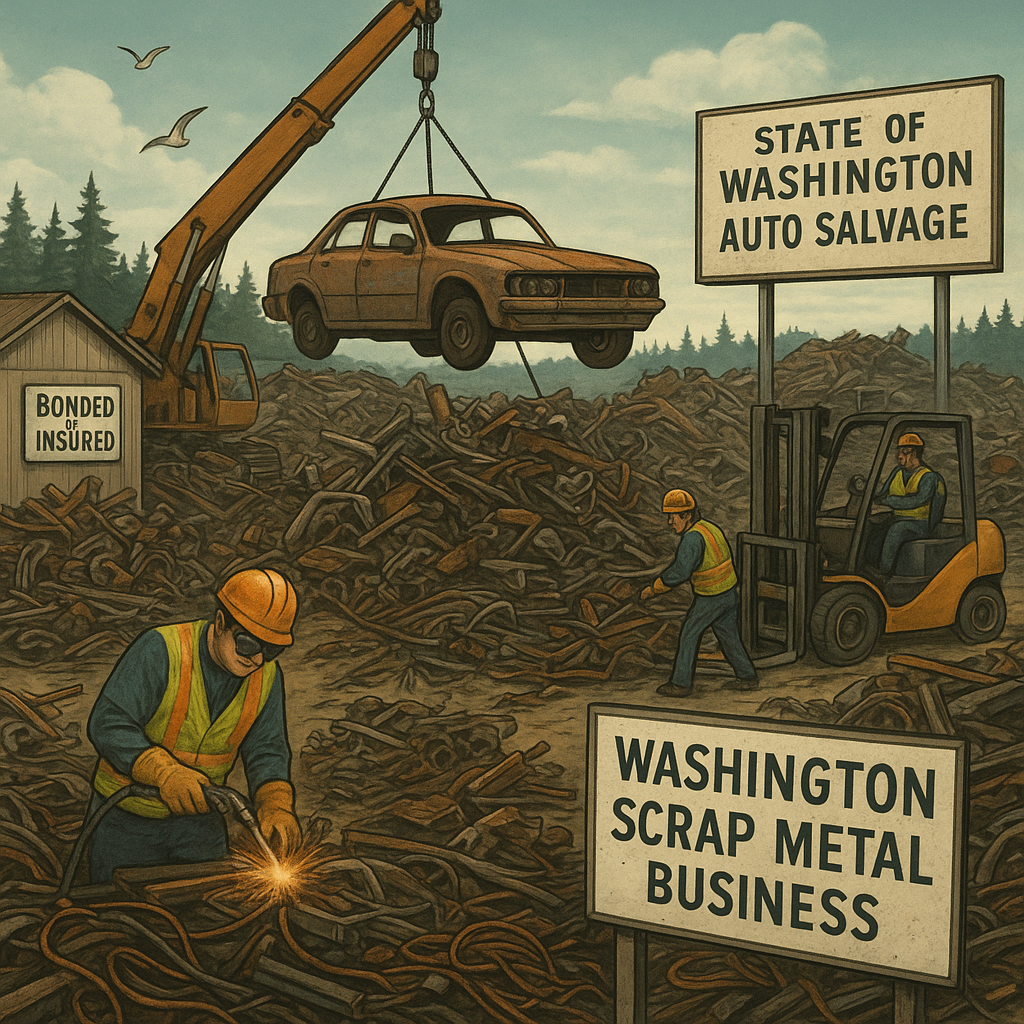
Starting an auto salvage business in Washington State is an exciting venture. You see treasure in old cars—parts to recycle, metal to reclaim, and a chance to build something profitable. But before you open your doors, there is one piece of paperwork you absolutely need to understand: the Washington scrap metal business bond. Think of it as a promise you make to the state and your customers, wrapped in a financial safety net. Without it, getting your license will hit a dead end. Let’s break it all down in plain English, no confusing jargon attached.
What Is a Washington Scrap Metal Business Bond?
A Washington scrap metal business bond is a type of surety bond required by the state. It’s not insurance for your company, though many people mix that up at first. Instead, it’s a three-party guarantee. You, the auto salvage business owner, are the principal. The state is the obligee, and the surety company is the one backing your promise. The bond says: “We guarantee this business will follow the rules, especially around buying and reporting scrap metal. If they don’t, and someone gets hurt financially, the bond steps in to make things right.”
In the auto salvage world, you deal with everything from catalytic converters to copper wiring and crushed car bodies. With that kind of inventory comes strict rules meant to stop theft. The bond is your license to show you’re a trustworthy player.
Why Is the Bond So Important for Auto Salvage Yards?
Picture this: someone rolls into your lot with a truckload of aluminum wheels they “found.” Later, it turns out those wheels were stolen from a construction site. Acting without proper care could leave you tangled in legal trouble. The scrap metal bond exists to protect the public from exactly that scenario. If a legal claim proves you knowingly accepted stolen material or broke Washington’s scrap metal laws, the bond pays out. Then, you repay the surety company every penny—so it keeps you honest.
It also protects the tiniest details. For example, Washington requires strict record-keeping about who sold you the metal and when. Missing a signature or failing to photograph a seller could lead to a valid claim. The bond cushions the harm to victims while pushing you to operate cleanly from day one.
Who Needs a Washington Scrap Metal Business Bond?
You might be wondering if this applies to your small, one-person operation. In Washington, if you buy or receive scrap metal for resale—including vehicle parts, old appliances, wires, or industrial scraps—you likely need a license and a bond. Typical businesses include:
- Auto wreckers and salvage yards
- Vehicle dismantlers who sell parts for reuse
- Scrap metal processors and recyclers
- Mobile scrap buyers who pick up metal from homes or businesses
- Any business that purchases metal for the purpose of exporting it
Even if you only occasionally buy old radiators or brake drums from walk-in customers, you’re on the hook. Washington lumps motor vehicle parts under the larger umbrella of scrap metal licensing. So, if your primary business is auto salvage, this bond is your baseline requirement.
The Link Between Your License and the Bond
Applying for a business license through the Washington State Department of Licensing (DOL) or local authorities often triggers the bond demand. Without the bond on file, your application stalls. Some jurisdictions might call it a “scrap processor license” or a “secondhand property license,” but the bond requirement stays firmly in place. Always double-check your city and county rules for extra layers, but the state-level scrap metal bond is your first hurdle.
How Does the Bond Actually Work in Real Life?
Let’s use a simple analogy. Imagine you’re borrowing your neighbor’s power washer. Your friend vouches for you, saying, “If they break it, I’ll pay for the repairs.” Here, your friend acts like the surety company. The bond works the same way. If you damage the public’s trust—by buying stolen goods or skipping mandated paperwork complaints—the surety covers the direct financial loss up to the bond amount. But don’t mistake it for a free pass. You are legally required to reimburse the surety for every cent, plus legal fees. So a claim feels more like a high-pressure loan than a gift.
The most common scenarios that trigger claims include:
- Purchasing scrap metal from a minor without parental consent.
- Failing to verify seller identification and vehicle license plates.
- Not holding purchased metal for the required period before processing it.
- Knowingly or negligently buying stolen property, even if you “got a good deal.”
What Does a Washington Scrap Metal Business Bond Cost?
Here’s some good news: you don’t pay the full bond amount upfront. The required bond amount for a Washington scrap metal business is typically $3,000, though some cities may ask for more. Instead, you pay a small premium—usually between 1% and 10% of that total. For a $3,000 bond, your yearly cost might be as low as $100 to $300, depending on your credit score and business history. That’s less than a monthly coffee budget for many shop owners.
Factors that swing your premium include:
- Personal credit score: Higher scores unlock the lowest rates.
- Business financials: Established, stable businesses look less risky.
- Your experience: Years in the salvage industry can help.
- Any past bond claims or legal blemishes on your record.
Don’t assume bad credit locks you out. Many surety companies offer programs specifically for imperfect credit, though the rate might climb to around 5-10%. Even then, the cost remains manageable for the protection you get.
The Hidden Cost of Not Having a Bond
Skipping the bond might look like a way to save a couple hundred dollars, but it’s a recipe for disaster. Operating without one can lead to immediate license revocation, heavy fines, and a closed yard. Plus, you open yourself up to out-of-pocket lawsuits. Putting up a $3,000 bond shows regulators and customers that you respect the rules. That trust often translates into more walk-in sellers and better relationships with local law enforcement.
Simple Steps to Get Your WA Scrap Metal Bond
Don’t let the paperwork scare you. Getting bonded is fairly straightforward, and you can often do it in a single business day.
- Gather your details: Have your business name, address, owner information, and tax ID ready.
- Request a quote: Use an online surety marketplace or contact a bonding agency that understands Washington’s specific scrap metal rules.
- Complete the application: You’ll answer basic questions about your background and operations. No invasive digging, just standard verification.
- Pay the premium: Once approved, pay the annual fee. Some companies let you lock in a multi-year rate to save a little.
- File the bond: The surety will issue your official bond form. Submit it to the Washington State Department of Licensing or your local licensing office as instructed.
- Renew on time: Keep a calendar reminder. Letting a bond lapse is just like never having it—your license can vanish overnight.
Frequently Asked Questions (And Human Answers)
Is the bond the same as liability insurance?
Not at all. Liability insurance protects your business if someone slips in your lot or if you accidentally damage a customer’s car. The bond protects the state and public from you breaking scrap metal laws. You typically need both.
Can I use cash or a certificate of deposit instead?
Washington law does allow certain substitutes, like a cash deposit or a savings certificate, but this ties up your working capital. A surety bond costs far less and keeps your cash available for buying inventory or fixing that old forklift.
What if I run multiple locations?
Each location usually needs its own bond or a rider that covers all sites. Chat with your surety agent about a master bond setup to streamline things and possibly save money.
How long is the bond valid?
Most bonds run for a one-year term. You’ll need to renew annually for as long as you stay in business. Mark it on your calendar alongside your business license renewal.
The Human Side: Why This Bond Matters to Your Community
Think about the bigger picture for a moment. Metal theft hits communities hard. The catalytic converter stolen from a family minivan, the copper pipes ripped from a vacant house, the bronze plaque swiped from a park bench—these crimes depend on shady buyers who look the other way. By bonding your auto salvage business, you’re announcing that your yard is not a safe place for thieves to offload stolen goods. You become part of the solution, protecting neighbors and local businesses. That reputation can turn into your strongest marketing asset.
Customers will trust a bonded salvage yard. When a homeowner needs to sell an old water heater or a contractor delivers a load of scrap wire, they’ll feel safer knowing you’re fully licensed and backed by a bond. Transparency builds repeat business.
Putting It All Together
Navigating the world of scrap metal bonds might feel like dismantling an engine without a manual, but it doesn’t have to be. Remember: a Washington scrap metal business bond is a small investment that keeps your auto salvage dream legal, trustworthy, and protected. It costs a fraction of the required amount, shields the public from shady dealings, and signals to everyone that you run a clean operation. Start your application early, ask questions, and treat the bond as the foundation beneath your business—not just another fee. With it in place, you can focus on what you love: breathing new life into old metal.
Leave a Reply