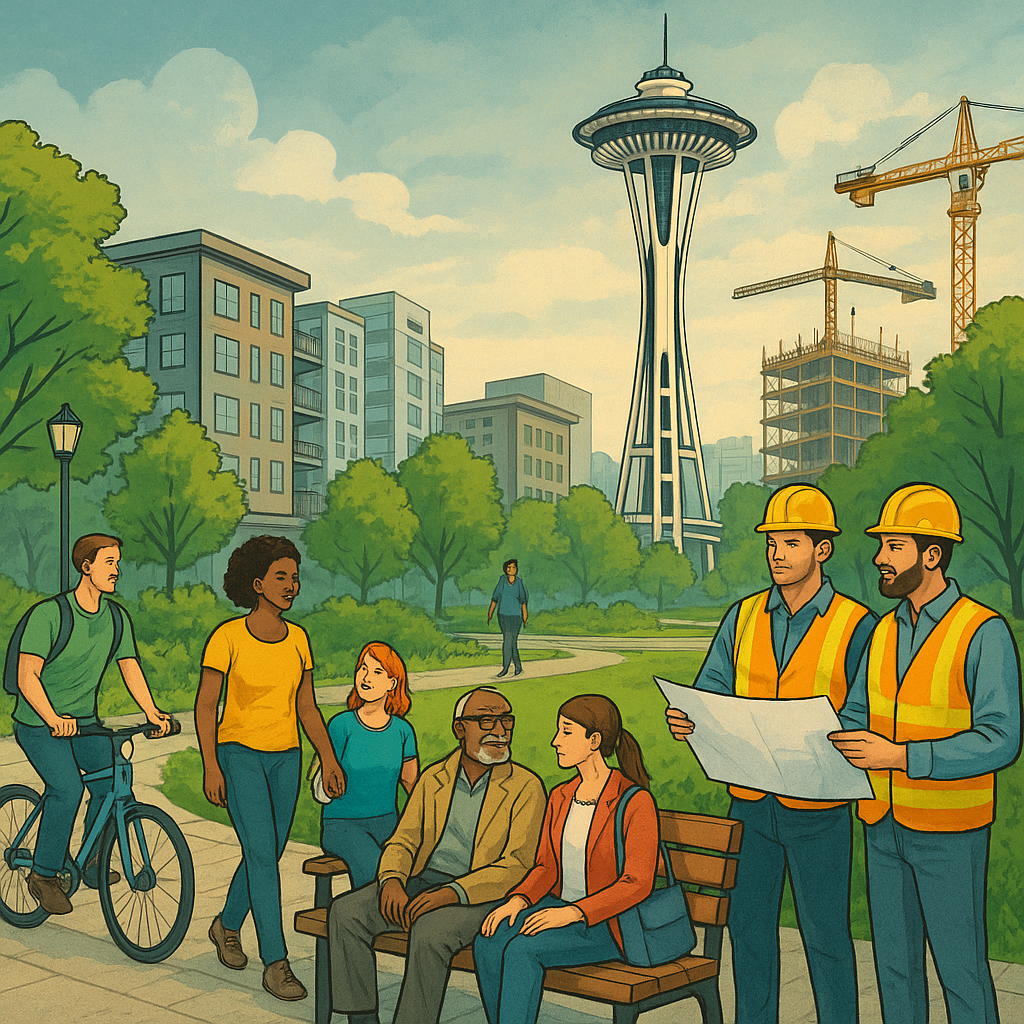
Have you ever walked through a freshly paved plaza in downtown Seattle, admired a new stretch of sidewalk in Capitol Hill, or noticed a pop-up park where there used to be an empty lot? Those transformations don’t happen by magic. They’re the result of careful planning, hard work, and a little-known financial tool called the Public Place Improvement Surety Bond. If you’ve never heard of it, you’re not alone. But this bond plays a huge role in keeping Seattle’s public spaces safe, beautiful, and welcoming for everyone.
Let’s pull back the curtain on how these bonds work, why the City of Seattle requires them, and what they mean for contractors, businesses, and everyday residents who love this city.
What Exactly Is a Public Place Improvement Surety Bond?
Think of a surety bond as a three-way promise. There’s the person or company doing the work (the contractor), the government agency requiring the work (the City of Seattle), and a third party that backs the promise (the surety company). In simple terms, the bond says: “If the contractor doesn’t hold up their end of the deal, the surety company will step in and make it right, up to a certain amount of money.”
When it comes to public place improvements, the deal usually involves building, repairing, or upgrading something that everyone uses. This could be a sidewalk, a planter strip, a curb ramp, street trees, pedestrian lighting, or even small plazas and pocket parks. The City of Seattle requires a Public Place Improvement Surety Bond to make sure these projects meet local codes, look good, and don’t become an eyesore—or worse, a hazard—down the road.
Why the need for a bond? Because the city’s public right-of-way isn’t just a strip of concrete; it belongs to every person who walks, wheels, or bikes through it. If a contractor does shoddy work and then disappears, taxpayers shouldn’t have to foot the bill for repairs. The bond is the safety net that catches those costs.
Why Seattle Prioritizes Bonds for Public Spaces
Seattle is growing fast. With new apartment buildings, office towers, and revitalized neighborhoods come countless small-scale improvement projects. Each one touches the public realm in some way. A developer may need to widen a sidewalk or add a street tree as part of a building permit. A business might want to build a charming outdoor seating area that extends onto the sidewalk. Even a homeowner replacing an old driveway curb cut can trigger the need for a bond.
In every case, the city asks a simple question: “Will this improvement endure and serve the community well?” The bond requirement is the city’s way of getting a written, financial guarantee that the answer is “yes.”
A Safety Net for the Whole Community
Imagine a contractor pours a beautiful new concrete sidewalk but cuts corners on drainage. A few months later, puddles form and freeze in winter, creating a slip hazard. Without a bond, the city might have to chase the contractor through legal channels or simply pay for repairs itself. With a City of Seattle WA Public Place Improvement Surety Bond in place, funds are readily available to fix the problem quickly. The bond protects everyone who steps onto that sidewalk.
Keeping Quality Consistent Across Neighborhoods
Seattle’s neighborhoods have distinct personalities—from the industrial-chic streets of Ballard to the tree-lined avenues of Madrona. But one thing that binds them together is a basic standard of quality in public infrastructure. The bond system helps maintain that consistency. Contractors know that if their work doesn’t pass city inspection, the bond can be called upon to cover corrections. That knowledge encourages them to do the job right the first time.
How the Bond Process Works in Seattle
You might be wondering, “This sounds a lot like insurance. Is it the same thing?” Not quite. While both involve risk management, a surety bond is more like a line of credit with a specific purpose. If the contractor fails to perform, the surety company pays the city, but ultimately the contractor must repay the surety. So the bond isn’t insurance for the contractor; it’s a guarantee for the city and the public.
Here’s a quick walk-through of the typical process:
- Project Approval: The property owner or contractor gets a permit from the Seattle Department of Transportation (SDOT) or another relevant city department for work in the public right-of-way.
- Bond Requirement: The city notifies the applicant that a Public Place Improvement Surety Bond is needed, and specifies the required dollar amount based on the scope of work.
- Securing the Bond: The contractor contacts a surety bond agency. The agency evaluates the contractor’s financial stability, experience, and track record. Once approved, the bond is issued and filed with the city.
- Work and Inspection: The contractor completes the improvement. City inspectors visit the site to check that everything meets Seattle’s codes and design standards.
- Release or Claim: If the work passes, the bond is eventually released. If it fails, the city files a claim against the bond to fund necessary repairs or completion.
This straightforward sequence keeps the whole system moving smoothly and gives everyone a clear set of expectations.
Who Needs a Public Place Improvement Surety Bond?
The short answer: almost anyone making physical changes to Seattle’s public right-of-way. But let’s break it down with some real-world examples.
- Developers building mixed-use projects that include new streetscapes, ADA-accessible ramps, or widened sidewalks.
- Business owners creating streateries or parklets—those outdoor dining areas that became so popular in recent years. These often require bonding to ensure the structures are safe and removable if needed.
- Homeowners doing major driveway or landscaping work that affects the adjacent sidewalk or planting strip. Even replacing a crumbling retaining wall along the street edge can trigger the requirement.
- Utility companies or contractors who open up streets for underground work and must restore the pavement and markings to city standards.
In each case, the bond requirement might feel like one more hoop to jump through. But ultimately it’s a form of good housekeeping. It encourages everyone to approach public spaces with the care they deserve.
The Value of Bonds: More Than Just Paperwork
It’s easy to get lost in the administrative language and see a bond as a bureaucratic hurdle. But if you take a step back, you realize these bonds directly shape your daily experience of the city.
Have you ever pushed a stroller along a smooth, well-maintained sidewalk and felt a sense of ease? Have you lingered in a cozy street-side café, grateful for the extra space? Those moments don’t happen by accident. They happen because someone, somewhere, was held accountable for quality. The Seattle City Public Place Improvement Surety Bond is one of the quiet tools that creates that accountability.
For contractors, the bond can actually be a badge of honor. Being able to secure a bond demonstrates financial stability and reliability. It tells the city and potential clients, “We’re serious about our work, and we stand behind it.” In a competitive market, that’s a real advantage.
Common Questions About Seattle’s Improvement Bonds
How Much Does a Bond Cost?
The cost to the contractor (the premium) is typically a small percentage of the total bond amount—often between 1% and 3% for well-qualified applicants. The exact figure depends on the contractor’s credit score, financial history, and the size of the project. It’s not a flat fee, but it’s designed to be an affordable layer of protection for the city.
What Happens If a Claim Is Filed?
If the city determines that the work is substandard or incomplete, they inform the surety company. The surety investigates and, if the claim is valid, pays out to cover the correction costs. Then, as mentioned earlier, the surety company seeks reimbursement from the contractor. That back-end accountability is what keeps the whole system honest.
How Long Does the Bond Stay Active?
The bond typically remains in force until the city formally accepts the improvements and issues a release. This could be after a maintenance period that ensures the work holds up through a rainy season or a full year. Seattle’s climate is no joke—bonds help guarantee that new concrete doesn’t crack at the first freeze-thaw cycle.
Weaving Public Space Improvements Into Seattle’s Future
Seattle is a city of constant reinvention. Every new project—big or small—is a chance to weave together neighborhoods, improve pedestrian safety, and add a little more beauty to daily life. At the heart of that transformation is a commitment to doing things right. The Public Place Improvement Surety Bond is a quiet engine behind that commitment.
So the next time you stroll through a well-kept public plaza or notice a freshly planted street tree thriving in its little plot, remember the invisible guarantees that helped bring it to life. They may not be flashy, but they’re essential to building a city that works for everyone.
Whether you’re a contractor preparing to break ground, a business owner dreaming of a streetside patio, or a resident simply curious about how your neighborhood gets shaped, understanding these bonds gives you a deeper appreciation for the careful choreography required to enhance Seattle’s public spaces. After all, a great city isn’t just built—it’s continuously nurtured, one bonded project at a time.
Leave a Reply