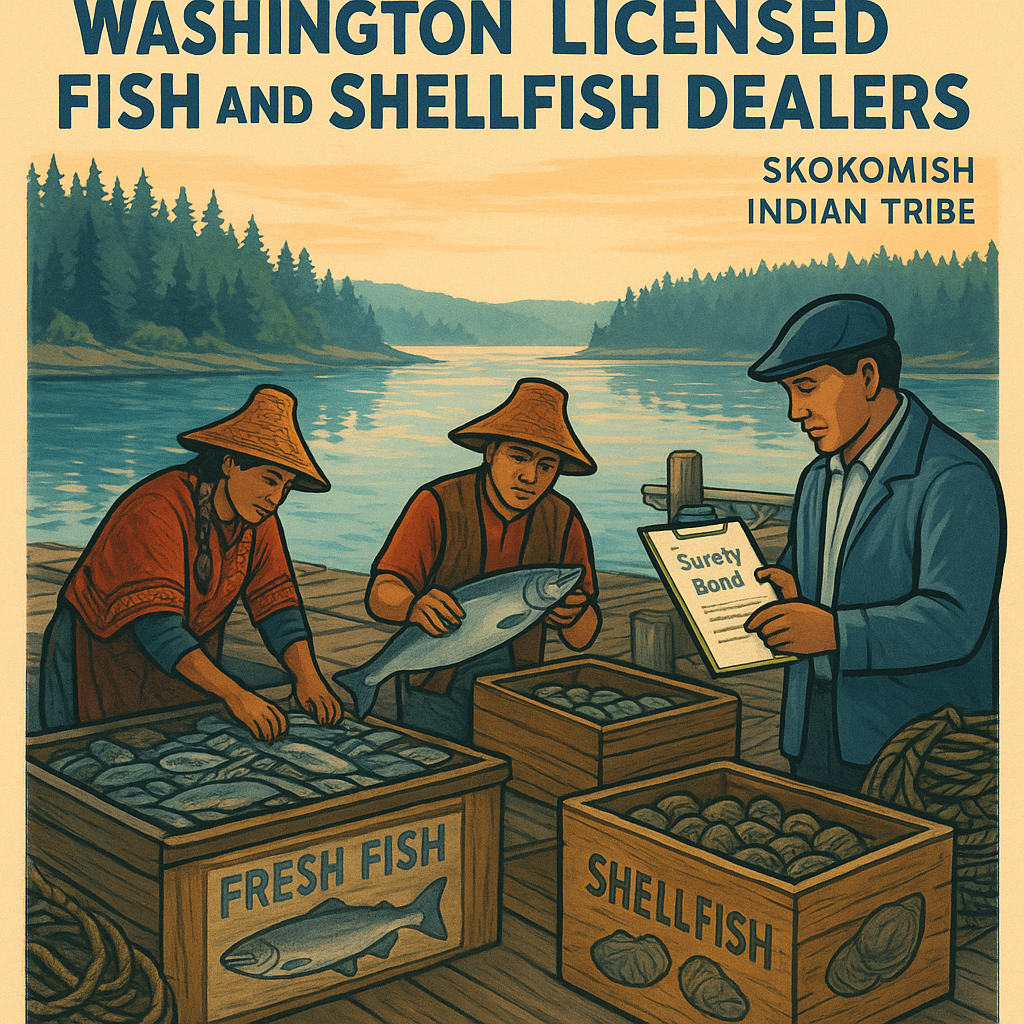
Picture this: you’ve just hauled in a boatload of fresh salmon off the Washington coast. The catch is perfect, the market is strong, and tribal partners are waiting. But before you sell a single fish, there’s a quiet guardian of trust that needs to be in place—a surety bond. If you’re a fish or shellfish dealer working with tribes like the Skokomish Indian Tribe, understanding the Washington fish dealers surety bond isn’t just paperwork. It’s the key to unlocking strong, respectful business relationships.
What Exactly Is a Washington Fish Dealer Surety Bond?
Let’s strip away the confusion. A surety bond is not insurance for you. It’s a three-party promise: you (the fish dealer), a surety company, and the entity requiring the bond—often a state agency or a tribal government. The bond guarantees that you’ll follow the rules, pay what you owe, and treat producers fairly. If something goes wrong, the bond steps in to make things right for the fishermen or the tribe.
In Washington, any person or business buying fish or shellfish for resale—from tribal fishers on reservation land or from state-regulated harvesters—typically needs a licensed fish and shellfish dealers surety bond. This requirement protects everyone in the supply chain, from the deckhand to the wholesaler. Think of it as a financial handshake that says, “I’m good for my word.”
Why Does Washington Require This Bond?
Washington’s seafood industry is a big deal. We’re talking millions of dollars moving from dock to dinner plate. With that much money flying around, there’s always a risk that someone might skip payment, misreport catches, or bend the rules. The state’s Department of Fish and Wildlife, along with tribal authorities, wants to safeguard the livelihood of harvesters and the integrity of the resource.
Here’s the simple truth: without a bond, a fish dealer could disappear with a week’s worth of premium crab without paying a cent. The bond creates a safety net. If a dealer fails to pay for fish or violates regulations, a claim can be filed against the bond. The surety company pays out up to the bond’s limit, and then the dealer has to reimburse the surety. It keeps everyone honest and the industry stable.
The Tribal Connection: More Than Just a Stamp
Now, let’s talk about something that makes Washington special—tribal partnerships. Many tribes, including the Skokomish Indian Tribe, are sovereign nations with their own natural resources, fisheries, and commercial regulations. When you work with a tribal fishery, you’re not just dealing with the state. You’re entering into a government-to-business relationship that respects tribal self-governance.
The Skokomish Indian Tribe, located in the Hood Canal area, has a deep cultural and economic connection to salmon, shellfish, and steelhead. Their fisheries are managed carefully, and they issue their own licenses and permits to fish dealers. Part of that licensing often includes securing a surety bond that meets tribal requirements. This isn’t a bureaucratic hurdle—it’s a way of ensuring that the tribe’s harvesters are protected under tribal law.
How Tribal Bonds Work Alongside State Bonds
Dealers sometimes wonder: “Do I need two separate bonds?” The answer depends on where you buy seafood. If you’re purchasing directly from tribal fishers on reservation land, the tribe may require a bond naming the tribe as the obligee. The state of Washington also requires a bond for your state license. In many cases, a single bond can be written to cover both requirements if it’s carefully structured. However, you must confirm with your surety professional that the bond form specifically includes the tribal entity and meets all their conditions.
Think of it like a driver’s license: you can drive in any state, but you still need to obey local traffic laws. The bond is your license to do business, and tribal partnerships add a layer of local law that demands respect and clarity.
Why the Skokomish Indian Tribe’s Bond Requirement Matters
The Skokomish Indian Tribe’s licensed fish and shellfish dealers bond is a perfect example of tribal sovereignty in action. By requiring this bond, the tribe ensures that every dealer who steps onto their land or buys from their fishers is financially accountable. The bond amount can vary based on the dealer’s volume and history, but its purpose never changes: it shields tribal members from the risk of nonpayment or fraudulent dealing.
For a small-scale tribal fisherman, waiting weeks for a check from a dealer can be stressful. Knowing that there’s a bond behind that invoice turns anxiety into confidence. It encourages more trade, better prices, and long-term relationships. The bond might seem like a quiet document sitting in a drawer, but it’s actively weaving trust into every transaction.
The Nuts and Bolts: How to Get Your Washington Fish Dealer Bond
Alright, so you need a bond. Where do you even start? The process is simpler than you might imagine.
- Determine Your Required Bond Amount. Washington state typically sets bond amounts based on the value of fish purchased monthly. Tribal entities like the Skokomish Indian Tribe will tell you the exact figure they need. It could be a flat amount or a scaled amount.
- Find a Surety Company. Work with a bond agency that understands both state and tribal requirements. They’ll know the Skokomish Indian Tribe surety bond form inside and out.
- Complete an Application. You’ll provide basic business and financial information. The surety will check your credit and business track record. Don’t worry—even dealers with less-than-perfect credit can often get bonded.
- Pay the Premium. The bond premium is a small percentage of the total bond amount, usually 1-5% for qualified applicants. You pay this annually, and the bond renews as long as you stay in business.
- File the Bond. The surety will issue the bond form. You’ll need to provide it to the Washington Department of Fish and Wildlife and to the Skokomish Indian Tribe or any other tribal partner. Keep copies for your records.
Once that bond is on file, you’re cleared to buy and sell fish legally and in good standing. It’s like flipping a switch that opens up a world of opportunity.
Common Questions (and Straight Answers)
“Isn’t this just another tax on small businesses?”
I get why it might feel that way. But a bond isn’t a tax—you don’t lose that premium money into a government black hole. A tiny fraction of your revenue goes to buying a credit product that enables you to access markets you couldn’t otherwise enter. It’s a business investment, not a fee.
“What happens if a claim is filed against my bond?”
If a claim is legit, the surety will pay the harmed party up to the bond limit. Then, you must repay the surety. It’s essentially a line of credit. To avoid claims, keep meticulous records, pay fishermen on time, and follow every tribal and state regulation carefully.
“Can I use one bond for multiple tribes?”
Possibly. Some surety bonds can list multiple obligees. But each tribal government may have its own bond form and wording. Never assume. Always ask the tribe’s licensing office and your bond agent to coordinate. A blanket approach might leave you non-compliant, and that’s a risk you don’t want to take.
The Bigger Picture: Sustainability and Respect
Beyond the legal jargon and the paperwork, there’s something beautiful about the bond system. Washington’s fisheries are a shared treasure. They sustain tribal communities, support families, and put healthy food on tables across the globe. A Washington licensed fish and shellfish dealers surety bond—especially when it includes tribal partnerships like that with the Skokomish Indian Tribe—reinforces the idea that business should be fair, transparent, and rooted in mutual respect.
When a Skokomish elder sells you a batch of geoduck clams or a young fisherman delivers his coho salmon, the bond is a silent promise. It says, “Your catch deserves prompt payment, and your heritage matters.” That’s not just commerce. That’s community-building.
Who Needs to Pay Attention to This?
If you’re a seafood processor, wholesaler, restaurant owner, or export broker who buys directly from harvesters in Washington, you probably need this bond. Add in tribal purchases, and the need becomes crystal clear. Even if you’re a startup dealer hoping to work with the Skokomish Indian Tribe or other coastal tribes, securing the right bond should be step one in your business plan.
Don’t overlook the fact that tribal fisheries often have enhanced sustainability standards. The bond helps ensure that those high-value, often eco-certified products move through honest channels. It protects the premium pricing that tribal partnerships can bring.
Making Your Bond Work for You
Rather than seeing the bond as a burden, flip the script. Use it as a marketing tool. When you approach a tribal council or a fisher co-op, having your bond already in place shows you’re serious and prepared. It tells them, “I’ve done my homework, and I respect your rules.” That can give you a genuine edge over less-prepared competitors.
Also, maintain open communication with your surety agent. If your business grows and you need a higher bond limit, adjust it proactively. If you expand to work with additional tribes, get the bond rider you need before you finalize a deal. A proactive approach keeps your business humming without legal hiccups.
Wrapping It All Up
Washington’s fish dealer surety bond may seem like a dry obligation, but it’s actually a living thread that ties together commercial ambition, tribal sovereignty, and honest dealing. Whether you’re forging a partnership with the Skokomish Indian Tribe or casting your net across the state, the bond is your foundation. It proves that you’re in the business for the long haul, not just a quick buck.
So, the next time you see that bond certificate, don’t just file it away. Remember that it represents a wave of handshakes from the docks of Hood Canal to the bustling Seattle markets. It’s a small piece of paper with a big job—keeping Washington’s seafood legacy thriving for generations to come.
Leave a Reply