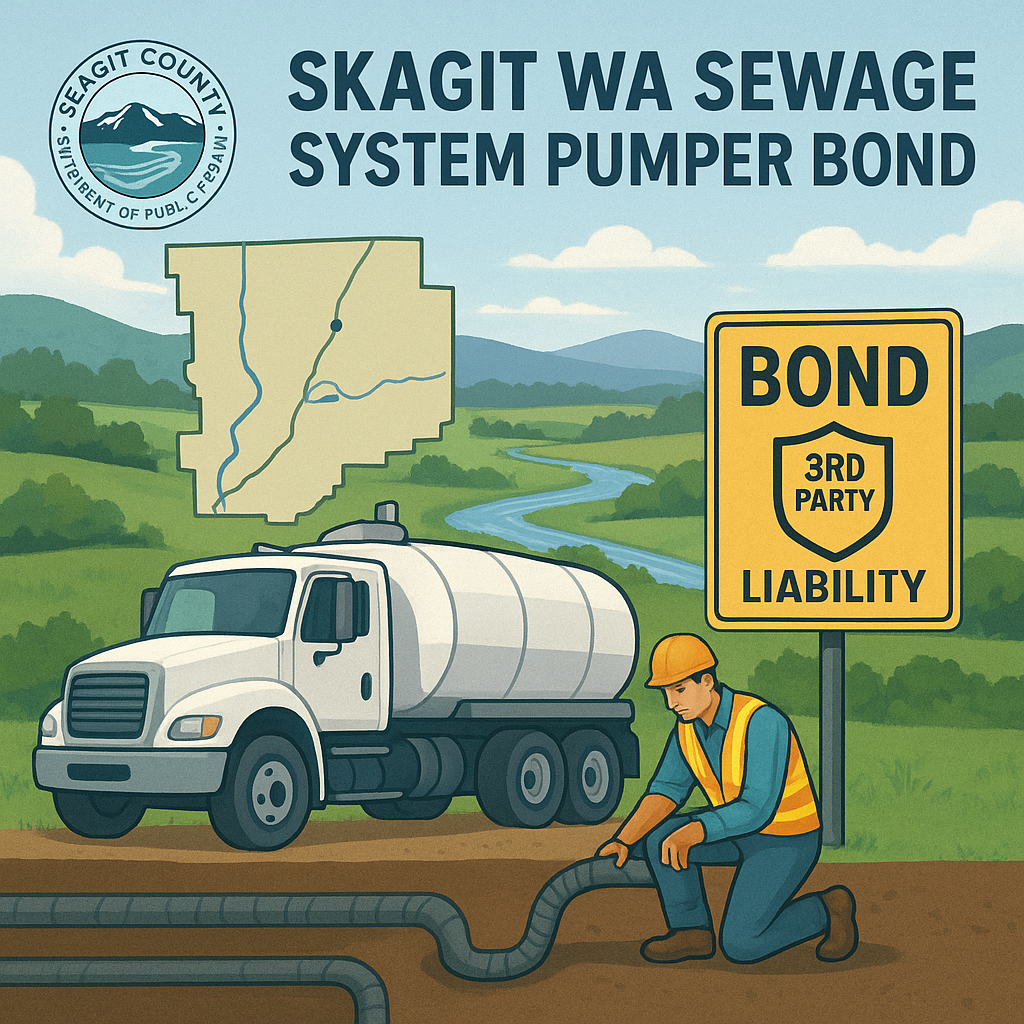
Have you ever stopped to think about what happens after you flush? For many homes and businesses in Skagit County, the journey doesn’t end at a city sewer line. Instead, it leads to an on-site septic system that needs regular care. And when it’s time to pump out that tank, someone has to drive up, hook up the hoses, and haul away the waste. That someone is a sewage system pumper. But did you know that in Skagit County, these pumpers must carry a special kind of financial protection called a Sewage System Pumper Bond? It’s a behind-the-scenes safety net that keeps our groundwater clean, our property safe, and our community healthy.
What Exactly Is a Sewage System Pumper Bond?
Let’s break it down in simple terms. A Sewage System Pumper Bond (sometimes called a Sewer Contractor Bond) is a three-party agreement. The Skagit County Department of Public Health requires it before a pumper can legally operate. Think of it like a security deposit that protects the public, not the pumper. If a contractor makes a mess—literally—this bond helps pay for the cleanup or damages.
It’s not insurance for the pumper’s own truck or business. It’s a promise. The bond says: “I’ll do my job right, follow the rules, and if I slip up, there’s money set aside to fix the problem.” The third party in that agreement is the bonding company, which backs the pumper’s promise financially.
Why Does Skagit County Require This Bond?
Imagine a pumper accidentally spills raw sewage onto your property. Or worse, they dump it somewhere they shouldn’t—like a ditch that drains into the Skagit River. The mess isn’t just smelly; it’s a public health threat. Harmful bacteria and viruses can seep into drinking water sources, spread disease, and damage fragile ecosystems. That’s a nightmare for families, farmers, and wildlife alike.
The Skagit County Department of Public Health wants to prevent these scenarios before they happen. By requiring a bond, they make sure every pumper has real skin in the game. If they break environmental regulations, the bond can cover the cost of environmental cleanup, property repair, or legal claims filed by affected residents. In other words, it’s a way of keeping our community safe without using taxpayer dollars.
The Third-Party Liability Connection
You might see this bond referred to as a “3rd Party Liability” bond. That simply means it protects someone other than the two main parties—the county and the contractor. That “someone” is you, your neighbor, or anyone who could be harmed by a pumper’s negligence. If a contractor’s mistake floods a basement with septic overflow, the bond is there to step in. Without it, you might be stuck footing the bill or chasing a fly-by-night company through a lengthy lawsuit.
Who Needs This Bond in Skagit County?
Not everyone who handles hoses needs one. The requirement applies to any sewer contractor or business pumping, hauling, or disposing of septage from septic tanks, holding tanks, or portable toilets within Skagit County. That includes:
- Septic tank pumping companies
- Portable restroom service providers
- Grease trap cleaners (if they also handle sewage)
- Independent operators who contract with the county or private residents
If you’re hiring someone to pump your septic system, always ask: “Are you bonded and licensed with the Skagit County Department of Public Health?” A legitimate professional won’t hesitate to show proof. It’s your first line of defense against shoddy work and environmental hazards.
How the Skagit County Department of Public Health Protects You
The Department of Public Health doesn’t just collect paperwork. They actively monitor and enforce standards for liquid waste management. Their goal is clear: keep surface water and groundwater free of untreated sewage. They issue permits, conduct inspections, and require this bond as part of the licensing process. If a pumper violates the rules—like dumping in an unapproved location or failing to properly maintain equipment—the county can make a claim against the bond. This quickly puts money toward fixing the damage, which might include soil remediation, water testing, or even emergency medical surveillance if public exposure occurred.
In a way, the bond acts like a silent sentry. It’s always in the background, ready to guard your family’s health. And because it’s tied to the pumper’s license, it encourages operators to stay on their best behavior. A claim could mean higher bond premiums or even losing the ability to work.
What Does a Sewage System Pumper Bond Cover?
The bond is laser-focused on liabilities that arise from pumping activities. Common covered scenarios include:
- Accidental spills during pumping or transport
- Improper disposal at unapproved sites
- Property damage caused by negligent operation (like driving into a leach field)
- Cleanup costs for contamination of soil or waterways
- Legal judgments awarded to third parties harmed by the pumper’s actions
It’s important to note that the bond doesn’t cover ordinary business risks like a broken pump or employee injuries. That’s where commercial general liability insurance and workers’ comp come in. Think of the bond as a specific safety net woven into the county’s public health fabric.
How Much Does the Bond Cost, and How Do You Get One?
Bond amounts are set by the county. Typically, a Skagit WA Sewage System Pumper Bond might range from $10,000 to $25,000, but you don’t need to pay that full amount out of pocket. Instead, you pay a small percentage—often 1% to 3% annually—to a surety company. Your exact rate depends on your credit, experience, and business financials. It’s a surprisingly affordable way to enter the industry legally.
Getting bonded usually involves these steps:
- Fill out an application with a surety bond provider.
- Provide some basic business and personal financial information.
- Receive a quote and pay the premium.
- The surety files the bond directly with the Skagit County Department of Public Health.
Many agencies can issue a bond within 24 hours, so you can get to work quickly while showing the community you mean business.
Real-Life Examples: Why It Matters
Picture this: a septic tank pumper in Mount Vernon finishes a job and drives off, but the hose connection wasn’t fully secure. A steady trickle of raw sewage drips along a residential street and into a storm drain. Within hours, neighbors report a terrible smell, and the county traces it back to the pumper’s truck. Without a bond, the pumper might apologize and offer to pressure-wash the street. With the bond, public health officials can bring in professional remediation teams immediately, test water samples, and ensure no long-term risk remains—all paid for by the bond funds. The pumper’s business reputation takes a hit, but the community doesn’t suffer lasting harm.
Another scenario: a portable toilet company unloads waste into a farmer’s field, thinking it’s “just fertilizer.” The high concentration of pathogens sickens cattle and contaminates a shallow well. The bond steps in to cover the vet bills, livestock losses, and well decontamination. The farmer doesn’t have to lawyer up alone; the bond provides an avenue for compensation.
Is This Bond the Same as Insurance?
No, and the distinction matters. Insurance protects the business from its own losses—like a traffic accident involving the pump truck. A bond protects the public from the business’s failures. If a claim is paid out on the bond, the pumper must reimburse the bonding company fully. That’s a powerful motivator to do the job right the first time. It’s also why the county trusts bonded operators: they’ve been vetted by a surety and have a financial backstop in place.
How You Can Support Clean Water in Skagit County
Whether you’re a homeowner with a septic system or a restaurant owner managing grease traps, you play a part. Schedule regular pumping (typically every 3 to 5 years for households) and always choose a bonded, licensed professional. When you see a pumper’s truck, look for the county-issued decal or ask to see their bond certification. Reporting suspicious dumping or unlicensed operators to the Skagit County Department of Public Health helps keep everyone safe.
If you’re a sewer contractor, staying bonded isn’t just red tape—it’s your badge of reliability. It tells customers you’re serious about protecting what matters: their health, their property, and the stunning natural landscapes that make Skagit County such a special place to live.
The Bigger Picture: Public Health and You
Every time a pump truck rolls down your road, there’s a small, invisible infrastructure of trust at work. The Skagit County Sewage System Pumper Bond connects honest business practices, environmental stewardship, and community wellness. It’s a reminder that public health isn’t just about doctors and clinics—it’s also about the systems that handle our waste quietly, 24/7.
Next time you see that truck, you’ll know there’s a lot more to the story than meets the eye. And if you’re in the pumping business, keep your bond current, operate with care, and take pride in the role you play. After all, we all share the same water, the same soil, and the same goal of a thriving, healthy Skagit County.
Leave a Reply