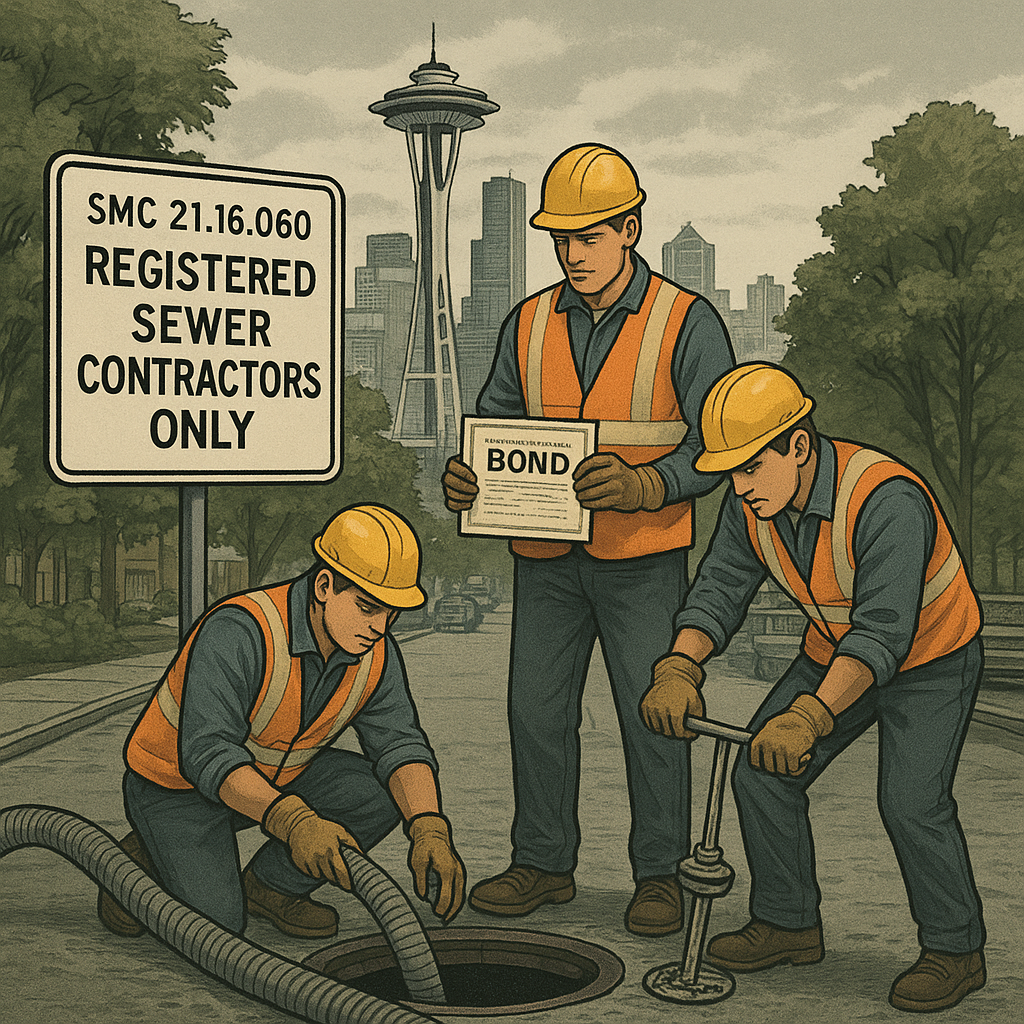
If you’re a homeowner dealing with a backed-up drain or a contractor looking to perform sewer work in Seattle, you’ve probably stumbled across a few terms that feel like a foreign language. Side sewer contractor registration, SMC 21.16.060 bond, third-party liability — it can quickly make your head spin. But here’s the good news: understanding these requirements doesn’t have to be painful. Let’s break it all down in plain English so you can stop worrying about red tape and focus on getting the job done right.
What Exactly Is a Side Sewer, and Why Does Seattle Care So Much?
Think of a side sewer as the private driveway that connects your house to the public road — except it’s underground, and instead of cars, it carries wastewater. Your side sewer runs from your home’s plumbing system out to the city’s main sewer line under the street. Everything that goes down your drain or toilet travels through this pipe. If it breaks, clogs, or collapses, it’s your responsibility to fix it, not the city’s.
Seattle cares deeply about side sewers for two big reasons. First, a failed side sewer can send raw sewage into the environment, polluting local waterways. Second, improperly done repairs can damage public streets, sidewalks, and even neighboring properties. That’s why the City of Seattle has strict rules about who can touch these pipes. You can’t just hire any handyman with a shovel — you need a registered side sewer contractor who understands the local codes and carries the right insurance and bonds.
Seattle Side Sewer Contractor Registration: The Foundation of Everything
In Seattle, performing side sewer work without proper registration isn’t just a bad idea — it’s illegal. Under Seattle Municipal Code (SMC) 21.16.060, contractors must register with the city before they can obtain permits for any side sewer construction, repair, or replacement. This registration acts like a seal of approval. It tells you that the contractor has met the city’s baseline requirements for competency, insurance, and financial responsibility.
Why does this matter to you as a homeowner? Hiring an unregistered contractor might save you a few dollars upfront, but it opens the door to massive risks. If something goes wrong — say the contractor accidentally ruptures a gas line or damages your neighbor’s property — you could be left holding the bill. Worse, the city can issue stop-work orders and fines, leaving your yard torn up and your sewer still broken.
How a Side Sewer Contractor Gets Registered
Contractors don’t just fill out a quick online form and call it a day. The registration process involves proving they have the right experience, insurance, and bonding. They need to show a valid City of Seattle business license, general liability insurance, and the all-important side sewer contractor registration bond. The bond is often the piece that confuses people the most, but it’s actually a brilliant consumer protection tool. Let’s dig into that.
The SMC 21.16.060 Bond: Your Financial Safety Net
When a contractor registers for side sewer work in Seattle, they must secure a surety bond in the amount set by the city. This is often referred to as the SMC 21.16.060 bond because that’s the code section that mandates it. Imagine the bond as a pot of money set aside specifically to protect you (and the city) if the contractor breaks the rules.
Here’s how it works. A bond involves three parties: the contractor (the principal), the city (the obligee), and the bonding company (the surety). If the contractor does shoddy work that violates city codes, abandons a job, or causes damage they refuse to fix, an affected party can file a claim against the bond. The bonding company then investigates and, if the claim is valid, pays out up to the bond’s limit. But here’s the kicker: the contractor has to repay the bonding company every penny. That’s a powerful motivator to do things by the book.
Think of it like a security deposit on an apartment. The landlord holds it just in case you punch a hole in the wall. You’re going to try very hard not to punch that hole because you want your deposit back. The bond works the same way—it encourages contractors to follow the rules or face financial consequences.
Third-Party Liability: When Bad Sewer Work Ripples Outward
Side sewer work isn’t done in a vacuum. A contractor might be digging right next to your neighbor’s foundation, under a public sidewalk, or near a busy street. One small mistake can cause damage to people or property that have nothing to do with your sewer project. This is where third-party liability kicks in.
In the context of Seattle’s requirements, third-party liability coverage protects anyone who isn’t the contractor or the homeowner hiring them. Picture this scenario: a contractor’s excavation collapses a section of the public sidewalk, injuring a pedestrian. Or maybe they accidentally cut an underground power line, shutting down electricity for the whole block. Without proper liability coverage, those injured parties could come after the homeowner’s insurance — or worse, the homeowner’s personal assets.
Seattle’s registration process requires contractors to carry general liability insurance with sufficient limits to cover these nightmare scenarios. Combined with the bond, it creates a double layer of protection. The insurance handles bodily injury and property damage to others, while the bond adds an extra layer of accountability for code violations and substandard work.
Does the Bond Replace Insurance?
This is a common point of confusion. The short answer is no — the bond and insurance serve different purposes. A contractor’s general liability insurance typically covers accidental damage and injuries that happen during the job. The bond, on the other hand, is more about guaranteeing that the contractor complies with specific laws and performs the work properly. If the contractor installs the wrong type of pipe that doesn’t meet Seattle’s standards, you’d likely turn to the bond. If a backhoe smashes through your garage wall, you’d rely on the insurance. They complement each other, but both are essential.
What Homeowners Should Ask Before Hiring a Side Sewer Contractor
Now that you know the mechanics, how do you protect yourself in the real world? The best defense is asking the right questions before you sign any contract. You wouldn’t hire a surgeon without checking their credentials, and your sewer line is arguably just as vital to your daily comfort.
Here’s a quick checklist to keep handy:
- “Are you a registered side sewer contractor with the City of Seattle?” Ask to see proof. You can also verify directly with the city’s permitting office.
- “Can I see your bond certificate?” Legitimate contractors can produce this on the spot. Make sure the bond amount matches what Seattle requires.
- “What kind of general liability insurance do you carry, and what are the limits?” A reputable contractor will be proud to show you their coverage.
- “Have you handled projects like this in Seattle before?” Local experience matters because codes and soil conditions vary wildly from one city to another.
- “Do you pull the necessary permits, or is that my job?” A registered contractor should manage the permit process. If they suggest skipping permits, run far away.
The Real-World Ripple Effect of Following the Rules
It’s tempting to view registration, bonds, and insurance as just more bureaucratic hoops that make projects more expensive. But let’s flip the perspective. These safeguards exist because real people have been left with devastating repair bills and legal nightmares. Imagine saving $2,000 by hiring an unregistered contractor, only to face a $30,000 claim when they accidentally flood your neighbor’s basement with sewage. That’s not a hypothetical situation — it happens more often than you’d think.
Seattle’s system creates a framework where everyone knows the rules and has skin in the game. Homeowners get peace of mind. Contractors operate on a level playing field. The city protects its infrastructure and environment. And if something does go wrong, there’s a clear path to resolution without needing to sue everyone in sight.
Navigating the Registration Process as a Contractor
If you’re a contractor reading this, you already know that Seattle doesn’t make it easy — and that’s a good thing. The registration process filters out fly-by-night operators and ensures that only qualified professionals can do this critical work. You’ll need to gather your business license, insurance certificate, bond, and any other documents the city’s Side Sewer Program requires. The bond amount can vary, so double-check the latest from the city or a trusted surety bond agency that specializes in Washington contractor bonds.
One tip that saves headaches: don’t wait until a client is desperate for an emergency repair to get your registration in order. The process can take some time, and you don’t want to lose a job because your paperwork isn’t yet approved. Also, keep your registration active. Allowing it to lapse can lead to fines and prevent you from pulling permits, effectively shutting down your ability to work legally in Seattle.
Frequently Asked Questions About Seattle’s Side Sewer Rules
Let’s tackle a few questions that pop up constantly in online forums and over the phone at permitting counters.
Can a homeowner do their own side sewer repair without hiring a registered contractor? In limited cases, yes. Seattle does allow homeowners to perform work on the side sewer that serves their own owner-occupied single-family residence, but only if they obtain the required permits and pass inspections. However, this is a risky path. Side sewer work is physically demanding, requires specialized knowledge, and must meet strict codes. Most homeowners eventually find that hiring a registered professional is the safer, smarter choice.
What happens if a contractor’s bond is exhausted by claims? If a valid claim eats up the bond’s limit, the bonding company pays out what’s owed, but the contractor is on the hook for that amount plus any additional uncovered damages. More importantly, the city can suspend the contractor’s registration until a new bond is in place. This creates a strong incentive for contractors to resolve disputes quickly and avoid claims altogether.
Is the SMC 21.16.060 bond just for sewer contractors? Yes, this specific bond requirement is tied to side sewer contractors registered in Seattle. Other types of contractors have their own bonding requirements under different codes. Don’t confuse it with a general contractor license bond.
Making Sense of It All: A Simple Recap
We’ve covered a lot of ground, so let’s boil it down. If you’re doing side sewer work in Seattle — or hiring someone to do it — you must deal with contractor registration, a required bond, and third-party liability insurance. Registration proves the contractor is legitimate. The bond provides a financial remedy if they ignore the rules. Insurance shields you and the public from accidents. And all of it is governed by the same underlying goal: keeping Seattle’s sewer system safe, functional, and fair for everyone.
Whether you’re a homeowner facing an unexpected sewer disaster or a contractor building your business in the Emerald City, taking the time to understand these rules pays off. It might not be the most glamorous topic, but when it protects your home and your bank account, it suddenly becomes very interesting.
So next time you hear “SMC 21.16.060 bond,” you can smile, knowing exactly what it means and why it matters. That’s a superpower worth having.
Leave a Reply