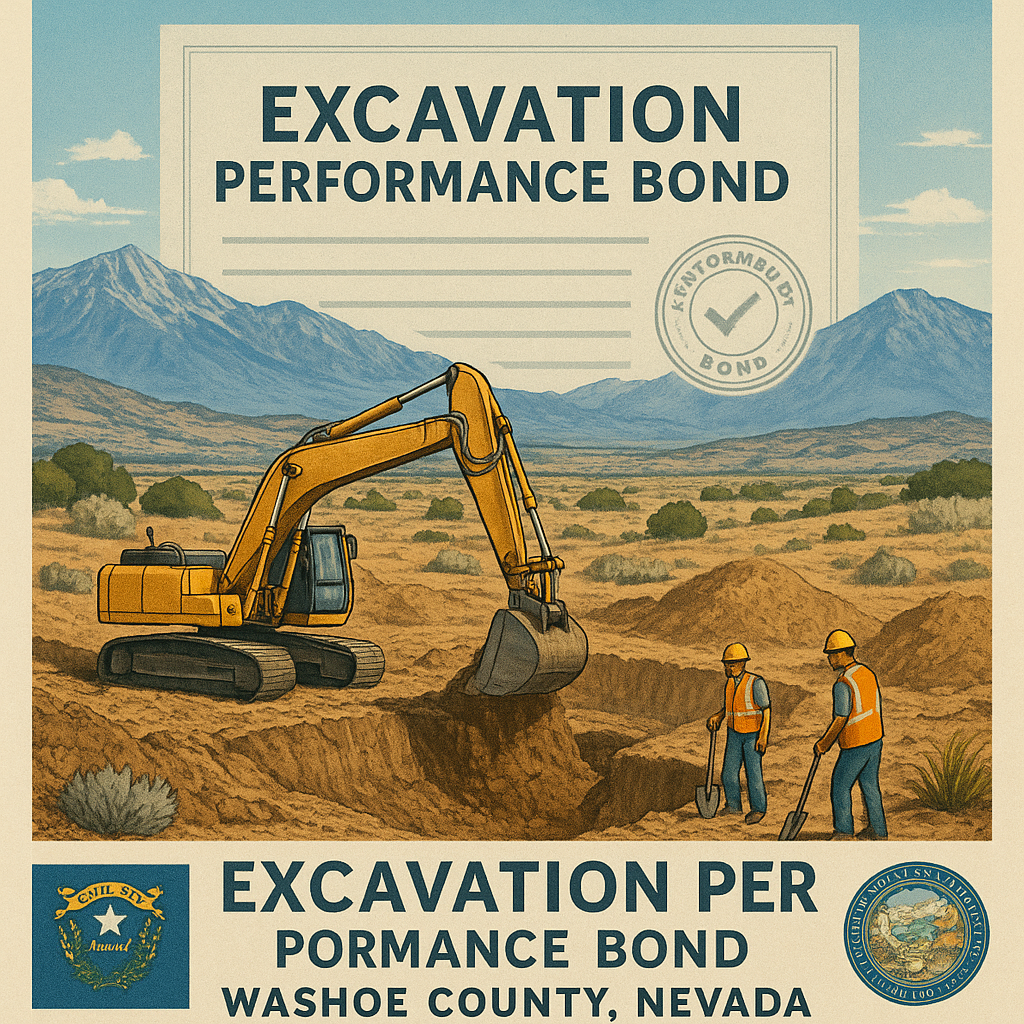
Have you ever wondered what keeps a large excavation project from turning into a giant mess in your neighborhood? Picture this: a contractor digs up a street to install new water lines, then vanishes before filling the trench properly. Who pays for the repairs? That’s exactly where an excavation performance bond steps in—and if you’re working in Washoe County, Nevada, understanding this requirement isn’t just smart, it’s essential for staying compliant.
Let’s break down everything you need to know in plain, everyday language. No confusing legal jargon, no dense paragraphs. Just the facts you’ll actually use.
What Is an Excavation Performance Bond, Really?
Think of a performance bond as a safety net. It’s a three-party promise: you (the excavation contractor), the county (Washoe County), and a surety company. The bond guarantees that you’ll complete the job according to the approved plans, permits, and local rules. If you don’t—maybe you cut corners, leave a project half-done, or damage public property—the county can tap into that bond to fix things without dipping into taxpayer dollars.
In Washoe County, this bond is often called an “Excavation Performance Bond” or a “Compliance Only” bond. The name tells you its focus: it’s all about making sure you comply with county standards. It’s not about the quality of your workmanship in a subjective sense; it’s about following the specific rules set by the county regarding excavation, trenching, backfilling, and surface restoration.
Why Washoe County Requires This Bond
Reno, Sparks, and the unincorporated areas around them are growing fast. Every time a new development breaks ground or an old utility gets upgraded, excavation happens. Washoe County wants to protect public roads, sidewalks, drainage systems, and underground utilities from damage caused by careless or incomplete work.
Imagine a contractor digs a trench for fiber optic cables across a residential street. The county requires that the trench be backfilled with properly compacted material and paved to match the existing surface. If the contractor fills it with loose dirt and drives away, the first rainstorm creates a sinkhole. The county now has to hire another crew to do it right. The performance bond ensures money is set aside for exactly that scenario, so residents don’t have to wait months for repairs.
It’s a way of saying, “We trust you, but we’ll verify—and we have a backup plan.”
Who Needs This Bond in Washoe County?
If you’re an excavation contractor planning to dig in the public right-of-way or on county-owned property, you’ll almost certainly need a bond. This applies to:
- Utility contractors installing water, sewer, gas, or electric lines
- Fiber optic and telecommunications crews
- Grading and site preparation companies working near public infrastructure
- Driveway and curb cut installers when the work extends into the public right-of-way
Even if you’re a subcontractor, the responsibility often falls on the primary permit holder. But smart subcontractors ask about bonding requirements upfront to avoid surprises. Don’t assume your general contractor handles everything—double-check with Washoe County’s Public Works or Community Services Department to see what’s needed for your specific project.
“Compliance Only” – What Does That Mean?
You might see the term “Compliance Only” attached to this bond. It’s a critical distinction. A standard performance bond often covers the entire construction contract, including project completion deadlines and material quality. A “Compliance Only” bond narrows the focus to your adherence to county codes, standards, and permit conditions. It’s less about finishing a building on time and more about making sure the hole you dig gets filled correctly, the asphalt gets patched properly, and the disturbed landscaping gets restored to the county’s satisfaction.
So, if your project runs a bit long but all excavation work meets code, the bond may not be triggered. If you violate a specific compliance rule, however, that’s when the county steps in.
How the Bond Process Works: A Simple Walkthrough
Getting bonded doesn’t have to feel like navigating a maze. Here’s a straightforward look at the typical steps:
1. Determine the Bond Amount. Washoe County will calculate the required bond amount based on the scope of excavation. It might be a flat minimum for small jobs or a percentage of the estimated restoration cost for larger projects. Always ask the county for this figure before you shop for a bond.
2. Apply Through a Surety Agency. You’ll work with a surety bond company or an insurance agent specializing in bonds. They’ll ask about your business finances, experience, and credit history. Don’t panic—smaller bonds are often issued quickly with minimal paperwork.
3. Pay the Premium. You won’t pay the full bond amount. Instead, you pay a premium, usually a small percentage of that total. For a well-qualified contractor, premiums can range from 1% to 3%. If you have less-than-perfect credit, you might pay a bit more, but options exist.
4. File the Bond with Washoe County. Once approved, the surety issues the bond document. You’ll deliver this to the county as part of your permit application. They keep it on file until the project is complete and all inspections are passed.
5. Complete the Work and Get Released. After final inspection, if everything complies, the county releases the bond obligation. Some bonds have a defined expiration period, while others stay active until formally released. Keep copies of all paperwork for your records.
What Does This Bond Cost You?
The cost is surprisingly accessible. Since you’re only paying the premium, a $10,000 bond might cost you between $100 and $300 per year, depending on your credit score and business history. Some sureties even offer multi-year discounts if you expect to pull multiple permits in Washoe County.
Think of it as an affordable insurance policy that enables your business to operate legally. Without it, you can’t get your permits, and your projects stall. With it, you show the county—and your clients—that you’re a responsible, professional contractor.
Real-Life Scenarios Where This Bond Saves the Day
Let’s put this into context with a couple of everyday situations:
Scenario A: The Disappearing Contractor. A small excavation crew wins a bid to install a sewer lateral across a county road. They do the digging but run into financial trouble and abandon the job before repaving. The county uses the bond to hire a new contractor immediately. The road is restored in days, not weeks. Without the bond, nearby residents would be stuck with a dusty, rutted crossing until funds were scraped together.
Scenario B: The Rushed Restoration. A contractor finishes a gas line upgrade but, to save time, skips proper compaction tests on the backfill. Two months later, the pavement settles and cracks, creating a hazard for cyclists. A county inspector spots it, and the bond covers the re-excavation and proper repaving. The contractor’s relationship with the county remains intact because the issue is handled without legal battles.
These aren’t far-fetched. They happen more often than you’d think. The bond turns a potential headache into a manageable fix.
Common Misconceptions About Excavation Bonds
“Isn’t this the same as my general liability insurance?” Not quite. Liability insurance protects you if you cause bodily injury or property damage to a third party. The performance bond specifically guarantees your compliance with county regulations and contract terms. They complement each other; they don’t replace one another.
“Will a bond cover my subcontractors’ mistakes?” Typically, yes—if you’re the permit holder, you’re responsible for everyone working under you. The county holds you accountable, so choose your subs wisely and verify they follow the rules.
“Are bonds refundable if I don’t do the work?” The premium isn’t refundable once the bond is issued, because the surety is taking on the risk from day one. So make sure you have your permits and project details lined up before locking in the bond.
How to Get the Best Rates and Terms
Want to keep your bonding costs low? Focus on these areas:
- Build good business credit. Pay your bills on time, and check your credit report for errors.
- Maintain a strong track record. Completed projects without bond claims make you look less risky.
- Work with a specialized surety agent. They know which companies favor excavation bonds and can shop your application around.
- Ask about a “blanket bond” program if you do frequent work in Washoe County. Instead of getting a new bond for each project, one overarching bond might cover all your permits for a year, saving time and money.
Staying Compliant Beyond the Bond Paper
Having the bond in hand is only step one. Compliance is an ongoing process. Familiarize yourself with Washoe County’s excavation standards, such as traffic control requirements, utility potholing procedures, and compaction testing protocols. Ignorance of the rules won’t protect your bond if something goes wrong. In fact, it could lead to claims that raise your future premiums or make it harder to get bonded at all.
Keep open lines of communication with county inspectors. If you’re unsure about a requirement, ask before you dig. They’d rather clarify than write up a violation later. Building a reputation for reliability and quality work can also expedite future permit approvals.
Wrapping It Up: Your Key Takeaways
An excavation performance bond in Washoe County isn’t a bureaucratic hurdle to dread. It’s a straightforward tool that protects the community, the county, and your business reputation. By guaranteeing that you’ll follow the rules, it lets you focus on the actual work without worrying about worst-case scenarios derailing your finances.
So, before you break ground on your next project in Reno, Sparks, or any unincorporated part of the county, check the bonding requirements. Reach out to a knowledgeable surety agent, get your bond in order, and show Washoe County you’re serious about doing the job right. After all, a smooth project starts long before the first shovel hits the dirt—and the right bond is a powerful foundation.
Leave a Reply