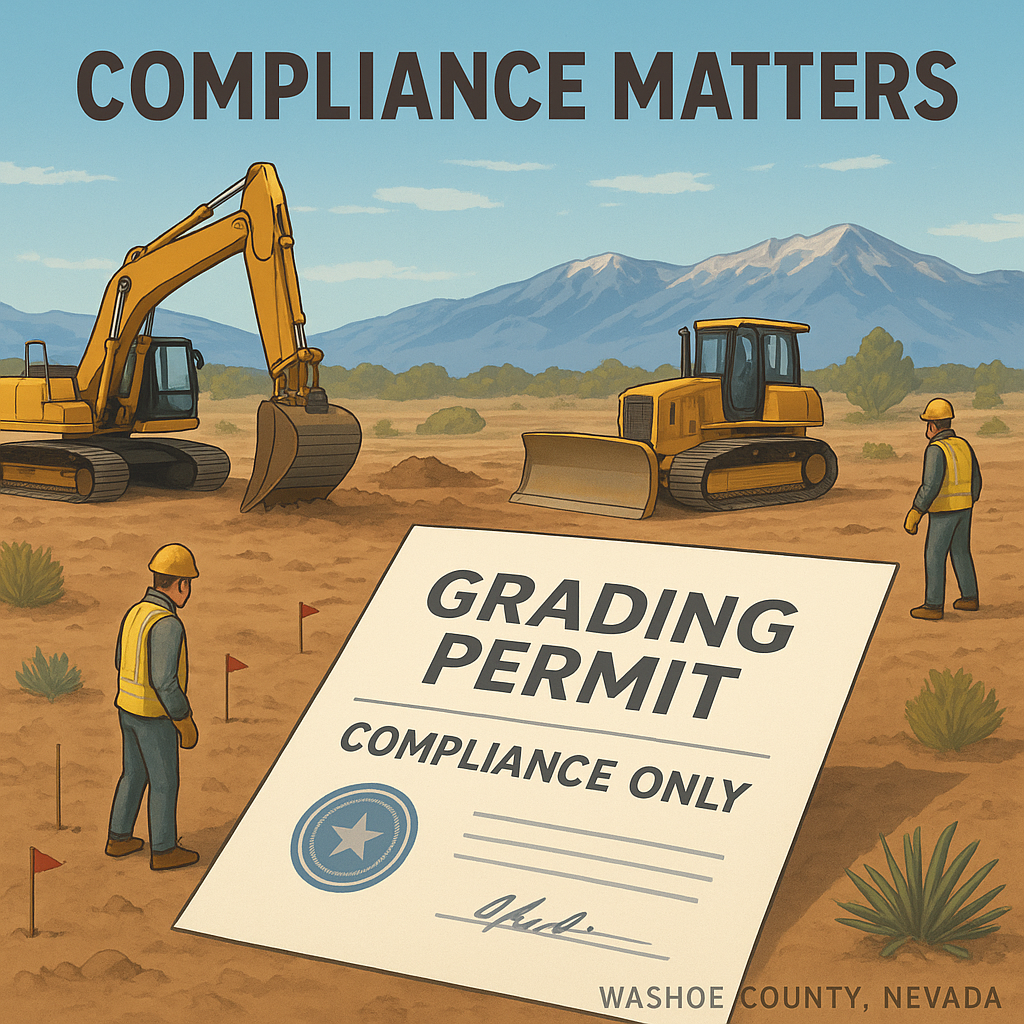
If you’re a grading contractor working in Reno, Sparks, or anywhere else in Washoe County, you’ve probably heard the phrase “grading permit bond” more times than you can count. It might seem like just another piece of paperwork—something to check off a list. But understanding the bond and the compliance rules behind it can save you from expensive fines, project delays, and a whole lot of headaches. Let’s break it down in plain English, so you can get back to moving dirt with confidence.
Why Grading Work Gets Extra Attention in Nevada
Washoe County sits in a unique high desert environment. The soil can be finicky, drainage patterns are crucial, and a sudden downpour can turn a gentle slope into a mudslide. That’s why local building departments don’t treat grading like a casual backyard project. They look at earthwork as something that can alter flood paths, destabilize neighboring properties, and damage public roads. When you pull a grading permit, you’re promising the county that you’ll follow approved plans and protect the surrounding area.
Think of a grading permit bond as a financial handshake. It’s not an insurance policy for your equipment or crew. Instead, it’s a promise to the county—backed by a bonding company—that if you walk away from an unfinished or improperly done job, funds will be available to fix the mess. It puts the county’s mind at ease, and it shows your clients that you’re serious about doing things right.
What Exactly Is a Washoe County Grading Permit Bond?
A grading permit bond is a type of surety bond. In simple terms, three parties are involved:
- The Principal: You, the contractor who needs the bond.
- The Obligee: Washoe County, which requires the bond to protect the public and the environment.
- The Surety: The bonding company that backs your promise financially.
If you fail to comply with the permit’s rules—like not stabilizing the soil, leaving a dangerous cut, or ignoring erosion control measures—the county can make a claim against your bond. The surety would pay out to cover repairs, and then you’d be responsible for reimbursing the surety every penny. It’s a serious commitment, but it keeps everyone honest.
Compliance-Only Bonds vs. Performance Bonds
You might notice the term “compliance only” floating around. In Washoe County, many grading projects require a compliance bond. Unlike a full performance and payment bond on a public works job, a compliance bond is laser-focused on making sure the grading matches the approved plans and follows county codes. It doesn’t cover the quality of your paving or whether you pay your concrete supplier. It’s strictly about erosion control, drainage, slope stability, and similar grading-specific rules.
When Do You Actually Need a Grading Bond?
Not every shovelful of dirt triggers a bond requirement. Smaller residential landscaping jobs often don’t. But if you’re changing the contour of the land on a larger scale—think subdivision development, commercial pad grading, or cutting into a hillside for a driveway—chances are the county will ask for one. When you submit your grading permit application, the plan reviewer will estimate the amount of earth moved and the potential impact. They’ll decide whether a bond is necessary and, if so, how much it needs to be.
How do you know for sure? Pick up the phone and call the Washoe County Community Services Department before you even bid the job. A quick conversation can keep you from underpricing a project that carries a hidden bonding cost.
How to Get Your Grading Permit Bond Without the Stress
Securing a bond is more straightforward than you might imagine, especially if your business has decent credit. Here’s the typical path:
- Determine the bond amount. The county will tell you the required value, often based on the scope of earthwork.
- Reach out to a surety bond agency. You can work with a local agent who knows Nevada’s rules or an online provider that specializes in contractor bonds.
- Fill out a quick application. For smaller bonds under a certain threshold—often $50,000 or so—you might get approved instantly without a credit check. Larger bonds may require a soft credit pull and some financial information.
- Pay the premium. You won’t pay the full bond amount. You’ll pay a small percentage, typically between 1% and 3% for well-qualified contractors. So a $10,000 bond might cost you just $100 or $200 a year.
- File the bond with Washoe County. The surety will mail you the original bond form. You’ll sign it and deliver it to the county to complete your permit package.
Ever wonder why premiums stay so low? The surety company believes most contractors will finish the job properly. They’re betting on your professionalism. It’s kind of like a cosigner on an apartment lease—the landlord trusts the cosigner’s wallet, but they really hope you’ll just pay rent on time.
Common Compliance Pitfalls That Trip Up Grading Contractors
Even experienced earthmovers can stumble when it comes to the fine print. Here’s what to watch out for:
- Letting the bond lapse before final approval. Many bonds automatically renew, but if you cancel a bond too early—before the county signs off on your work—you’re instantly out of compliance. Always keep the bond active until you receive a formal release letter.
- Ignoring winter shutdown requirements. Washoe County sees snow and freeze-thaw cycles. Your permit and bond likely require you to stabilize exposed slopes before a seasonal halt. A quick snow cover won’t protect you from a claim if spring meltwater washes away a slope.
- Changing the plan without permission. Field modifications happen. Maybe you hit unexpected rock and need to adjust the slope. But if you deviate from the approved grading plan without a revised permit, you’re violating the bond’s terms. A phone call and a revised drawing can save you a world of trouble.
- Forgetting dust control and track-out measures. While dust might seem like a nuisance issue, repeated complaints can flag your project with the county. Excessive dust can be seen as a failure to follow erosion and sediment control plans, and that’s absolutely a compliance matter.
What Happens if Someone Files a Bond Claim?
No one wants to face a claim, but understanding the process helps you respond calmly. Typically, a county inspector will document a problem—say, a drainage swale that wasn’t built to spec and is flooding a neighbor’s yard. They’ll give you a reasonable deadline to fix it. If you fail to act, the county can file a claim with your surety company.
The surety will investigate. If the claim is valid, they’ll pay the county up to the bond amount to hire another contractor to correct the issue. Then they’ll come to you for reimbursement. And because you signed an indemnity agreement, you’re legally on the hook for every dollar spent—plus legal fees. A claim can also make future bonds more expensive or harder to get. So think of compliance as an investment in your reputation and your bottom line.
Steps to Stay in Good Standing from Start to Finish
Want to breeze through your next grading project without bond drama? Adopt a few habits that make compliance part of your workflow:
- Attend the pre-construction meeting. This is where county staff clarify exactly what they expect. Bring your site supervisor and ask about inspection triggers.
- Document everything with photos. Snap pictures of installed silt fences, stabilized slopes, and final grading. Visual records can stop a dispute before it spirals.
- Schedule inspections promptly. Don’t wait until the very end. Ask for a rough grade inspection and a final inspection. Staying ahead of the schedule shows good faith.
- Keep your bonding company in the loop. If you run into delays or unexpected winter weather, let them know. A transparent relationship can lead to extensions or practical solutions.
- Apply for a bond release the moment work is done. After the final inspection passes, request a release in writing. Then you can cancel the bond and stop paying premiums.
The Real-World Benefits of Getting Compliant—and Staying That Way
At first glance, bonding and compliance might feel like a hurdle. But what if you looked at it as a competitive advantage? When you’re known as the contractor who never has permit hang-ups and always delivers a tidy, county-approved site, general contractors and developers take notice. They’ll call you first for the next phase.
Beyond reputation, compliance protects you from financial risk. The cost of a bond is tiny compared to a potential claim or a stop-work order. Plus, many liability insurance policies exclude damages arising from intentional violation of permit conditions. If you cause downstream flooding because you skipped a retention basin, your insurance might not cover it. The bond steps in to fix the immediate problem, but you still want to avoid that scenario altogether.
At the end of the day, a Washoe County grading permit bond isn’t a bureaucratic hoop—it’s a tool that keeps our foothills stable, our neighborhoods dry, and your business growing steadily. Whether you’re carving out pads for a new commercial center in South Reno or shaping a residential lot in Incline Village, understanding the bond and knowing how to stay compliant will let you focus on what you do best: shaping the land safely and skillfully.
Ready to Peacefully Navigate Your Next Grading Permit?
If you’ve got a project on the horizon and you’re wondering where to start with the bonding process, reach out to a surety professional who understands Washoe County’s specific requirements. They can confirm your bond amount, lock in a competitive rate, and have your paperwork ready in a matter of days—sometimes hours. And remember, the best time to think about compliance is before a single track is laid in the dirt. A little planning upfront makes the whole job feel smoother than fresh-graded soil after a light rain.
Leave a Reply