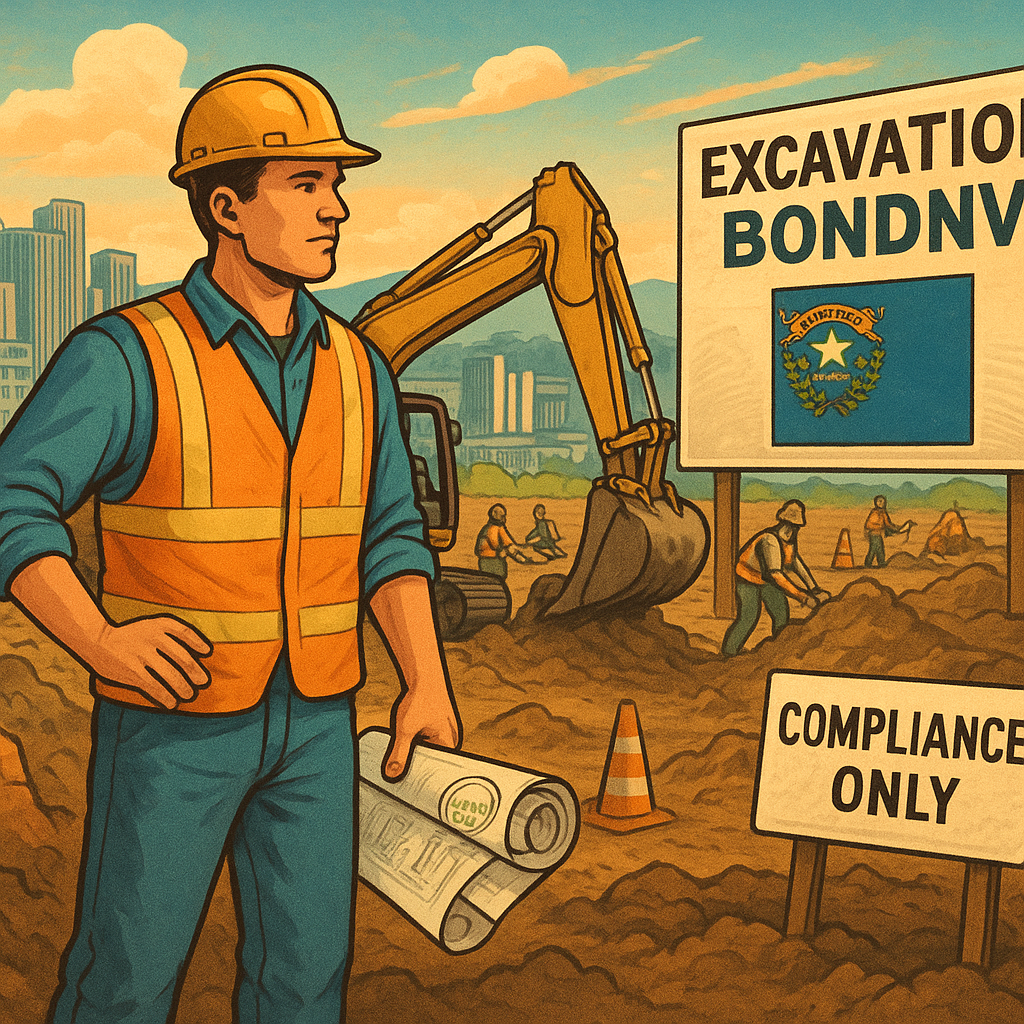
If you’re an excavation contractor in Reno, Nevada, you’ve probably heard the term “excavation bond” thrown around at city hall or seen it listed on a permit application. At first glance, it can sound like just another bureaucratic hoop to jump through. But peel back the layers, and you’ll find it’s actually a straightforward way to protect the community, your business, and the city’s infrastructure—all at the same time. Let’s break it down in plain English, without the legal jargon, so you know exactly what’s required and why it matters.
What Exactly Is an Excavation Bond?
Imagine you’re a kid playing in a sandbox, and the neighbor says, “Sure, you can dig over there, but if you break the sprinkler pipe, you promise to fix it.” That handshake is nice, but it’s not very secure. An excavation bond works like a financial backup to that promise. It’s a three-party agreement: you, the contractor (the principal), the City of Reno (the obligee), and a surety company (the guarantor). The bond tells the city, “If this contractor doesn’t follow the rules and causes damage, there’s money set aside to make it right.”
Specifically, a City of Reno NV excavation bond is a compliance-only bond. That’s a key distinction. It doesn’t cover the quality of your work for the property owner, nor does it ensure you finish the project on time. Instead, it solely guarantees that you’ll comply with all municipal codes, ordinances, and regulations related to excavation work within city limits. Think of it as your pledge to play by Reno’s rules while digging up streets, sidewalks, or public utility zones.
Why Does the City of Reno Require This Bond?
Have you ever driven over a freshly patched section of road that sunk a few months later? That’s exactly the kind of headache the city wants to avoid. Reno’s streets, sidewalks, and underground utility corridors aren’t just layers of asphalt and dirt—they’re a complex web of water mains, sewer lines, gas pipes, and fiber-optic cables. One careless shovel can disrupt an entire neighborhood’s internet or cause a water main break that floods a street.
The excavation bond requirement is essentially a risk management tool. By requiring a bond, the city ensures that contractors have a strong financial incentive to:
- Follow approved digging plans and depths.
- Properly backfill and compact trenches to prevent future road collapse.
- Restore public right-of-ways to their original (or better) condition.
- Immediately repair any unintended damage to public infrastructure.
If something goes wrong, the city doesn’t have to chase down a contractor or spend taxpayer money on repairs. They can file a claim against the bond, and the surety company steps in to fund the fix. Ultimately, the contractor still pays for it—the bond just guarantees the funds are available right when they’re needed.
Who Needs a Reno Excavation Bond?
Not every landscaping project that involves a shovel requires a bond. The requirement kicks in when your work intersects with the public domain. You’ll almost certainly need an excavation bond if you’re:
- Digging up or cutting into city streets, alleys, or curbs.
- Working within a public utility easement or right-of-way.
- Installing or repairing water, sewer, or storm drain connections that tie into the municipal system.
- Trenching across a sidewalk or public pathway for any utility line.
Even if you’re a subcontractor hired by a general contractor, the responsibility often falls on the entity actually performing the excavation. Before you start a project anywhere near city property, a quick call to the City of Reno Public Works department can clarify whether your permit application will need a bond on file. Don’t skip this step—working without a required bond can lead to stop-work orders, fines, or even losing your contractor’s license.
The Difference Between a Bond and Insurance
This is a common point of confusion. Many contractors assume their general liability insurance policy covers everything. While insurance is crucial, it protects you, the contractor, from accidents and lawsuits. An excavation bond, on the other hand, protects the city and the public. If you damage a fire hydrant, your insurer might pay for the hydrant itself, but the bond ensures the city gets reimbursed for the labor, traffic control, and administrative costs associated with the repair—all according to city standards. They work together, but they serve different masters.
How Much Does an Excavation Bond Cost in Reno?
Now for the question that’s probably on your mind: “What’s this going to set me back?” The cost of the bond depends on two things: the required bond amount set by the city and your financial health. The City of Reno typically determines the bond amount based on the scope of the project. For smaller jobs, you might see a bond in the range of $5,000 or $10,000. Larger, more complex excavations could require a higher amount, such as $25,000 or more. Always verify the exact amount with the city’s engineering division when you pull your permit.
You don’t pay the full bond amount upfront. Instead, you pay a premium, which is a small percentage of the total. For a contractor with good credit and a stable business history, that premium could be as low as 1-3% of the bond amount. So, a $10,000 bond might cost you just $100 to $300 per year. Even if your credit isn’t perfect, there are surety providers who specialize in helping contractors get bonded. The key is to work with a bond agency that understands Nevada’s specific requirements.
How to Get an Excavation Bond in Reno
The process is simpler than you might think. Here’s a typical roadmap:
- Confirm the requirement: Talk to the City of Reno permit office. Get the exact bond form name, the required dollar amount, and any special conditions. They may have a specific bond form they require.
- Gather your information: You’ll need your contractor’s license number (issued by the Nevada State Contractors Board), your business tax ID, and personal identification. Past work history helps too.
- Contact a surety bond agency: Look for one experienced in Nevada license and permit bonds. They’ll ask a few questions about your experience and run a soft credit check. Don’t be nervous—bad credit doesn’t always mean rejection; it just might affect your premium.
- Pay the premium and file the bond: Once approved, you’ll pay the premium, and the surety will issue the bond. They’ll typically send it directly to the city or provide you with a sealed copy to attach to your permit application.
Pro tip: Keep your bond active. Most excavation bonds are continuous until canceled, but the city might require renewal each year. If the surety cancels your bond because of a missed premium, the city will be notified, and your permits could be suspended. Set a calendar reminder for any expiration dates.
What Happens If a Claim Is Filed?
Let’s be realistic. Mistakes happen. A backhoe operator misjudges a trench, and a water line cracks. The city inspector notices that the backfill material isn’t properly compacted. In such a scenario, the city can file a claim against your excavation bond. The surety company will then investigate to confirm the claim is valid. If it is, the surety will pay out the amount needed to rectify the issue—up to the full bond penalty.
Here’s the part many contractors overlook: the bond is not an insurance policy you can simply walk away from. You are legally required to reimburse the surety company for every penny they pay out on a claim. Think of the surety as a co-signer on a loan. They front the money to the city to fix the problem quickly, but then they’ll come to you for repayment. That’s why working cleanly and addressing any city concerns immediately, before they escalate to a claim, is always your best strategy.
The Bigger Picture: Trust and Opportunity
Beyond the paperwork and premiums, this bond system helps build trust between contractors and the city. When you carry the required bond, you signal to Reno’s building officials that you’re a serious professional who stands behind the rules. That can lead to smoother permit processes over time and even make you more attractive to clients who know you’re properly bonded.
Moreover, public infrastructure projects—funded by both federal and local dollars—are ramping up across Northern Nevada. Being bonded and ready to go means you can bid on this work without scrambling at the last minute. It’s a small, proactive step that opens doors.
Common Questions Reno Contractors Ask
Is this the same as a contractor license bond?
No. The Nevada State Contractors Board requires a license bond for all licensed contractors, which guarantees you’ll comply with state contracting laws. The City of Reno excavation bond is an additional, project- or contractor-specific requirement that deals strictly with how you interact with city property during excavation. You often need both.
Can I use one bond for multiple projects?
Sometimes. The city might accept a blanket excavation bond that covers all work you perform within a certain period, say a year. In other cases, a single-project bond is required. The most efficient approach is to ask the permit technician which option makes sense for your workload. If you do frequent street cuts, an annual blanket bond saves time and money.
What if I’m just digging on private property, but near the border?
As long as your excavation stays entirely on private land and doesn’t touch any public right-of-way or easement, you typically won’t need this bond. However, if your trenching even grazes the sidewalk or the area between the sidewalk and the curb (which is often a public right-of-way), the requirement clicks in. When in doubt, get clarity from the city in writing.
Putting It All Together
Understanding excavation bond requirements in Reno doesn’t need to feel like deciphering an ancient scroll. It all boils down to a simple promise: you’ll dig carefully, follow the city’s rules, and if something breaks, you’ll fix it fast. The bond is just the financial backbone that guarantees that promise holds weight.
By obtaining the right bond before you break ground, you’re not just checking a box for a permit. You’re protecting your reputation, avoiding project delays, and contributing to a community that stays safe and functional. So, next time you prepare a bid for a job that involves cutting into a Reno street, make the excavation bond one of the first things you line up. It’s a small investment for peace of mind—yours and the city’s.
Leave a Reply