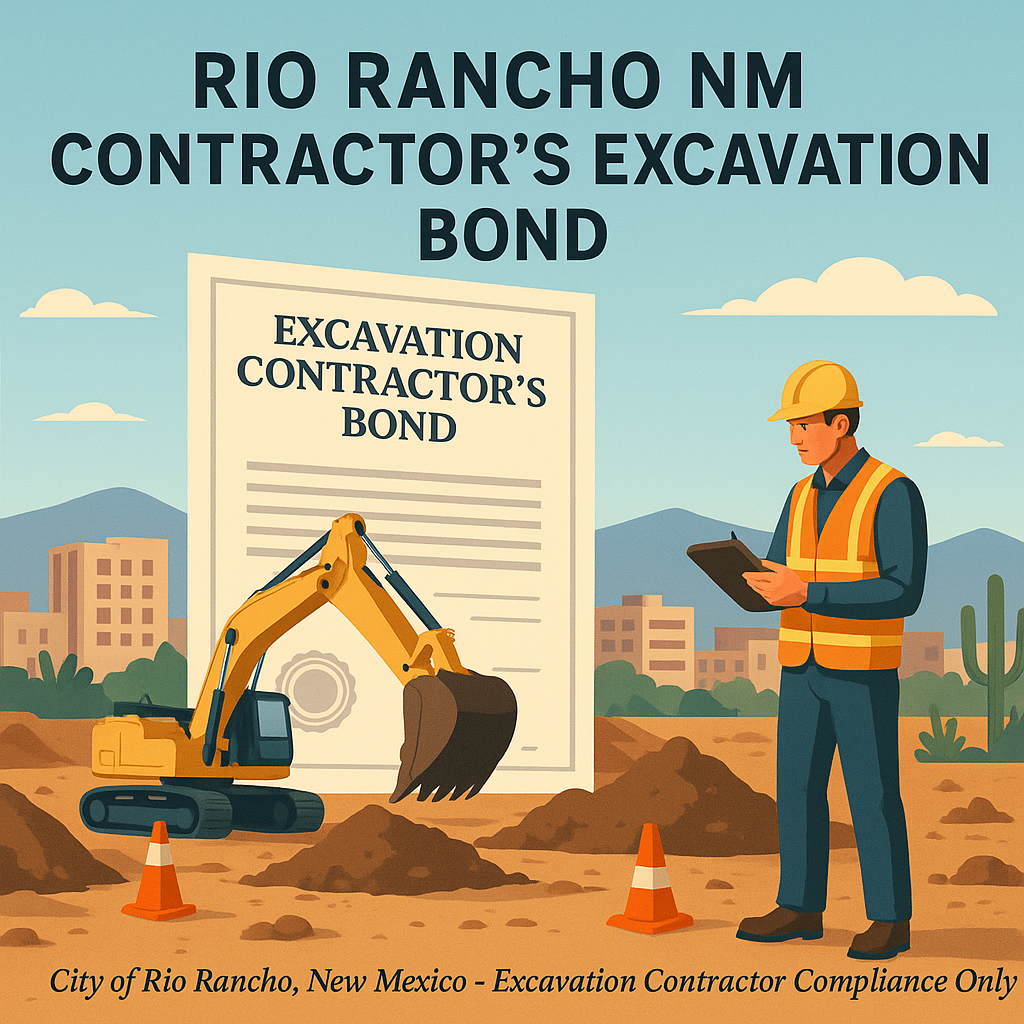
If you’re planning to dig into the earth around Rio Rancho—whether for a new home foundation, utility trenching, or a commercial site prep—there’s a good chance you’ll run into a requirement for an excavation contractor bond. It might sound like just another piece of red tape, but understanding this bond can save you time, money, and headaches down the road. Let’s walk through what this bond is, why the City of Rio Rancho cares about it, and how you can get one without the stress.
What Exactly Is an Excavation Contractor Bond?
At its heart, an excavation contractor bond is a three-party promise. Think of it like a co-signer on a rental agreement, but for your professional obligations. The three parties are:
- The Principal: That’s you, the excavation contractor.
- The Obligee: The City of Rio Rancho, which requires the bond.
- The Surety: The insurance-like company that backs your promise.
The bond guarantees that if you, the contractor, don’t follow the city’s rules—say you damage a sidewalk and walk away without repairing it, or you fail to backfill properly—the surety will step in to make things right up to the bond’s dollar amount. In Rio Rancho, this is specifically a compliance bond. That means it’s all about sticking to the local excavation codes, ordinances, and permit conditions. It’s not a performance bond that covers the entire project’s completion, nor is it insurance for your tools. It’s a targeted safety net aimed squarely at protecting public infrastructure and city standards.
Why Does Rio Rancho Require This Bond?
The City of Rio Rancho sits on a delicate network of underground utilities, streets, sidewalks, and drainage systems. A single careless dig can fracture a water main, sever a fiber optic line, or undermine the pavement. The excavation bond is the city’s way of saying, “We trust you to do the work responsibly, but we need a financial guarantee just in case.”
When you pull an excavation permit, the city issues it with conditions—things like proper shoring, erosion control, and restoration of the public right-of-way. The bond backs those conditions. If a contractor vanishes without repairing a damaged curb, the city can make a claim on the bond. It’s not about punishment; it’s about making sure residents and taxpayers aren’t left footing the bill for someone else’s corner-cutting. Plus, having a bond requirement levels the playing field for reputable contractors who already do things by the book.
Who Needs to Obtain a Bond?
Essentially, any contractor performing excavation work within Rio Rancho city limits is likely required to secure this bond before a permit is issued. This includes:
- Grading and site preparation crews
- Trenching contractors for utilities, plumbing, or irrigation
- Foundation diggers for residential or commercial structures
- Landscaping companies doing significant earthmoving that encroaches on public areas
- Demolition contractors whose work disturbs the soil near public infrastructure
The key trigger is the excavation itself, not the size of your business. Even a one-person operation with a backhoe needs to play by the same rules as a large civil engineering firm. If you’re not sure whether your project falls under the bond requirement, a quick call to the Rio Rancho Planning and Zoning or Engineering Department can clear it up. Better to ask before you start digging than to face a stop-work order.
How Does the Bond Protect Everyone?
Let’s illustrate with a common scenario. Imagine you’re trenching across a neighborhood street to connect a new water service. The permit says you must compact the backfill in layers and repave the asphalt to city specs. You finish the job, but six months later the patch sinks, creating a tire-eating pothole. The city can file a claim against your excavation bond. The surety will investigate, and if the claim is valid, they’ll pay the city the funds needed to hire another contractor to fix the dip. Then they’ll turn to you for reimbursement, because the bond isn’t a free pass.
This process protects the city’s infrastructure budget. It also indirectly safeguards homeowners and business owners who might otherwise suffer from prolonged construction defects. And from your perspective, being bonded signals to clients and municipal inspectors that you’re a professional who operates with integrity. It’s a trust badge that can set you apart from unlicensed competitors who cut corners.
Key Requirements for the Rio Rancho Excavation Bond
The city determines the required bond amount based on the nature and scope of your work. Because this is a compliance-only bond, the amount is often a flat figure rather than a percentage of the project cost. While specifics can vary, many Rio Rancho excavation bonds fall in the range of $5,000 to $25,000. Always confirm the exact amount with the permitting department, as it might be tied to the type of permit or the linear feet of excavation.
Essential requirements typically include:
- A valid business license with the City of Rio Rancho.
- Proof of liability insurance and possibly workers’ compensation coverage.
- Completion of the permit application and payment of associated fees.
- The bond form itself executed by a surety company authorized to do business in New Mexico.
Once issued, the bond must be kept on file with the city and renewed annually, or as long as your registration remains active. Let it lapse, and you could find your permits pulled or your contractor status suspended.
The Bonding Process: Step by Step
Getting an excavation bond in Rio Rancho isn’t complicated if you partner with the right surety provider. Here’s a typical roadmap:
- Determine the required bond amount. Check the city’s website or call the permit office to get the exact figure specific to your license type or upcoming project.
- Gather your business information. You’ll need your company’s legal name, tax ID, years in operation, and possibly personal credit details if you’re a small or newer business.
- Apply with a surety bond agency. Many agencies offer online applications in just a few minutes. They’ll run a soft credit check to quote your premium.
- Pay the premium. This is the annual cost for the bond, and it’s a fraction of the total bond amount. You don’t need to tie up hundreds or thousands of dollars in collateral.
- Receive and sign the bond documents. The surety will send you the official bond form that meets Rio Rancho’s specific wording.
- File the bond with the city. Submit the original bond or a certified copy to the appropriate department, either in person or via a contractor portal.
Once filed, you’re bonded and ready to dig—provided all other permit conditions are met.
How Much Does an Excavation Bond Cost?
The premium you pay depends on two main factors: the bond amount required and your personal or business credit score. For a standard compliance bond with good credit, premiums typically range from 1% to 5% of the bond amount. So if Rio Rancho demands a $10,000 excavation bond, you might pay between $100 and $500 per year. That’s a small price for the peace of mind and legal compliance it brings.
If your credit is less than stellar, don’t panic. Many surety companies specialize in working with contractors who have had past hiccups. The premium might be higher, perhaps in the 5% to 10% range, but approval is often still possible without massive collateral. The surety world understands that an excavation contractor’s credit score doesn’t always reflect their ability to dig a trench correctly.
What Happens if a Claim Is Filed?
A claim on your bond doesn’t mean you’re automatically guilty, but it does trigger a formal process. The city (or sometimes an affected property owner, depending on the bond’s wording) submits a written claim detailing how you violated a code or caused damage. The surety investigates, often giving you a chance to present your side. If the claim holds up, the surety pays out the damages up to the bond’s penalty.
After paying, the surety will come to you for reimbursement, plus any legal costs. Remember, a bond is a form of credit extended to you by the surety. When they pay a claim, they’re basically lending you money that you must repay. That’s why it’s so crucial to handle jobs properly from the start and address any city concerns before they snowball into a formal complaint.
Tips for Maintaining Your Bond and Good Standing
Keeping your excavation bond in good order isn’t just about writing a check once a year. These practical tips help you avoid headaches:
- Read and understand the city’s excavation codes. Ignorance won’t protect you if a sidewalk collapses.
- Document your work. Take before-and-after photos, especially of any public right-of-way you disturb.
- Communicate proactively. If you hit an unexpected underground obstruction or cause accidental damage, notify the city’s public works department immediately. Quick resolution often prevents a bond claim.
- Renew early. Set calendar reminders for your bond’s expiration. A lapse can halt all your ongoing permitted work.
- Keep your credit healthy. Even if you’re already bonded, a better credit score can lower your premium when it’s time to renew.
Frequently Asked Questions About Rio Rancho Excavation Bonds
Is this bond the same as insurance?
No. Insurance protects your business from accidents, theft, or liability claims. A bond protects the city (and sometimes the public) from your non-compliance. If a claim is paid, you remain ultimately responsible and must reimburse the surety.
How long does the bond last?
Most excavation bonds in Rio Rancho are continuous until canceled or tied to your annual business license renewal. You’ll typically pay the premium yearly and keep the bond active as long as you’re performing permitted work. Always confirm the exact term with the city.
Do I need a separate bond for each job?
That depends on the city’s structure. Often, a single blanket excavation bond covers all work you perform under your license during the year. However, some large-scale projects might trigger additional bonding requirements. Your permit office can clarify.
Can I get bonded with bad credit?
Yes, in most cases. While the premium will be higher, many surety providers offer programs for contractors with challenged credit. You might also be able to improve your rate by providing business financials or collateral.
What if I stop doing excavation work?
You can cancel the bond once you’re sure no further permits will be pulled and all existing obligations are satisfied. Provide written notice to the city and the surety. The cancellation might not be immediate; there’s often a required notice period, typically 30 to 60 days, to cover any latent issues.
Digging Deeper—A Worthwhile Step for Any Contractor
Excavation contractor bonds might seem like a regulatory hurdle, but they’re really a straightforward way for Rio Rancho to protect shared spaces and for you to demonstrate your commitment to quality work. By securing the right bond, you’re not just checking a box—you’re investing in your reputation and the community you’re helping to shape. Even though every trench is different, the path to bonding is clear: know your requirements, team up with a reputable surety, and keep the conversation open with the city. Do that, and you’ll be free to focus on what you do best—digging in and getting the job done.
Leave a Reply