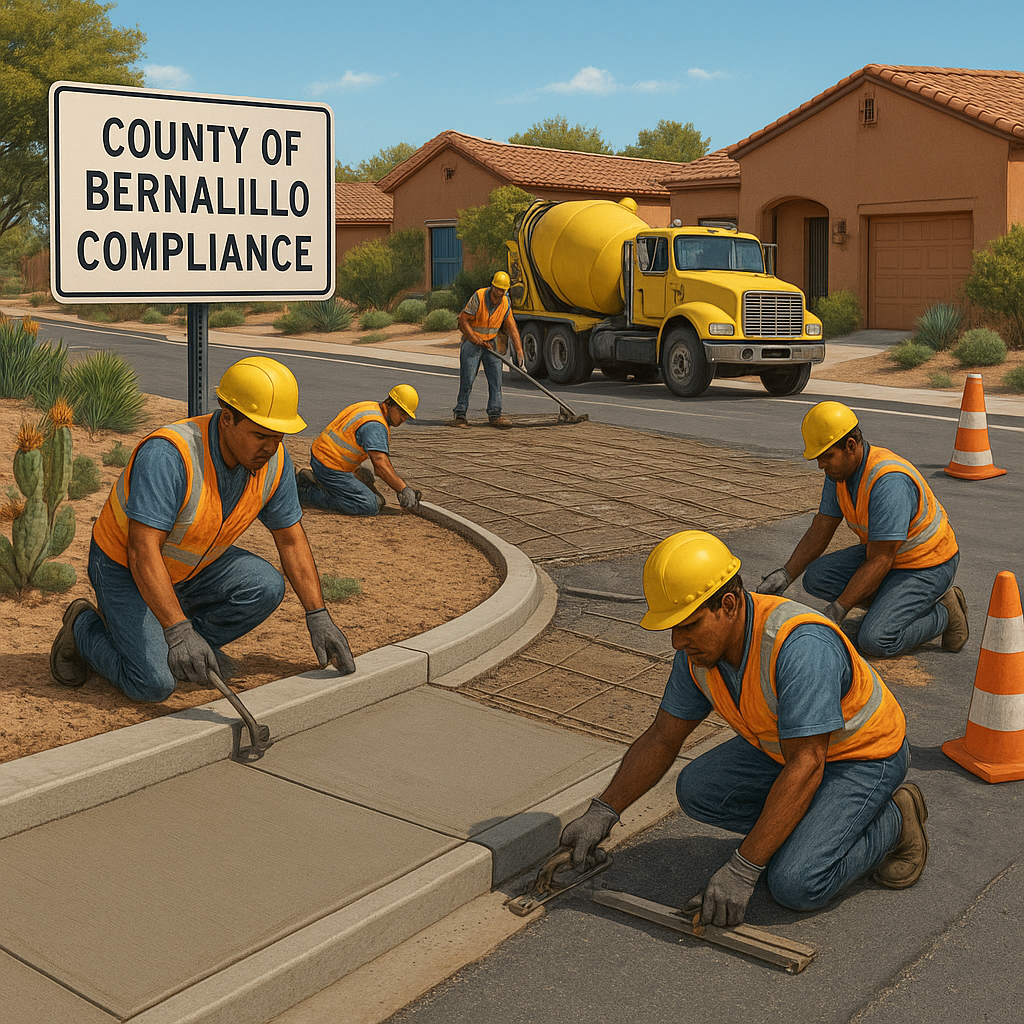
If you’re a contractor in Bernalillo County, New Mexico, and you specialize in building or repairing sidewalks, driveways, curbs, or gutters, there’s an important piece of paperwork you absolutely cannot skip. It’s not just another government form—it’s your ticket to staying on the right side of local laws and protecting both your business and your customers.
In this post, we’ll break down everything you need to know about the County of Bernalillo NM Contractor’s Sidewalk, Drive-Pad, Curb & Gutter Bond. Think of this as your friendly, no-nonsense guide. No confusing legalese, just plain talk about what this bond is, who needs it, how to get it, and why it matters.
What Exactly Is This Bond?
Let’s start with the basics. A bond might sound like something only huge construction companies worry about, but it’s actually quite simple. Picture a safety net. When a contractor takes on a project to pour a new driveway, replace a cracked sidewalk, or install a curb and gutter along a street, the bond acts as a financial promise.
Specifically, this is a compliance bond. It guarantees that the contractor will follow all the rules set by Bernalillo County. Those rules cover things like building codes, material standards, and proper drainage. If the work isn’t done correctly, or if the contractor walks away before finishing, the bond can step in to cover the cost of fixing the mess.
In short: the bond protects the public—and the county—from unfinished or shoddy work.
Who Needs This Bond in Bernalillo County?
Not every contractor rolling through Albuquerque or the surrounding areas must carry this specific bond. It’s tailored for those working directly with sidewalks, drive-pads (that’s the concrete slab where your car parks), curbs, and gutters. If your business falls into one of these buckets, keep reading:
- Sidewalk construction and repair specialists
- Driveway installers handling residential or commercial drive-pads
- Curb and gutter contractors dealing with street edges and water flow
- General concrete contractors taking on projects that touch any of the above in county right-of-way areas
The county requires this bond as part of your permitting process. So before you even dig your first shovel of dirt, you’ll need to show proof that the bond is in place. No bond? No permit. It’s that straightforward.
Why Does Bernalillo County Require This Bond?
Ever walked down a sidewalk with a huge crack that tripped you up? Or seen a driveway that’s already crumbling a year after it was poured? Those headaches cost taxpayers and homeowners money. The county wants to avoid exactly that.
Protecting Public Safety
Sidewalks and curbs are more than just concrete—they’re pathways that people depend on daily. A poorly installed gutter can lead to flooding during monsoon season. Uneven walkways become hazards for kids on bikes, elderly neighbors, and anyone pushing a stroller. By requiring a bond, the county adds an extra layer of accountability.
Ensuring Taxpayer Dollars Aren’t Wasted
Many of these projects involve public right-of-way areas. When a contractor does subpar work, the county often ends up footing the bill for repairs. The bond shifts that risk back onto the contractor, where it belongs. If the county has to step in, the bond covers the costs—not your tax dollars.
Encouraging Professional Standards
Bonds aren’t just a punishment waiting to happen. They encourage contractors to do the job right the first time. Why? Because claims against a bond can hurt a contractor’s reputation and make it harder to get bonded in the future. It’s a gentle push toward quality craftsmanship.
How Does the Bond Work in Real Life?
Imagine you’re a homeowner in Los Ranchos de Albuquerque, and you hire a contractor to replace your old, cracked driveway. The contractor pulls a permit from Bernalillo County and shows you proof of their Sidewalk, Drive-Pad, Curb & Gutter Bond. That gives you peace of mind. But halfway through the job, the contractor disappears. The concrete is half-poured, and your front yard looks like a construction war zone.
What happens next? You contact the county, and they investigate. If the contractor failed to meet the terms of the bond, you can file a claim. The bond company then steps in to either get the contractor to finish the job or pay for someone else to do it, up to the bond amount. No drawn-out lawsuits, no begging for a refund. The bond is your safety net.
What Are the Bond Amount and Cost?
Contractors often worry about the price tag. Here’s the good news: you don’t have to pay the full bond amount. The bond amount is set by the county—for example, it might be $10,000 or another figure depending on the project scope. But you only pay a small percentage of that, known as the premium.
For most contractors with decent credit and a clean business history, the premium ranges from 1% to 3% of the total bond amount. So a $10,000 bond might cost you just $100 to $300 a year. That’s a small price to pay for being able to legally pull permits and win more jobs.
Factors that influence your rate include:
- Personal credit score
- Business financials
- Years of experience
- Any previous bond claims
Even if your credit isn’t perfect, there are bonding companies that specialize in helping contractors get approved. You might pay a slightly higher premium, but it’s still far cheaper than facing a lawsuit or losing a lucrative contract.
Steps to Get Your Bernalillo County Sidewalk Bond
Ready to get bonded? The process is simpler than you think. It’s not a mountain of paperwork that takes weeks. Here’s a quick roadmap:
- Know your bond requirement. Double-check with Bernalillo County exactly which bond form and amount they need for your specific permit.
- Gather your info. Have your business license, contact details, and possibly a few financial documents ready.
- Contact a surety bond agency. Look for one that specializes in contractor license bonds in New Mexico. Local agents often understand the county’s nuances best.
- Get a quick quote. Many agencies offer same-day quotes online or over the phone.
- Pay the premium and sign. Once approved, you’ll pay the annual premium and receive your bond document.
- File the bond with the county. Submit the original bond form along with your permit application. Keep a copy for your records.
That’s it. In many cases, you can have the bond in hand within 24 hours.
Common Misconceptions About Contractor Bonds
Let’s clear up some confusion, because bonds are often mistaken for other things.
Is a Bond the Same as Insurance?
No, and this is a big one. Contractor general liability insurance protects you if something goes wrong on the job—like property damage or injury. A bond protects the public (and the county) from your failure to follow the rules. If a claim is paid on your bond, you must repay the bonding company. With insurance, you generally don’t repay a claim payout.
Does the Bond Cover My Tools or Employees?
Nope. The bond isn’t for your equipment or workers’ comp. It’s strictly a guarantee of compliance with county ordinances.
Can I Just Skip the Bond If I’m Doing a Small Job?
We wouldn’t recommend it. The county checks for bonds on permitted work. Even a “small” driveway repair might need a permit, and without the bond, you’ll hit a brick wall. Plus, working without a required permit and bond can lead to fines and a black mark on your reputation.
What Happens If You Don’t Comply?
Operating without the proper bond in Bernalillo County isn’t a slap on the wrist—it can be a career stumbler. You could face:
- Stop-work orders halting your project mid-pour
- Hefty fines that eat into your profits
- Legal trouble if a homeowner or the county decides to pursue damages
- Loss of contracting license in severe cases
The easy path? Just get bonded. It shows you’re a professional who respects the rules and cares about your community’s safety.
Tips for Staying in Good Standing
Once you have the bond, maintain it like you would any business asset. Here are a few pro tips:
- Renew on time. Bonds are typically annual. Set a calendar reminder so your coverage never lapses.
- Document your work. Take photos before, during, and after each project. If a dispute comes up, clear records are your best defense.
- Communicate with inspectors. Invite county inspectors early. A quick conversation can prevent small issues from becoming bond claims.
- Know the local codes. Bernalillo County may have specific requirements for concrete thickness, slope, and ADA compliance. Staying educated protects both you and the people using those sidewalks.
Frequently Asked Questions
How long does it take to get bonded?
Most contractors can get approved and receive their bond the very same day they apply, especially if their credit and business history are solid.
Can I use one bond for multiple projects?
It depends on the county’s rules. Sometimes a single bond covers all work for a set period. In other cases, you may need a project-specific bond. Always confirm with the county permitting office.
What if I have a bad credit score?
Don’t panic. Many bond agencies work with contractors who have less-than-perfect credit. You might pay a higher premium, but approval is still very possible. The key is to be honest and work with a specialist.
Does the bond expire?
Yes. Most bonds are written for a one-year term and must be renewed annually. Keep your bond active for as long as you’re doing covered work.
Wrapping It Up
Whether you’re a veteran concrete contractor in Bernalillo County or just starting your sidewalk and driveway business, the Sidewalk, Drive-Pad, Curb & Gutter Bond is non-negotiable. It’s your proof that you stand behind your work and play by the rules that keep our neighborhoods safe and accessible.
Think of the bond not as a burden, but as a badge of trust. When customers see that you’re bonded, they know you’re serious. And when the county sees your bond on file, you slide through the permitting process without a hitch.
So, take that next step. Reach out to a surety bond expert who knows Bernalillo County’s requirements inside and out. In the time it takes to finish your morning coffee, you could have the bond that unlocks your next big project. Your business—and your community—will thank you for it.
Leave a Reply