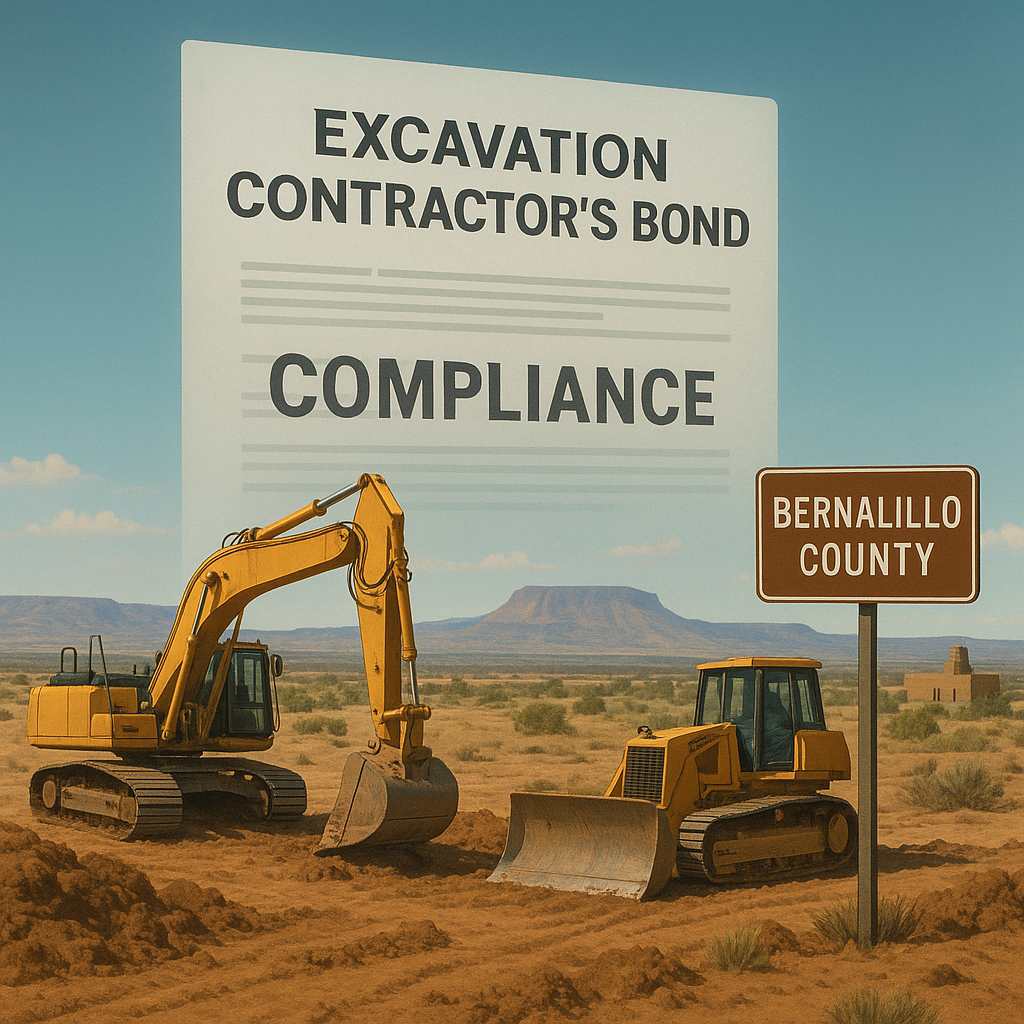
If you’re an excavation contractor working in Bernalillo County, New Mexico, you’ve probably heard the term “excavation bond” tossed around more than a shovel full of dirt. But what exactly does it mean? And why does the county care so much about a piece of paper? Let’s dig into the details (pun intended) in a way that won’t put you to sleep.
So, What Is a Contractor’s Excavation Bond Anyway?
Think of an excavation bond as a financial promise. It’s not insurance—though people often mix them up. A bond is more like a safety net for the public and for Bernalillo County itself. When you pull that permit and start moving earth, the county wants to be sure you’ll follow the rules, fix any damage to public property, and complete the job correctly. The bond guarantees there’s money set aside to cover things if you don’t.
In simple terms, you’re telling the county, “I’ll do this work the right way. If I mess up, here’s a fund to make it right.” It’s a trust-building tool between you, your clients, and the local government.
Why Bernalillo County Requires This Bond
Excavation work is inherently risky. One wrong move and you could slice through a fiber-optic line, hit a water main, or destabilize a neighboring property’s foundation. For the county, the bond is a way to protect public infrastructure and private property without draining taxpayer dollars. It shifts the financial responsibility back to the contractor—where it belongs.
In Bernalillo County, the bond requirement falls under local ordinances designed to regulate construction and safeguard community assets. Whether you’re trenching for a sewer line, grading a building pad, or digging footings for a new home, compliance isn’t optional.
Compliance Only: What That Label Means for Your Business
You might see “Excavation Contractor – Compliance Only” attached to the bond description. That’s not just legal fine print. It signals that the bond is strictly about following local regulations—not a generic license bond, but one tailored to excavation activities. While some bonds cover a broad range of contractor duties, this one zeroes in on making sure your digging, trenching, and backfilling operations meet county standards.
How does that play out in real life? Imagine you’re replacing a residential sewer line. You dig up part of a public sidewalk to access the connection. Once the job is done, you’re responsible for restoring that sidewalk to its original condition—or better. If you leave a crumbling mess behind, the county can step in and use the bond to pay for repairs. That’s compliance in action.
Who Needs This Bond?
Not every contractor with a pickup truck and a backhoe. The excavation bond is typically required for anyone performing excavation work that disturbs public rights-of-way, utility easements, or county-owned land. Even on private property, if your project connects to public sewer, water, or drainage systems, the bond may be triggered. When in doubt, a quick call to the Bernalillo County planning or public works department can save you a world of headaches.
Here’s a quick checklist of situations where you’ll likely need the bond:
- Public right-of-way work: Trenching across streets, alleys, or sidewalks.
- Utility connections: Tying into county water, sewer, or stormwater systems.
- Grading and drainage: Projects that alter runoff patterns or impact public drainage facilities.
- Demolition involving excavations: Removing structures where underground service lines exist.
How Much Coverage Do You Need?
Bond amounts vary. In many jurisdictions, including Bernalillo County, the required bond amount depends on the scope of the project. A small residential sewer hookup might need a $5,000 bond, while a major subdivision grading job could push that figure to $25,000 or more. The county sets these figures based on the potential cost of repairing any damage you might cause.
It’s not about punishing contractors with high costs. The premium you pay—often 1% to 3% of the total bond amount—is based on your credit and business financials. So even a $10,000 bond might only cost you a couple hundred dollars a year. That’s a small price for the peace of mind and legal compliance it provides.
The Process: Getting Your Excavation Bond in Bernalillo County
Obtaining the bond isn’t complicated, but you do need to follow the steps. Here’s a roadmap to help you navigate without getting lost.
Step 1: Determine your bond requirement. Start with the county’s Public Works Division or the building permit office. They’ll tell you whether a bond is needed and the minimum amount based on your project type.
Step 2: Contact a surety bond company. You can’t pull this off with your car insurance agent. Surety bonds come from specialized providers. They’ll evaluate your credit history, business experience, and sometimes your personal financial standing. Don’t worry if your credit isn’t stellar—there are programs for most situations, though rates may be higher.
Step 3: Submit paperwork and payment. Once approved, you’ll sign an indemnity agreement (promising to reimburse the surety if a claim is paid) and pay the premium. The bond is then issued to you.
Step 4: File the bond with the county. This is crucial. The original bond document must be on file with Bernalillo County before you can break ground. Keep a copy for your records; you may need it for future permits.
Pro tip: Many bonding agencies can handle the entire process online, turning it around in a day or two. Just don’t wait until the morning your excavator is scheduled to arrive.
What Happens If Something Goes Wrong?
Let’s paint a picture. You’re digging a trench for a new water line. Despite calling 811 for utility locates, you accidentally nick a fiber optic cable. The repair costs $8,000. The affected utility files a claim against your bond. Now what?
A claim doesn’t mean you’re automatically at fault—it’s a demand for payment. The surety company will investigate. If the claim is valid, they pay the damaged party up to the bond amount. But here’s the kicker: you are responsible for paying the surety back every penny. The bond isn’t a free pass. It’s a guarantee that the money is available, but you’ll eventually settle the debt.
This is why it’s so important to do the work right the first time. Treat your bond like a safety cushion, not a slush fund. Maintaining good relationships with the county, property owners, and utility companies reduces the chance of claims derailing your business.
Common Misunderstandings About Excavation Bonds
Let’s clear the air. We hear these questions all the time.
“Isn’t this just an extra fee the county dreamed up?”
Not really. The bond cost is modest compared to the potential liability of uninsured damage. It’s a proactive measure that keeps project costs predictable for everyone—contractors, homeowners, and taxpayers alike. Without the bond system, you’d likely need to post a much larger cash deposit or face stricter permitting hurdles.
“I already have general liability insurance. Do I still need a bond?”
Yes, in most cases. Insurance protects you. A bond protects the public. They serve different masters. Your insurance might cover property damage or bodily injury, but the bond specifically ensures compliance with county codes and repairs to public works. Many jurisdictions want both. Think of them as complementary, not competitors.
“My credit isn’t perfect. Can I still get bonded?”
Absolutely. While premium rates are credit-sensitive, surety companies have programs for contractors with less-than-perfect credit. You might pay a higher percentage, but you can still obtain the bond. Building your credit over time can lower your rates. Some sureties also look at business revenue and experience, so don’t count yourself out.
Keeping Your Bond and Business in Good Standing
Once you have the bond, the work isn’t over. You need to keep it active. Most excavation bonds are continuous until canceled—meaning they auto-renew each year as long as you pay the premium. Letting it lapse can freeze your ability to pull permits and may even result in fines. Set a reminder for the renewal date. Treat it like your vehicle registration; you don’t want to discover it’s expired at the worst possible moment.
Also, if you change your business structure—say from a sole proprietorship to an LLC—you’ll likely need a new bond. The bonding company bases the agreement on the legal entity named on the bond. A quick update avoids compliance gaps.
Practical Tips for Smooth Excavation Projects in Bernalillo County
- Call before you dig: This isn’t just a slogan. New Mexico One Call (811) is free and essential. The markout minimizes the risk of hitting buried utilities.
- Document everything: Take before-and-after photos of the work site, especially public areas. This evidence can help fight a claim if someone alleges you caused damage that existed before you arrived.
- Communicate with inspectors: Invite county inspectors early and often. They can catch potential compliance issues before they become expensive problems.
- Budget for restoration: Include sidewalk, curb, and asphalt repair costs in your bid. When the job is done right, claims are rare.
Why This Matters to You as a Contractor
At the end of the day, the excavation bond requirement isn’t a barrier—it’s a badge of professionalism. It tells clients and the county that you stand behind your work. In a competitive market like Bernalillo County, having your bond in place can set you apart from unlicensed or uninsured operators. It opens doors to bigger projects, government contracts, and relationships with savvy property owners who demand compliance.
Are you ready to take the next step? The process is straightforward: check your project requirements, contact a bonding agency, file the paperwork, and get to work. By understanding the “why” behind the bond, you can move forward with confidence—and a little less paper-chain anxiety.
Remember, the ground beneath our feet connects us all. When you dig responsibly and stay bonded, you’re helping build a safer, more resilient Bernalillo County. That’s something worth celebrating, one clean trench at a time.
Leave a Reply