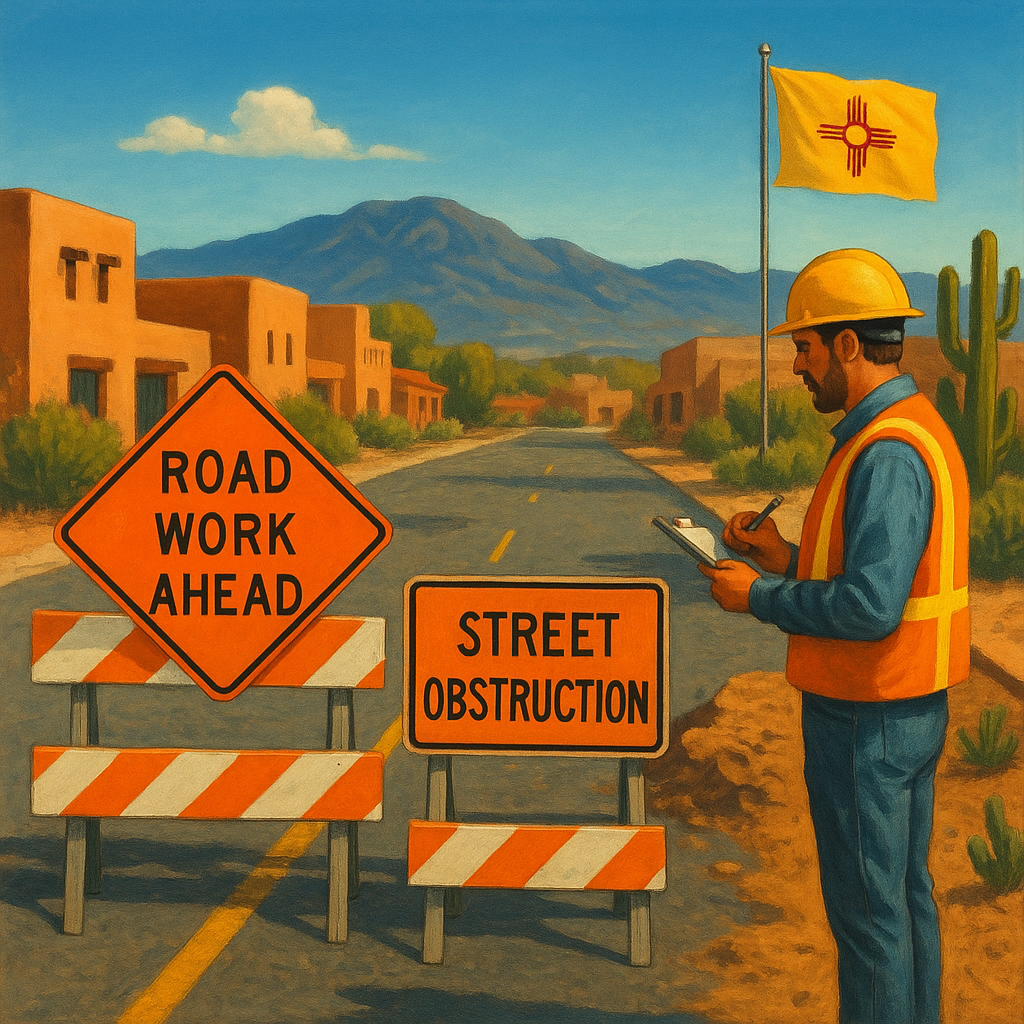
Have you ever walked down a sidewalk and suddenly found your path blocked by a big construction hole, orange cones, and a plywood barrier? It’s a common sight in growing places like Bernalillo County, New Mexico. While that barrier keeps you safe, there’s a quiet piece of paperwork making sure everything is done right. That paper is called a contractor’s barricading bond. If you’re a contractor planning to dig into a street or block a walkway, understanding this bond is a must. Let’s break it down in plain, simple language—no confusing legal talk.
What Exactly Is a Contractor’s Barricading Bond?
Think of a barricading bond as a financial promise between three parties. The contractor (that’s you) gets the bond. The county (Bernalillo County) requires it. A third party, called the surety company, backs the bond financially. The whole point is to guarantee you’ll set up safe barricades when you obstruct a public street, sidewalk, alley, or any right-of-way, and that you’ll clean up and restore everything when the work is done. If you don’t, the county can use the bond money to fix the problem without dipping into taxpayer dollars.
A good analogy is a security deposit on a rental apartment. When you move in, you put down a deposit so the landlord has protection against damage. If you leave the place spotless and pay all your rent, you get the deposit back (or it simply isn’t claimed). A barricading bond works almost the same way. It’s a safety net for the community—not a cost you lose unless something goes wrong.
Why Does Bernalillo County Require This Bond for Street Obstructions?
Bernalillo County isn’t being fussy. Street obstructions create real risks. A poorly marked excavation can cause accidents, injuries, and vehicle damage. An unbarricaded trench might collapse or flood. Beyond safety, there’s the matter of public trust. Residents and businesses expect contractors to protect the infrastructure that their tax money funds. The bond requirement simply shifts the responsibility squarely onto the contractor’s shoulders. It encourages:
- Proper placement of warning signs, cones, and lights.
- Safe pedestrian detours that comply with the Americans with Disabilities Act (ADA).
- Timely restoration of pavement, curbs, and landscaping.
- Compliance with all county permits and codes.
The county’s code enforcement team can’t be everywhere at once. A bonding requirement acts like an extra set of eyes. The surety company has a financial incentive to make sure you follow the rules, because if they have to pay a claim, they will come after you for reimbursement. It’s a built-in accountability system.
Key Requirements for the Bernalillo NM Contractor’s Barricading Bond
Every county handles bonds a little differently. In Bernalillo County, several specifics shape what you need to provide. While you should always check the most current county ordinance or speak with the Public Works Department, here’s a practical overview of what to expect.
Who Needs the Bond?
Generally, any contractor, subcontractor, or utility company that plans to excavate, cut, or obstruct a county-maintained street, sidewalk, or right-of-way must secure a barricading bond. This includes plumbers replacing water lines, electricians laying conduit, and general contractors doing site development. Even smaller jobs like installing a driveway culvert may trigger the requirement. If your work creates a hazard that needs barricades, a bond will most likely be part of your permit application.
Bond Amounts and When They Vary
The required bond amount often depends on the scope and scale of your project. A small, short trench might only need a $5,000 or $10,000 bond, while a major street-widening project could call for a $50,000 bond or more. The county may also have a flat bond amount for smaller, recurring jobs, sometimes referred to as a blanket barricading bond. This type allows you to work on multiple permitted jobs throughout the year under one bond, which saves time and paperwork.
The Permit-Bond Connection
You can’t get a street obstruction permit without the bond in place. There’s no swapping the order. First, you obtain the bond. Then you present the bond certificate along with your permit application, proof of insurance, and detailed traffic control plan. Bernalillo County will keep the bond on file until the work passes final inspection and the restoration is approved. After that, the bond obligation is typically released or canceled, provided there are no pending claims.
How to Obtain a Contractor’s Barricading Bond in Bernalillo County
The process feels familiar if you’ve ever gotten any type of surety bond. You’ll work with a surety bond agency, often the same place you get your license bond or permit bond.
- Choose a bond provider: Many agencies specialize in New Mexico contractor bonds and understand Bernalillo County’s specific form language.
- Complete an application: You’ll provide basic business information, the required bond amount, and possibly the project details.
- Credit check (usually a soft pull): The surety evaluates your personal and business credit history. Good credit often means instant approval and the best rates.
- Pay the premium: You don’t pay the full bond amount. Instead, you pay a small percentage, typically between 1% and 5% of the bond total.
- Receive your bond form: The agency issues the official bond document, which you sign and submit to Bernalillo County.
If your credit is challenged, don’t panic. Many sureties offer programs for contractors with less-than-perfect credit. The premium may be higher, but you can still get bonded. The key is to work with an agency that has multiple surety markets so they can match you with the right one.
What Does a Barricading Bond Cost?
The cost puzzles many first-time applicants. Let’s clear it up with a straightforward example. The bond amount is not the price you pay. If the county demands a $10,000 barricading bond, you won’t hand over ten grand. You only pay the annual premium. With strong credit, a $10,000 bond might cost as little as $100 for a one-year term. If your credit is shaky, the premium could be $300 to $500. Larger bonds scale naturally—a $50,000 bond might run $500 to $2,500. This premium is fully earned, meaning you don’t get it back after the project is done. But it buys you the county’s approval and a whole lot of peace of mind.
Several factors influence your rate:
- Personal and business credit scores.
- Years of experience in the industry.
- Any past bond claims or permit violations.
- The bond amount and length of the project.
What Happens If a Claim Is Filed Against Your Bond?
A claim happens when the county or an affected property owner believes you failed to meet your obligations. Perhaps you removed barricades too early and a pedestrian was injured. Maybe you left a gaping pothole for weeks without properly cold-patching it. When a claim arises, the surety company investigates. If the claim is valid, the surety pays up to the bond penalty amount to make the injured party whole. However, this is not insurance. You signed an indemnity agreement when you got the bond, which means you must repay every penny the surety pays out. This can drain a small contracting business fast. That’s why it’s so important to take barricading and restoration seriously from day one.
Practical Scenarios You Might Encounter
Let’s put all this into real-world context. Imagine you’re a plumber hired to replace a water service line from the main under the street to the house. You pull a permit from Bernalillo County, which requires a $10,000 barricading bond. You set out orange cones, a “Sidewalk Closed” sign with an approved pedestrian detour, and steel plates at the end of each day. After connecting the line, you properly compact the backfill, patch the asphalt, and clean up all mud and debris. The county inspector checks the work, signs off, and your bond obligation ends. That’s the clean path everyone wants.
Now consider what happens when corners are cut. Another contractor digs a trench across a neighborhood street, throws up a couple of old cones, and disappears for the weekend. A rainstorm washes out the trench, a car nearly fishtails, and the county receives complaints. Upon inspection, the barricading is deemed inadequate. The county files a claim against the bond to hire an emergency crew and barricade the area properly. That contractor now faces a surety claim, possible permit suspension, and a serious hit to their reputation. The bond did its job—but at great expense to the contractor who cut corners.
Tips for Keeping Your Bond and Your Business Healthy
- Always follow MUTCD standards: Bernalillo County references the Manual on Uniform Traffic Control Devices. Your barricades, signs, and lighting must meet these standards every single day.
- Document everything: Take dated photos of your barricade setup each morning and before you leave. If a citizen messes with your cones, you’ll have proof you did things correctly.
- Communicate with the county: If a restoration will be delayed due to weather or supply issues, notify the inspector immediately. Most problems start with a lack of communication, not bad intentions.
- Renew your blanket bond before it expires: If you’re working on a year-round bond, set a calendar reminder. Letting the bond lapse means your permits become invalid, and you could face stop-work orders.
- Treat the bond as a last resort: Never assume the bond will just cover a sloppy job. It’s a safeguard for the public, not a substitute for quality work.
Frequently Asked Questions About Bernalillo County Barricading Bonds
Is a barricading bond the same as a performance bond?
Not quite. A performance bond guarantees the entire construction project will be completed according to the contract. A barricading bond is much narrower—it specifically covers the safety, barricading, and restoration of the public right-of-way. Some projects might require both, but they serve separate purposes.
Can I get a barricading bond with bad credit?
Yes. Many surety companies specialize in bonds for contractors with less-than-perfect credit. The premium will be higher, and you may be asked to provide business financials or a co-signer. Honest conversations with your bond agent can open doors you might think are closed.
How long does it take to get the bond?
For clean credit and bond amounts under $50,000, you can often get approved and receive the bond form within the same business day. Some online agencies issue bonds in under an hour. Larger bonds or those requiring underwriting review might take a day or two.
Do I need a separate bond for each street obstruction permit?
It depends on how you structure your bonding. A single-job bond covers one specific project. A blanket barricading bond covers multiple permits over the course of a year, which is far more efficient for contractors who regularly work in county rights-of-way. Confirm with Bernalillo County Public Works which option they accept for your workload.
Moving Forward with Confidence
The Bernalillo NM contractor’s barricading bond doesn’t have to feel like a hurdle. Instead, view it as a badge of professionalism. It tells county officials, homeowners, and business owners that you’re serious about safety and accountability. When you know the requirements, understand the costs, and partner with the right surety agency, the entire process becomes just another smooth step in your project’s preparation. So before you break ground on that next street obstruction in Bernalillo County, secure your bond, double-check your traffic control plan, and take pride in knowing you’re helping keep New Mexico’s streets safe for everyone.
Leave a Reply