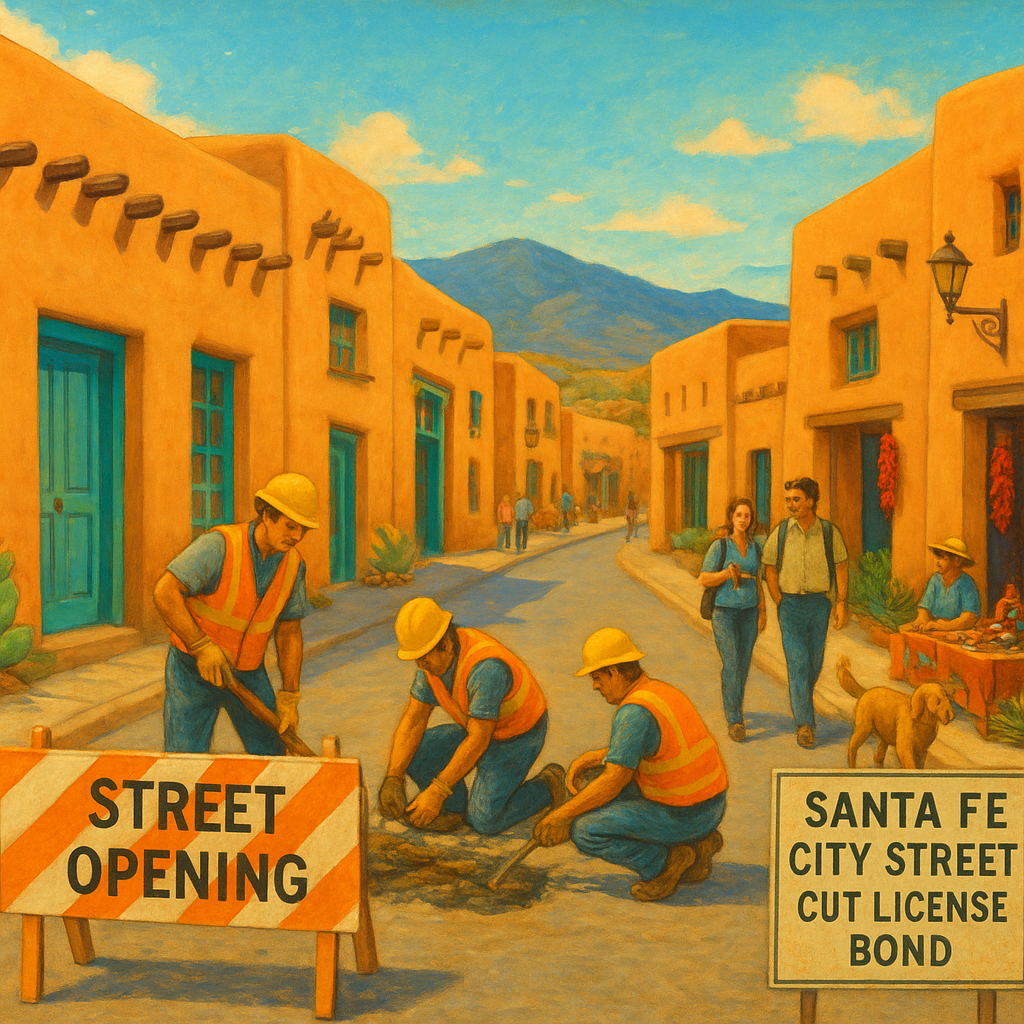
Have you heard the news? The City of Santa Fe, New Mexico, just rolled out a fresh requirement that could affect anyone planning to dig into a public street. If you’re a contractor, a utility company, or even a homeowner tackling a big project, this new policy might be on your radar soon. Don’t worry—it’s not as confusing as it might sound. Let’s break it all down together in plain, everyday language.
What Exactly Is a Street Opening License Bond?
Think of a street opening license bond as a financial promise. It’s a safety net for the city and its residents. Whenever someone needs to cut into a public street—maybe to repair a water line, install fiber optic cables, or connect a new sewer pipe—they have to get a permit. The bond is a layer of protection that guarantees the work will be done correctly and the street will be restored to its original condition.
If the job is sloppy, or if the contractor skips town without fixing the pavement, the city can use the bond money to cover the repairs. It’s like a security deposit, but instead of handing over a pile of cash, you purchase a bond through a surety company. You pay a small percentage of the total bond amount, and the surety backs you up.
Why Did Santa Fe Implement This New Policy?
Cities constantly evolve, and Santa Fe is no exception. With more construction, utility upgrades, and infrastructure improvements happening every year, the streets take a beating. The city noticed a need to strengthen accountability. Previously, some projects left behind patchy asphalt, uneven surfaces, or potholes that became headaches for drivers and taxpayers.
Santa Fe’s new bond policy ensures that everyone who cuts into a public street has skin in the game. It’s not about making life harder—it’s about keeping our neighborhoods safe and beautiful. The city wants to avoid scenarios where the community foots the bill for someone else’s unfinished work. This bond requirement creates a formal, trackable process from start to finish.
Who Needs This Bond in Santa Fe?
You might be wondering, “Does this apply to me?” The answer is: it depends on your project. Generally, anyone performing a street cut or excavation on public right-of-way within Santa Fe city limits will need to secure a street opening license bond. This includes:
- Licensed plumbing contractors tapping into water or sewer mains.
- Telecom crews laying underground cables.
- Utility companies repairing gas or electric lines.
- Private homeowners hiring someone to install a new driveway connection that disturbs the street.
- General contractors doing any work that requires breaking the asphalt or concrete of a public road or alley.
Even if you hire a subcontractor, the responsibility to have the bond usually falls on the entity pulling the permit. So if you’re managing a job, double-check the requirements before anyone fires up a jackhammer.
What About Small DIY Projects?
If you’re a homeowner thinking about digging a small trench next to the curb for a sprinkler line, you might not need a full street cut bond. But it’s always smart to call the City of Santa Fe’s Public Works Department or visit their website. The threshold often depends on the depth, size, and location of the cut. When in doubt, ask. Fines for unpermitted street work can be far more costly than the bond itself.
How Does the Bond Work, Step by Step?
Securing a street opening license bond in Santa Fe isn’t complicated once you see the roadmap. Here’s a simple breakdown:
1. Determine Your Bond Amount
The city will tell you the required bond amount based on the scope of your project. It could be a fixed amount for minor work or a larger sum for major excavation. Typical amounts range from a few thousand dollars up to $50,000 or more for extensive projects.
2. Apply for the Bond
You’ll contact a surety bond agency (many operate online or have local agents). They’ll ask about your business, credit history, and experience. Don’t let the word “credit” scare you—even if yours isn’t perfect, you can often get bonded, though you might pay a slightly higher rate.
3. Pay the Premium
You don’t pay the full bond amount. Instead, you pay a yearly premium, often 1% to 10% of the total. For example, if your required bond is $10,000 and your premium rate is 3%, you’d only pay $300 for a year of coverage.
4. File the Bond with the City
Once you have the bond documents, you’ll submit them as part of your permit application. The city keeps a copy on file. Now you’re clear to start work.
5. Complete the Job Right
This is the most important step. Do quality work, restore the street properly, and pass any required inspections. When the city signs off, your obligation under the bond ends happily.
Boosting Accountability Without Breaking the Bank
Nobody likes extra paperwork, but this bond actually protects both you and the community. Think of it like renting a tool: you leave a deposit, and when you return the tool in good shape, you get your deposit back. With a bond, you don’t get the premium refunded, but the small cost gives you the privilege to work in public space and builds trust with the city.
Contractors might initially see the bond as another expense, but it can become a competitive advantage. Homeowners and businesses looking for a reliable professional often prefer a bonded contractor because it signals legitimacy and financial responsibility. It says, “I stand behind my work.”
Real-Life Scenario: The Missing Patch
Imagine a crew finishes installing a sewer line but rushes the asphalt patch. Six months later, that patch sinks, creating a puddle that freezes in winter and becomes a slip hazard. Without a bond, the city might struggle to chase down the contractor for repairs. With the new bond requirement, Santa Fe can file a claim against the bond, get the money quickly, and fix the sinkhole without delay. The contractor then has to reimburse the surety company. Everyone stays accountable.
How to Make the Process Smooth
Feeling a bit overwhelmed? Don’t be. Follow these simple tips to breeze through the new requirement:
- Start early. Don’t wait until the day before your project to get the bond. Give yourself at least a week to shop around and gather paperwork.
- Work with a knowledgeable bond agent. They can explain exactly what Santa Fe requires and help you get the best rate based on your situation.
- Keep records. Photograph the street before and after your work. Document inspections and permits. If a dispute ever arises, you’ll have proof.
- Invest in quality paving restoration. A proper compaction and smooth finish will pass inspection and avoid bond claims down the road.
- Bond for the right amount. Underestimating your project could delay permit approval. Overestimating might cost more in premiums. Talk to the city for guidance.
Common Questions People Ask About the Santa Fe Street Cut Bond
Is this the same as insurance?
Not exactly. Insurance protects your own business from risks like accidents or lawsuits. A bond protects the city (and the public) if you fail to meet your obligations. It’s a guarantee, not a policy that covers your losses.
Can I use one bond for multiple projects?
Often, yes. Santa Fe may allow a continuous or blanket bond that covers all your street openings during the year, rather than requiring a new bond for each tiny job. Check with the city’s engineering or public works department for their specific rules.
What happens if I don’t get the bond?
Simply put, you won’t get a permit. If you start cutting the street without a permit and bond, you face stop-work orders, fines, and even legal trouble. Plus, you’d be liable for any damage out of your own pocket—no safety net.
How long does the bond last?
Bond terms typically run for one year and can be renewed. If your project takes longer, you may need to keep the bond active until the city releases you. The release happens after final inspection and a waiting period to ensure the restoration holds up.
Why This Policy Matters for Santa Fe Residents
Even if you’ll never touch a jackhammer, this new requirement affects you. It means better-maintained streets, fewer tax dollars spent on surprise repairs, and a higher standard for anyone working beneath our roads. The next time you see a crew digging up the asphalt, you can feel a little more confident that the job will be done properly—because there’s a bond backing it up.
Santa Fe’s charm lies in its historic roads and vibrant neighborhoods. By holding contractors to a higher level of responsibility, the city is preserving that charm while welcoming necessary modern improvements. It’s a forward-thinking move that balances growth with community care.
Ready to Dig In? Here’s Your Next Step
If you’re planning a project that will break ground in a public street, reach out to the City of Santa Fe’s permit office. They’ll give you the latest bond amount requirements and point you toward approved surety companies. A quick conversation can save you time and prevent costly delays.
Remember, the street opening license bond is just one piece of the puzzle—but it’s a piece that keeps our roads safe, our neighborhoods beautiful, and our projects moving forward. Whether you’re a seasoned contractor or a first-time permit applicant, this new policy is designed to help everyone succeed.
Got more questions? Drop a comment below or share your experience. Have you already gone through the new bond process in Santa Fe? We’d love to hear how it went for you. Together, we can keep our city connected—one well-paved street at a time.
Leave a Reply