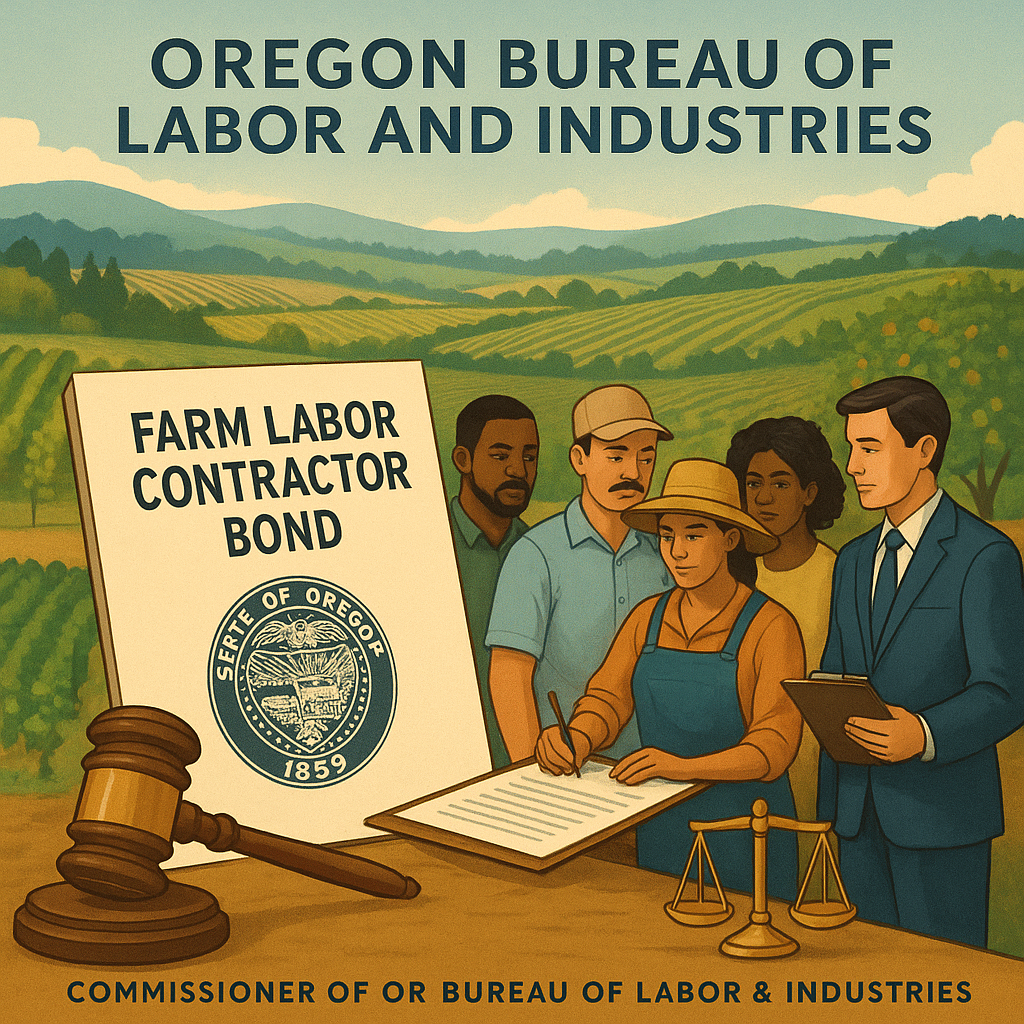
What Is an Oregon Farm Labor Contractor Bond?
Think of an Oregon Farm Labor Contractor Bond as a sturdy safety net. It’s a financial promise that protects the people working in the fields, orchards, and packing sheds. More technically, it’s a type of surety bond required by the Oregon Bureau of Labor and Industries (BOLI) for anyone operating as a farm labor contractor in the state.
But what does that actually mean for you? If you recruit, transport, or manage farm workers, this bond guarantees you’ll play by the rules. Those rules cover everything from paying wages on time to providing safe housing and proper working conditions. If you fail to meet those obligations, the bond can step in to make things right for the workers who were harmed. It’s not insurance for your business—it’s a shield for the hardworking men and women who help Oregon’s agriculture thrive.
Understanding the Role of the Commissioner of the Bureau of Labor & Industries
You’ll often see the bond referred to with the name “Commissioner of OR Bureau of Labor & Industries.” That’s the official entity that requires and holds the bond. The Commissioner leads BOLI and oversees enforcement of labor laws across Oregon. When you get this bond, you’re essentially making a three-party agreement: you (the contractor), the surety company issuing the bond, and the Commissioner acting on behalf of Oregon’s workers and the public.
Who Needs This Bond in Oregon?
Not everyone who hires seasonal help needs this bond. The requirement kicks in when you’re acting as a farm labor contractor. So, who exactly fits that description under Oregon law?
- Recruiters: You actively seek out and hire farm workers for yourself or other growers.
- Transporters: You provide transportation for workers to and from job sites, even if you’re not the one hiring them directly.
- Crew Leaders and Foremen: You manage, supervise, or pay a crew of agricultural workers on a farm.
- Labor Brokers: You connect workers with farmers for a fee, essentially acting as the middleman.
Are you a farmer who only employs a small, steady crew directly on your own land, handling all payroll and HR yourself? In that case, you likely don’t need a farm labor contractor bond. But if you bring in a third-party crew leader or use a contractor to handle harvesting, that person absolutely must be bonded. It’s a clear line: control and employment direct from the farm versus a separate contracting service. The Oregon Bureau of Labor & Industries takes this distinction very seriously to prevent misclassification and protect workers.
How Much Does the Bond Cost?
The state of Oregon sets the total bond amount at $30,000. That’s the maximum coverage available if a claim is filed. However, you don’t pay that entire amount upfront. You pay a small percentage, known as the bond premium. For most qualified contractors, this premium runs between 1% and 5% of the $30,000 face value. That means you could pay as little as $300 to $1,500 per year to stay compliant.
Your exact cost depends on a few personal factors. Surety companies will look at your credit score, your experience in the agricultural industry, and your business financials. A contractor with strong credit and a clean track record will slide into that 1% range. Someone with a few financial hiccups might pay closer to 5% or need to go through a special program. Even at the higher end, think of it as a necessary license fee that opens the door to doing legitimate business across the state.
Why the Price Is So Manageable
You might wonder how a $30,000 guarantee can cost just a few hundred bucks. That’s because a surety bond works like a line of credit, not an insurance payout. The bonding company pays out a claim initially, but then they will come back to you for every single penny. They trust you to follow the law, and the low premium reflects that trust. For a farm labor contractor, it’s an affordable way to prove your commitment to fair labor practices.
Why Does the BOLI Require This Bond?
The Oregon Bureau of Labor & Industries doesn’t ask for this bond just to create paperwork. The purpose is rooted in real-world consequences. Agricultural work is demanding and can sometimes leave workers vulnerable. A bond provides a powerful incentive for contractors to do the right thing and a financial remedy if they don’t.
Imagine a scenario where a crew of pickers finishes an entire harvest but the contractor who hired them suddenly vanishes without paying their final wages. Without a bond, those workers might have nowhere to turn. The Oregon Farm Labor Contractor Bond changes that. The workers can file a claim against the bond and recover their unpaid wages. The bond also covers other violations like failure to meet housing safety standards or unlawful deductions from paychecks. It essentially turns a contractor’s legal duty into a cash-backed promise, with the Commissioner of OR Bureau of Labor & Industries watching over the process.
How to Get Your Oregon Farm Labor Contractor Bond
Securing the bond is a straightforward process that usually takes just a few business days. Here’s the typical path you’ll follow.
- Confirm You Need the License. Review BOLI’s farm labor contractor criteria. If you recruit, transport, or manage farm workers for a fee, you need both the license and the bond.
- Gather Your Business Information. You’ll need details about your business structure, Tax ID number, and personal information for the primary owners.
- Request a Bond Quote. Work with a surety bond agency that has experience with Oregon BOLI requirements. They’ll collect your info and shop your application to multiple bonding companies to find the best rate.
- Pay the Premium and File the Bond. Once approved, you’ll pay the premium. The surety company will issue the official bond form naming the Commissioner of OR Bureau of Labor & Industries as the obligee. You’ll then submit this bond to BOLI along with your license application or renewal paperwork.
Most contractors can get approved and have the bond document in hand within 48 hours if they have solid credit. Some specialized agencies even offer instant online quotes, making the whole ordeal a single lunch break’s work.
What Happens If a Claim Is Filed?
It’s the part nobody likes to think about, but it’s crucial to understand. When a worker or the state believes you’ve violated the labor rules covered by the bond, a claim can be filed. The Commissioner’s office investigates the complaint. If they find it valid, the surety company will pay out funds to the harmed workers, up to the full $30,000 bond amount.
Now here comes the tough part: you must repay the surety company for every dollar they spent. Unlike insurance, where the company simply absorbs the loss, a surety bond involves full reimbursement. The moment a claim is paid, your relationship with that bonding company likely ends, and getting bonded again becomes much harder and more expensive. It’s a stark reminder that this bond isn’t just a piece of paper—it’s a serious commitment to treating farm workers with the dignity and fairness they deserve.
Keeping Your Bond Valid
Your bond runs on an annual cycle, typically aligned with your farm labor contractor license renewal. You’ll receive a notice to renew and pay the next year’s premium. If you let the bond lapse, BOLI can suspend or revoke your license, effectively shutting down your contracting business. Always keep your contact information current with both the BOLI and your surety agency so you never miss a deadline. A short lapse can mean starting the whole application over again.
Common Questions About the Oregon Farm Labor Contractor Bond
Is the bond the same as a farm labor contractor license?
No, they are two distinct requirements. The license is the official permit from BOLI to operate. The bond is a financial guarantee that you must have in order to get or keep that license. Think of them as a pair: you won’t get one without the other.
Can I use a cash deposit instead of a bond?
Oregon law typically requires a surety bond from a licensed insurance company. A cash bond is not an accepted substitute for the BOLI farm labor contractor bond. You must work with a surety provider to fulfill the requirement.
What if I’m a farmer hiring a contractor? Do I need to check their bond?
Absolutely. As a farmer, you can be held responsible if you knowingly use an unlicensed or unbonded contractor. It’s a smart risk-management move to ask for a copy of the contractor’s BOLI license and bond certificate before they set foot on your property. Protecting your farm means verifying that anyone you bring on adheres to the state’s labor laws.
Does the bond cover anything beyond unpaid wages?
Yes. The bond also protects against violations of Oregon’s farm labor contractor laws. This can include things like unsafe housing provided by the contractor, improper fee charging, or failing to maintain required worker records. The scope is intentionally broad to cover the key areas where worker exploitation can occur.
A Simple Step Toward Fair Agriculture
The Oregon Farm Labor Contractor Bond might seem like just another bureaucratic hoop. But when you zoom out, it represents something bigger. It’s a testament to Oregon’s commitment to treating every worker with respect. For contractors, it’s a badge of credibility. For workers, it’s a safeguard that their labor won’t go unpaid. And for farmers, it’s a guarantee that the folks harvesting their crops are being treated right.
Whether you’re a new crew leader getting your paperwork in order or a seasoned contractor renewing for the fifth time, understanding this bond’s requirements keeps your business rooted in fairness. After all, in an industry built on growth, trust is the most valuable crop of all.
Leave a Reply