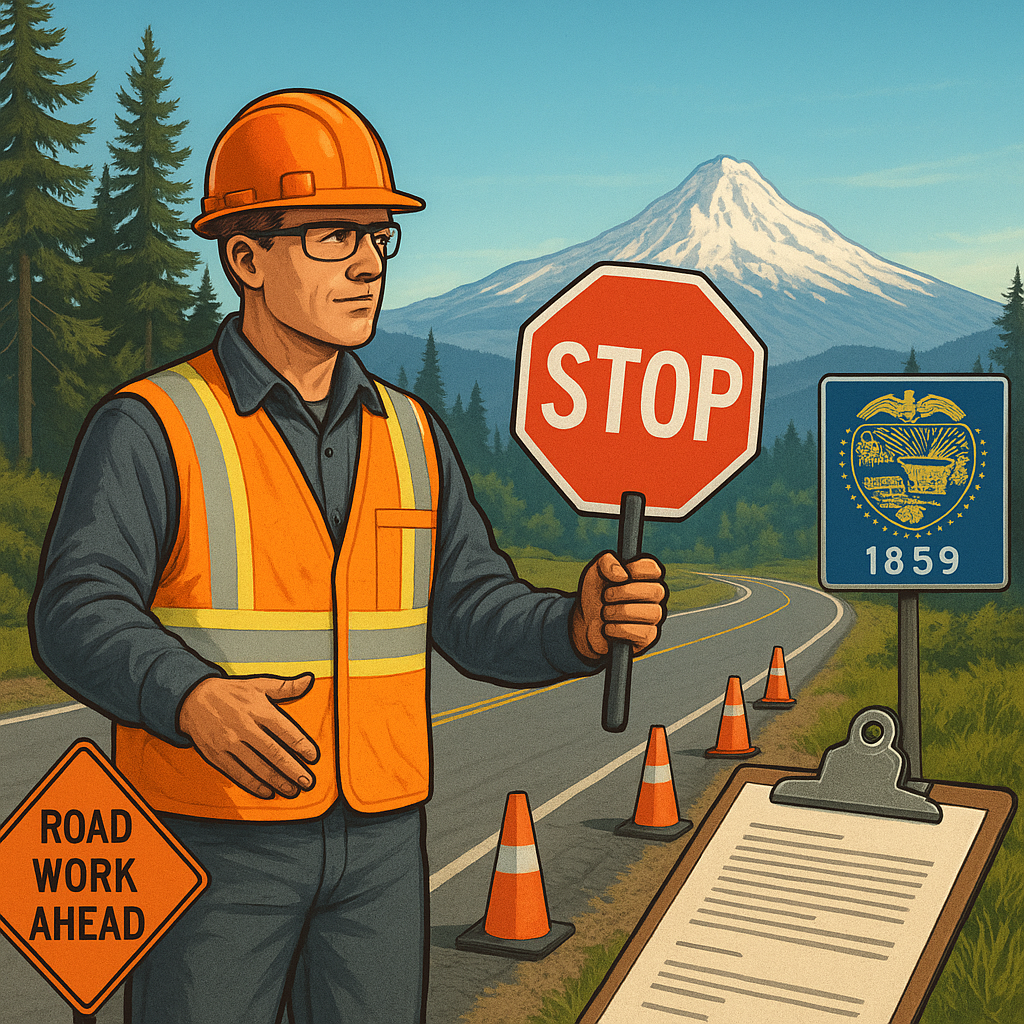
Picture this: You are driving down a winding Oregon highway, the scent of pine floating through your open window. Suddenly, bright orange signs appear. Traffic slows. Ahead, a person holding a stop/slow paddle stands calmly, controlling the flow of vehicles around a work crew. That person is a construction flagger. They do a lot more than just hold a sign. They are the frontline guardians of safety in a chaotic, ever-changing environment. But what ensures that flagging contractors themselves operate responsibly and ethically? That’s where Oregon’s unique bonding requirement comes into play.
The Unsung Heroes of the Road: What Is a Flagging Contractor?
Before we dive into the paperwork, let’s talk about the people. A flagging contractor isn’t just a person with a paddle. They are trained professionals who set up traffic control zones, manage the flow of cars, and communicate constantly with construction crews. Their job is to prevent accidents in places where a mistake can have deadly consequences. In Oregon, a business that provides these specialized services is often required to be licensed and bonded. This isn’t just a suggestion; it’s a cornerstone of public trust.
Why Does Oregon Require a Bond for Flagging Contractors?
You might wonder, “What’s the big deal about a piece of paper?” The Oregon Construction Flagging Contractor Bond is far more than paperwork. It’s a financial promise. Think of it as a safety deposit box for ethics. The state requires this bond to protect its own interests and, more importantly, the interests of the public. If a flagging contractor cuts corners, fails to pay their employees correctly, damages public property, or violates state regulations, the bond is there to provide a path for compensation. It ensures that the contractor operates by the rules, even when nobody is watching.
A Financial Safety Net, Not Insurance
Let’s clear up a common point of confusion. A surety bond is not insurance for the contractor. It’s a three-party agreement. You have the contractor (the principal), the state (the obligee), and the surety company. If the contractor does something wrong, a claim is made. The surety company might pay out, but they will then come back to the contractor for every single penny. It’s essentially a powerful form of credit that guarantees you can be held financially accountable for your actions. Insurance protects you; a bond protects the state and the public from you.
Decoding the “OR Construction Flagging Contractor Bond”
This specific bond is filed directly with the State of Oregon. Its official nature means it’s not a generic business license bond you grab off the shelf. It must precisely match the language required by the state’s construction or transportation regulations. When you obtain this bond, you are telling the State of Oregon, “I stand behind my work and my business practices. If I fail, here is a guaranteed fund to make things right.”
What Does the Bond Actually Cover?
The coverage is wide but targeted. It’s designed to enforce compliance with all state laws related to the work. This includes, but isn’t limited to:
- Wage and hour violations: Making sure flaggers are paid what they are owed, including overtime.
- Safety regulation infractions: Penalties for failing to set up a work zone correctly, endangering drivers and workers.
- Tax remittance issues: Ensuring state payroll taxes are paid.
- Contractual failures with public entities: If a contractor takes payment from a city or state agency and then abandons the job.
How Do You Get Bonded in Oregon? A Step-by-Step Glimpse
The process is often less intimidating than it sounds. It’s not about burying you in red tape; it’s about verifying your credibility. Here’s the journey in digestible chunks.
1. Knowing the Required Amount
First, you must confirm the bond amount the State of Oregon requires for your specific license. Bond amounts can vary. This information usually comes directly from the licensing board or agency, such as the Oregon Department of Transportation (ODOT) or the Construction Contractors Board (CCB), depending on the exact category of your work.
2. Applying Through a Surety Agency
You don’t go directly to the state for the bond. You work with a surety bond agency. These professionals act like a bridge. You’ll fill out an application that asks about your personal credit, business history, and experience. For flagging contractors, underwriters aren’t looking for perfection; they are looking for stability and honesty.
3. The Underwriting Magic
This is where humans step in. The surety company reviews your profile. They are asking a simple question: “How likely is this person to follow the rules and avoid a claim?” If you have solid experience in flagging and decent credit, you’re likely to get a great rate.
4. Paying a Fraction, Not the Full Amount
Here’s the part most people love. You do not pay the full bond amount upfront. You pay a small annual premium. If a $10,000 bond is required, your premium might be as low as $100 to $300 a year, depending on your creditworthiness. It’s an incredibly cost-effective way to meet a state requirement. Once you pay the premium, the agency issues the bond, and you file it with the state.
What Does It Cost? The Real-World Perspective
Let’s put numbers in perspective without making your eyes glaze over. The cost of your Oregon flagging contractor bond is driven by your personal credit score and business financial health. For a standard bond amount, a contractor with excellent credit might pay a premium of just 1% of the total bond value. Someone with challenged credit might pay 5% to 10%. Is that fair? It’s a risk-based system. The surety company is essentially lending their reputation to you. The higher the perceived risk, the higher the cost to rent that reputation. However, even with less-than-perfect credit, programs exist to get you bonded. The goal is compliance and safety, not exclusion.
The Naked Truth: What Happens Without the Bond?
Operating as a construction flagging contractor in Oregon without the required bond is playing with fire. The state can levy heavy fines. Your license can be suspended or revoked instantly. Public entities will refuse to award you contracts. A lapse in your bond is not a small clerical error; it’s an immediate shutdown trigger for your business operations. The state tracks the active status of your bond vigilantly. If it expires and you don’t replace it, a letter arrives, and the clock starts ticking.
Beyond the Paperwork: Building Trust on the Highway
We often think of bonds as just a bureaucratic hurdle. But step back and look at the flagger on the road again. That bond is invisible armor. It reassures the state government that your company is legitimate. It tells the construction firm hiring you that a mechanism exists to resolve financial disputes. It tells the tired driver in the pickup truck that there’s accountability behind the person directing them past a fresh asphalt edge.
Why does this matter to you, reading this? Maybe you’re starting your own flagging business. Maybe you’re hiring one. Or maybe you’re just a curious resident of the Beaver State. Knowing that a bond exists reinforces that safety isn’t an accident. It is engineered, regulated, and financially guaranteed. The requirement isn’t there to make life difficult for small business owners. It’s there to weed out negligent operators who might put profit over people.
Maintaining the Promise: It Doesn’t End at Approval
Once you have that bond certificate in hand, the relationship is ongoing. Bonds typically come with a term of one or two years. You’ll need to renew it religiously. Set reminders. The surety agency will usually warn you, but the ultimate responsibility is yours. If you grow your business, your licensing authority might also require a higher bond amount. Think of it like upgrading your safety pledge as your shadow gets longer.
Is It Worth It? A Quiet Question Answered
If you’re a flagging contractor, you might look at the premium as just another expense. But ask any contractor who has faced a false accusation or a dispute that escalated: the bond is a mediator and a shield. It prevents a single lawsuit from wiping out your personal savings. It separates professional operators from fly-by-night hobbyists. For the price of a few cups of coffee per month, you secure the legal right to operate and protect the public good. In a state as geographically diverse as Oregon—from the busy bridges of Portland to the lonely stretches of Highway 20—standardized accountability keeps everyone moving forward, safely. That’s a promise worth making.
Leave a Reply