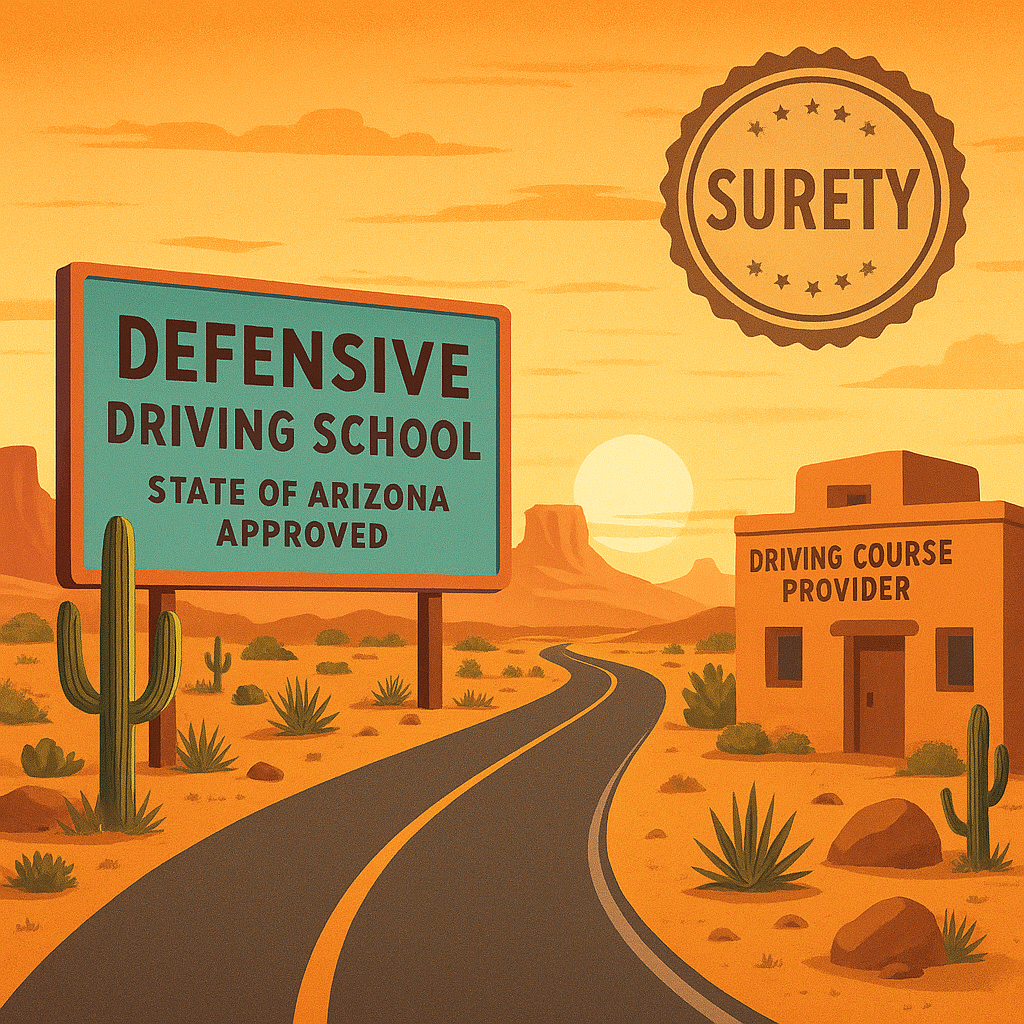
Picture this: You’re cruising down a sunbaked Arizona highway, the desert stretching out like a golden blanket. Suddenly, a driver ahead swerves. Your heart jumps. In that split second, everything you learned in a defensive driving course kicks in — you brake smoothly, steer to safety, and avoid a crash. That’s the power of quality driver education. But have you ever wondered what ensures those schools teach you the right skills? That’s where the Arizona Defensive Driving School Surety Bond comes in. It’s not just paperwork; it’s a quiet promise that keeps our roads safer every single day.
In this post, we’ll unpack everything about this bond in plain, friendly language. No legal jargon, no confusing fine print. Just a straightforward look at why it matters to driving course providers, students, and anyone who shares Arizona’s roads.
What Exactly Is a Defensive Driving School Surety Bond?
Think of a surety bond as a three-way promise. You have the driving school (the business owner), the state of Arizona (which requires the bond), and the students (the customers). The bond is a safety net that says: “If the school doesn’t follow the rules or fails to deliver what was promised, there’s money set aside to make things right.”
It’s not insurance for the school itself. Instead, it protects the public — everyday drivers who sign up for a course, expecting honest, professional training. If a school closes suddenly without refunding tuition, or if an instructor cuts corners in a way that harms a student, the bond can cover financial losses. That assurance builds trust. And trust is the foundation of any great learning experience behind the wheel.
Why Does Arizona Require This Bond for Driving Schools?
Arizona isn’t just a state of stunning landscapes; it’s also a state with busy interstates, urban traffic, and long stretches of rural roads. Defensive driving schools play a huge role in reducing accidents, lowering insurance costs, and even helping drivers dismiss traffic tickets. With so much at stake, the state wants to make sure these schools operate ethically and competently.
By mandating a surety bond, Arizona creates a layer of accountability. The bond tells every driving course provider: “You’re expected to follow the law, keep your promises, and treat your students fairly.” If they don’t, there’s a concrete way for affected individuals to seek compensation. This system helps weed out bad actors and lifts the reputation of the entire industry.
The Link Between Bonds and Safer Drivers
You might be asking, “How does a financial guarantee actually make our roads safer?” It’s a great question. The connection is more direct than you think.
When a driving school is backed by a surety bond, it signifies stability and credibility. Students are more likely to choose a bonded school, knowing their money is safe. That financial security allows the school to invest in better instructors, updated course materials, and well-maintained vehicles. Quality instruction leads to drivers who truly understand hazard recognition, space management, and crash-avoidance techniques. Over time, those better-trained drivers mean fewer collisions, fewer injuries, and fewer tragic headlines.
In short: The bond keeps schools honest, honesty lifts training quality, and quality training saves lives.
Who Needs This Bond in Arizona?
Simply put, if you run a business that offers defensive driving courses to the public in the Grand Canyon State, you likely need this bond. That covers a wide range of setups:
- Traditional driving schools with physical classrooms and behind-the-wheel instruction.
- Online defensive driving course providers that allow students to complete training via computer or mobile device.
- Specialized programs that cater to court-ordered driving improvement, points reduction, or insurance discounts.
- Independent instructors who aren’t attached to a large school but still offer certified courses.
Each of these providers shares the same responsibility: to deliver dependable, accurate, and fair services. The bond is the state’s way of ensuring they live up to that promise.
How Much Does the Bond Cost, and How Do You Get One?
Here’s the good news: You don’t need to pay the full bond amount out of pocket. The required bond amount is set by the state (often thousands of dollars), but the premium you pay is just a small percentage of that total. Think of it like renting a safety net rather than buying it outright.
The exact premium depends on a few factors:
- Your personal credit score. A higher score usually means a lower rate.
- Your business experience and financial history. Solid track record? Better terms.
- The bond amount required. Larger bonds will naturally have slightly higher premiums, but still very manageable.
For many driving school owners, the annual premium is modest — often comparable to a routine business expense like liability insurance. Getting bonded is straightforward. You apply through a surety bond company, they review your information, and once approved, you receive the bond document to file with the Arizona state agency that oversees driving schools. The entire process can be surprisingly quick, sometimes just a few days.
What Happens If a School Operates Without the Bond?
Skipping the bond might seem like a way to save money, but the risks far outweigh any short-term savings. Arizona takes this requirement seriously. A school operating without the mandatory surety bond could face:
- License suspension or revocation. No license means no business.
- Hefty fines. Penalties that drain your hard-earned revenue.
- Legal troubles. If a student files a complaint and you have no bond, you bear the full financial burden personally.
- Lost credibility. Word travels fast. Unbonded schools struggle to attract students who are looking for trusted providers.
In a competitive market, being properly bonded is a badge of honor. It shows your students that you stand behind your work. It says, “We’re not going anywhere, and we take your safety seriously.”
The Human Side of the Bond: Real Stories from Arizona Roads
Imagine Maria, an Arizona mom who gets a minor traffic ticket. She opts for a defensive driving course to keep her record clean. She pays a local provider and takes the class. But a week later, the school shuts down without filing her completion certificate. Maria is out the money, the court deadline is approaching, and her stress skyrockets. If the school was bonded, Maria could file a claim and recover her loss, then enroll elsewhere. The bond turns a nightmare scenario into a manageable hiccup.
Now picture the school owner’s side. Carlos runs a small defensive driving outfit in Tucson. He’s passionate about teaching new drivers. When he proudly displays his bonded status, it sets him apart from unlicensed competitors. His students feel safer, his enrollment climbs, and he sleeps better knowing he’s built a business on integrity. The bond isn’t a burden to Carlos — it’s a foundation.
Common Questions Driving School Owners Ask
Let’s address a few head-scratchers in plain English. Because if you’re running a school, you’ve probably thought about these.
“Does the bond cover me if a student is unhappy with the course?”
Not necessarily for simple dissatisfaction. The bond is there for genuine financial harm — like a prepaid course that was never delivered, or fraudulent practices. It’s not a satisfaction guarantee; it’s a protection against dishonest or non-compliant behavior.
“How often do I need to renew?”
Most bonds in Arizona are annual. You’ll renew your bond at the same time you renew your school license. Mark it on your calendar so there’s no lapse. A gap in coverage can trigger penalties and interrupt your ability to accept new students.
“What if I switch from only classroom courses to online instruction?”
Typically, the bond requirement remains the same because the service still involves teaching Arizona defensive driving. You might need to update your license details, but the bond follows the business, not the delivery method. Always check with the state to be sure.
“Is this the same as an insurance policy?”
No, and that’s a crucial distinction. Insurance protects your business from accidents or lawsuits. The bond protects your students from your business’s wrongdoing. They serve different purposes. Most driving schools need both.
Why “Boosting Driver Safety” Is More Than a Catchphrase
Every time a school files for its Arizona Defensive Driving School Surety Bond, it’s not just checking a regulatory box. It’s joining a community of professionals who put safety above shortcuts. This collective commitment trickles down to thousands of newly educated drivers each year—drivers who are more alert, more patient, and more capable of handling the unexpected.
Consider this: According to traffic safety data, defensive driving education can reduce crash rates significantly. When schools operate under a bond, they’re under pressure to maintain high standards or risk claims. That pressure isn’t negative; it’s a motivator. It pushes providers to update their curriculum, train their instructors continuously, and treat every student as a future road steward.
So the next time you see a licensed, bonded driving school advertisement, you’ll know it stands for something real. It means that Arizona’s breathtaking desert drives, bustling city streets, and quiet suburban roads are just a little bit safer. And that’s something we can all appreciate.
Taking the First Step Toward a Safer Future
Whether you’re a seasoned driving course provider or someone dreaming of opening your own defensive driving academy, understanding the surety bond is key. It’s not a hurdle to be feared. It’s a tool that solidifies your reputation, protects your students, and contributes to a culture of responsibility on Arizona’s roads.
If a friend or family member were about to take a defensive driving class, wouldn’t you feel better knowing the school had this layer of protection? That’s the heartbeat behind the regulation. By demystifying bonds and embracing their purpose, everyone wins — business owners gain trust, students gain skills, and our communities gain safer streets.
So here’s to the defensive driving schools that step up, get bonded, and keep Arizona moving forward. You’re not just teaching people to pass a test; you’re teaching them to come home safely. And that’s a mission worth protecting.
Leave a Reply