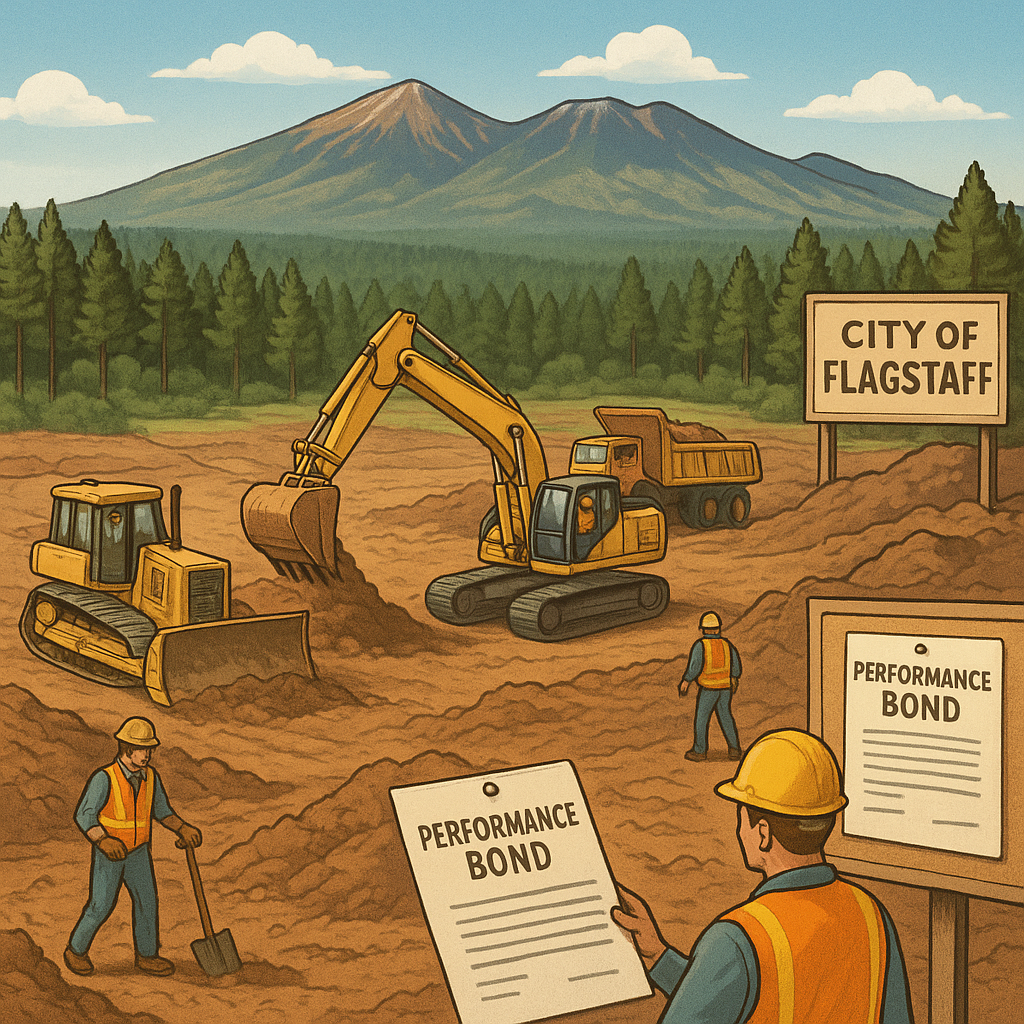
Have you ever driven past a construction site in Flagstaff and wondered what guarantees that the project will actually be finished? Maybe you’ve seen crews clearing land for a new park, carving out a road extension, or preparing the ground for a community center. Behind the scenes, there’s a financial safety net making sure the work gets done—even if the contractor hits a rough patch. That safety net is often a performance bond. Specifically, for many municipal projects, it’s what’s called an Improvements Performance Bond, and understanding how it works can give you a whole new appreciation for how our city grows responsibly.
What Exactly Is a Performance Bond?
Think of a performance bond as a promise with money attached. When a contractor signs up to do a job—say, clearing and earthwork for a future housing development or public roadway—the city needs assurance that the work will meet the agreed standards and finish on time. A performance bond is a three-way agreement between the contractor (the person or company doing the work), the City of Flagstaff (the project owner or obligee), and a surety company (the financial backer). If the contractor fails to deliver, the surety steps in to cover the cost of completion or hires another contractor to finish the job.
It’s not insurance. It’s more like a cosigner on a loan. The contractor pays a premium for the bond, but the surety company will investigate the contractor’s finances, experience, and track record before saying “yes.” That vetting process alone weeds out unreliable bidders.
Why Flagstaff Relies on These Bonds for Municipal Improvements
Flagstaff is growing, and with that growth comes new infrastructure—roads, drainage systems, parks, and utility upgrades. Many of these projects start with clearing and earthwork. The city, like most municipalities, uses public funds and wants to protect taxpayers. An Improvements Performance Bond ensures that if a contractor abandons the site or produces shoddy work, the city isn’t left scrambling to find extra money.
Because the bond runs to the municipality, Flagstaff is the direct beneficiary. That means the bond is written specifically to protect the city’s interests. If the contractor defaults, Flagstaff can make a claim against the bond to recover costs or get the work completed. It’s a layer of accountability that keeps public projects humming along.
The Role of Clearing and Earthwork Contractors
Clearing and earthwork are the unsung heroes of construction. Before any building goes up, the land must be cleared of trees, rocks, and debris. Then the soil must be graded, compacted, and prepared to handle everything from water runoff to heavy structures. In Flagstaff’s unique terrain—with its volcanic soils, slopes, and sensitive forest-edge environments—this phase can be tricky. A small mistake in grading can lead to erosion problems or drainage nightmares years later.
That’s why a performance bond specifically for clearing and earthwork contractors is so valuable. It guarantees that the groundwork is done correctly according to city specifications. If the land settles unevenly or the drainage fails, the bond provides a remedy without draining the city’s maintenance budget.
How the Bond Runs to the Municipality: A Closer Look
You might see the phrase “bond runs to the municipality” on project documents. All that means is the city is the protected party. The bond is issued in the name of the City of Flagstaff. So if there’s a problem, Flagstaff officials have the direct legal right to pursue the surety for damages or completion costs. They don’t need to track down the contractor’s assets or hope the contractor has insurance that covers the problem.
This setup is especially common for subdivision improvements, public works, and any private development where the finished infrastructure will eventually be dedicated to the city. For example, a developer building a new neighborhood might install streets, sidewalks, and water lines. The city will require an Improvements Performance Bond to cover those public improvements until they pass final inspection and the city accepts them.
What Happens Without a Bond?
Imagine a contractor clears a site for a new downtown plaza, moves some earth, and then disappears. Maybe they ran out of money. Maybe they took on too many jobs. Without a bond, the city is stuck with a half-finished site, exposed soil that could wash away in the next monsoon, and a gaping hole in the community’s plans. Taxpayers foot the bill to fix it. A performance bond prevents that scenario, or at least cushions the blow.
Common Questions Local Contractors Have
If you’re a contractor bidding on Flagstaff projects, you might wonder: Do I really need a performance bond for every job? For public projects above a certain dollar threshold, yes. The City of Flagstaff follows Arizona Revised Statutes, which require performance and payment bonds for most public works contracts. Even some private developments within city limits may require them as a condition of plan approval.
Another common question: How much does a performance bond cost? Typically, the premium is a small percentage of the total contract amount—often between 1% and 3%. The rate depends on your company’s creditworthiness, financial statements, and experience. A strong track record can lower your costs. It’s an investment in your business’s credibility.
And remember: being bondable signals to the city and private clients that you’re a stable, capable contractor. It can open doors to bigger projects you might not win otherwise.
The Human Side of Infrastructure: Why This Matters to Flagstaff Residents
You might not think about performance bonds when you take your morning jog along a new trail or when you see crews paving your street. But those bonds are quietly protecting your quality of life. They ensure that the park you’re looking forward to won’t be a muddy lot forever. They help keep property values stable because surrounding infrastructure is built right. They even protect the environment by preventing half-finished earthwork from causing sediment runoff into our cherished creeks and forests.
Plus, these bonds create a culture of excellence. Contractors who know they’re on the hook financially tend to do better work. They manage timelines carefully. They communicate more often. The entire community benefits.
Real-World Scenario: A Small Subdivision in Flagstaff
Let’s paint a picture. A developer plans a 20-home subdivision off a rural road near the base of the San Francisco Peaks. The city requires the developer to put up an Improvements Performance Bond for the road, sidewalks, storm drains, and water lines. A local clearing and earthwork contractor is hired to grade the lots and cut the road base. Halfway through, the contractor encounters unexpected subsurface lava rock that wrecks their equipment. Their costs skyrocket, and they threaten to walk off the job.
Because there’s a performance bond, the city isn’t left with a scarred landscape. The surety company reviews the situation. They might advance funds to help the contractor finish, or they’ll hire a replacement crew. Either way, the subdivision gets completed, and future homeowners aren’t stuck with a muddy mess. The developer stays on track, the city takes ownership of functioning infrastructure, and the community grows gracefully.
How to Get Bonded for a Flagstaff Municipal Job
If you’re a clearing and earthwork contractor aiming to work with the City of Flagstaff, start by building a solid financial history and compiling proof of past projects. Reach out to a reputable surety bond producer who understands Arizona municipal requirements. They’ll walk you through the application, help you understand the underwriting process, and find a surety company that fits your niche.
Keep in mind that bonding capacity grows over time. You may start with smaller bonds and work up to larger ones as your track record strengthens. Be proactive: even if a small job doesn’t require a bond, finishing it professionally builds the reputation that sureties love to see.
Busting a Few Myths About Performance Bonds
Myth: The bond protects the contractor. Truth: It protects the owner—the city. The contractor is still responsible for doing the work. The bond is a backstop, not a get-out-of-jail-free card.
Myth: Only huge companies can get bonded. Truth: Small and mid-sized contractors can qualify too, especially with guidance from a knowledgeable agent and a focus on strong financial management.
Myth: Making a claim is easy and always pays the full amount. Truth: Claims are complicated. The surety investigates thoroughly. The city must prove the contractor defaulted. Then the surety may opt to complete the work themselves or pay the cost to hire a new contractor, up to the bond’s penalty amount. It’s not a blank check.
Looking Ahead: Flagstaff’s Growth and Your Peace of Mind
As Flagstaff continues to evolve, performance bonds will remain a cornerstone of responsible development. They protect the city’s investments, inspire confidence among contractors, and safeguard the everyday experiences of people who live, work, and play here. The next time you see a sign announcing a new public improvement, you’ll know there’s an invisible force standing behind it—a promise backed by a bond, ensuring that the dirt being moved today becomes the foundation of tomorrow’s community. And that’s something worth celebrating.
Leave a Reply