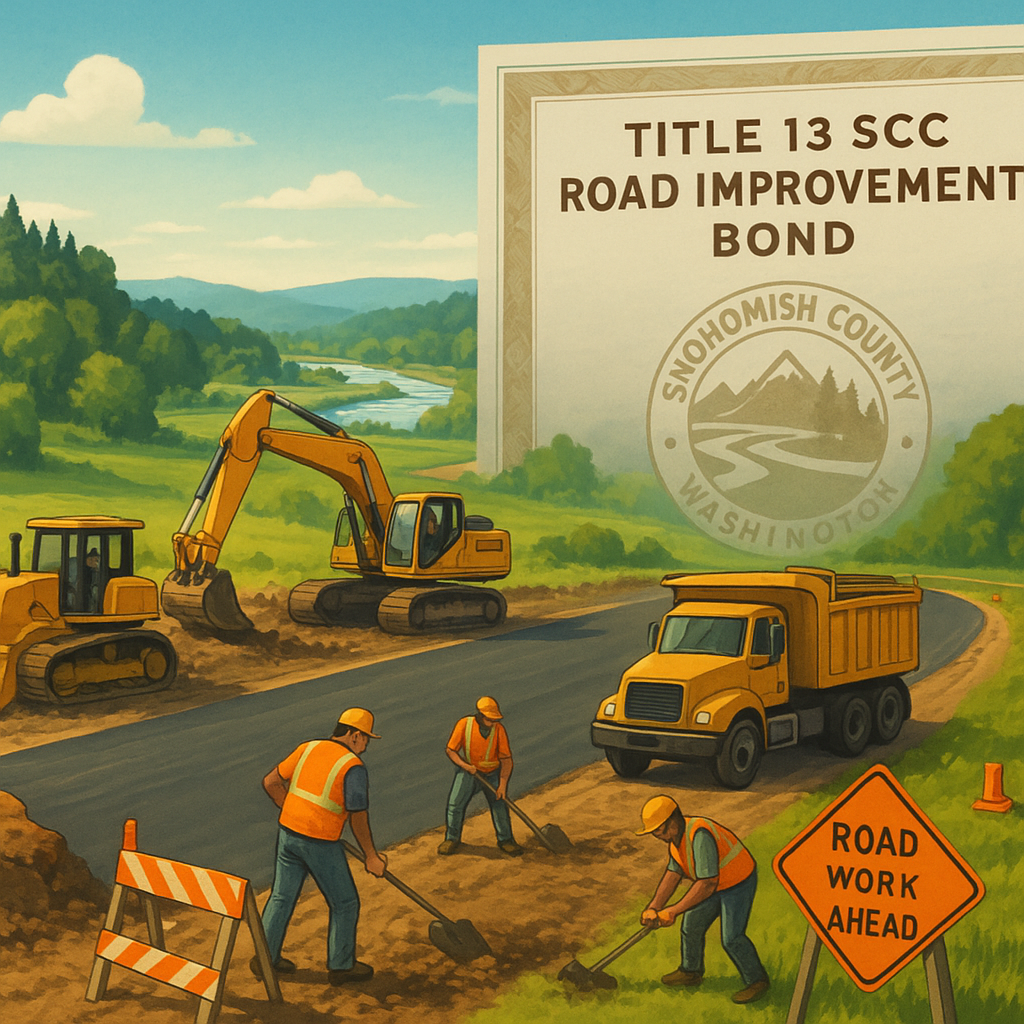
If you’re a contractor in Washington State—especially one who deals with clearing land, moving dirt, or building roads—you’ve probably heard the phrase “Title 13 SCC” tossed around. Maybe it came up during a bid, or a project manager mentioned you’d need a bond before breaking ground. But what does it all actually mean? And why does Snohomish County care so much about a piece of paper called a Road Improvement Bond?
Let’s break it down in plain, everyday language. No legal jargon, no confusing codes. Just the real talk about what these bonds are, who needs them, and how they protect everyone from the homeowner next door to the county itself.
A Road Improvement Bond? What Are We Even Talking About?
Picture this: you’re hired to clear a wooded lot, grade a long driveway, or install utilities along a rural road. Your work is going to tear up the ground, bring in heavy equipment, and inevitably impact the public roads leading to the site. Maybe your trucks will track mud onto the pavement. Maybe the trench you dig will disturb the road shoulder. Or, worst case, your excavation could accidentally damage a culvert or weaken the asphalt.
A Snohomish County Road Improvement Bond is essentially a financial promise. It’s a three-party agreement between you (the contractor), a surety company, and Snohomish County (the municipality). You’re promising to do the work without harming county roads, and if things go wrong, the bond provides money to fix the damage. Think of it like a security deposit you’d put down when renting an apartment—except this deposit isn’t cash out of your pocket. It’s backed by an insurance-like product.
Where Does Title 13 SCC Fit In?
Title 13 is part of the Snohomish County Code (SCC). It lays out the rules for roads, bridges, and right-of-way improvements. When the county issues a permit for work that might affect public infrastructure, Title 13 gives them the authority to require a bond. The bond “runs to the municipality,” meaning Snohomish County is the protected party. If something gets damaged, the county can file a claim against the bond and get funds to restore the road without having to chase you down in court.
This isn’t unique to Snohomish County—many counties have similar requirements—but the specific language and thresholds are local. For clearing and earthwork contractors, it’s often the very first hurdle after getting a permit.
Why Does the County Require This Bond in the First Place?
You might be thinking, “I have my own insurance. Why do I need another layer?” Great question. Your general liability insurance protects you from third-party claims, but the county wants a dedicated financial instrument that’s uniquely focused on road damage. They don’t want to negotiate with your insurance adjuster after a heavy rain washes out the road shoulder your crew disturbed. They want a bond they can tap directly.
Here’s what the bond covers in real-world terms:
- Repairing damaged pavement: If your tracked excavator chews up the curb or cracks the asphalt on a county road, the bond pays for repairs.
- Fixing drainage issues: Your grading work might redirect stormwater in a way that floods the road. The bond handles the cost to correct it.
- Restoring disturbed right-of-way: Did you dig up the grassy strip between the sidewalk and the curb? That’s part of the right-of-way. The bond ensures it’s put back the way it was.
- Cleanup and debris removal: Mud, gravel, and construction debris left on the road aren’t just unsightly—they’re hazards. The bond can fund cleanup if you don’t.
For the county, it’s about protecting taxpayer dollars and keeping roads safe. For you, it’s a way to show you’re a responsible contractor who takes public infrastructure seriously.
Who Is Actually Required to Get a Bond?
Not every small landscaping job triggers this bond. The requirement typically kicks in when you’re doing substantial clearing, earthwork, excavation, or road construction that connects to or crosses county right-of-way. If your project involves:
- Creating a new driveway approach from a county road
- Widening or extending a road
- Installing utilities under the road surface
- Grading that alters natural drainage patterns affecting the road
- Large-scale clearing adjacent to county right-of-way
…then there’s a very good chance Title 13 SCC will apply. The county’s Public Works or Planning Department will spell out the exact bond amount, which often depends on the estimated value of the improvements that could be damaged. A small driveway culvert job might need a $5,000 bond. A major subdivision road could require a bond of several hundred thousand dollars.
The Contractor’s Side: Responsibilities Beyond Just Buying the Bond
Here’s where it gets real. Getting the bond isn’t a one-and-done checkbox. It’s tied to your performance. As a clearing and earthwork contractor, your responsibilities stretch from the moment you accept the job until the county releases the bond—sometimes months after you’ve packed up your equipment.
1. Understanding the Scope and Timing
Before you start, sit down with the county’s permit conditions. They’ll tell you exactly what’s expected: the maximum disturbance area, how to protect existing pavement, erosion control measures, and the timeline for permanent restoration. If the bond covers a temporary construction entrance, make sure you know when it needs to be removed and the area restored.
2. Working Clean and Communicating Early
The best claim is the one that never happens. Keep mud off the road with tire wash stations or street sweepers. If something unexpected happens—like discovering buried debris that forces you to dig closer to the road—call the county inspector before you make a mess bigger than necessary. A quick phone call can prevent a bond claim and keep your reputation spotless.
3. Completing the Finish Work Correctly
Your bond doesn’t vanish the day you finish paving or seeding. Most Snohomish County road improvement bonds have a maintenance period, often one or two years. During that time, you’re responsible if erosion causes ruts, if asphalt settles, or if vegetation dies. The county will inspect the site before releasing the bond, and they expect to see everything in solid shape.
4. Record-Keeping Is Your Friend
Take dated photos before, during, and after the work. Save emails with county staff. If a dispute arises over whether damage existed before you started, having clear evidence can save you thousands of dollars. Think of it like taking pictures of a rental car before driving off the lot—it’s a small habit that pays off big time.
How Does the Bond Actually Work When Something Goes Wrong?
Let’s say a winter storm hits right after you’ve rough-graded a new access road, and runoff washes a load of sediment onto the county road, clogging a culvert and causing flooding. The county sends an inspector, sees the problem, and notifies you to fix it. If you’re on top of your game, you jump in, clean it up, and may only get a warning. But if you ignore the notice or can’t respond quickly, the county can call in a separate contractor, pay them out of the bond, and then come after you for the full amount—plus any administrative costs.
The surety company that issued the bond isn’t an insurance company in the traditional sense. They’ll pay the county, but then they’ll turn to you for reimbursement. So, while the bond itself protects the county, the financial risk ultimately stays with you. That’s why being proactive is so crucial.
Finding and Paying for a Road Improvement Bond
You don’t walk into a hardware store and grab a bond off the shelf. You’ll work with a surety bond agency. They’ll look at your credit, business financials, and experience. For small bonds, the process can be quick and inexpensive—maybe 1% to 3% of the bond amount annually. Larger bonds might require more detailed underwriting.
When you’re pricing a project for a client, remember to include the bond premium as a line item. It’s a direct project cost, just like fuel or materials. Forgetting it could eat into your profit margin.
What Happens If You Don’t Get the Bond?
Skipping the bond isn’t an option if it’s required. Without it, the county won’t issue your permit. Work without a permit could lead to stop-work orders, fines, and even having to undo work already done. That’s a nightmare scenario for any contractor. Plus, it tells clients and county officials you’re not someone who plays by the rules—damaging your ability to win future public or private jobs.
Smooth Roads, Strong Reputation
At its core, a Snohomish County Title 13 SCC Road Improvement Bond isn’t a bureaucratic hurdle to grumble about. It’s a tool that helps decent contractors stand out. When you’re bonded, you’re signaling to clients, the county, and the community that you’re committed to doing things right and making things whole. You’re not just moving dirt—you’re building roads that connect neighborhoods and protect the public’s investment.
Next time you’re scanning through a county permit checklist and see “Road Improvement Bond required,” you can nod with confidence. You know what it is, why it matters, and how to keep your side of the street clean—literally and figuratively.
Because when the work is done and the bond is released, the best compliment is a road that no one even remembers was ever disturbed. And that, right there, is the mark of a true professional.
Leave a Reply