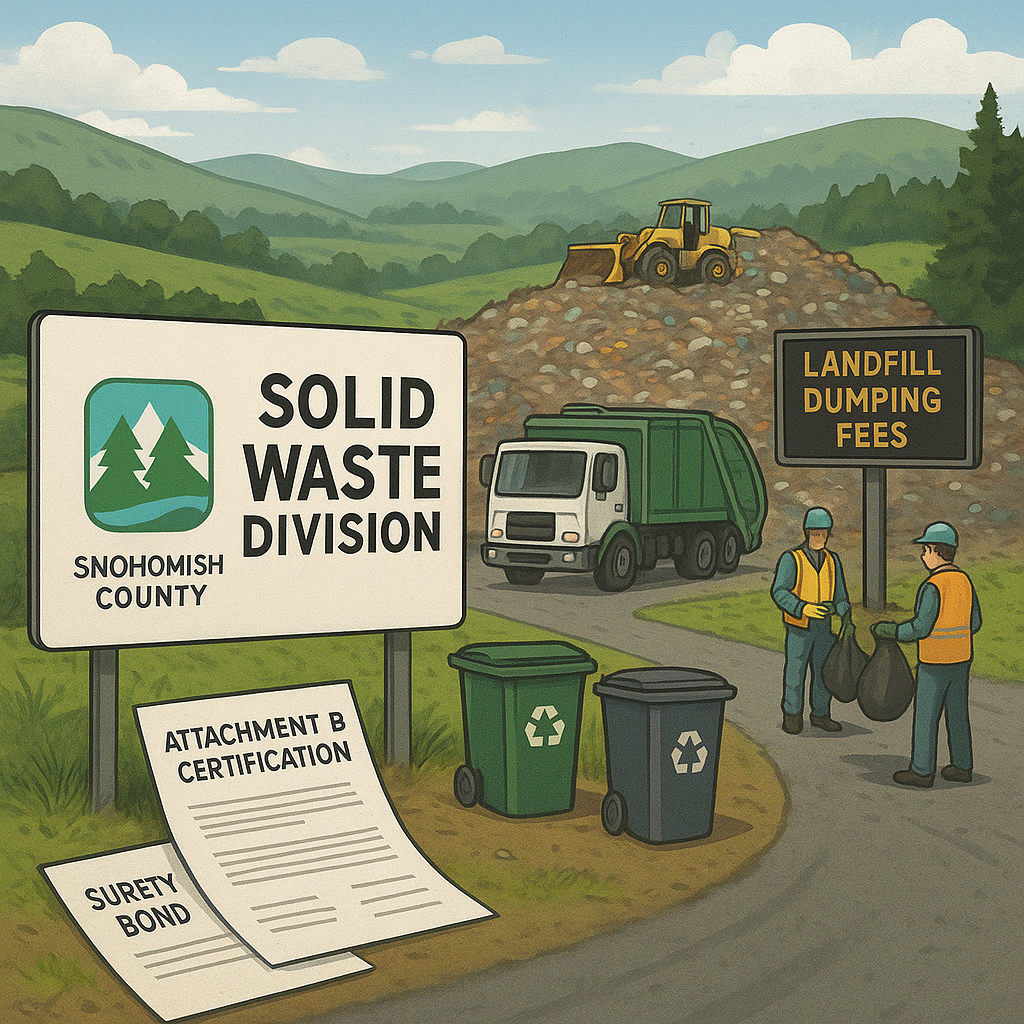
Have you noticed a little more money leaving your wallet every time you head to the landfill? If you live or run a business in Snohomish County, Washington, things are shifting. The local Solid Waste Division has recently updated its landfill dumping fees, and there’s a fresh spotlight on something called the Attachment B Certification Surety Bond. Don’t worry—you don’t need to be a lawyer or a waste management pro to make sense of it. We’re breaking it all down into plain, everyday language.
Think of this as your friendly neighbor explaining why the dump just got a little pricier and why some folks now need a special financial promise to use it. Let’s dig in.
What’s Happening with Landfill Dumping Fees in Snohomish County?
Like everything else from a gallon of milk to a tank of gas, the cost of handling your trash is going up. The Snohomish County Solid Waste Division recently approved an increase in landfill dumping fees. This isn’t about punishing anyone—it’s about keeping the system running safely, funding recycling programs, and making sure our beautiful corner of Washington stays clean for generations.
Whether you’re a homeowner clearing out the garage or a contractor hauling debris from a big construction site, those rates affect you. The new fee structure helps cover everything from equipment maintenance to environmental protection measures at facilities like the Cathcart Way facility and the airport road transfer station.
But here’s the part that often gets overlooked: if you’re a regular commercial hauler or a business that frequently uses the landfill, you might need to understand more than just the sticker price. That’s where the surety bond comes in.
So, What Exactly Is the Attachment B Certification Surety Bond?
Let’s strip away the official-sounding name. The Attachment B Certification Surety Bond is basically a financial safety net. Imagine you’re renting an apartment. You give the landlord a security deposit, right? If you accidentally break something or skip out on the last month’s rent, the landlord has that deposit to fall back on. The bond works in a similar way, but it’s a three-party promise between the County, a business, and an insurance company.
In Snohomish County, certain waste haulers and businesses that bring solid waste to county facilities must post this bond. The “Attachment B” part refers to a specific form tied to the county’s solid waste regulations. By securing the bond, you’re telling the county, “I’ll follow the rules, pay my fees on time, and handle waste responsibly. If I don’t, this bond will cover the county’s losses.”
It’s not a tax. It’s not an extra fee you’ll never see again. It’s a credit-backed guarantee that you’ll play fair.
Who Needs This Bond?
Not every Saturday-morning trip to dump a few bags of household trash will require a bond. This requirement typically kicks in for:
- Commercial solid waste haulers collecting from multiple customers.
- Construction and demolition debris removal companies.
- Businesses operating roll-off containers or large-volume waste streams.
- Anyone required by the Solid Waste Division to file an Attachment B Certification.
If you’re a local roofer, a remodeling contractor, or you run a junk-removal service, it’s worth checking whether the new regulations or updated fee schedules have introduced bonding requirements you weren’t aware of before.
Why Is the Bond So Important to the County?
Think of the landfill as a shared community resource. Every time someone dumps waste without paying the correct fee—or improperly disposes of something hazardous—the whole system takes a hit. Cleanup costs, environmental damage, and lost revenue all add up.
The Attachment B Certification Surety Bond gives the county a layer of protection. It ensures that if a hauler goes out of business or skips a big payment, the county isn’t left holding the bag. Your tax dollars don’t have to swoop in to fix the mess. Instead, the bond covers things like unpaid dumping fees or fines for rule violations.
That’s good news for everyone who enjoys clean parks, safe groundwater, and well-maintained waste facilities.
How Does the Landfill Fee Increase Tie Into It All?
Rising fees and bonding often go hand in hand. When the cost per ton of garbage goes up, the financial risk for the county grows too. A hauler who pays late—or not at all—leaves a bigger dent. So the county strengthens its bonding requirements at the same time it adjusts rates. It’s a way of saying, “We trust you, but let’s put a solid agreement in place.”
Let’s put it in simple numbers (these are illustrative, not official figures—always check the county’s current fee schedule):
- If a hauler dumps 20 tons of waste and the fee per ton has jumped from $100 to $115, that one trip alone costs $2,300. Multiply that across a busy week, and you can see how quickly unpaid fees pile up.
- A bond that covers several months of estimated fees smooths that risk right out.
How to Get an Attachment B Certification Surety Bond
Don’t let the paperwork scare you. The process is often simpler than you’d think. You’ll work with a surety bond agency (often the same kind of company that provides contractor license bonds or auto dealer bonds). Here’s a typical path:
- Confirm your requirement. Reach out to the Snohomish County Solid Waste Division directly or check the latest Attachment B form. They’ll tell you if you need a bond and what the minimum amount is.
- Gather basic business information. This usually includes your company name, address, federal tax ID, and a credit check. The bond agency uses this to determine your premium.
- Get a quote. Most bonds cost just a small fraction of the total coverage amount. For example, a $10,000 bond might only cost you $100 to $300 per year if your credit is solid.
- Sign and submit. Once approved, you’ll receive the bond form. You’ll sign it, attach it to your Attachment B Certification, and file it with the county.
- Renew on time. Many bonds need to be renewed annually. Mark your calendar so there’s no lapse in coverage.
It feels like a big step, but think of it as just another piece of your business’s foundation—like your insurance policy or your business license.
What Happens If You Skip the Bond?
This isn’t a gray area. If the county requires an Attachment B Certification and you don’t have a valid bond on file, you can be turned away at the landfill gate. That means lost time, fuel, and productivity. In a business where every hour counts, a simple administrative oversight can become a costly headache.
Beyond the immediate inconvenience, non-compliance can lead to fines, suspension of your disposal privileges, or even legal action. The county takes waste management seriously because it directly affects public health and the environment.
Making Sense of Higher Fees for Everyday People
You might be reading this and thinking, “I’m just a homeowner. Do I really need to care about surety bonds?” The answer is yes, but indirectly. When haulers and contractors pay their fair share and follow the rules, the system runs smoothly. That keeps fee increases from spiraling out of control and ensures our drop-off sites stay safe, clean, and open when we need them.
And if you’re hiring a contractor, you might even ask whether they’re properly bonded. It’s a sign of a professional who respects the community and has their paperwork in order. It’s a small question that can give you peace of mind.
Tips for Navigating the New Landfill Fee Landscape
- Plan your loads. If you’re a DIY renovator, separate recyclables and reusable materials before heading to the transfer station. Lowering the weight lowers your out-of-pocket cost.
- Stay informed. The Snohomish County Solid Waste Division website posts fee schedules, forms, and updates. A quick check before you go can save you from sticker shock.
- Budget for bonds. If you own a business, treat the surety bond premium as a predictable annual expense. It’s a small investment that keeps your operation running without snags.
- Ask questions. County staff and local bonding agencies are used to explaining these details. You don’t have to figure it out alone.
The Bigger Picture: Why All of This Matters
Snohomish County is growing. More people, more businesses, and more waste. The combination of increased landfill dumping fees and stronger bonding requirements helps the county manage that growth responsibly. It’s not just about dollars and cents—it’s about protecting the Stillaguamish River, preserving farmland, and keeping our roadsides free of illegal dumping.
When you see that Attachment B Certification Surety Bond requirement pop up, it’s a reminder that waste management is a partnership. The county provides the infrastructure. Haulers and businesses provide the service. And everyone chips in to keep it functioning fairly.
So the next time you pull up to the landfill scale, you’ll have a deeper understanding of what goes on behind the scenes. The fees might be a bit higher, but they’re fueling a system that works. And that bond tucked into a business’s paperwork? It’s a quiet promise that we’re all in this together—keeping Snohomish County clean, one load at a time.
Leave a Reply