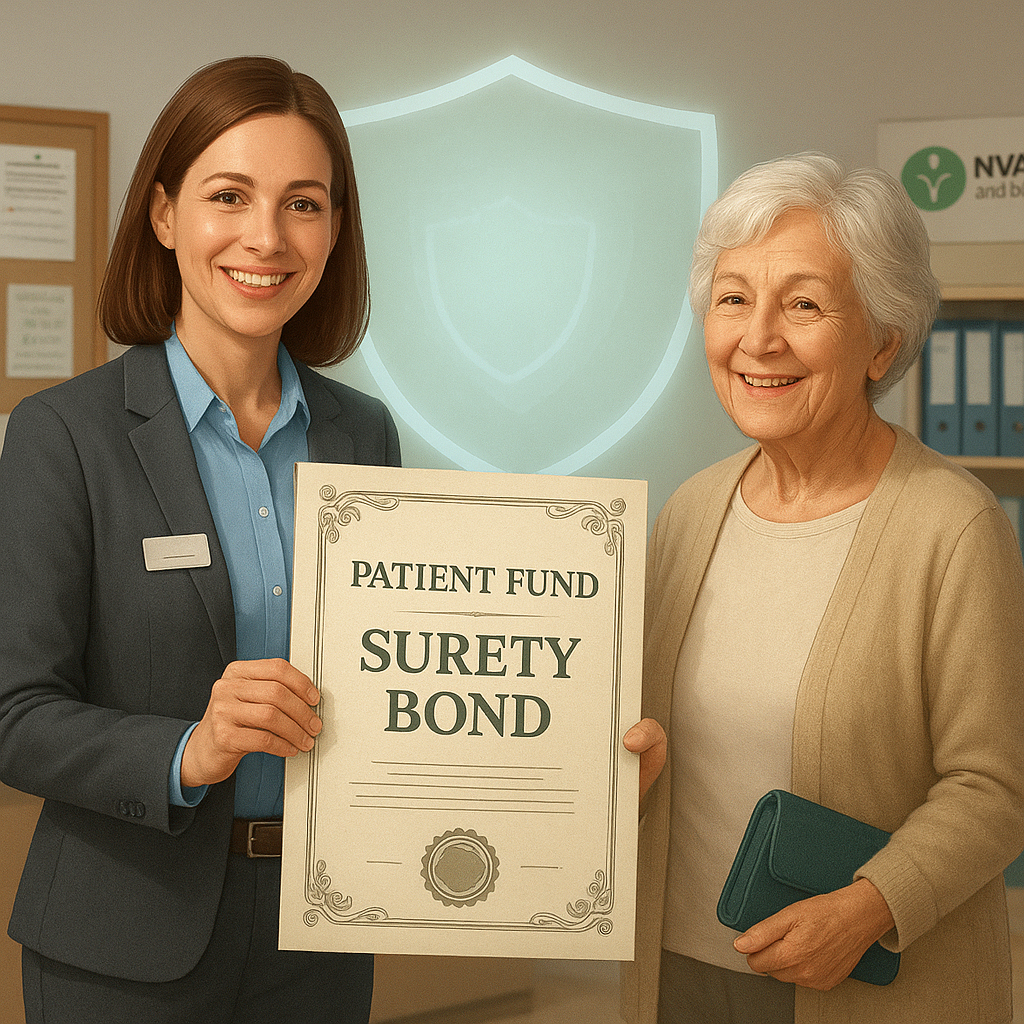
Have you ever handed over cash to someone and thought, “I sure hope they keep this safe”? Now imagine that feeling multiplied by a hundred—because it’s not your money, it’s the life savings of an elderly parent or a loved one with a disability. That tight knot in your stomach? That’s exactly why patient fund surety bonds exist. They’re not the most exciting topic in the world, but they’re a quiet guardian that watches over some of the most vulnerable people in our communities.
If you’re running an assisted living facility, an adult daycare, or any service that manages money for residents, you’ve probably heard the term “patient fund surety bond” tossed around by regulators. Maybe you’re a family member trying to understand how your mom’s personal allowance is protected inside a care home. Either way, you’re in the right place. Let’s unpack this in plain, everyday language—no legal jargon, no insurance-speak, just real talk.
What Exactly Is a Patient Fund Surety Bond?
Think of a surety bond as a three-way promise. You have the care facility (the one handling the money), the state agency that says “you must protect this money,” and a bond company that says, “If the facility messes up, we’ll make it right.” That’s the heart of a patient fund surety bond. It’s a financial guarantee that any money belonging to residents—whether it’s their social security check, a little spending cash, or a rainy-day fund—won’t vanish into thin air.
In Nevada, the Aging and Disability Services Division of the Department of Health and Human Services keeps a close eye on this. They require certain providers to hold a patient fund surety bond as part of their licensing. The bond acts like a security deposit for the residents’ funds. If a facility misuses or loses that money, the bond kicks in to reimburse the person who was harmed. It’s not insurance for the facility; it’s protection for the people who can least afford a financial hit.
Why This Matters More Than You Think
Picture this: Mrs. Johnson moves into a group home. She brings a small savings account and her monthly pension, which the home agrees to manage so her bills get paid and she has a little pocket money. Everything seems fine, until a bookkeeper starts skimming a few dollars here and there. Or maybe an honest mistake happens—a check gets lost, a record isn’t kept. Without a patient fund surety bond, that money might just be gone. With a bond in place, Mrs. Johnson and her family have a clear path to get repaid. It turns a “maybe” into a “for sure.”
These bonds aren’t only for worst-case scenarios, though. They also build trust. When a family sees that a facility holds a bond required by the Aging and Disability Services Division, it’s a sign that the business takes its responsibility seriously. It’s like seeing a restaurant health inspection grade in the window—you feel a little safer walking through the door.
Who Needs This Bond in Nevada?
Not every healthcare provider in the Silver State needs a patient fund surety bond. It generally applies to facilities that:
- Accept and manage resident funds or personal money on behalf of their clients.
- Operate under the oversight of the Aging and Disability Services Division (ADSD).
- Provide residential care, adult day care, or similar supportive services where residents may not be able to handle their own finances independently.
The exact requirement can depend on the type of license and the volume of funds handled. For instance, a small adult foster home that helps residents pay for incidentals might need a smaller bond amount than a large assisted living center managing hundreds of individual accounts. The state sets the bond amount based on the risk—often a multiple of the total resident funds held at any given time. If you’re unsure, your licensing analyst at ADSD will tell you exactly what’s needed. Better to ask early than to scramble later.
How the Bond Protects “Patient Funds” (And What That Really Means)
The term patient funds covers any personal money that a facility holds, manages, or has access to for a resident. This could be:
- Monthly Social Security or SSI payments.
- Veterans’ benefits.
- Cash gifts from family members.
- Small accounts used for haircuts, snacks, or outings.
When a facility says, “We’ll take care of this for you,” they’re stepping into a fiduciary role—a fancy way of saying they have a legal duty to act in the resident’s best interest. The patient fund surety bond backs up that promise with real money. If the facility breaks that trust, the bond pays out, and then the bonding company goes after the facility to recover what was paid. So in the end, the bad actor is held responsible, not the taxpayer or the victim.
A Safety Net, Not a Magic Wand
It’s important to know what the bond doesn’t do. It doesn’t cover poor care, medical malpractice, or property damage. It’s strictly for financial loss tied to resident funds that were supposed to be safeguarded. If a resident’s television gets broken, that’s a different issue. The bond focuses solely on the money. Think of it like a lockbox for dollars and cents.
Real-Life Scenarios Where a Bond Saves the Day
Let’s make this even more concrete. A facility in Las Vegas collected resident funds to buy holiday gifts. The staff member in charge used some of the money for personal expenses, and the gifts never appeared. Without a bond, the families might have had to file a police report and hope for restitution—often a long, disappointing road. With the bond in place, they filed a claim, provided proof of the missing funds, and received compensation much faster. The bond became the bridge between a broken promise and a made-whole family.
Another scenario: a Reno care home accidentally overcharged several residents for months because of a billing software error. The total overcharge ran into thousands of dollars. The facility couldn’t immediately repay everyone out of pocket. The patient fund surety bond stepped in to cover the claims while the home sorted out its finances. The residents didn’t miss a beat.
How Do You Get a Patient Fund Surety Bond?
If you’re a provider, the process is simpler than you might imagine. You’ll work with a surety bond agency that understands Nevada’s specific requirements for the Aging and Disability Services Division. Here’s the typical roadmap:
- Find out the required bond amount. Your licensing paperwork or the ADSD will specify how much coverage you need. It could be a flat dollar amount or a formula based on the total resident funds you manage.
- Apply with a reputable surety company. The application asks about your business financials, credit history, and experience. Don’t panic if your credit isn’t perfect—some programs exist specifically to help smaller or newer facilities get bonded.
- Pay the premium. You won’t pay the full bond amount. Instead, you pay a small percentage, often 1% to 5% of the total. So a $10,000 bond might cost as little as $100 to $500 a year. That’s a small price for peace of mind.
- File the bond with the state. The surety will give you a form to submit to ADSD as proof of coverage. Keep a copy for your own records, and set a reminder to renew it before it expires. A lapse can put your license at risk.
What If a Claim Happens?
No one likes to think about claims, but it helps to understand the mechanics. If a resident or their family believes funds were mishandled, they can file a claim against the bond. The surety company investigates. If the claim is valid and the facility can’t or won’t repay, the surety covers the loss up to the bond limit. Then, as we mentioned, they’ll seek reimbursement from the facility. So it’s not a “get out of jail free” card—it’s more like a forced loan that the facility must eventually pay back.
Why “NV” Matters: Nevada’s Unique Focus on Vulnerable Adults
You might see “NV” pop up in bond names or forms because each state has its own rules. Nevada’s Aging and Disability Service a Division of Health and Human Service (the official name is often shortened to ADSD) works hard to protect older adults and people with disabilities from abuse, neglect, and—yes—financial exploitation. The patient fund surety bond is one tool in a larger kit that includes inspections, background checks, and complaint investigations.
When you see that a provider is bonded, it means they’ve met a baseline of accountability. It doesn’t mean they’re flawless, but it does mean they’re part of a system that takes financial safety seriously. For families shopping around for care, this can be a deciding factor. You want the facility that says, “We handle your dad’s money as if it were our own”—and puts a bond behind that statement.
Common Questions People Ask
Is this bond the same as liability insurance? Not at all. Liability insurance protects the facility against lawsuits for injury or negligence. The patient fund surety bond specifically protects the residents’ money. They serve different purposes, and having one doesn’t replace the other. Most facilities need both.
Does every small care home need one? In Nevada, if you handle and have access to resident funds, the answer is usually yes. Even a small home that just keeps a few hundred dollars in a petty cash drawer may be required to carry a bond. Always check with ADSD to confirm your obligation.
Can a resident’s family buy a bond for a facility? No, the bond is the facility’s responsibility. It’s part of being a licensed provider. Families can, however, ask to see proof that the bond is current. A reputable provider will be happy to show it.
Wrapping It All Up: Trust, Verified
A patient fund surety bond might sound like dry paperwork, but it’s really a living promise. It says to every resident and every family, “Your money is safe here.” It turns regulatory compliance into something that touches real lives. Whether you’re a care provider navigating licensing in Nevada or a daughter looking out for her aging father, understanding this bond helps you see through the complexity to the simple truth: people’s savings deserve ironclad protection.
Next time you hear the phrase “patient fund surety bond,” don’t let your eyes glaze over. Remember Mrs. Johnson and the holiday gifts, the billing error that got fixed, and the peace of mind that comes from knowing a third party has your back. In the world of aging and disability services, that peace of mind is priceless—and it all starts with a bond that’s small in cost but huge in impact.
Leave a Reply