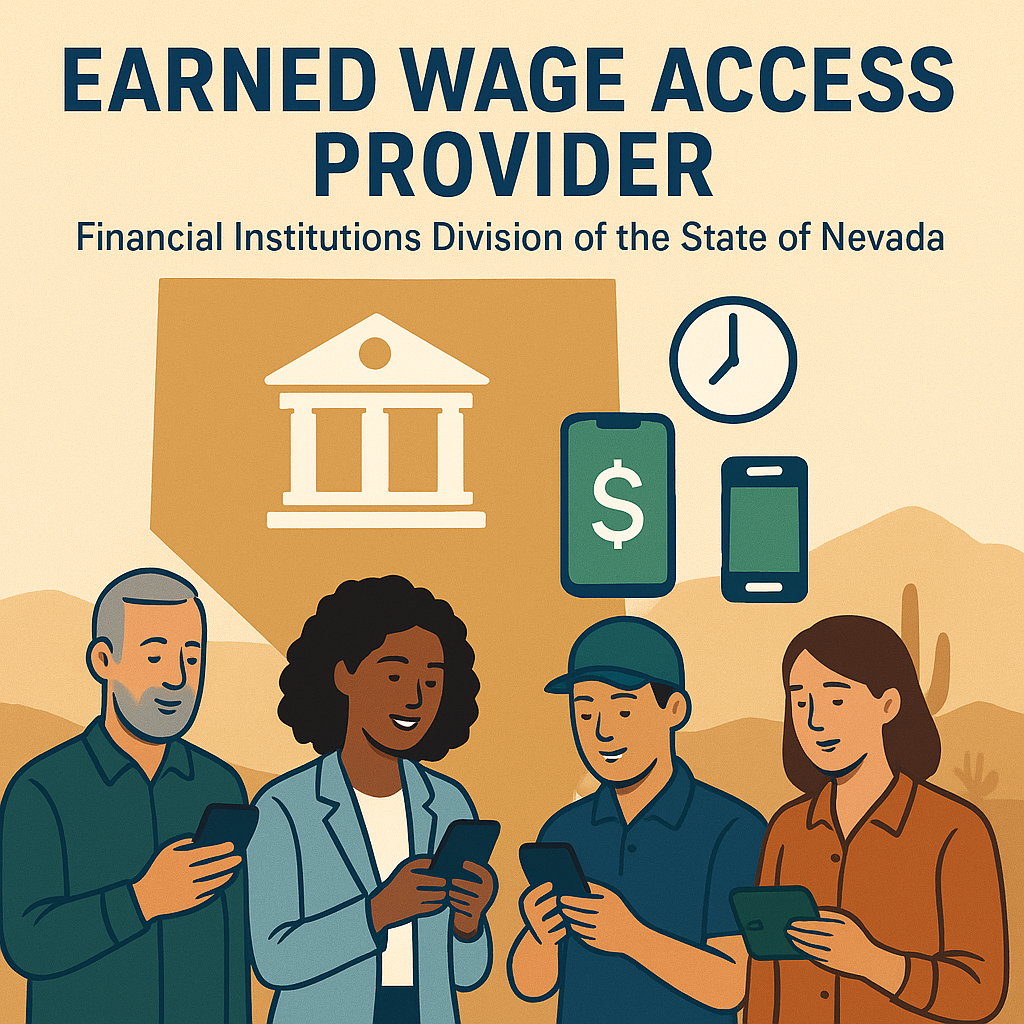
Have you ever found yourself staring at a calendar, counting the days until your next paycheck arrives while an unexpected bill sits on the counter? That uncomfortable stretch between the money you’ve already earned and the moment it lands in your bank account is something many of us know all too well. For years, the only solutions were things like high-interest credit cards, payday loans, or awkward conversations with family. Now, earned wage access services are changing that story, and a recent move by Nevada’s financial regulators is making these services even stronger and safer for everyone.
What Exactly Is Earned Wage Access?
Think of earned wage access, often called EWA, as a bridge between the work you’ve already done and the paycheck that’s still a week away. In a typical job, you might work two full weeks before seeing any of that money. But life doesn’t wait. A car repair, a medical visit, or even a grocery run can pop up without warning. EWA providers let you tap into a portion of the wages you’ve already earned before your official payday, often through a simple app on your phone. It’s not a loan in the traditional sense because there’s no interest and no rigid repayment schedule—you’re simply accessing money that’s already yours.
Imagine a friend who says, “You’ve already worked three days of this pay period, so here’s some of that cash now. The rest comes on payday.” The service runs quietly in the background, often partnering with your employer or connecting to your timesheet data. When payday finally arrives, the amount you took early is subtracted from your total check, and life keeps moving. It’s straightforward, transparent, and increasingly popular. But as with any new financial tool, the rules need to keep pace with innovation. That’s where Nevada steps into the picture.
Nevada Puts a Framework in Place
For a while, earned wage access services operated in a kind of gray area. Were they loans? Were they payroll services? Regulators across the country scratched their heads. Nevada decided to bring clarity. The state established a licensing system that officially welcomes earned wage access providers while also wrapping important consumer protections around them. Leading the charge is the Financial Institutions Division of the State of Nevada, the same agency that oversees banks, credit unions, and other financial service companies. By creating a clear path for EWA providers to become licensed, Nevada is saying, “We see you, we know workers need this, and we’re going to make sure it’s done right.”
This isn’t about red tape for the sake of it. The regulatory approval signals that earned wage access is a legitimate financial product that deserves a stable home in the market. When a state like Nevada gives a formal nod, it boosts confidence for employers, employees, and the entire industry. Suddenly, a service that might have felt like a side alley becomes a well-lit main street. And at the heart of that regulatory structure sits one critical requirement: the Earned Wage Access Provider Bond.
The Bond: A Safety Net in Simple Terms
Let’s unpack the bond requirement without getting tangled in insurance jargon. The Financial Institutions Division of the NV Earned Wage Access Provider Bond is essentially a financial promise. An Earned Wage Access Provider must obtain this bond as part of their licensing in NV. If the provider fails to play by the rules—maybe they don’t pass along the funds they promised, or they violate someone’s privacy—the bond acts as a pool of money that can step in and make things right for consumers. Think of it like a seatbelt. You hope you never need it, but if something goes wrong, you’re incredibly glad it’s there.
Here’s an analogy: When you rent an apartment, you often pay a security deposit. The landlord holds that deposit in case you damage the property or miss rent. The bond works in a similar way, except it’s held by a surety company and overseen by the state. If an EWA provider breaks its promises, the harmed party can file a claim against the bond. The provider then has to pay that money back to the surety. This setup gives Nevada teeth to enforce its rules without relying solely on lawsuits or fines that might take years to collect. It puts consumer protection first.
Why This Matters for Everyday Workers
You might wonder, “I just use an app to get my wages early. Why should I care about a bond buried in a government filing cabinet?” The answer is that these behind-the-scenes safeguards shape the experience you have when you tap that “get paid now” button. A licensed, bonded provider knows Nevada is watching. They’re more likely to have clear fee disclosures, responsive customer service, and secure technology. The bond requirement raises the bar, pushing out operators who might cut corners or treat user funds carelessly.
Consider a scenario. Sarah works at a retail store in Reno. Her hours vary, and one week she picks up extra shifts to cover a broken water heater at home. Using an earned wage access app licensed in Nevada, she transfers $200 of her already-worked earnings. Because her provider holds the necessary bond, Sarah can rest easier knowing that if the company mishandled her money or violated state rules, a path to recovery exists. Without that backing, she’d be left hoping the company’s customer service line picks up. The bond isn’t just a piece of paper; it’s a concrete layer of trust.
How Nevada’s Move Boosts the Whole Industry
When one state takes a deliberate, thoughtful approach to regulation, the effects ripple outward. Other states often look to early adopters to see what works and what doesn’t. By building a framework that includes the Financial Institutions Division and the bond requirement, Nevada is creating a model that can be copied elsewhere. For EWA providers, this regulatory clarity is actually a green light. It says, “If you meet these standards, you can operate openly and build lasting relationships with employers.” That’s far better than operating in fear of sudden crackdowns or shifting interpretations of old laws never designed for apps and instant transfers.
Employees get more consistent service, too. When providers know the rules, they can invest in better technology, partner with more payroll systems, and offer seamless integration. The entire ecosystem matures. Instead of a patchwork of uncertainty, the industry gains a stable foundation. This boost isn’t just symbolic. It attracts investment, encourages innovation, and helps companies scale responsibly. Ultimately, more workers across Nevada and beyond will have access to flexible pay options that fit their lives, not just the 20th-century two-week pay cycle.
Breaking Down the Licensing Process
If you’re a business owner or part of an EWA startup, you might be curious about what it takes to get licensed in Nevada. While I won’t dive into every form, the path generally involves an application to the Financial Institutions Division of the State of Nevada, background checks for key executives, detailed financial statements, and evidence of that all-important bond. The bond amount is set to cover potential consumer harm, and the cost for the provider is typically a small percentage of that total, depending on their creditworthiness.
For the average user, this means the EWA provider on your phone screen has passed state-level scrutiny. They’re not a nameless startup operating from a distant server with no accountability. Nevada has put eyes on them. The licensing process also typically requires the provider to disclose how fees work (if there are any), how data is protected, and how disputes will be handled. That transparency trickles down into a clearer user experience.
Common Questions About Earned Wage Access and the Nevada Bond
Let’s tackle a few questions you might be silently asking while reading this.
Does the bond make EWA more expensive for me?
Generally, no. The bond is a cost of doing business for the provider, much like office rent or server fees. Reputable providers already factor compliance into their plans, so the bond doesn’t usually translate into higher fees for you. In fact, by building trust, it can attract more users and help keep costs down through scale. If you ever see a provider charging sky-high fees and blaming regulation, they might be pointing fingers in the wrong direction.
Is EWA the same as a payday loan?
Absolutely not. A payday loan gives you money you haven’t earned yet and comes with massive interest rates that can trap you in debt. Earned wage access is your own money, already on your timesheet. There’s no interest, and most providers charge either a small flat fee per transaction or nothing at all, sometimes earning revenue from optional employer services. The Nevada bond requirement further highlights that difference, keeping EWA in a category closer to payroll services than lending.
What if my employer doesn’t offer earned wage access?
Some EWA providers can work directly with you by connecting to your bank account and tracking your income patterns, even if your employer isn’t officially partnered. However, the smoothest experiences usually happen when the provider has a direct link to your company’s payroll system. As regulatory approval like Nevada’s spreads, more employers will feel comfortable jumping on board, knowing the service is safe and vetted.
A Win for Financial Wellness
At its core, the story of Nevada’s regulatory approval is about giving people more control over money they’ve already earned, without sacrificing security. The Financial Institutions Division didn’t just wave a magic wand; it built a thoughtful framework that balances innovation with protection. The Earned Wage Access Provider Bond is a key pillar of that balance. It reassures workers that their early wage transfers aren’t a risky gamble but a regulated, reliable tool in their financial toolkit.
When financial stress drops, people can focus on what truly matters—family, health, and career growth. That’s the real ripple effect. So the next time you see an app offering early pay and notice it’s licensed in Nevada, you’ll know there’s a lot of thinking, rule-making, and yes, a bond sitting quietly in the background, making sure everything stays on track.
Looking Ahead: EWA’s Growing Footprint
Nevada’s move is part of a larger wave. Other states are watching, analyzing, and drafting their own rules. As the earned wage access industry matures, we can expect more standardization, clearer consumer disclosures, and even more convenient ways to receive pay. The bond requirement might become a template, adapted for local needs but maintaining the same core promise: if something goes wrong, consumers won’t be left empty-handed.
For now, if you live in or work for a company based in Nevada, you’re at the forefront of a healthier financial shift. You can use EWA services knowing that the Financial Institutions Division of the NV Earned Wage Access Provider Bond is doing its quiet, important work behind the scenes. And that’s something worth appreciating the next time payday feels a little too far away.
Leave a Reply