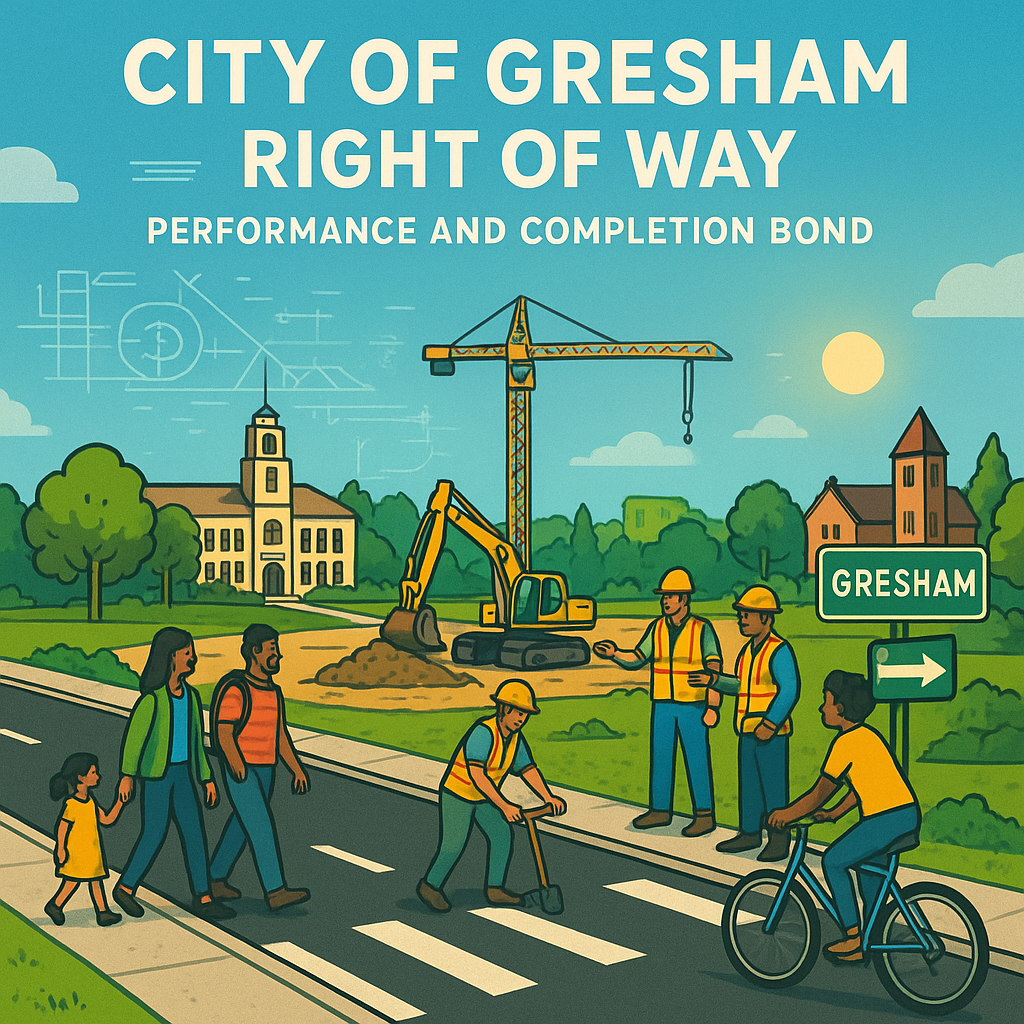
What Exactly Is a Right of Way Bond?
Think of a Right of Way Bond as a promise you can take to the bank. In simple terms, it’s a special kind of insurance for public property. When a contractor needs to dig into a city street, sidewalk, or utility easement to install a water line, repair a sewer, or lay fiber optic cable, they’re working in what’s known as the public right of way. The City of Gresham, like many cities, requires a financial guarantee that the contractor will finish the job correctly and leave the area as good as – or better than – they found it. That guarantee is the City of Gresham OR Performance and Completion Right of Way Bond.
It’s not insurance for your tools or your truck. It’s a three-party safety net. The City (the Obligee) asks you, the contractor (the Principal), to secure a bond from a surety company (the Surety). If you don’t hold up your end of the bargain, the surety steps in to pay the City so they can hire someone else to fix the mess. You then have to pay the surety back every penny. It’s like a co-signer on a lease, but for the street in front of your house.
Why the City of Gresham Requires This Bond
Gresham is a growing community, and public works projects happen all the time. Every time a contractor opens up a road, there’s a risk of a sloppy patch job, a sinking trench, or an unfinished sidewalk that turns into a trip hazard. The City’s priority is protecting taxpayers and everyone who uses that right of way – drivers, cyclists, pedestrians, and kids walking to school.
By requiring this bond, the City can say, “We’re all in this together, but you’re on the hook if things go sideways.” It makes sure public money doesn’t get spent fixing a private contractor’s mistake. It also levels the playing field. Reputable contractors who do quality work already factor in these costs, so the bond helps weed out those who might cut corners and disappear. Whether you’re installing a new driveway approach or a massive underground conduit, the bond is your official green light to break ground.
How Does a Performance and Completion Bond Work?
The name gives away the two big promises. The “performance” part means you promise to do the work according to the City’s approved plans, codes, and standards. The “completion” part means you promise to actually finish the entire scope of work, including final cleanup and pavement restoration, within a set timeline. If you walk away halfway through a trench repair, you’ve broken both promises.
The Key Players in Your Bond
- The Principal (You, the Contractor): You buy the bond and pledge to complete the right of way work correctly.
- The Obligee (City of Gresham): The city that requires the bond and gets the protection.
- The Surety (Bonding Company): The company that backs your promise financially and guarantees payment to the city if you fail.
Here’s a real-world analogy. Imagine you borrow your neighbor’s fancy lawnmower. You promise to return it full of gas and washed. Your other neighbor, who trusts you, says to the owner, “If they don’t clean it, I’ll pay for a detail.” The owner agrees. That’s the bond. You’re the principal, the owner is the City, and the trusting neighbor is the surety. You get to use the lawnmower (dig in the right of way), but the surety has your back – and will come after you if you leave it a muddy mess.
Who Needs to Get This Bond?
Most contractors who physically disturb the public right of way in Gresham will need some form of this security. You’ll typically encounter the requirement if you are:
- Excavating for utility connections (water, sewer, gas, electric, telecom).
- Repairing, replacing, or constructing sidewalks, curbs, and driveway aprons.
- Installing or repairing underground irrigation or drainage systems within the right of way.
- Performing street cuts for any reason.
- Placing temporary materials or equipment that impact the roadway.
You don’t need to be a massive general contractor, either. A small landscaping company replacing a section of sidewalk or a plumber doing a main line repair at the curb could all be subject to this bond. The exact bond amount and type (some may be cash deposits or letters of credit) depend on the project scale, but the core idea stays the same: safeguard the public space. Always check with the City of Gresham’s permit office early. They’ll let you know the exact bond amount and any supplementary insurance you’ll need before the first shovel hits the dirt.
How Much Does a Gresham Right of Way Bond Cost?
You don’t pay the full bond amount like you’re buying a car. You pay a small percentage, called the premium. If the City sets your bond amount at $10,000, you might only pay between $100 and $300 annually, depending on your credit and financial health. The bond amount itself is the maximum the surety would pay out, but your out-of-pocket expense is just that yearly premium.
Several factors influence your premium rate:
- Your personal and business credit score. Strong credit often unlocks the best rates.
- The total bond amount required by the City. Larger bond = higher premium, though the percentage often gets smaller on big bonds.
- Your company’s financial statements and experience. A well-established business with solid cash flow looks less risky.
- The specific scope of work. A simple, short-term patch might be viewed differently than a complex, multi-phase street widening.
It’s a smart investment when you compare it to the cost of repairing a failed street patch months later, not to mention the fines and legal headaches.
Steps to Secure Your Right of Way Bond
Getting bonded doesn’t have to be a headache. Here’s a simple path to follow so you can get to work faster.
1. Visit the City of Gresham Permit Office
Before anything else, talk to the city. They’ll give you the exact bond form, tell you the required amount, and specify any special conditions like additional insured endorsements. Every project is unique, and you want the right paperwork from the start.
2. Gather Your Business Info
Surety companies want to know who they’re backing. Have your business license, owner information, and basic financials ready. If you’re a smaller contractor, your personal credit will be a big factor, so know where you stand.
3. Shop Smart with a Bond Agency
You don’t have to go it alone. A bond agency that specializes in contractor bonds can run your application through multiple surety markets. They can find a company that understands the City of Gresham Performance and Completion Right of Way Bond and can offer competitive pricing. Provide them with the city’s bond form and the required amount.
4. Review and Sign, Then File
Once approved, you’ll receive the bond document. Double-check that the principal name, project description, and bond amount match the city’s requirements exactly. Sign it, and submit the original to the City of Gresham. The city will keep it on file. Don’t start work until the city confirms the bond is accepted. That’s your official “all clear.”
What Happens If Something Goes Wrong?
Let’s be honest – most contractors never trigger a bond claim. They do the job right, the City inspects and accepts the work, and the bond eventually expires or is exonerated. But what if a crack crew patches a road poorly and a sinkhole appears two months later, after you’ve already been paid?
The City will first notify you and give you a chance to fix the defect. That’s the ideal path. If you’re unable or unwilling, the City files a claim against your bond. The surety investigates. If the claim is valid, the surety pays the City up to the full bond amount. Then the surety turns to you for full reimbursement plus any legal costs. A claim can hurt your future bonding ability and tarnish your reputation. That’s why it’s critical to communicate early if you hit unexpected soil conditions or weather delays. The City would rather work with a proactive contractor than deal with a bond claim.
Common Questions Contractors Ask
Is this the same as a general contractor license bond?
No. A license bond guarantees you’ll follow state contractor laws. The right of way bond is project-specific and guarantees the physical restoration of public property. You might need both to legally pull a permit in Gresham.
How long does the bond stay active?
The bond typically remains in effect until the City formally accepts the completed work and releases the bond. There’s often a warranty period written into the bond or permit conditions. During that time, any defects that pop up are still your responsibility. Read the fine print – some bonds have a one-year or two-year maintenance period baked in.
Can I use a cash deposit instead?
Sometimes, yes. The City may accept a cashier’s check or irrevocable letter of credit in place of a surety bond. This ties up your capital, though. A bond preserves your cash for materials, payroll, and the next job. It’s almost always the better move for an active business.
Final Thoughts
The City of Gresham OR Performance and Completion Right of Way Bond isn’t red tape designed to frustrate you. It’s a handshake between the community and the people building and maintaining its infrastructure. When you look at it as a mark of professionalism – proof that you stand behind your work and respect public space – it becomes a powerful tool for winning better contracts and building trust with municipal clients.
Next time you’re preparing a bid for a project that touches a street or sidewalk in Gresham, build the bond into your estimate early. It’s a small line item that protects you, the public, and the city’s long-term livability. And that’s a win for everyone who calls Gresham home.
Leave a Reply