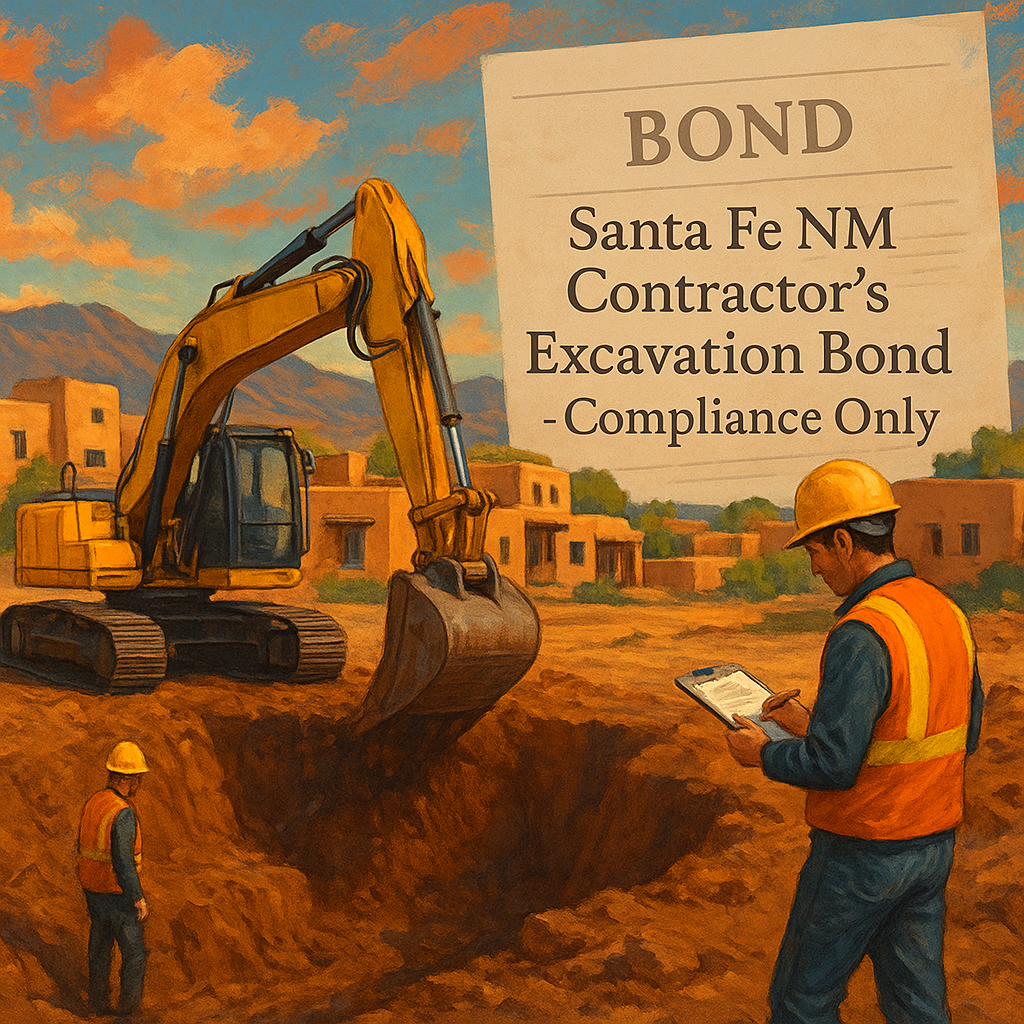
Picture this: you’ve just landed a big excavation project in Santa Fe County. The equipment is ready, your crew is on standby, and the client is eager to break ground. Then you hear those two little words that can feel like a speed bump: excavation bond. If you’re nodding along, thinking, “Wait, what exactly is that, and why do I need it?”—you’re in the right place. We’re about to unpack everything you need to know about the Santa Fe NM contractor’s excavation bond in plain, friendly language. No legal jargon, no cryptic fine print. Just the good stuff that helps you stay compliant and keep your business moving forward.
So, What Is an Excavation Bond Anyway?
Let’s break it down with a simple analogy. Think of an excavation bond like a safety deposit you leave with a trusted friend when you borrow their prized tool. You’re promising you’ll return it in perfect condition. If you accidentally break it, the friend uses that deposit to fix or replace it. In the construction world, the bond is a three-party agreement that protects the county and the public when an excavation contractor does work within Santa Fe County’s right-of-way or on public property.
Specifically, a County of Santa Fe NM Contractor’s Excavation Bond is a type of surety bond. It guarantees that you, the contractor (we call you the principal), will follow all local rules, codes, and safety regulations. The county (the obligee) requires this bond before you can get your permit. The surety company backs you financially if something goes wrong. It’s not insurance for your business—it’s a shield for the community.
Why Santa Fe County Cares About Your Excavation Work
You might wonder, “Why does the county need a guarantee beyond my word and reputation?” Imagine the intricate web of utilities under the streets—gas lines, water mains, fiber-optic cables. One wrong scoop with an excavator could disrupt an entire neighborhood. Santa Fe County, with its blend of historic charm and modern infrastructure, takes this seriously. The bond ensures that if your work accidentally damages public property or leaves a road in unsafe condition, the county has a financial remedy.
This isn’t about mistrusting contractors. It’s about protecting everyone’s investment. Every time you dig near a county road, sidewalk, or storm drain, the bond stands behind your promise to restore the area to its original state. And if, for some reason, you can’t or don’t, the county can make a claim against the bond to cover the repair costs. You remain responsible to reimburse the surety company, but the public doesn’t get stuck with the bill.
Who Needs This Specific Santa Fe Bond?
If you’re an excavation contractor planning to break ground inside Santa Fe County’s jurisdiction—especially in public right-of-ways—chances are you’ll need this bond. It applies to both local businesses and out-of-town crews. Whether you’re trenching for a new water line, grading for a driveway approach, or doing major site prep, the county wants to see that bond certificate in your permit application packet.
Don’t confuse it with a general contractor’s license bond or a state-level bond. This one is county-specific. Even if you hold a New Mexico state contractor’s license, Santa Fe County often requires its own excavation contractor compliance bond. The good news? In many cases, the bond requirement is for compliance only, meaning it’s not a huge financial hurdle. Think of it as a targeted requirement that keeps you on the right side of local regulations without breaking the bank.
How Does the Bond Actually Work?
Let’s walk through a real-life scenario. Suppose you’re installing a new sewer lateral and you accidentally cut a telecom cable while digging. The county inspects the damage and determines it needs immediate repair. Instead of a lengthy legal battle, the county files a claim against your excavation bond. The surety company investigates. If the claim is valid, the surety pays the county up to the full bond amount. Then you repay the surety—every penny, plus any fees. That’s the key difference from insurance: a bond protects the obligee, and you remain fully liable for any payouts.
For you as a contractor, this means clean, careful work isn’t just good business sense; it directly protects your wallet. A claim can also make it harder and more expensive to get bonded in the future, so staying claim-free is a huge advantage.
What Does a Santa Fe Excavation Bond Cost?
Here’s where many contractors breathe a sigh of relief. Because the Santa Fe County bond is often a compliance-only bond, the required amount is usually set at a level that’s manageable. As of this writing, many similar excavation bonds carry a penalty of $5,000 or $10,000, but you don’t pay that full sum. You pay a small premium, typically a percentage based on your credit and business financials. For a well-qualified contractor, that premium might be as low as 1% to 5% of the bond amount. So a $5,000 bond could cost just $100 to $250 per year.
Several factors influence your premium: your personal credit score, your years of experience, and whether you’ve had any past bond claims. If your credit is less than perfect, don’t worry. There are programs that can still get you bonded, often for a slightly higher rate. The key is to work with a surety professional who understands New Mexico’s local requirements.
Your Step-by-Step Path to Getting Bonded
Ready to get the ball rolling? The process is simpler than you might think. Here’s a typical roadmap:
- Determine the exact bond requirement. Contact Santa Fe County’s Public Works Department or the permitting office. Ask for the current bond amount and form. Requirements can change, so get it straight from the source.
- Gather your business info. You’ll need your contractor’s license number, business name, address, and possibly your federal EIN. Personal information for the owner(s) is also required for the credit check.
- Apply with a reputable surety bond agency. Look for one that specializes in New Mexico contractor bonds. They’ll walk you through the paperwork and can often provide a quote within minutes.
- Pay your premium and receive your bond form. The surety issues the official bond document. Some agencies can even notarize and file it directly with the county on your behalf, saving you a trip.
- Include the bond with your permit application. The county reviews it and, once approved, you’re officially cleared to begin work.
Pro tip: Don’t wait until the last minute. Some bonds can be issued the same day, but if you have special circumstances, starting a few days early keeps your project from stalling.
Common Missteps to Avoid
Even seasoned contractors can trip over bonding details. Here are some pitfalls to watch out for:
- Assuming your state license bond covers it. It doesn’t. The Santa Fe County excavation bond is a separate animal. Always verify local needs.
- Getting the bond amount wrong. Bond forms often list a specific penalty. If you bring a $5,000 bond but the county requires $10,000, your permit will be denied.
- Letting the bond lapse. Most bonds are continuous until canceled. If you fail to renew the premium, the surety can notify the county and your permit may be revoked mid-project.
- Working without a bond when one is required. The consequences can include stop-work orders, fines, and damage to your professional reputation. Not worth the risk.
Staying Compliant Long After You’re Bonded
Once you have that NM County of Santa Fe excavation bond in hand, your job isn’t quite done. Compliance is an ongoing relationship with the county. Keep copies of the bond in your files and on the job site. Make sure your contact information stays current with the surety company so you don’t miss renewal notices. And, of course, follow every relevant code to the letter—call before you dig (811 in New Mexico), secure necessary permits for each phase, and restore any disturbed public property promptly.
Think of the bond as your silent partner. It’s there in the background, giving county officials peace of mind and allowing you to focus on what you do best: moving earth safely and skillfully. When you honor that partnership through careful work, the bond becomes just another routine part of your business, no more intimidating than a well-used shovel.
Why This Little Piece of Paper Matters for Your Reputation
Here’s something nobody talks about: being bonded can actually be a marketing advantage. When homeowners or commercial developers see that you carry a Santa Fe County excavation bond, it signals that you’re credible, vetted, and ready to play by the rules. It tells them, “This contractor has skin in the game.” In a competitive market, that extra layer of trust can tip the scales in your favor.
So, rather than viewing the bond as bureaucratic red tape, reframe it as a badge of professionalism. You’re not just another guy with a backhoe; you’re a bonded, compliant, reliable business owner. That’s worth mentioning in your proposals and on your website.
Wrapping It All Up
Navigating excavation bonds for Santa Fe NM contractors doesn’t have to feel like deciphering ancient scrolls. At its heart, it’s about protecting the community you serve and ensuring your business operates on solid ground—literally and figuratively. You now know what the bond is, why the county requires it, how much it costs, and the simple steps to obtain one.
Your next move? Reach out to Santa Fe County’s permitting office, confirm the current bond requirements, and connect with a surety bond expert who knows New Mexico inside and out. In no time, that bond will be just another tool in your kit, clearing the way for you to dig in and build something great. After all, this is Santa Fe—where the landscape and the opportunities are both too beautiful to let paperwork stand in your way.
Leave a Reply