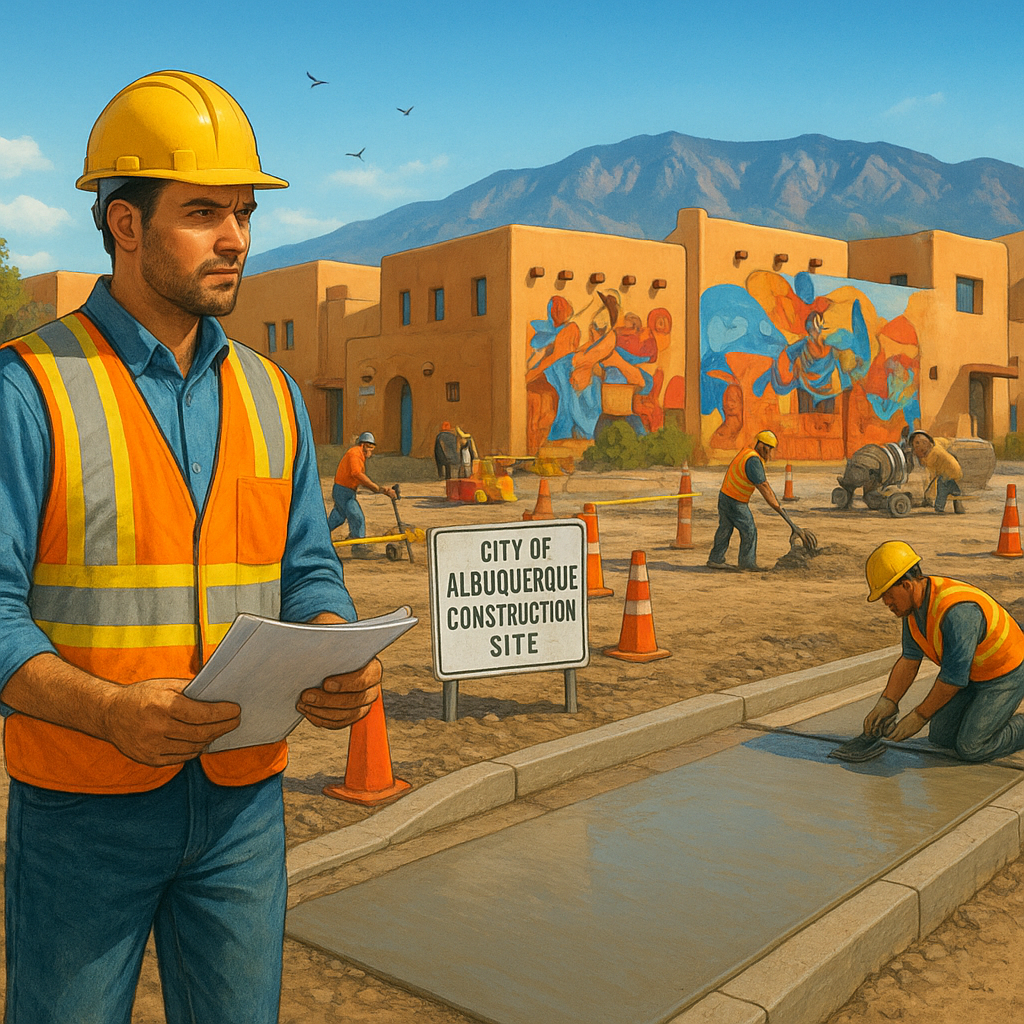
If you’re a concrete contractor in Albuquerque, you know the feeling. You’ve got a project lined up to pour a new driveway approach or replace a crumbling curb, and right as you’re about to pull the permit, the city drops a requirement you didn’t see coming: a surety bond. Suddenly, a simple job feels tangled in red tape. Take a deep breath. This isn’t a roadblock; it’s just the city’s way of making sure public spaces stay safe and look great. Let’s walk through what these bonds are, why they exist, and how you can check this off your list in no time.
What Exactly Is a Sidewalk, Drive-Pad, Curb & Gutter Bond?
Think of it as a promise you make to the City of Albuquerque. It’s a three-party agreement between you (the contractor), a surety company, and the city. You’re promising that any work you do on public right-of-way areas—sidewalks, curbs, gutters, and those concrete drive-pads connecting driveways to the street—will be done correctly and in line with the city’s rules. If something goes wrong and you don’t fix it, the bond offers a financial safety net so the city isn’t stuck with the repair bill.
It’s not insurance for your company. Instead, it’s a guarantee to the public that your work won’t create tripping hazards, drainage issues, or ugly patch jobs that drain city resources. The bond amount is set by Albuquerque, and you only pay a small fraction of that total as your premium.
Why Albuquerque Puts These Bonds in the Spotlight
Sunshine and monsoon rains can be tough on concrete. Sidewalks crack, curbs shift, and gutter pans wear out. The city knows that if a contractor does subpar work, it’s not just an eyesore—it can be a liability. A poorly poured driveway pad can flood a neighbor’s yard. A raised sidewalk edge can trip a pedestrian. Albuquerque’s regulations, including the requirement for a City of Albuquerque NM Contractor’s Sidewalk, Drive-Pad, Curb & Gutter Bond, aim to protect everyone. It’s a way to hold contractors accountable without tying up projects in court.
You might be asking, “Do I really need this just to pour a small curb?” In many cases, yes. If your job touches any part of the public right-of-way, the city wants that bond in place before you start. It’s not about mistrust; it’s about keeping neighborhoods safe and tidy for decades to come.
The “Compliance Only” Bond for Sign Painters and Bill Posters
Here’s where things get interesting. If you’re a bill posting or sign painting contractor, you might encounter a slightly different animal: the Bill Posting/Sign Painting Contractor – Compliance Only Bond. The phrase “compliance only” matters. It means your bond isn’t about the physical quality of your brushwork or vinyl application. Instead, it guarantees you’ll follow city ordinances—things like size restrictions, placement rules, and permit requirements.
Imagine you’re painting a mural on a wall that overlooks a public sidewalk. You don’t need a bond promising the paint won’t peel (though you should definitely use good paint). You need a bond promising you didn’t ignore a city code that prohibits advertisements in that zone. It’s a narrow, focused promise, and it keeps the visual landscape of Albuquerque fair for everyone.
How to Snag Your Albuquerque Contractor Bond Without the Headache
Feeling overwhelmed? Don’t be. Getting bonded is simpler than you think, and you can often wrap it up the same day. Here’s a quick roadmap:
- Know your exact requirement. The city will tell you which bond you need. Look for “Sidewalk, Drive-Pad, Curb & Gutter” or “Sign Painting Contractor – Compliance Only.” Grab the exact bond amount they require.
- Reach out to a surety bond pro. You don’t have to navigate this alone. An agency that specializes in contractor bonds can walk you through it. They’ll ask for your business info and possibly a credit check for larger bonds.
- Pay a premium, not the full amount. If the bond is $10,000, you might pay between $100 and $500 for the year. Good credit? You’ll land on the lower end. It’s a fraction of the bond’s coverage.
- File it with the city. Once your bond is issued, submit it alongside your permit application. The city now knows you’re backed by a financial guarantee.
Many contractors keep a blanket bond on file so they don’t have to scramble for each new project. If you do regular curb and sidewalk work, that’s a savvy move.
What Does This Bond Actually Cost, and Is It Worth It?
You’re running a business, so the bottom line matters. A sidewalk and curb bond for a smaller job might cost you less than a tank of gas. Let’s break it down realistically. If the required penal sum is $5,000, your annual premium could be as low as $50 to $100. For a $25,000 bond, you might pay a couple hundred bucks. The price hinges on your personal credit score and the bond amount. But here’s the real value: no bond, no permit. No permit, no job. And if you skip the bond and something goes wrong, you could face fines or legal headaches that make that premium look like pocket change.
It’s also a quiet marketing tool. When homeowners see that you’re bonded, they sleep a little easier. It tells them the city trusts you enough to let you work on public walkways.
A Day in the Life: The Bond in Action
Let’s paint a picture. You’ve been hired to replace a cracked driveway approach where the car crosses the sidewalk. The homeowner wants it smooth and code-compliant. You head to the city’s permitting office with your plans. The clerk says, “Great, just attach your $10,000 drive-pad bond certificate.” Because you already secured an Albuquerque City NM Contractor’s Sidewalk, Drive-Pad, Curb & Gutter Bond, you pull up the PDF on your phone and hand it over. Permit approved. The job takes two days. The concrete sets perfectly, and the inspector signs off. Your bond sits quietly in the background, a silent partner.
Now imagine the opposite. You didn’t bond up. A heavy storm washes out the new concrete because the slope was wrong, directing water into the street. The city gets complaints. Without a bond, you’re facing out-of-pocket repairs and potential fines. The bond would have covered the correction, saving your reputation and wallet.
Common Contractor Questions, Answered Without the Jargon
Does every contractor in Albuquerque need this bond?
Not every single one. The bond applies specifically to those doing work on sidewalks, curbs, gutters, or driveway pads within the public right-of-way. If your project stays entirely on private property and doesn’t touch public concrete, you might not need this particular bond. But always confirm with the city—overlap is common.
What about sign painters? I don’t touch concrete.
Right. Your bond is separate—the Compliance Only version. It’s all about following sign and bill posting ordinances, not structural work. You’ll typically need it if you’re installing or painting signs visible from public streets, where zoning laws kick in.
How fast can I get bonded?
Very fast. Many agencies can issue a sidewalk and curb bond within hours once your application is submitted. For the compliance-only sign bond, it’s often instant if you have decent credit. You don’t want to lose a hot lead because paperwork drags on.
Will my bond ever pay out? I don’t plan on messing up.
Hopefully never. A bond is there for worst-case scenarios. But understand this: if a claim is paid, you’re responsible for reimbursing the surety company. It’s not like insurance where you walk away. Think of it as a debt you owe, so doing quality work is still your best defense.
Making the Process Your Own—and Moving Forward
Navigating new regulations can feel like learning another language. But once you demystify the NM sidewalk bond or the sign painting compliance bond, it becomes just another tool in your belt. The City of Albuquerque didn’t dream these up to frustrate you; they created them to ensure that every contractor contributes to a safe, walkable, and beautiful city.
Next time a permit clerk mentions a bond requirement, you’ll know exactly what they mean. You’ll be able to say, “No problem, I’ve got that covered,” and keep your timeline intact. So go ahead, grab your bond, pour that perfect driveway pad, and leave the sidewalk smoother than you found it. Your community will thank you—one safe step at a time.
Leave a Reply