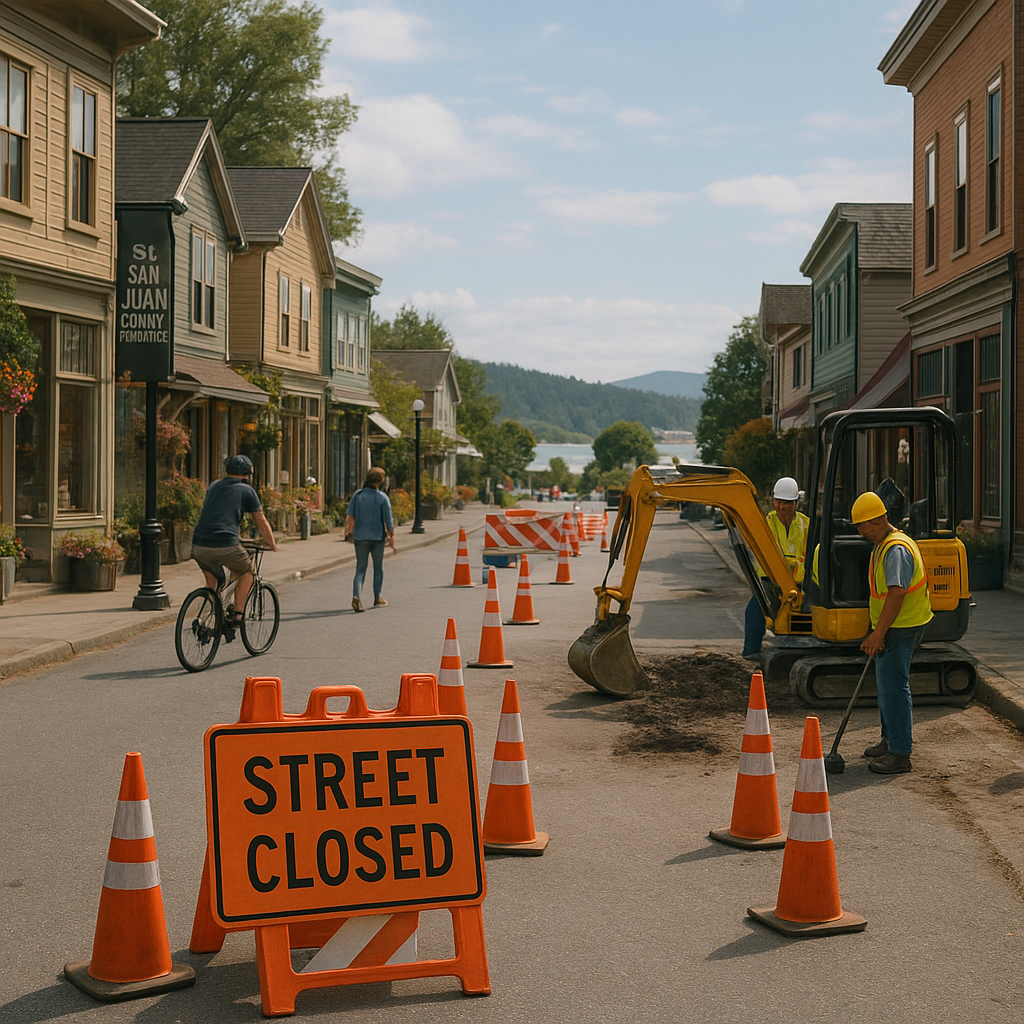
Picture a quiet morning on Orcas Island. You’re heading to the ferry terminal with a fresh cup of coffee, the salty breeze drifting through your windows. Suddenly, traffic slows. Ahead, a backhoe is clawing into the pavement, orange cones sprouting like mushrooms. A water main gave out overnight, and now a trench slices right across the road. It’s a headache, no doubt. But behind the scenes, a small but mighty promise keeps everyone protected—the street obstruction bond. In San Juan County, Washington, this bond isn’t just a piece of paper. It’s a safeguard that ensures our island roads stay safe, smooth, and fully restored after the dust settles.
If you’ve ever wondered why some construction barriers vanish in a week while others seem to linger forever, you’re asking the right question. Let’s unpack how a San Juan WA street obstruction bond works, who needs one, and why it’s a quiet hero for our community.
So, What Exactly Is a Street Obstruction Bond?
Think of a street obstruction bond like a security deposit for public roads. When a contractor, utility crew, or even a homeowner digs into a street, sidewalk, or alleyway, they’re borrowing property that belongs to everyone. The county says, “Sure, break ground—but promise you’ll put it back exactly how you found it.” The bond is that promise in financial form.
More formally, a street obstruction bond (often called a right-of-way permit bond) is a type of surety bond. It’s a three-party agreement: the contractor (the principal), the County of San Juan, State of Washington (the obligee), and the surety company that backs the bond. If the contractor leaves a crater in the road or botches the repair, the county can tap the bond to fix the mess without chasing anyone for cash. No taxpayer dollars drained, no finger-pointing.
Why Does San Juan County Insist on These Bonds?
Our islands—San Juan, Orcas, Lopez, Shaw, and the smaller gems—face unique challenges. The roads here curve around rocky bluffs and thread through dense forests. They’re lifelines for ferries, emergency vehicles, school buses, and islanders who just need to grab groceries. A poorly patched trench might seem trivial on a suburban boulevard, but on a narrow island lane with relentless rain and heavy logging trucks, it can turn into a tire-eating hazard overnight.
San Juan County requires a street obstruction bond to protect both its infrastructure and its people. The bond guarantees that any excavation in the public right-of-way follows county codes. The pavement must be restored to the proper grade, packed tight, and sealed against water intrusion. If the work falls short, the bond pays for the county to hire another crew to make it right. For a place where tourism and natural beauty are economic engines, keeping roads in top shape isn’t just a detail—it’s essential.
Who Needs a Street Obstruction Bond in San Juan County?
You might think this only applies to big construction firms. In reality, the net spreads wider. If your project touches a county road, sidewalk, or utility easement, you’ll likely need a bond before pulling a permit. Common scenarios include:
- Plumbers replacing a sewer lateral that crosses under a street.
- Electrical crews installing underground power lines or fiber optic cables.
- Contractors paving a new driveway approach from a county road.
- Landscapers adding drainage systems that connect to roadside ditches.
- Event organizers placing a temporary stage or crane that blocks a street.
Even a homeowner acting as their own contractor may need to secure a Washington state street obstruction bond if the county determines the work could risk public safety. The rule of thumb: if you’re scraping, digging, or obstructing anything beyond your property line, expect to talk about a bond.
How the Bond Process Actually Works
Let’s walk through a real-world rhythm. Suppose a contractor wins a job to upgrade an aging water line beneath a road on San Juan Island. Before a shovel hits the dirt, they head to the county’s Public Works Department for a right-of-way permit. The county reviews the scope and sets a bond amount. That number fluctuates based on the project’s size, the road’s importance, and the estimated restoration cost. A small driveway cut might need a $2,000 bond; a major trench across a arterial road could require $25,000 or more.
The contractor then contacts a surety bond agency. The agency checks the contractor’s credit, experience, and financial stability, then issues the bond for a fraction of the total amount—often 1% to 10% of the bond value, paid as an annual premium. The bond is filed with the county, and the permit is issued. When the project wraps up, the county inspects the restoration. If everything looks tight, the bond is eventually released. If not, the county can file a claim to pay for repairs. The contractor remains ultimately responsible for repaying the surety, so there’s strong motivation to do the job right the first time.
A Quick Analogy to Make It Stick
Imagine you’re lending your favorite car to a neighbor. You hand over the keys but hold onto a $500 cash deposit. If they return the car with a full tank and zero scratches, they get the cash back. If the bumper comes back scuffed, you use that deposit to fix it. A street obstruction bond acts the same way, just with roads instead of a sedan, and with a professional surety company managing the financial guarantee.
Real-World Snapshot: A Trench on Lopez Island
Let’s put skin on this. A local utility company needs to replace a corroded gas line that runs under a quiet Lopez Island road. The crew opens a trench six feet deep and ten feet long. They work efficiently and backfill the hole, but a month later, the patch sinks two inches. Rain pools there, soon becoming a slick hazard for cyclists and motorcycles. A neighbor calls the county.
Because the contractor posted a San Juan County Washington street obstruction bond, the county’s inspector cites the failed restoration. The contractor gets a chance to fix it. If they don’t, or if they already packed up and left, the county taps the bond funds. A new crew cuts out the sunken spot, compacts the base properly, and repaves without a single dollar coming from local taxpayers. The road is safe again, and the bond did its quiet job.
Safety Benefits That Go Beyond Pavement
The most obvious safety win is a smooth, intact driving surface. But the ripple effects run deeper. Properly closed trenches prevent water from infiltrating the road base, which reduces frost heave and pothole formation during our wet winters. A secure road also means ambulances reach homes faster, school buses don’t swerve around cracks, and cyclists—plentiful on our island byways—aren’t launched over a hidden ridge in the pavement.
There’s also a financial safety net. Without bonds, a county might hesitate to issue permits for urgent utility repairs, afraid of being stuck with a repair bill. That could delay critical infrastructure work. The bond removes that hesitancy, striking a healthy balance between progress and protection.
What About the Cost and How to Get One
Here’s good news: securing a County of San Juan WA street obstruction bond is usually straightforward and surprisingly affordable. Most contractors budget the bond premium as a standard project cost, just like they do for materials or equipment rental. A $10,000 bond might cost somewhere between $100 and $500 annually, depending on the applicant’s credit profile. That’s a modest price for the peace of mind it delivers to the entire community.
Steps to obtain the bond typically include:
- Determine the exact bond amount required by the county for your permit.
- Gather basic business and personal information (licenses, financials).
- Contact a surety bond agency that understands Washington state requirements.
- Fill out a quick application and receive a quote, often within hours.
- Pay the premium and file the bond with San Juan County Public Works.
Many local contractors build an ongoing relationship with a surety provider, making future bonds even faster. And if you’re a homeowner pulling a one-time permit, don’t be intimidated. It’s a standard process that surety specialists can walk you through over the phone.
Common Questions About Street Obstruction Bonds
We hear a few head-scratchers all the time, so let’s clear them up.
“Is the bond the same as insurance?” Not quite. Insurance protects you from accidents. A surety bond protects the county (and the public) from your failure to meet obligations. If a claim gets paid, you reimburse the surety company. Think of it as a credit line with a public guarantee.
“How long does the bond last?” The bond typically remains in effect until the county formally accepts the restoration work and releases the obligation. Some bonds are written for a set term and renewed if the project drags on. Always check your permit’s expiration date.
“What if I’m just repairing my own driveway approach?” Even a small project within the right-of-way often triggers the bond requirement. Call San Juan County Public Works before you dig. A quick conversation can save you from costly fines or a stop-work order.
“Can I use cash instead of a bond?” Some counties allow cash deposits, but bonds are far more common. A surety bond keeps your cash available for project expenses and signals financial responsibility to the county.
How Street Obstruction Bonds Weave Into Island Life
It’s easy to overlook the invisible threads that keep a community running. When you drive over a patch of fresh asphalt that’s perfectly flush with the old road, you’re experiencing the end result of a system that includes careful engineering, county oversight, and yes, a humble surety bond. In a county where the landscape demands resilience and the community values self-reliance, this requirement reflects a shared commitment to do things right.
Next time you see a crew with jackhammers tearing into a Friday Harbor street, you’ll recognize the quiet machinery at work beyond the machinery itself. That bond is a promise written in legal language, but its translation is simple: “We’ll leave these roads as good as we found them, maybe better.”
A Final Thought on Responsible Growth
San Juan County is a place where neighbors still wave, ferries punctuate the day, and the environment holds a sacred spot in daily choices. As our communities evolve—new housing, upgraded utilities, faster internet lines—the need to dig into public roads won’t disappear. But thanks to the Washington state street obstruction bond requirement, progress doesn’t have to come at the expense of safety or fiscal sanity.
Whether you’re a seasoned contractor or a first-time permit applicant, understanding this bond turns a bureaucratic hurdle into a tool you can appreciate. It keeps our roads smooth, our tax dollars where they belong, and our island network humming. And that’s something worth a quiet nod the next time you roll across a seamless stretch of pavement on your way to the water.
Leave a Reply