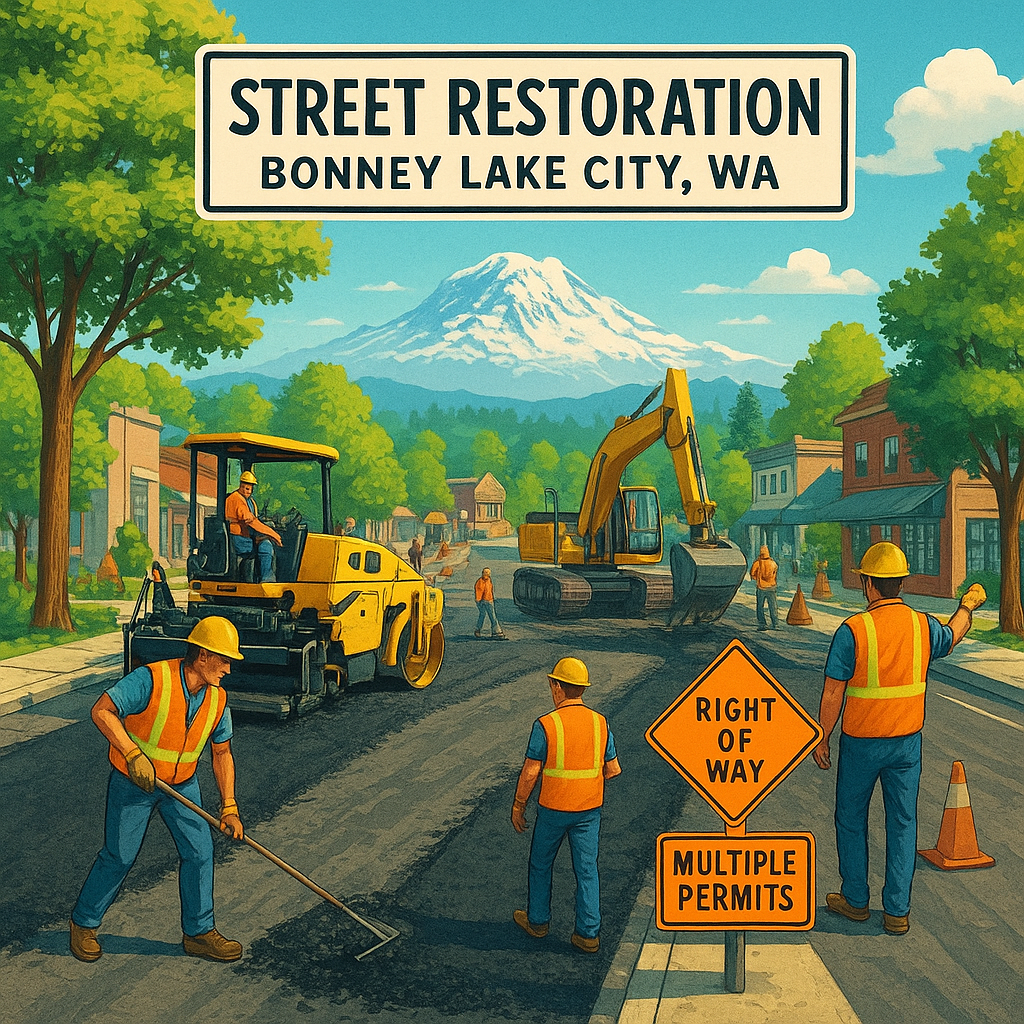
Have you ever wondered what keeps our roads smooth and safe after construction crews dig them up? If you live in Bonney Lake, Washington, you might soon notice fresh pavement, upgraded utilities, and smoother rides on familiar streets. But here’s the thing no one talks about: before any shovel hits the ground, contractors have to promise they’ll fix everything properly. That promise often comes in the form of a street restoration bond, especially when multiple permits are involved. Let’s unpack what that means for you, your neighborhood, and the future of our city.
What Exactly Is a Street Restoration Bond?
Think of a street restoration bond as a security deposit for public roads. When a contractor, utility company, or developer needs to dig into a city street—maybe to repair a water main, install fiber optic lines, or connect new sewer services—they’re required to restore the road to its original condition (or better) once the work is done. The bond is a financial guarantee. If the contractor does a poor job, or if they vanish without finishing, the city can use that bond money to hire someone else to fix the mess. You won’t be left staring at a pothole for months.
In Bonney Lake, the process gets a little more interesting when multiple permits are pulled. Instead of posting a separate bond for each tiny project, a contractor can secure a single street restoration (multiple permits) bond. This blanket bond covers several jobs over a set period. It’s a more efficient, streamlined way to handle things—both for the city and for the companies doing the work.
Why Bonney Lake Is Investing in Street Revitalization
Bonney Lake is growing. New families, businesses, and community spaces are calling this corner of Pierce County home. With growth comes the need to upgrade aging infrastructure and make room for modern utilities. You’ve probably noticed more construction signs, lane closures, and fresh asphalt patches around town. These aren’t random projects; they’re part of a coordinated effort to revitalize our streets and underground networks.
But every single cut into the pavement is like a small wound. If it’s not repaired correctly, water seeps in, freezes, expands, and creates cracks that spread like spiderwebs. A street restoration bond makes sure that the “healing” process is done right. The city’s public works department can inspect the repair and, if it falls short, dip into the bond funds without costing taxpayers a dime.
How the Multiple Permits Bond Works in Plain English
Let’s break it down with a simple analogy. Imagine you’re lending your car to several friends for different errands. You could ask each friend for a small damage deposit, but that’s a lot of paperwork. Instead, you ask one responsible friend to post a larger deposit that covers all trips. If anyone damages the car, you use that deposit to fix it. That’s exactly what the multiple permits bond does. A contractor puts up one bond, which covers all their permitted street cuts for a year (or another agreed-upon term). The city holds that bond as insurance.
This setup is especially helpful for utility providers who might need to access multiple locations for routine maintenance. Pacific Northwest weather can be tough on underground pipes, and quick repairs are essential. With a pre-existing blanket bond, they can get permits faster and start fixing problems without delay—all while protecting the public’s investment in the roadway.
Who Needs This Bond?
Not every project requires a bond of this size, but for those doing extensive work in the public right-of-way, it’s mandatory. Typical bond holders include:
- General contractors handling infrastructure upgrades
- Utility companies (gas, electric, water, telecom)
- Developers building new subdivisions that tie into city streets
- Plumbers and excavation specialists doing multiple small repairs across the city
If you’re a homeowner planning a simple sewer line replacement on your property that barely touches the street, you might not need a multiple permits bond. But for anyone who regularly digs into Bonney Lake’s pavement, this bond is a non-negotiable ticket to work.
What the City of Bonney Lake Requires
Bonney Lake, like many Washington cities, follows municipal codes that outline right-of-way restoration standards. The multiple permits bond amount is set by the city based on the scope and frequency of work. It’s not a one-size-fits-all figure. The city’s engineering or public works department reviews the contractor’s anticipated projects and calculates a bond that adequately covers potential restoration costs.
Why does this matter to you? Because when the bond is in place, the city has leverage. That means the patched-up rectangle on your morning commute won’t sink three inches after the first rainstorm. If it does, you can report it, and the city will enforce the bond terms. No more playing phone tag with a contractor who’s already moved on to the next job.
How These Projects Affect Daily Life in Bonney Lake
Let’s be real: construction is inconvenient. Detour signs, orange cones, and the rumble of heavy machinery can test anyone’s patience. But temporary headaches lead to long-term gains. Upcoming street restoration projects aim to:
- Improve driving surfaces and reduce vehicle wear and tear
- Enhance pedestrian safety with better curb ramps and crosswalks
- Upgrade stormwater drainage to prevent flooding
- Repair or replace aging utility lines before they fail catastrophically
The multiple permits bond ensures these improvements aren’t followed by premature deterioration. When a contractor knows their bond is on the line, they’re far more likely to compact the soil correctly, lay asphalt at the right temperature, and meet all specifications. It’s a built-in quality control mechanism.
What Happens If Something Goes Wrong?
Imagine a scenario: a fiber optic company cuts into a residential street to lay cable. They patch it up, but six months later, the patch starts crumbling. You call City Hall. The public works inspector comes out, determines the restoration doesn’t meet standards, and notifies the contractor. If the contractor doesn’t fix it within a set time, the city files a claim against the bond. The surety company that issued the bond pays out the necessary amount, and the city hires a qualified crew to do the job right. The contractor then has to repay the surety company—so they’re financially motivated to get it right the first time.
This process protects everyone. You get a properly repaired road. The city maintains its infrastructure. Even the contractor benefits by building a reputation for reliability. In the long run, these bonds keep Bonney Lake’s streets safer, smoother, and better looking.
The Bigger Picture: Revitalizing Bonney Lake
Street restoration bonds are just one piece of a larger puzzle. Bonney Lake has been steadily investing in its future, and you can see it in the fresh sidewalks, updated parks, and well-maintained public spaces. The multiple permits bond program encourages responsible development by holding contractors accountable. It also speeds up administrative processes—contractors can secure one bond and then focus on delivering quality work across multiple job sites.
If you’re a business owner or developer considering projects in the area, understanding this bond requirement is key. It’s not a hurdle; it’s a partnership with the city that says, “We want you to succeed, and we want our streets to stay beautiful.” For residents, it’s a behind-the-scenes assurance that their tax dollars aren’t wasted on shoddy repairs.
Frequently Asked Questions
How long does a multiple permits bond last?
Typically, these bonds are set for a one-year term, but they can be tailored to match the duration of the permits. Renewal processes are straightforward if the contractor continues to work within the city.
Is this the same as a performance bond?
Similar, but not exactly. A performance bond covers an entire construction project. A street restoration bond specifically guarantees the repair of right-of-way areas that were disturbed. Sometimes both types of bonds may be required for larger developments.
Can a homeowner request to see proof of a contractor’s bond?
Absolutely. If you’re hiring someone to do work that crosses into the public right-of-way, ask for their bond information. Reputable contractors will have no problem sharing it. You can also verify with the city that the bond is active and sufficient.
Final Thoughts: Smooth Roads Ahead
Next time you drive down a fresh stretch of asphalt in Bonney Lake, remember the invisible safety net that helped make it happen. The street restoration (multiple permits) bond might sound like bureaucratic jargon, but it’s really a promise—a promise that our community won’t be left to deal with subpar work. It’s a system that encourages efficiency, holds contractors accountable, and keeps our city moving forward, literally.
So, the next time you see a backhoe digging into your street, don’t just groan. Picture the bond paperwork that guarantees the road will look brand new once the work wraps up. Bonney Lake is on the rise, and with smart safeguards like these in place, the journey will be a lot smoother for all of us.
Have you noticed any recent street restorations in your neighborhood? How did they hold up through our rainy winter? We’d love to hear your stories. After all, these projects aren’t just about asphalt and concrete—they’re about the places we call home.
Leave a Reply