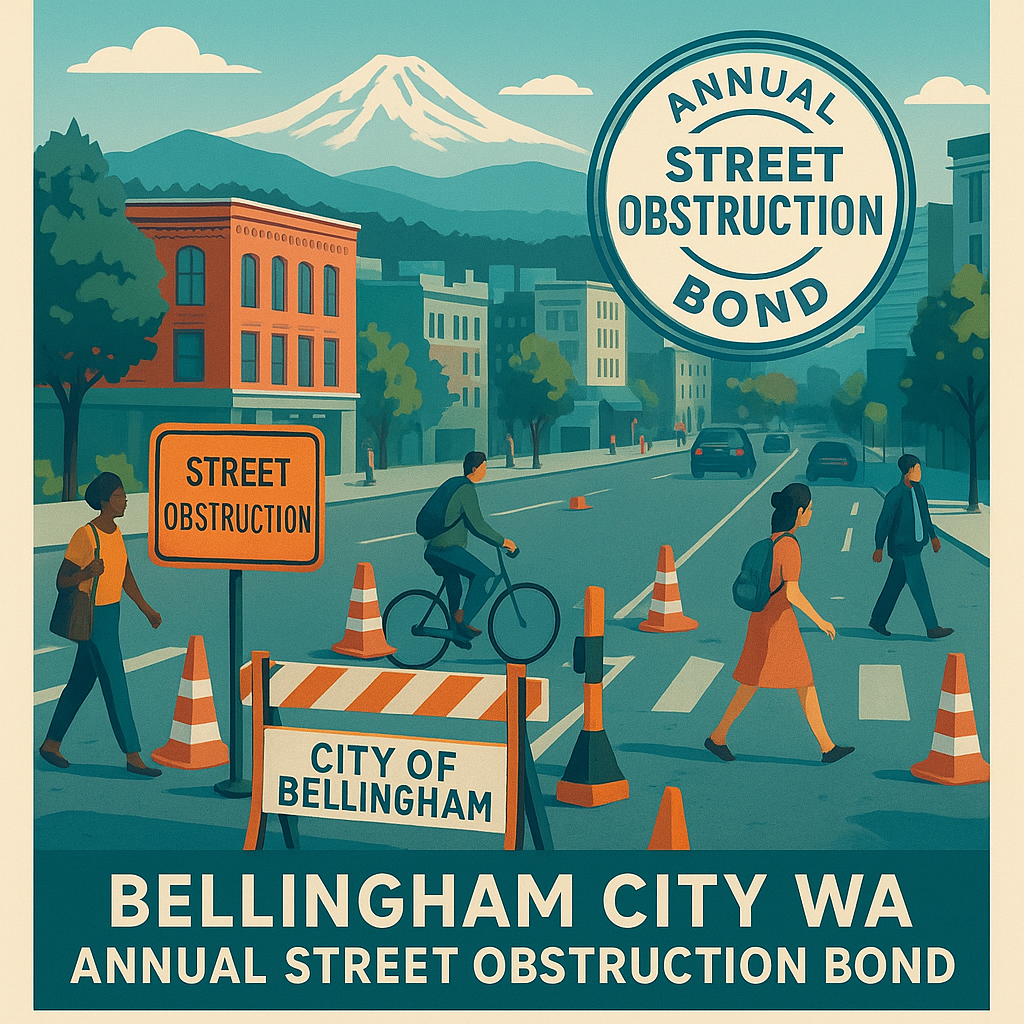
Have you ever driven down a freshly paved road only to see it torn up a few weeks later for utility work? It can be frustrating—especially when the patch job leaves behind a bumpy, uneven surface. The City of Bellingham, Washington, knows this struggle all too well. To keep streets smooth and safe for everyone, they require an annual street obstruction bond. But what exactly does that mean? And why should residents, contractors, and business owners care?
In this post, we’ll walk you through everything you need to know about the Bellingham WA street obstruction bond. You don’t need a law degree or a construction background to understand it. Think of it like a safety deposit for the roads you drive on. Let’s dig in—pun intended.
What Is a Street Obstruction Bond, Anyway?
Imagine you’re renting an apartment. The landlord asks for a security deposit. If you take great care of the place and leave it spotless, you get your deposit back. If you put a hole in the wall, the landlord holds onto that money to fix the damage.
A street obstruction bond works the same way, just with city streets instead of an apartment. When a contractor, utility company, or even a homeowner digs into a public right-of-way—think cutting open the road to fix a water pipe or install fiber optic cables—the city wants a guarantee. They need to know that the street will be restored to its original condition, or better, once the job is done.
This bond is a financial promise. It says, “I will follow the rules, do the work properly, and put the pavement back the way I found it.” If the work is shoddy or the street sinks months later, the city can use the bond money to cover repairs. It’s a simple concept with a big payoff: safer roads for everyone.
Why Does Bellingham Require an Annual Bond?
Bellingham is a growing city with a lot of moving parts. Construction projects pop up regularly—new housing developments, sewer upgrades, gas line replacements. The city’s Public Works Department has a tough job: balancing progress with protecting public infrastructure.
Requiring an annual street obstruction bond does a few important things:
- Protects taxpayers: Road repairs can cost a fortune. If a contractor does a lousy patch job and disappears, the city—and its residents—shouldn’t have to foot the bill. The bond covers those costs.
- Encourages quality work: Knowing their bond is on the line pushes contractors to follow Bellingham’s strict restoration standards. Nobody wants a claim against their bond.
- Streamlines the permitting process: Instead of buying a separate bond for every single project, contractors can secure one annual bond that covers all their permitted work throughout the year. It saves time, paperwork, and headaches.
So while the term “obstruction bond” might sound like bureaucratic jargon, it’s really just common sense. It keeps everyone accountable.
Who Actually Needs This Bond?
You might think only massive construction firms need to worry about street obstruction bonds. But the requirement casts a wide net. If your project involves any excavation, cutting, or work that disturbs the surface of a city street, alley, sidewalk, or even the grassy right-of-way strip, you’ll likely need a right-of-way permit—and that permit calls for a bond.
Typical candidates include:
- General contractors building new driveways or subdivisions.
- Utility companies running gas, electric, water, or sewer lines.
- Telecommunication crews installing fiber internet or cable TV.
- Plumbers or excavation specialists hired to repair a broken sewer lateral.
- Homeowners overseeing a major landscaping project that cuts into the public right-of-way (though in some cases, the hired contractor carries the bond).
Does that mean you, as an everyday resident, need to run out and buy a bond? Unlikely, unless you’re personally managing a project that tears up the street. But it’s great to know why the orange cones and temporary patches show up—and why they should be fixed right.
The Annual Advantage: One Bond for the Whole Year
Here’s where Bellingham’s approach gets clever. Some cities require a bond for each individual obstruction permit. Imagine buying a separate insurance policy every time you drive to the grocery store. It would be a logistical mess. The annual street obstruction bond replaces that chaos with a single, yearly safety net.
With an annual bond, a contractor puts up a set amount of money (or a surety bond for a set amount) that covers all their permitted street work for an entire calendar year. It stays in place as long as they remain compliant. If they complete all restorations to the city’s satisfaction, the bond continues smoothly into the next year. If a problem occurs, the city can draw from the bond to fix the road, and the contractor must replenish the bond amount.
This system benefits everyone: contractors save on administrative costs, the city spends less time tracking multiple bonds, and residents see more consistent, high-quality road restorations.
How Much Does the Bond Cost?
The dollar figure isn’t set in stone; it depends on the scope of work the contractor typically handles. Bellingham’s Public Works Department determines the bond amount based on factors like typical project size, roadway classification, and how much damage restoration might cost in a worst-case scenario. The goal is to have enough coverage to fix major failures but not to price small operators out of the market.
Contractors often work with a surety company to secure the bond. The actual out-of-pocket cost is usually a small percentage of the total bond amount—similar to paying an insurance premium. And because it’s annual, the cost spreads out over months of work, making it a manageable business expense.
The Step-by-Step Process: From Permit to Perfect Pavement
Wondering how this all fits together? Let’s trace the journey from idea to restored roadway.
- Plan the project: Whether it’s a sewer repair or a new cul-de-sac, the contractor maps out exactly where and how they’ll cut into the street.
- Apply for a right-of-way obstruction permit: The contractor submits plans to the City of Bellingham, detailing the work zone and restoration approach.
- Provide proof of bond: The annual street obstruction bond must be on file and active before the permit is issued. If not, the permit gets delayed.
- Complete the work with care: The contractor excavates, makes the necessary repairs or installations, and then follows strict backfilling and paving standards. Bellingham has very specific requirements for compaction, asphalt thickness, and curing time.
- Pass inspection: City inspectors check the restoration. Is the patch smooth? Are there any depressions? Does the asphalt match the adjacent surface?
- Release or retain the bond coverage: For an annual bond, this step is ongoing. If all work passes, the bond stays healthy. If deficiencies pop up, the city notifies the contractor. Unresolved issues lead to a bond claim, where the city hires a third party to fix the work and recovers the cost from the bond.
It’s a cycle designed to keep Bellingham’s roads looking and feeling great, one project at a time.
Real-Life Benefits for Drivers and Pedestrians
You might be reading this as a driver who’s tired of dodging potholes. So what’s in it for you? A lot, actually. Here’s how the annual street obstruction bond translates into a better daily commute:
- Smoother rides: Properly restored road cuts don’t turn into wheel-banging divots after a rainy winter. The bond helps enforce high standards.
- Fewer surprise repairs: When a utility company knows their bond is on the line, they’re far less likely to slap on a cheap temporary patch and hope nobody notices.
- Faster project turnaround: The streamlined annual bond process means permits get issued quicker. Projects finish faster, so lane closures and detours shorten.
- Protected investment: Roads are expensive public assets. The bond safeguards that investment, keeping property values stable and maintenance costs down.
Common Questions (and Friendly Answers)
We get it—bonds and permits can feel overwhelming. Here are some questions people often ask, unpacked in plain English.
“Is a street obstruction bond the same as insurance?” Not quite. Insurance protects the contractor if something accidental happens, like damaging a neighbor’s mailbox. The bond specifically guarantees that the road restoration work will be done right. They work together, but they’re not interchangeable.
“What happens if a contractor doesn’t fix a sunken patch?” The city won’t just shrug it off. They’ll issue a notice to the contractor. If the issue isn’t resolved, the city files a claim against the bond, uses those funds to hire another crew, and the original contractor faces consequences—possibly losing the ability to pull permits in Bellingham.
“Can a homeowner get an annual bond instead of their contractor?” Typically, the licensed contractor performing the work secures the bond because they’re the ones signing off on the permits. A homeowner doing a small DIY project within the right-of-way would still need a permit, but the city may handle the bonding requirement differently. Always check with the Public Works permitting desk first.
Staying on the Right Side of the Bond
For contractors, avoiding bond claims means avoiding stress and extra costs. Here are a few practical tips:
- Know Bellingham’s restoration standards by heart. The city publishes detailed specs. Don’t guess—measure compaction, use the right asphalt mix, and pay attention to trimming edges cleanly.
- Communicate with inspectors early and often. A quick conversation before you pour the final layer can catch issues while they’re cheap to fix.
- Don’t let temporary patches linger. Permanent restoration should happen as soon as weather and project phasing allow. Delays invite failures and complaints.
- Document everything. Photos, compaction reports, and material tickets create a paper trail that protects you if a dispute arises.
Beyond the Bond: A Culture of Safer Streets
At its core, Bellingham’s annual street obstruction bond isn’t about red tape—it’s about community pride. Every smooth lane, every even sidewalk, and every intersection free of puddles reflects a shared commitment to quality. The bond is just one piece of the puzzle, joining inspections, training, and public feedback to create a safer, more livable city.
Have you noticed a road restoration gone wrong near your home? Now you know that the city has a mechanism to make it right. And if you’re a contractor, you can see the annual bond as more than a requirement; it’s your reputation wrapped up in a financial guarantee.
Wrapping It All Up
The next time you see a crew cutting into a Bellingham street, you’ll know the hidden layer of protection sitting behind the orange cones. The City of Bellingham’s annual street obstruction bond is a smart, streamlined way to hold everyone accountable, protect taxpayer dollars, and keep roads safe and pleasant to travel on. Whether you’re a business owner, a resident, or just someone who appreciates a well-maintained pavement, it’s a system worth understanding.
Thinking about a project that might require a bond? Reach out to the City of Bellingham Public Works Department. They can walk you through the current bond requirements, permit fees, and restoration standards so your next project starts on solid ground—and ends with a street that looks brand new.
Leave a Reply