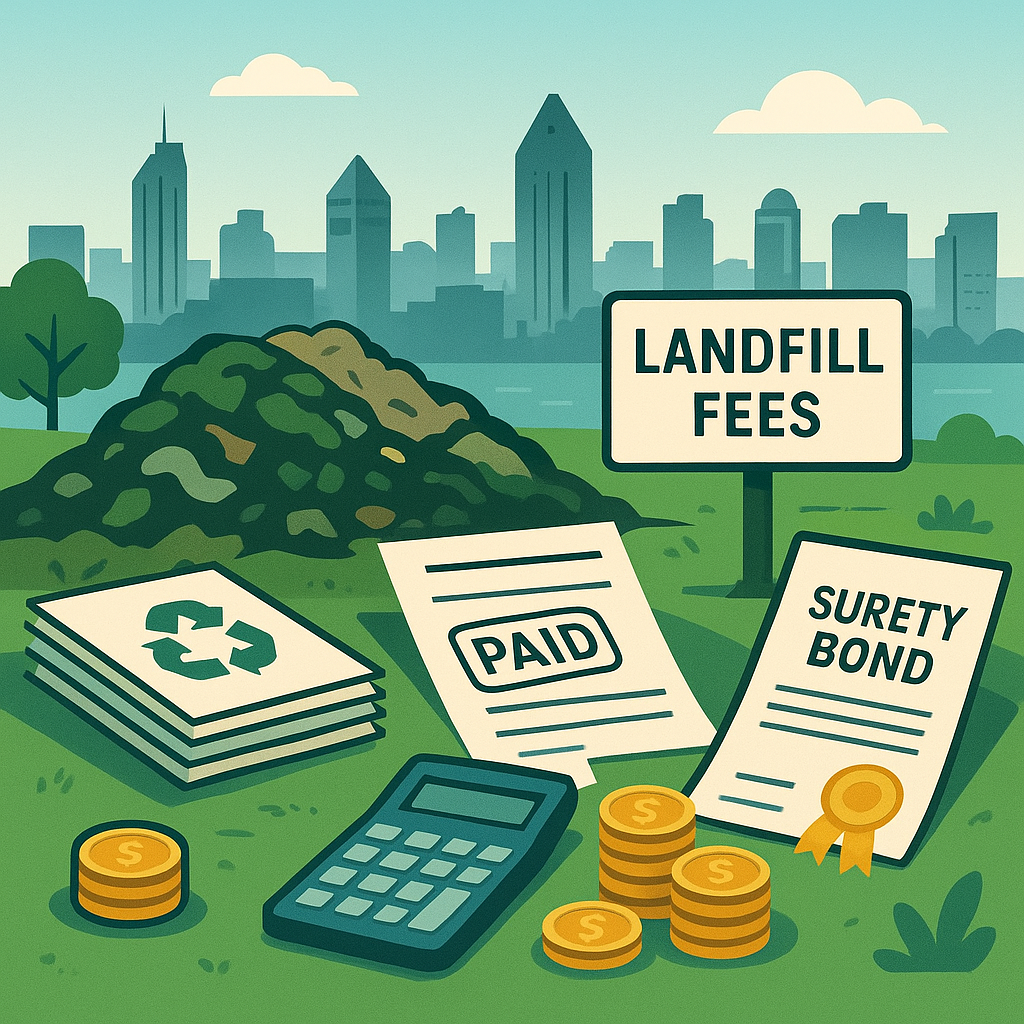
If you’re a contractor, landscaper, or demolition pro in Southern California, you already know how quickly landfill dumping fees can eat into your project’s bottom line. Every truckload of debris, green waste, or mixed trash comes with a price tag — and when you’re hauling multiple loads a week, those upfront payments sting. But what if you could hit the pause button on that cash outflow without skipping a beat at the gate? That’s exactly where San Diego’s deferred payment strategy comes in, using a little-known tool called a Surety Instrument Deferred Payment Account Bond. It sounds fancy, but it’s essentially a credit line backed by a bond, and it can be a game-changer for your business cash flow.
What Is a Surety Instrument Deferred Payment Account Bond, Really?
Let’s strip away the legal jargon. A Surety Instrument Deferred Payment Account Bond is a three-way promise between your business, the City of San Diego, and a surety company. Think of it like a secured credit card designed specifically for landfill dumping fees. Instead of paying cash or writing a check every time your truck pulls up to the Miramar Landfill or another city facility, you set up a deferred payment account. You dump now, get billed later, and the bond guarantees the city that you’ll pay your tab on time.
The bond is not insurance for you; it protects the city against non-payment. But for your business, it works like a financial safety net that turns unpredictable daily expenses into predictable, manageable invoices. You no longer have to keep huge cash reserves sitting in a checking account just to cover dumping fees.
Why San Diego Contractors Are Rethinking Dumping Fees
Have you ever had a week where three big jobs all require hauling at the same time? Suddenly you’re shelling out thousands of dollars just to get rid of debris before you’ve even invoiced your clients. That’s a cash flow crunch that can delay payroll, equipment rentals, or even your ability to bid on the next project. San Diego’s landfill dumping fees may seem non-negotiable, but how you pay them is entirely up to you.
By shifting to a deferred payment model, you align your expenses with your income. You dump throughout the month, the city sends a consolidated statement, and you pay after your clients have paid you. That simple timing shift can maximize your savings by reducing the need for high-interest credit lines or short-term loans. It’s not a discount on the tonnage rate, but it’s a real saving on the cost of money.
The Hidden Cost of Paying Upfront Every Trip
Imagine you’re running a small demolition crew. On average, you pay $60 per ton, and a full truckload might set you back $400. Paying that five times a week means $2,000 out the door before Friday. Now multiply that by a month. You’ve just tied up $8,000 that could have earned interest, covered a surprise equipment repair, or funded marketing to land more jobs. The opportunity cost is real.
With a deferred payment bond in place, you keep that $8,000 in your account longer. You might use it to take advantage of early-payment discounts from suppliers or simply avoid bouncing checks. Over a year, the cumulative effect can be substantial, even if the dumping fee per ton stays the same.
How the City of San Diego’s Deferred Payment Account Works
The City of San Diego requires certain haulers and businesses to secure a surety bond if they want to enjoy deferred payment privileges at city-operated landfills. The bond amount typically matches the estimated monthly dumping charges. For example, if you anticipate $10,000 in fees each month, you’ll likely need a $10,000 bond — though the exact figure is determined by the city’s Environmental Services Department based on your volume history.
Once approved, you receive a unique account number. Every time you dispose of waste, the gate attendant records the load against that account instead of demanding immediate payment. At the end of the billing cycle, you get an itemized statement, and you have a set number of days to pay. It’s similar to how commercial water or electricity accounts work.
But what happens if you fail to pay? The city can file a claim against your bond. The surety company would pay the city up to the bond’s limit, and then pursue you for reimbursement. A claim can spike your future bond premiums and damage your reputation, so timely payment is crucial. In that sense, the bond enforces discipline while offering flexibility.
Eligibility and Getting Started
Are you wondering if your business qualifies? Most licensed waste haulers, demolition contractors, and landscape companies with a valid San Diego business tax certificate can apply. The process isn’t as intimidating as it sounds. You’ll need to:
- Contact the City of San Diego Environmental Services Department to request a deferred payment account application.
- Provide details about your estimated monthly disposal volume.
- Work with a surety bond provider to obtain the Surety Instrument Deferred Payment Account Bond.
- Submit the completed paperwork and bond to the city for approval.
The bonding company will assess your credit and financial strength. Even if your credit isn’t perfect, many agencies offer programs for applicants with less-than-ideal scores. The cost, known as the bond premium, is usually a small percentage of the total bond amount — often between 1% and 5% annually. That premium is your only out-of-pocket expense to unlock deferred billing, aside from any administrative fees the city might charge.
Maximizing Savings Beyond the Obvious
Simply deferring payment is a great start, but savvy business owners can squeeze even more value from this strategy. Here’s how to turn the deferred payment bond into a full-blown savings machine.
1. Sync Billing Cycles with Project Milestones
Most municipal billing cycles run monthly. Align your dumping activities so that the bulk of your fees land in a cycle that corresponds to your client payment schedule. For instance, if your big commercial clients pay on the 15th, try to schedule heavy disposal after the previous cycle’s cutoff but before their check clears. That way the city’s due date falls after you’ve already banked the receivable. It’s a simple tweak that reduces the need for bridge capital.
2. Use the Bond to Negotiate Volume Breaks
When you’re not bleeding cash at the scale every day, you can confidently commit to higher volumes with your disposal needs. Some transfer stations and private facilities offer volume discounts or loyalty programs. Even if the city landfill itself doesn’t budge on its per-ton rate, having a deferred account frees you to explore alternative disposal sites that might reward bulk commitments. And you’ll still have the bond as a backup for city sites when needed.
3. Build a Credit Cushion for Slow Seasons
Landscaping and construction can be seasonal. During dry months, you’re hauling green waste nonstop. In winter, work slows down. A deferred payment account smooths out those peaks and valleys. You handle the busy season without draining your reserves, and you pay later when income may be lower but more predictable. It’s like having a line of credit that costs only the bond premium, no interest charges on the deferred balance itself.
4. Protect Your Business Credit and Relationships
One often-overlooked benefit is the professional signal it sends. The city and your suppliers see that you’re bonded and trusted to manage an account. That credibility can spill over into other areas — maybe a supplier extends more favorable terms because they see your financial responsibility. Plus, you avoid embarrassing situations where a check bounces at the landfill gate or a debit card is declined. Peace of mind is a form of savings, too.
Common Pitfalls and How to Dodge Them
No strategy is risk-free. The most obvious danger is letting the deferred balance balloon without tracking it. Just because payment isn’t due today doesn’t mean the money won’t leave your account eventually. Keep a running tally of your dumping activity, matching gate receipts to your internal records. Treat the upcoming payment like an invoice that’s already spent.
Another pitfall is underestimating your bond amount. If your volume spikes unexpectedly and you exceed the bond limit, the city could suspend your deferred payment privileges. Request a bond amount with a comfortable buffer based on your highest historical month, not your average. The premium difference is usually minimal, but the inconvenience of a suspended account isn’t worth skimping.
Finally, don’t fall for the myth that the bond replaces a business license or other permits. The deferred payment bond is separate. You still need all required city and state credentials to operate. Keep your paperwork tidy and renewal dates on your calendar.
Is a Deferred Payment Bond Right for Your Business?
Ask yourself: Do I spend more than $2,000 a month on landfill dumping fees in San Diego? Does my cash flow get tight when multiple invoices are outstanding? Would I like to stop scrambling for checks at the weigh station? If you answered yes to any of these, the answer is likely a resounding yes. Even small operators can benefit from converting a variable daily cost into a predictable monthly obligation.
It’s not a magic bullet — you still pay the full tipping fee eventually. But the strategic timing shift can mean the difference between a cash crunch and smooth sailing. And when you combine it with smart scheduling, volume negotiation, and disciplined record-keeping, it becomes a powerful tool for maximizing your business’s financial health.
Taking the Next Step
Getting started is simpler than you think. Reach out to a reputable surety bond agency familiar with California municipal bonds. Explain that you need a San Diego landfill deferred payment account bond or a City of San Diego surety instrument. They’ll guide you through the application, which often can be completed online. Simultaneously, contact the City’s Environmental Services Department to get the official requirements and forms. Many contractors find that they can have the bond in hand within a few business days.
In the fast-paced world of construction and landscaping, every dollar you can keep working for you matters. By leveraging San Diego’s deferred payment strategy, you’re not just paying dumping fees — you’re managing them with finesse. That’s the kind of smart move that separates thriving businesses from those just scraping by.
Leave a Reply