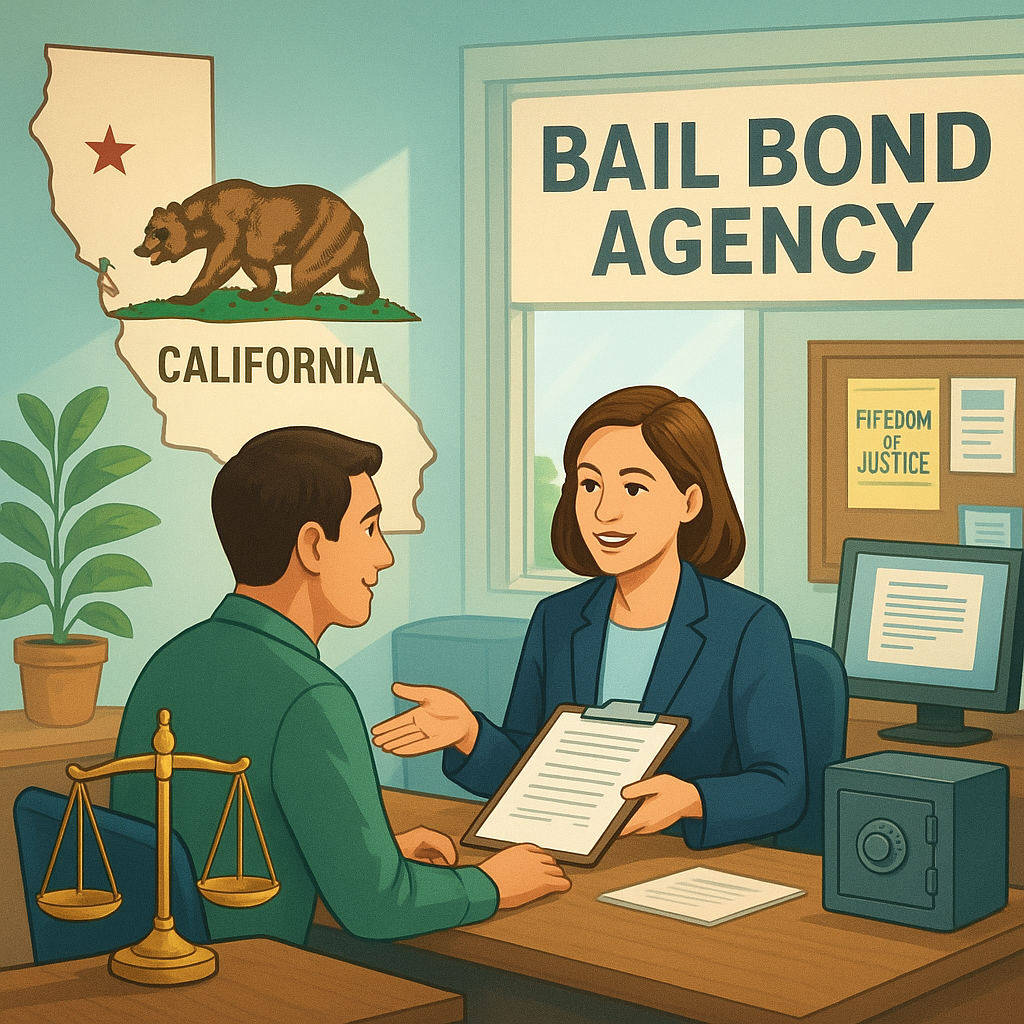
Picture this: A frantic call comes in the middle of the night. A loved one has been arrested, and suddenly you’re thrown into a world of court dates, legal jargon, and a bail amount you can’t afford to pay out of pocket. That’s when many Californians turn to a bail bond agent for help. But have you ever wondered what keeps those agents accountable? Behind every legitimate bail bond agency in the Golden State stands a specific type of financial guarantee — a special surety bond designed to protect you. Today, we’re going to unpack the world of California bail bond agents, the bonds they must hold, and exactly what that means for consumers like you.
What Is a Bail Bond Agent’s Bond in California?
Before things get complicated, let’s strip it down to the basics. A bail bond agent’s bond — officially called the Bond of Bail Agent in California — is a three-way contract between the bail agent (the principal), a surety company (the insurer), and the State of California (the obligee). The state requires this bond before a bail agent can ever write a single bail bond. Think of it as a financial promise: if the agent breaks the rules or causes you harm through dishonest or incompetent actions, there’s a pool of money available to make things right.
The current required bond amount set by the California Department of Insurance is $7,500. While that might not sound like a massive sum in the world of court bonds, it serves as a vital safety net. The bond doesn’t protect the bail agent — it’s there exclusively to protect the public and the state. If a bail agent misappropriates collateral, engages in fraud, or fails to fulfill their legal obligations, an injured party can file a claim against that bond.
Why Do Bail Agents Need This Bond?
You might be thinking, “Why does a piece of paper matter so much?” The answer boils down to trust and accountability. Bail bond agents deal with high-stress situations and significant sums of money. They act as a bridge between the court system and individuals who can’t afford to pay bail upfront. That position of responsibility requires a layer of consumer protection that goes beyond a simple business license.
Here’s how the bond steps in:
- Consumer protection: If an agent misuses the collateral you put up — like a car title or jewelry — the bond offers a route to recover your losses.
- Regulatory compliance: The state uses the bond requirement to enforce the rules set by the California Insurance Code. Agents who fail to return premiums when they should, or who charge illegal fees, risk having a claim made against their bond.
- Market integrity: Knowing every licensed bail bond agency must carry this bond gives the public confidence that a baseline of ethical behavior is guaranteed.
Without this requirement, it would be far too easy for unscrupulous operators to slip through the cracks. The bond essentially says, “We vouch for this agent — and if something goes wrong, there’s real money backing it up.”
Key Responsibilities of a California Bail Bond Agent
Understanding the bond also means understanding what duties a bail agent actually takes on. They’re not just someone who posts bail and disappears. California law imposes a series of serious responsibilities that, if ignored, can trigger a claim against that $7,500 bond.
Full Financial Transparency
A reputable State of California bail agent must clearly explain all fees, payment plans, and collateral requirements before you sign anything. The premium (usually 10% of the bail amount in California) is non-refundable, and agents have a duty to make sure you know that. Surprise charges or hidden costs can be a red flag — and a possible bond violation.
Guaranteeing Court Appearances
When a bail bond is posted, the agent is promising the court that the defendant will show up for every scheduled hearing. If the defendant skips town, the agent is on the hook for the full bail amount. This is why agents often require collateral and may use bail recovery agents (bounty hunters) to locate fugitives. But even here, the agent must follow strict state rules; aggressive or illegal collection practices can lead to a bond claim.
Proper Handling of Collateral
Whether it’s a house deed, a vehicle, or cash, collateral must be handled with care. The bail agent is legally obligated to return all collateral once the case concludes and financial obligations are satisfied — minus any lawful deductions. Failing to do so is one of the most common reasons a Bond of Bail Agent gets called into action.
Maintaining Accurate Records
Every bail bond transaction creates a paper trail. Licensed agencies must keep meticulous records of every premium collected, every piece of collateral, and every court date. Audits by the California Department of Insurance can happen at any time, and sloppy recordkeeping can result in fines or bond claims.
How Does the Bond of a Bail Agent Work in Practice?
Let’s put the bond into a real-world scenario. Imagine you use a bail bond agency to secure the release of your brother. You pay the non-refundable premium and hand over your car title as collateral. The case wraps up, your brother showed up to every court date, and you’ve held up your end of the bargain. Now it’s time for the agency to return your title. But months pass, calls go unanswered, and it becomes clear the agent has no intention of giving it back.
This is where the Bond of Bail Agent becomes your best friend. You can file a claim directly with the surety company that issued the bond. The surety investigates, and if your claim is valid, they’ll pay you up to the bond’s full amount — $7,500 in California. After that, the surety will turn around and seek reimbursement from the bail agent personally. It’s a powerful mechanism that gives everyday people leverage against a professional who’s gone rogue.
How to Become a Licensed Bail Agent in the Golden State
Maybe you’re reading this because you’re considering a career in the bail bond industry. Or perhaps you just want to understand the hoops a legitimate agency has to jump through. Either way, the pathway includes several critical steps — and the bond is right at the center.
- Complete pre-licensing education: California requires a 20-hour bail education course from an approved provider.
- Pass the state exam: You’ll need to score at least 70% on the bail agent licensing exam administered by the California Department of Insurance.
- Secure the Bond of Bail Agent: Before your license is even issued, you must purchase the $7,500 surety bond and file it with the state.
- Submit your application and fees: Along with fingerprints and a background check, you’ll send in your application, licensing fee, and proof of bond.
- Maintain the bond: This isn’t a one-and-done situation. You must keep your bond active and pay the annual premium (often a fraction of the total amount, depending on your credit) to keep your license valid.
Skipping any step — especially the bond — means the state will not allow you to operate. It’s a non-negotiable piece of the puzzle that separates the professionals from the pretenders.
What Consumers Should Know When Choosing a Bail Bond Agency
Armed with this knowledge, how can you use it when you’re in a tough spot? First, always verify that any bail bond agency you work with is properly licensed and bonded. You can check a license status online through the California Department of Insurance website in minutes. If an agent hesitates to show proof of their bond or can’t produce their license number, walk away immediately.
Ask questions. A trustworthy bail agent will welcome them:
- “Can you explain exactly what I’m paying for?”
- “What happens to my collateral, and when will I get it back?”
- “Are there any situation-specific fees I should anticipate?”
Real pros treat these questions with respect, not annoyance. Their answers should be clear and match what the law requires. And remember: that $7,500 Bond of Bail Agent stays invisible in the background, ready to work for you if things go sideways.
Common Misconceptions About the Bond of Bail Agent
Because surety bonds aren’t exactly dinner-table conversation, a few myths tend to float around. Let’s clear them up.
Misconception #1: The bond protects the bail agent. Not true. The bond protects you and the state from the agent’s misdeeds. The agent pays the premium, but the benefit flows outward to the public.
Misconception #2: A $7,500 bond limits total recovery to that amount. If the bail agent causes harm worth more than $7,500, you may still have legal avenues — like civil lawsuits — to recover additional damages. The bond is a layer of immediate, accessible relief, not necessarily the ceiling.
Misconception #3: All bail agencies carry the same bond. While the state minimum is $7,500, some agencies may be required to secure larger bonds based on their specific business model or bonding capacity. The baseline, however, remains the same for every individual bail agent license.
Frequently Asked Questions
Is the $7,500 bond the same thing as the bail money posted for a defendant?
No, not at all. The Bond of Bail Agent is a licensing requirement that ensures ethical conduct. The bail money posted for a defendant is a completely separate financial transaction that serves as a guarantee to the court for the defendant’s appearance.
How can I verify if a California bail agent’s bond is active?
The quickest method is to use the California Department of Insurance’s online license search tool. You can also ask the agent for a copy of the bond certificate and then call the surety company listed to confirm its validity.
Does every bail bond agency in the state need this bond?
Every individual bail agent license requires the $7,500 bond. An agency might also need a separate corporate surety bond. The goal is the same: to create multiple layers of accountability for anyone handling bail bond transactions in the State of California.
What happens if a bail agent lets their bond lapse?
If the bond expires or is canceled, the California Department of Insurance typically suspends the agent’s license immediately. The agent cannot legally write any new bail bonds until a new bond is secured and the license is reinstated. This is why working with an unlicensed agent is so dangerous — there’s no bond safety net for you at all.
The Human Side of Bonding a Bail Agent
It’s easy to get lost in the legal framework, but at its heart, this bond is about people. It’s about the mom who used her savings to help her son and trusted an agent to play fair. It’s about the family that needed a path through a confusing system and deserved honesty at every turn. The Bond of Bail Agent doesn’t just exist as a bureaucratic checkbox; it exists because real people sometimes get hurt by broken promises.
The next time you see the words “bail bond agency” on a storefront or a website, remember there’s an invisible net underneath the transaction. The State of California built that net with one goal: to create a profession that can be held to account. And that’s good for everyone — consumers, courts, and the honest agents who work hard to do things the right way.
Whether you’re a potential client, a future agent, or just someone who likes to know how things work, understanding the role of the bail agent bond brings clarity to an often-misunderstood industry. When the stakes are high, that knowledge becomes more than interesting trivia — it becomes power.
Leave a Reply