What Exactly Is a Washington Contractor License Bond?
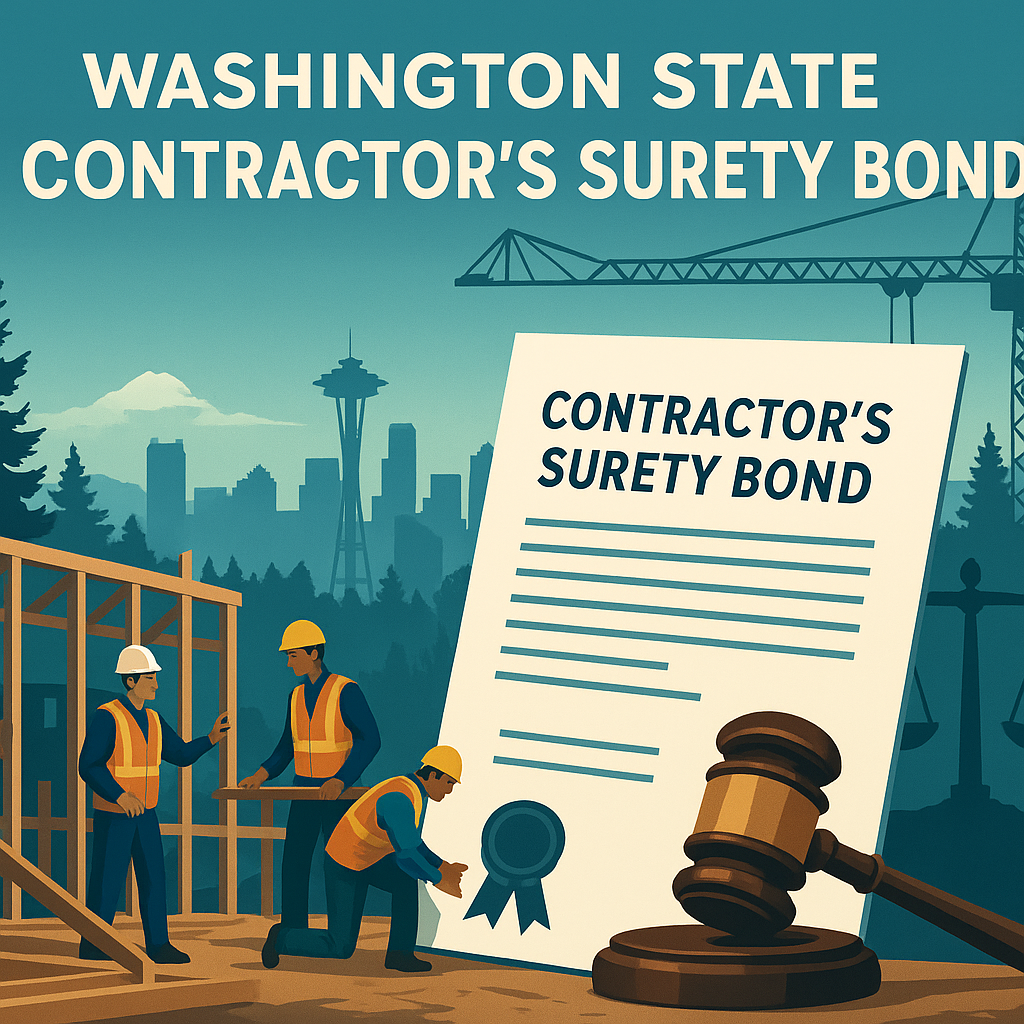
Picture this: you’re a homeowner and you’ve just hired a contractor to remodel your kitchen. You’ve handed over a deposit, but halfway through the job, something goes terribly wrong. The work is shoddy, the contractor stops showing up, or maybe they violate building codes. How do you get your money back? That’s where a Washington State Continuous Contractor’s Surety License Bond steps in—like a financial safety net woven specifically to catch these kinds of falls.
In plain language, this bond is a promise. It’s a three-way agreement between the contractor (that’s you, the business owner), the state of Washington (the obligee), and a surety company (the financial backer). The bond guarantees that you’ll follow state laws, honor your contracts, and treat customers fairly. If you don’t, the bond provides a way for harmed parties to get compensated—up to the bond’s limit.
Think of it less like insurance for your business, and more like a pre-funded trust account that protects the public. You’re still on the hook for any payouts, but the bond ensures the money is there when it’s needed.
Why Does Washington Require a Continuous Bond for Contractors?
Washington takes consumer protection seriously. The state’s Department of Labor & Industries (L&I) mandates that most construction contractors carry a continuous surety bond as a non-negotiable piece of their licensing puzzle. The word “continuous” is key here. Unlike a one-time project bond, a continuous bond stays in force year after year as long as you keep your license active. It doesn’t expire on a set date—it simply rolls along, provided you pay the premium and follow the rules.
But why does the state care so much? Imagine a world without this requirement. A contractor could cause damage, skip town, and leave a homeowner with zero recourse. The bond system creates accountability. It says, “If you want to work in Washington, you must have skin in the game.” This isn’t just a bureaucratic hoop—it’s a public shield. The continuous nature means coverage doesn’t accidentally lapse between renewal paperwork, so consumers stay protected without interruption.
Who Needs This Bond in Washington?
If you’re registering as a general contractor or a specialty contractor with L&I, you almost certainly need one. General contractors usually tackle larger, multi-trade projects—like building a new home or a commercial addition. Specialty contractors dive into specific trades: plumbing, electrical, roofing, landscaping, and painting, to name a few. Both categories must secure and maintain a bond before a license is issued or renewed.
Not sure if your work falls under the requirement? Ask yourself: Do you advertise, bid, or perform construction, repair, or improvement on someone else’s property? If the answer is yes, a contractor bond is likely in your future. Even subcontractors working for a larger firm often need their own bond unless they’re a direct employee on payroll. The rule covers a lot of ground, and it’s designed to capture anyone who takes money to build, alter, or fix things.
How Much Bond Does Washington Require?
Now for the numbers. As of this writing, Washington sets the following minimum bond amounts:
- General contractors: $12,000
- Specialty contractors: $6,000
These figures come straight from L&I regulations. Keep in mind that these are the minimum limits, and they can change over time, so always double-check with the department or your surety agent. The bond amount doesn’t reflect what you pay out of pocket—it’s the maximum payout available if a valid claim is made. We’ll talk about actual costs a little later.
The Magic Behind a Continuous Bond: No Lapses, No Headaches
So what’s the big deal about “continuous”? Let’s say you buy a bond on January 1st with a continuous provision. Even if you forget to send a renewal payment or a piece of mail goes astray, the bond might remain in effect until the surety formally cancels it (and provides notice to the state). This feature hands you a critical grace period, preventing your license from being suspended overnight.
Of course, this doesn’t mean you can ignore premiums. If the surety cancels the bond for non-payment, L&I will receive a cancellation notice, and your contractor license could be suspended quickly. But the continuous structure means you don’t face an automatic cliff every year. It’s a bit like a subscription that’s gentle on the off-ramp—you get warnings before the service stops.
For consumers, the continuous aspect is pure peace of mind. Even if the contractor’s paperwork is inches from expiring, the bond often remains valid until the proper cancellation process unfolds. That subtle buffer can make all the difference when a project veers off the rails.
How Does a Contractor Bond Actually Work When Things Go Wrong?
Let’s walk through a real-world scenario. Suppose you hire a general contractor to build a deck. The project is half-finished, and the contractor takes your money but never returns. You’re out $8,000 and staring at a stack of lumber. Because Washington requires a bond, you can file a claim against that contractor’s $12,000 general contractor bond.
Here’s the step-by-step process:
- File a claim: You submit paperwork to the surety company, explaining what went wrong and providing evidence like contracts, receipts, and photos.
- Investigation: The surety investigates. They’re neutral referees, not your advocate, so solid documentation is your best friend.
- Resolution: If the claim is valid, the surety pays you up to the bond’s full amount. The contractor is then legally obligated to repay the surety every cent—plus fees and legal costs.
Notice a crucial point: the contractor’s personal assets are on the line. The bond isn’t a “get out of jail free” card. It’s a credit line that the contractor must eventually settle. This creates a powerful incentive to do good work and follow the law.
How to Get Your Washington Continuous Contractor Bond
Ready to secure your bond? The process is surprisingly straightforward—often faster than getting a new driver’s license. You’ll work with a surety bond agency or an insurance agent who specializes in bonds. Here’s the typical flow:
- Fill out a short application: You provide basic information about your business and personal financials.
- Credit check: The surety reviews your credit report. Poor credit doesn’t automatically disqualify you, but it may affect your rate.
- Get a quote: Premiums are a small percentage of the bond amount—more on that below.
- Pay the premium and sign: Once you pay, the bond becomes active, and the surety files proof with L&I electronically.
Many agencies can turn around a bond the same day, so you don’t have to wait weeks to launch your business.
What Will You Actually Pay? The Cost of a WA Contractor Bond
Here’s where people often get confused. The bond amount (say, $12,000) is not the price you pay. You’re only responsible for the annual premium—a fraction of that total. For a contractor with good credit, a $12,000 bond might cost between $120 and $300 per year, translating to roughly 1% to 3% of the bond amount. Specialty contractors with a $6,000 bond could pay even less, sometimes as low as $60 to $180 annually.
Credit history plays the starring role here. Excellent credit can push your rate toward the 1% floor. If your credit is bruised but not broken, expect premiums in the 3% to 5% range. Even with less-than-perfect credit, bonds are generally available—you’ll just pay more for the perceived risk. Some specialty programs cater to contractors who need a second chance, so don’t let a low score discourage you from exploring options.
Bond vs. Insurance: Don’t Mix Up These Two Protect-Your-Business Tools
It’s a common head-scratcher. Isn’t a bond just another form of insurance? Not quite. An insurance policy protects your business from losses—like property damage, theft, or lawsuits. A surety bond primarily protects the public and the state. If a claim is paid out, you reimburse the surety. In essence, insurance is a risk transfer; a bond is a credit guarantee.
Many contractors carry both general liability insurance and the required license bond. They complement each other beautifully. Your insurance might cover an accident on the jobsite, while your bond covers the client if you violate state contracting laws or fail to pay subcontractors. Think of them as different tools for different jobs—you wouldn’t use a hammer to saw a board, right?
Common Pitfalls and How to Sidestep Them
Even savvy contractors can trip on bond requirements. Keep an eye out for these traps:
- Letting the bond lapse: If your coverage cancels and you don’t replace it, L&I can suspend your license lighting-fast. Always track your premium due dates.
- Underestimating what the bond covers: The bond handles specific violations—fraud, poor workmanship, unsafe practices, failure to pay subcontractors. It doesn’t cover every imaginable customer complaint, but it covers a lot.
- Ignoring bond increases: Occasionally, the state raises minimum bond requirements. Stay in the loop so you’re not caught with inadequate coverage during a renewal audit.
- Assuming one bond covers all business entities: Each separate legal entity (LLC, corporation) generally needs its own bond and license. If you run multiple companies, plan accordingly.
What Should a Homeowner or Business Owner Do With This Information?
If you’re hiring a contractor in Washington, always verify their bond and license before signing a contract. It takes only a few minutes on the L&I website. Look up the contractor’s name or license number, and confirm the bond is active. This small step can save you from financial heartache. Ask your contractor for their bond details—a reputable pro will happily share them.
Remember, the bond is a backstop, not a substitute for due diligence. Check references, read reviews, and get multiple bids. The bond exists so that if your due diligence misses something, you still have a path to recovery.
Wrapping It All Up: A Bond That Builds Trust
The Washington Continuous Contractor’s Surety License Bond might sound like a mouthful of jargon, but at its heart, it’s a straightforward promise: contractors must operate fairly, and the state makes sure there’s money on the table if they don’t. For builders and tradespeople, maintaining this bond isn’t just a legal box to check—it’s a badge of credibility that sets you apart in a competitive market. For consumers, it’s a layer of security that turns a handshake into something you can actually count on.
Whether you’re swinging a hammer or hiring the swinger, understanding this bond requirement makes the whole construction dance a little less risky. So next time you hear “continuous surety bond,” don’t let your eyes glaze over. See it for what it is: a quiet, powerful tool that keeps Washington’s building industry upright and accountable, one project at a time.
Leave a Reply