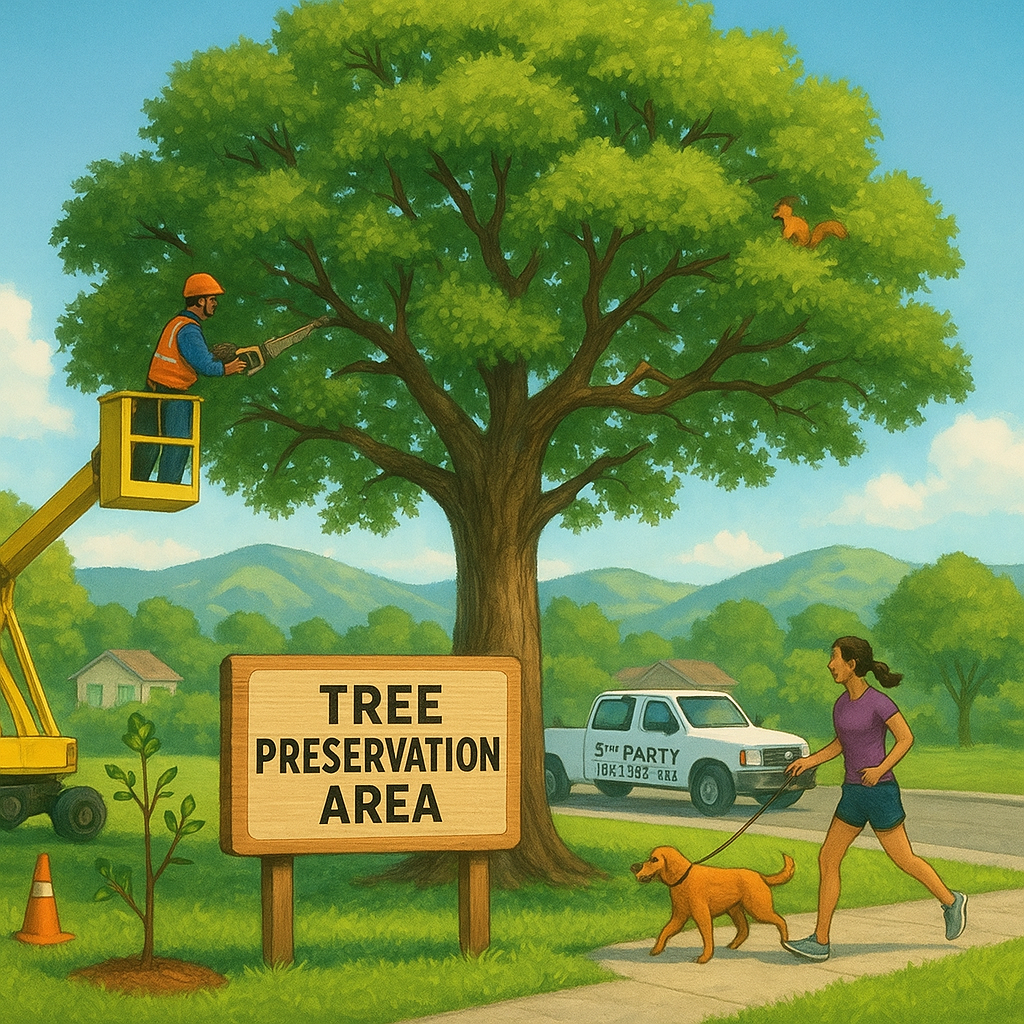
Have you ever walked down a quiet street in Danville, California, and admired the towering oaks or the flowering ornamental trees that give each neighborhood its charm? Those trees aren’t just pretty scenery. They are a vital part of the town’s character, property values, and even the local ecosystem. But if you own a home with a large tree that needs trimming, or you run a tree care business yourself, you’ll quickly bump into two important concepts: tree preservation and liability. Understanding these isn’t just about following rules — it’s about protecting your wallet, your reputation, and your community’s leafy heritage.
Why Tree Preservation Matters in Danville
Danville takes its trees seriously. The town is known for its scenic beauty, and much of that comes from a mature, well-maintained urban forest. When a tree is designated as protected — often because of its size, age, species, or historical significance — you can’t simply cut it down without going through the proper channels. Tree preservation ordinances exist to keep that canopy healthy for future generations. For homeowners, this means you might need a permit before any major pruning or removal. For tree trimmers, it means knowing the local rules inside and out. Ignoring them can lead to fines, stop-work orders, or even legal headaches.
The Town’s Love for Its Urban Forest
Think of Danville’s tree canopy like a community savings account. Every mature oak or sycamore has been growing for decades, providing shade that lowers air conditioning bills, cleaning the air, and making streets feel like welcoming outdoor rooms. Removing one without a good reason is like making a big withdrawal nobody approved. That’s why the City of Danville has guidelines that balance property rights with the greater good. When you work with a tree trimmer, you want someone who respects that balance — not someone who sees a chainsaw as the first solution.
Demystifying the Tree Preservation Bond
Maybe you’ve heard the term tree preservation bond and felt a little lost. It’s actually a simple idea. A bond is a financial guarantee. When a tree trimmer or a property owner obtains a permit to work near protected trees, the town may require a bond. This bond acts as a promise: if the contractor damages a preserved tree or fails to replace one that was permitted for removal, the city can use the bond money to fix the problem. In other words, it’s a safety net that ensures the newly planted sapling actually gets into the ground and thrives, even if the original contractor doesn’t follow through.
How Does a Bond Work in the Real World?
Let’s paint a picture. Imagine a homeowner hires a crew to expand a driveway, and the project bumps right up against a majestic heritage oak. The permit requires a Tree Preservation Bond of $5,000. During construction, the crew accidentally cuts a major root, and the tree begins to decline. Because the bond is in place, the city doesn’t have to chase the contractor through a messy claims process. The funds can be used to hire an arborist for treatment or, if the tree dies, to plant and establish a replacement. For the homeowner, it’s peace of mind. For the tree trimmer, it’s a clear incentive to work carefully around sensitive root zones.
Third-Party Liability: Protecting Everyone Involved
Now, let’s shift gears to a term you’ll hear often: third-party liability. In the world of tree trimming, this is all about what happens when an accident affects someone else’s property or person. A branch could take an unexpected bounce and smash a neighbor’s window. A rigging line might snap, sending a heavy limb through a roof two doors down. Or a worker could be injured while caring for a tree on your property. Who pays? That’s where liability coverage comes in. It’s not just a nice-to-have — it’s an absolute must for any reputable tree professional working in Danville, CA.
What Could Go Wrong Without Insurance?
Picture this: You hire a friendly guy with a truck and a ladder who says he can trim your overhanging oak for a bargain price. Halfway through the job, a large limb crashes onto your neighbor’s parked car, smashing the windshield and denting the hood. The repair bill comes to $4,000. If your trimmer doesn’t carry third-party liability insurance, you could be on the hook for that cost — not to mention the awkward conversation with your neighbor. Worse, you might discover your own homeowner’s policy doesn’t fully cover damage caused by an uninsured contractor. That cheap trim suddenly gets very expensive.
Insurance transforms a potential disaster into a manageable situation. A licensed, bonded, and insured tree trimmer will have coverage that kicks in when something goes sideways. For you as a homeowner, this means you can sleep soundly. For a tree care company, it shows professionalism and builds trust in a community like Danville, where word of mouth travels fast.
Steps to Stay Compliant as a Tree Trimmer in Danville
If you work with trees for a living, you’re not just an artist with a chainsaw — you’re a steward of the town’s living infrastructure. Staying on the right side of the rules doesn’t have to feel like a maze. Break it down into a few clear actions:
- Know the protected species. Familiarize yourself with Danville’s list of heritage or significant trees. Valley oaks, coast live oaks, and certain large sycamores often fall under protective ordinances.
- Get the right permits. Before any work on a protected tree, help your client apply for a tree removal or pruning permit. This is where the bond requirement often enters the picture.
- Secure a tree preservation bond if required. Work with a surety company to get the bond amount the city specifies. The cost is usually a small percentage of the total bond, and it’s a cost of doing business that pays off in credibility.
- Carry solid liability insurance. Make sure your policy covers property damage and bodily injury. Your clients should be able to ask for a certificate of insurance and get it without hesitation.
- Document everything. Take before-and-after photos. Note any pre-existing tree defects. If you’re building near a tree, install sturdy fencing around the critical root zone. This documentation can save you if questions arise later.
What Homeowners Should Ask Before Hiring a Trimmer
Asking the right questions can mean the difference between a smooth project and a tree-related nightmare. Don’t be shy — a true professional welcomes these inquiries. Here’s a starter checklist:
- “Are you licensed and insured for tree work in Danville?” Ask to see proof of general liability and workers’ compensation insurance.
- “Do you understand the town’s tree preservation rules?” Follow up with: “Will my tree need a permit or a bond?” A knowledgeable trimmer will guide you through the process.
- “Can you provide local references?” A company that has done similar work nearby will likely be familiar with Danville’s specific requirements.
- “What happens if something goes wrong?” Listen for a clear explanation of their insurance coverage and how they handle accidents. Vague answers are a red flag.
- “How will you protect the tree’s health?” You want to hear about proper pruning cuts, avoiding spikes on climbing trees, and respecting the root zone.
These questions help you filter out the fly-by-night operators and find a partner who treats your trees — and your liability — with the seriousness they deserve.
Wrapping It All Up
Tree preservation and third-party liability might sound like dry, technical topics, but at their core they’re about something deeply human: protecting what we love and looking out for each other. In Danville, where the landscape is part of the town’s identity, that means caring for the trees that have stood for generations while also making sure nobody gets left holding an unfair financial burden when an accident happens. Whether you’re a homeowner admiring a grand old oak from your kitchen window or a tree trimmer climbing into the canopy at sunrise, you play a role in that story.
So the next time you see a tree crew at work, pay attention. Notice the ropes rigged for safety, the protective gear, and the caution around that tangled oak limb. Behind every careful cut is a chain of responsibility: permits, bonds, and insurance policies that turn a risky job into a professional craft. And if you ever need tree work done yourself, remember that asking the right questions doesn’t make you difficult — it makes you smart. It keeps Danville’s trees standing tall and its neighborhoods thriving, one branch at a time.
Leave a Reply