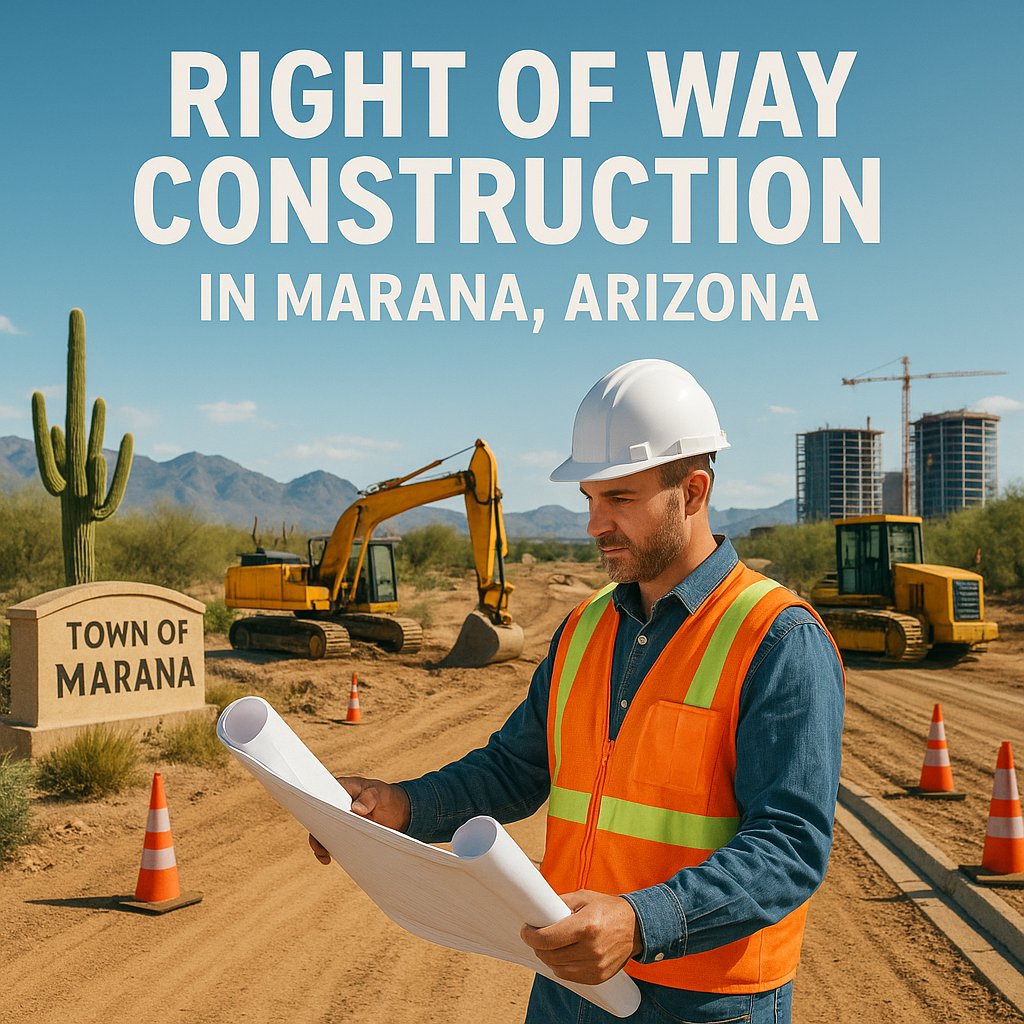
If you’ve ever driven through the growing Town of Marana, Arizona, you’ve probably noticed new roads, utility lines, or sidewalks popping up. Behind the scenes, there’s a little-known requirement that keeps those projects on track: a Right of Way Construction Performance Bond. It might sound formal, but don’t worry. By the time you finish reading this, you’ll feel like you’ve known about them all along. Let’s unpack the idea together, step by step, in plain, friendly language.
So, What Exactly Is a Right of Way Construction Performance Bond?
Think of it as a promise you can take to the bank. When someone wants to build in the public right-of-way in Marana—like the strip of land along a street—the town needs assurance the job will be done correctly. A performance bond is a three-party guarantee. You (the contractor or developer) buy the bond from a surety company. That surety tells the Town of Marana, “If this person doesn’t finish the work as agreed, we’ll step in and make it right—or pay to fix it.” It’s not insurance for you. It’s a safety net for the community.
A right of way is simply the area the public uses for travel and utilities. Think sidewalks, street pavements, curbs, gutters, and underground pipes. Any construction messing with that space must meet Marana’s standards. The performance bond makes sure your project won’t leave the town with a half-finished eyesore and a repair bill.
Why Does the Town of Marana Require These Bonds?
Marana is a place people love to call home, and the town works hard to keep it that way. When you dig into public property, you’re affecting everyone—neighbors, drivers, school buses, and emergency vehicles. The bond requirement protects taxpayers from shouldering the cost if a contractor walks away or does shoddy work. It’s not about distrust; it’s about smart planning. Picture this: a developer promises to install a new sidewalk as part of a subdivision. Without a bond, if the company goes bankrupt halfway through, the town would need to use public funds to finish the job. With a bond, the surety company covers it. Simple as that.
A Little History of the Bond Requirement
Like many growing Arizona towns, Marana updated its codes to manage booming development responsibly. The bond acts as a financial guarantee that the improvements will last and meet design standards. It also encourages contractors to do the job right the first time, because nobody wants a bond claim on their record.
Who Needs to Get a Right of Way Construction Performance Bond?
Honestly, if you’re a homeowner just replacing your driveway approach, you probably won’t need one. But larger players definitely do. Here’s a quick list:
- Developers building new subdivisions that require street extensions or turn lanes.
- Utility companies (or their contractors) trenching to install gas, electric, fiber, or water lines under public roads.
- Commercial builders adding sidewalks, bus stops, or decorative paving along a public right-of-way.
- Any contractor performing work inside Marana’s right-of-way under a permit that triggers the bond condition.
When in doubt, check with Marana’s Public Works or Engineering Department. They’ll let you know if your project falls under the performance bond requirement. And believe it or not, they’re actually happy to answer questions—they’d rather see the work done smoothly than deal with a mess later.
How Does a Right of Way Construction Performance Bond Work in Real Life?
Let’s walk through a story. Suppose you’re a contractor hired to widen a two-lane road and add bike lanes along a stretch of right-of-way in Marana. You pull your permit, and the town says, “We need a performance bond for 110% of the estimated construction cost.” You contact a surety bond agent. The agent reviews your financials, experience, and the project details. You pay a premium—typically a small percentage of the total bond amount. The surety issues the bond, you hand it to the town, and you start digging.
Now, what if something goes wrong? Imagine your crew hits financial trouble and can’t finish the bike lane. The town notifies the surety. After investigation, the surety might hire another contractor to complete the work or compensate the town for the cost up to the bond amount. You, as the original contractor, are still on the hook to reimburse the surety. So it’s not a free pass—it’s a powerful motivator to finish what you start.
Breaking Down the Costs and Requirements
Nobody likes surprises when it comes to money. So, let’s get clear. The bond amount is usually based on the engineer’s cost estimate for the right-of-way improvements. Often, the town requires the bond to be set at 100% to 110% of that estimate. The premium you’ll pay depends on your credit score, business history, and the bond size. For well-qualified contractors, it might be as low as 1% to 3% of the total bond amount. A $100,000 bond could cost $1,000 to $3,000 per year. Smaller or riskier applicants might pay a bit more, but it’s still manageable.
What Affects Your Bond Premium?
- Personal and business credit scores.
- Years of experience and past project success.
- The complexity and duration of the right-of-way work.
- Whether you’ve had prior bond claims.
Think of it like renting a safety deposit box. The surety trusts you with a big promise. The better your track record, the lower your rental fee.
The Application Process, Made Simple
Getting a Right of Way Construction Performance Bond in Marana doesn’t need to feel overwhelming. Most local bond agencies know exactly what the town requires. Here’s a straightforward path:
- Confirm the bond requirement. Check your permit conditions. The town will specify the bond amount or how to calculate it.
- Gather your documents. You’ll likely need a completed application, financial statements, work history, and the project’s engineered plans.
- Request a quote. Contact a surety bond professional. They’ll shop rates from different markets to find the best premium for your situation.
- Pay the premium and sign. Once approved, you pay the premium, the bond is issued, and you file the original with the Town of Marana.
- Keep it valid. Some bonds last until the work is completed and accepted. Others may need renewal if the project drags on. Just keep an eye on the expiration date.
Pro tip: Don’t wait until the last day. Starting early gives you time to fix any paperwork snags and keeps your project timeline relaxed.
What Happens After the Construction is Finished?
Great question. Once you finish the right-of-way work, you don’t just walk away. The Town of Marana inspects everything. They’ll check slopes, drainage, pavement thickness, utility connections—the whole nine yards. If it meets their standards, they issue an acceptance. Only then can the performance bond be released or canceled. Some bonds automatically expire once the work is approved. Others require a formal release letter. Either way, that’s the moment you breathe out, knowing the bond served its purpose.
And if small defects pop up later? Often, there’s a warranty or maintenance period written into the agreement. But the performance bond’s main job ends when the town gives the thumbs-up on the construction.
Common Misunderstandings, Cleared Up
Let’s tackle a few myths. First, a performance bond is not the same as a payment bond. A payment bond ensures subcontractors and suppliers get paid. Marana may require both, but they cover different risks. Second, the bond doesn’t mean the town will never sue you. If your work causes damage, you’re still responsible. The bond is an extra layer of security, not a get-out-of-jail-free card. Third, it’s not just a big-city thing. Marana uses these bonds to maintain quality even as the town grows. So if you’re new to development here, just know it’s normal and very manageable.
How a Right of Way Bond Benefits Everyone—Even You
You might be thinking, “This sounds like another hoop to jump through.” But take a step back. When every contractor working in Marana’s right-of-way is bonded, the playing field is level. Reputable companies aren’t undercut by someone who cuts corners and disappears. The bond signals to the town and to potential clients that you’re financially stable and serious about your work. It’s almost like a badge of reliability. In fact, many developers tell us it helps them win bids because property owners and project partners see that safety net and feel more comfortable.
For residents, it means safer streets, completed sidewalks, and no abandoned utility trenches. The whole community wins.
What Sets Marana Apart in Arizona?
Arizona municipalities like Tucson or Phoenix also use performance bonds, but each town can tailor its requirements. Marana has a reputation for being business-friendly while keeping standards high. The town’s staff often works with contractors to clarify expectations upfront, so there are fewer disagreements down the road. They understand that development is a partnership. And the right-of-way bond is just one piece of that partnership—a tool that keeps promises solid.
If you’re comparing Marana to other spots, you’ll notice the bond process here is streamlined. The town’s website and permitting office provide clear checklists. Many local surety agents are already familiar with Marana’s specific language, making the approval quick.
Ready to Get Your Right of Way Construction Performance Bond in Marana?
Whether you’re a seasoned developer or tackling your first municipal project, a little preparation goes a long way. Start by talking to the Town of Marana Engineering Department. Then connect with a reputable surety bond provider who can walk you through options. Ask about multitier credit programs if you’re concerned about approval hurdles. And remember, the bond isn’t another tax—it’s an investment in your professional reputation and the town’s future.
Feeling more confident? We hope so. Right of Way Construction Performance Bonds might not be the topic of dinner party chatter, but they’re the quiet guardians that keep our neighborhoods looking sharp and functioning safely. The next time you drive down a freshly paved street in Marana, you’ll know a little more about the invisible guarantee that helped build it.
Leave a Reply