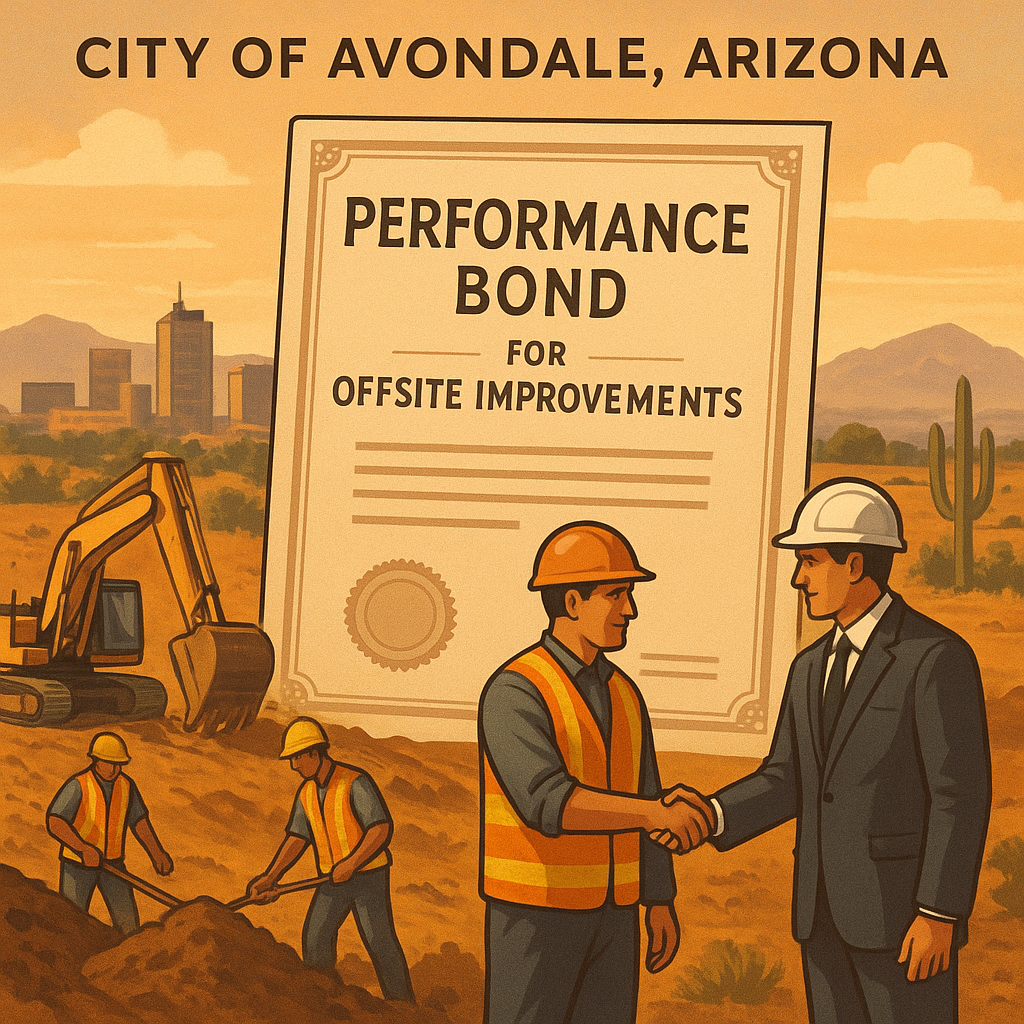
If you’re a clearing and earthwork contractor in Avondale, Arizona, you’ve probably heard the term “performance bond for offsite improvements” tossed around in bid documents or city requirements. It might sound like just another bureaucratic hoop to jump through, but it’s actually a key piece of the puzzle that keeps construction projects—and the community—safe. Let’s break down what this bond is, why the City of Avondale requires it, and how you can navigate the process without pulling your hair out.
What Exactly Are Offsite Improvements?
Offsite improvements are the construction projects that happen just outside the main property you’re working on, but they directly support that development. Think of them as the connective tissue between a new subdivision or commercial building and the city’s existing infrastructure. Common examples include:
- Building or widening public roads that lead to the site
- Installing sidewalks and curbs along a street
- Laying storm drains and sewer lines that tie into the municipal system
- Putting up streetlights and traffic signals
- Landscaping in public right-of-ways
For a city like Avondale, these improvements aren’t just nice to have—they’re essential for managing growth responsibly. Without them, a new apartment complex or shopping center could overwhelm the existing roads and drainage, creating headaches for everyone. That’s why the city steps in with a clear requirement: if you’re a contractor handling the earthwork, grading, or clearing that sets the stage for these offsite improvements, you need to provide a financial guarantee that the job will get done right.
The Performance Bond: Your Promise, Backed by Cash
A performance bond is a type of surety bond that involves three parties: the contractor (that’s you), the project owner (the City of Avondale or a developer), and a surety company. In simple terms, the bond says: “If the contractor fails to complete the offsite improvements according to the approved plans and specifications, the surety will pay the city to fix the mess.” It’s like a safety net. You hope you never need it, but it’s there if things go sideways.
Think of it this way. Imagine you hire a painter to redo your living room. You wouldn’t hand over the full payment upfront and just hope for the best, right? You’d want some assurance that the work gets finished—or you’ll get your money back. The city does the same thing on a much larger scale. Instead of risking an unfinished road or a half-built drainage system that floods the neighborhood, Avondale requires a bond that guarantees performance. If the contractor walks away or goes bankrupt mid-project, the bond makes sure the city doesn’t get stuck holding the bag.
Why Avondale, AZ Insists on This Bond
Avondale is a growing city, and with growth comes a flood of development applications. The city’s engineering department must protect public interests while allowing private projects to move forward. When a developer’s plan requires offsite improvements, the city wants confidence that those improvements will be completed to code—and that they’ll seamlessly connect to public systems.
Offsite work often sits on or near public land. If a clearing and earthwork contractor digs up a street, installs a storm drain, and then disappears without finishing, the consequences ripple out. Residents face detours, drainage problems, and safety hazards. The city would have to use taxpayer dollars to finish the job. The performance bond eliminates that risk. It’s a tool that shifts responsibility right back where it belongs: on the developer and contractor.
In Avondale, the bond “runs to the municipality.” That means the city is the beneficiary. The bond isn’t just a piece of paper—it’s a legally enforceable promise that Avondale can call in if the contract terms aren’t met. This setup gives city officials the peace of mind to approve projects, knowing that even if something goes wrong, public funds won’t be drained.
Who Needs This Bond? A Quick Look at Contractors
If your work involves clearing, grading, excavating, or general earthwork tied to offsite improvements in Avondale, this bond has your name on it. It’s not just for huge national construction firms. Many local contractors, subcontractors, and even smaller excavation companies find themselves needing a City of Avondale performance bond when they sign on to prepare a site that includes public roadwork or utility extensions.
You might be wondering: “What if I’m just a subcontractor? Does the bond fall on me or the general contractor?” Typically, the entity that signs the main development agreement with the city is responsible for providing the bond. Usually, that’s the developer or the general contractor. But if you’re a clearing and earthwork contractor bidding directly on municipal-adjacent work, you might be asked to secure your own bond. Always read your contract carefully. It’s better to ask upfront than to lose a bid because you’re missing the required bond paperwork.
How the Bond Protects Everyone—Including You
It’s easy to see the bond as a hurdle that only benefits the city. But in reality, a performance bond also protects you as a contractor. It builds trust. When the city sees you’ve secured a bond, they know a third-party surety company has vetted your financial stability and track record. That can give you a leg up over competitors who can’t get bonded. It’s like having a stamp of approval that says, “This contractor is reliable enough to insure.”
Plus, the bond process encourages clear documentation. The city spells out exactly what “complete” means for the offsite improvements. There’s no guessing game. You know the standards you must meet, and you can plan your work accordingly. If a dispute arises later, that documentation protects you from unfair claims. The surety will also investigate before paying out, so you don’t face frivolous demands.
Getting a Performance Bond: The Steps in Plain English
Securing a bond might feel intimidating the first time, but the process is fairly straightforward. Here’s how it usually goes:
- Gather your paperwork. You’ll need business financial statements, details about the specific project, and documentation of your experience with similar work. The surety wants to see you can handle the job.
- Reach out to a surety broker. Not all insurance agents handle contract bonds. Look for someone who specializes in surety bonds for construction—preferably one familiar with Arizona municipal requirements. They’ll shop your application to different surety companies.
- Get underwritten. The surety will evaluate your credit, work history, and the project risk. If you have a solid record and the offsite work isn’t unusually risky, you’ll likely get approved quickly.
- Pay the premium. The cost is usually a small percentage of the total contract amount—often between 1% and 3% for well-qualified contractors. So, for $500,000 worth of offsite improvements, you might pay $5,000 to $15,000 for the bond.
- Submit the bond to Avondale. Your broker will issue the bond form, which you then deliver to the city’s engineering or development services department. That’s your ticket to getting the project moving.
What Affects the Bond Cost?
The premium you’ll pay depends on a few factors. The biggest one is your personal and business credit history. Contractors with strong credit and a track record of completing projects on time get the best rates. The size and complexity of the offsite improvements matter too. A simple sidewalk extension costs less to bond than a major roadway widening with extensive earthwork. Also, if you’ve never taken on a bonded project before, the surety might charge a slightly higher premium until you build a bond history.
Here’s a practical tip: maintain good relationships with your banker and accountant. Sureties love clean financial statements. Even if your company is small, organized books go a long way toward showing you’re a safe bet.
Common Pitfalls and How to Dodge Them
Even the most experienced contractors can trip up when it comes to performance bonds. Watch out for these pitfalls:
- Not starting early enough. The bond application can take days or weeks, especially if you need to gather financial statements. Don’t wait until the day before the bid is due.
- Underestimating the scope of offsite work. If the city’s specifications change after the bond is issued, you might need a rider or a new bond. Build some flexibility into your schedule and budget.
- Ignoring the bond’s maintenance period. Some Avondale bonds include a warranty period—often one year—after completion. During that time, if defects crop up, the city can still make a claim. Stay responsive.
- Assuming all bonds are the same. A payment bond (which guarantees you’ll pay subs and suppliers) is different from a performance bond. You might need both. Check the city’s requirements carefully.
So, Is This Bond Just Red Tape?
At first glance, the City of Avondale performance bond for offsite improvements can feel like red tape. But once you understand the “why,” it becomes a tool that keeps the community’s infrastructure safe and separates serious contractors from fly-by-night operators. For the clearing and earthwork contractor who does quality work, the bond is less of a burden and more of a badge of credibility.
If you’re gearing up for a project that touches public roads, drainage, or utilities in Avondale, reach out to a surety professional early. Ask questions. Get prequalified. The more comfortable you are with the bonding process, the smoother your next job will go—and the more the city will trust you with the work that shapes Avondale’s future.
Have you dealt with offsite improvement bonds before? Whether you’re a seasoned pro or tackling your first bonded job, a little preparation goes a long way. And now that you know the nuts and bolts, you’re one step ahead in building something that lasts—not just for your client, but for the entire community.
Leave a Reply