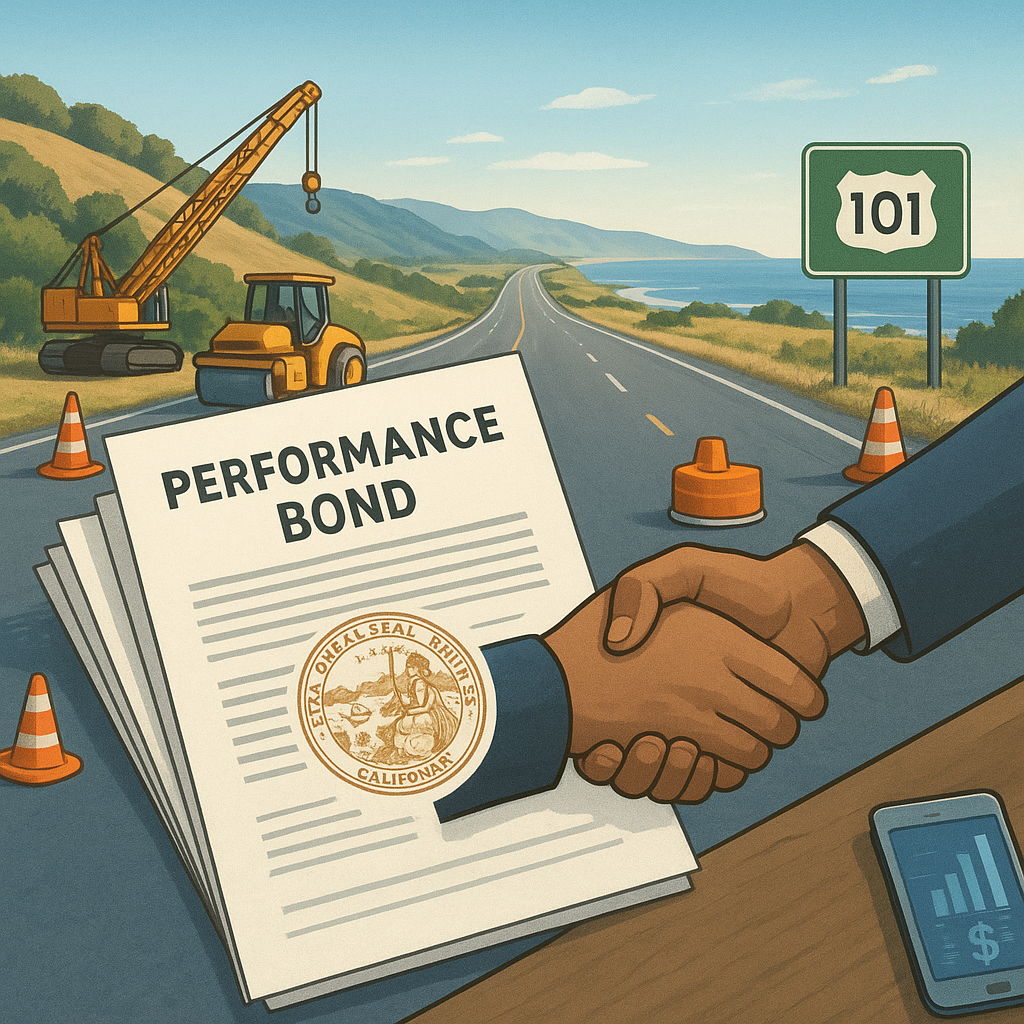
Have you ever noticed construction crews digging near a freeway, installing a new water line, or building an entrance to a new shopping center right off a state highway? Those projects don’t happen by accident. Behind the scenes, a detailed permitting process ensures the work is done safely and the public roadway is fully protected. A key piece of that protection puzzle is something called a performance bond. If you are planning any work that touches a California state highway, understanding this bond can save you a lot of stress down the road.
What Is a State Highway Encroachment Permit, Anyway?
Let’s start at the beginning. An encroachment permit is official permission from Caltrans—the California Department of Transportation—to perform work, place equipment, or install something within the state highway’s right-of-way. The right-of-way is the strip of land the state owns alongside and underneath the highway. This includes shoulders, slopes, ditches, and sometimes the airspace above.
Common activities that need an encroachment permit include things like building a new driveway connection to a state highway, burying fiber-optic cables along the shoulder, planting landscaping in a freeway interchange, or temporarily staging construction equipment. Without an approved permit, any disturbance to the right-of-way is illegal and can lead to fines or immediate stop-work orders.
Why a Performance Bond Enters the Picture
Issuing a permit isn’t just about paperwork. Caltrans needs a guarantee that once the work begins, it will be completed correctly and the public’s property will be left in good condition. That’s exactly what the California State Highway Encroachment Permittee Performance Bond provides.
Think of this bond as a powerful safety net for taxpayers. If a contractor digs a trench for a utility line but fails to repave the shoulder properly, leaving a dangerous drop-off, the state can use the bond to hire someone else to fix it. The bond essentially says, “We promise to do the work according to the rules. If we don’t, this financial guarantee will cover the cost of making things right.”
It’s similar to a security deposit when you rent an apartment. The landlord trusts you’ll leave the place in good shape, but they hold that deposit just in case. Here, the obligee is the State of California, and the bond is held to ensure the highway corridor returns to its original, safe state.
Breaking Down the Three Parties Involved
To really grasp how the bond functions, it helps to know the three key players:
- The Permittee (Principal): That’s you—the contractor, utility company, developer, or property owner doing the work inside the right-of-way. You purchase the bond and are responsible for performing the work as promised.
- The State of California (Obligee): This is Caltrans, acting on behalf of the public. They require the bond to protect the highway infrastructure and ensure taxpayer dollars aren’t spent repairing damage caused by a permittee.
- The Surety Company (Surety): This is the insurance-like company that backs the bond financially. They agree to pay the state up to the bond amount if you fail to meet your obligations. Keep in mind, unlike insurance, the surety will come back to you for reimbursement—you pay them back for any valid claim paid out.
When Does Caltrans Actually Require This Bond?
Not every small project triggers a bond requirement. Caltrans evaluates each encroachment permit application based on the scope of work, its potential impact, and the permittee’s history. Generally, you can expect a performance bond to be requested in situations like these:
- Major excavations or grading within the right-of-way.
- Installation of underground utilities (gas, water, telecom) that cross or run parallel to the highway.
- Construction of permanent structures such as retaining walls, sign foundations, or new roadway connections.
- Projects in high-traffic areas where the risk of public harm is greater if restoration isn’t done properly.
- Work performed by contractors without a long, proven track record with Caltrans.
Sometimes a permit may require a performance and payment bond combo, or a maintenance bond for a set number of years after completion to cover defects. The exact bond type will be spelled out in your permit conditions.
How the Bond Amount Is Determined
The required bond amount isn’t a random figure. Caltrans estimates what it would cost to complete the work and restore the site if the permittee walked away or did a poor job. This includes engineering, traffic control, materials, and labor. Often, the amount is set at 100% of the estimated restoration cost, with a minimum threshold that varies by district.
For a straightforward driveway approach, the bond might be just a few thousand dollars. For a large utility installation stretching miles along a busy freeway, the bond could climb into the hundreds of thousands. You’ll get the exact number when Caltrans reviews your plans and issues the permit conditions.
What Does the Bond Actually Cost You?
This is where many people breathe a sigh of relief. You don’t need to pay the full bond amount out of pocket. Instead, you pay a premium to the surety company—usually a small percentage of the total bond. For a well-qualified applicant with good credit and a solid business history, that premium typically ranges from 1% to 3% of the bond amount annually.
Let’s imagine Caltrans requires a $30,000 performance bond for your culvert replacement project. At a 2% rate, your annual premium would be just $600. That’s a manageable expense to secure a permit and show the state you’re responsible. Factors like your personal credit score, business financials, and the complexity of the project will influence your specific rate.
Getting the Bond: A Simple Walkthrough
The process is more straightforward than most people think. Once your encroachment permit application moves forward and Caltrans tells you a performance bond is needed, follow these steps:
- Read the permit conditions carefully. Note the exact bond wording required, the bond amount, and any special terms like a maintenance period.
- Find a reputable surety bond provider. Many agencies specialize in contractor bonds and understand Caltrans requirements inside and out. An experienced agent can save you time.
- Complete a short application. You’ll provide basic business details, financial information, and the bond specifications. In many cases, this can be done online in minutes.
- Receive a quote and pay the premium. For smaller bonds, approval can be instant. Larger bonds may require a brief underwriting review.
- Get your bond form. The surety will issue the official bond document, which you’ll sign as the principal. You can then submit it to Caltrans along with the rest of your permit package.
Pro tip: Don’t wait until the last minute. The bond must be in place before the permit is officially issued and work can begin.
A Real-World Scenario to Clear Things Up
Let’s paint a picture. A local water district needs to install a new main pipeline directly beneath a state highway shoulder to serve a growing neighborhood. They apply for an encroachment permit with Caltrans. Because the work involves deep trenching near live traffic and restoration of a heavily engineered shoulder, the state determines a $50,000 performance bond is necessary.
The water district contacts a surety bond agency, applies, and pays a 1.5% premium—$750. The bond is issued and filed with Caltrans. The pipeline work goes smoothly, the trench is backfilled perfectly, and Caltrans inspects and accepts the final restoration. They release the bond, and the water district moves on. But in an alternate story, the restoration starts to settle and crack a few months later. The water district is unresponsive. Caltrans calls on the bond, the surety pays out to hire a repair crew, and then the surety seeks repayment from the water district. The highway is fixed, and the bond did its job.
Common Questions People Ask
Is this the same as a contractor license bond?
No. A contractor license bond is a statewide requirement to protect consumers from poor business practices. A highway encroachment performance bond is project-specific and protects only the state’s right-of-way for that particular work. You often need both.
What if I already have a blanket performance bond?
Some large contractors maintain an annual blanket bond. Caltrans may accept it if the coverage is adequate and the bond form matches their requirements. Always verify with your permit coordinator before assuming it meets the rules.
How long does the bond stay in effect?
Typically, the bond remains active until Caltrans formally accepts the completed work and issues a release or exoneration. For projects with a maintenance period, the bond might be replaced or extended to cover defects for one or two years after completion.
Protecting Everyone on the Road
When you stop and think about it, this bond requirement makes perfect sense. Highways are built with public money, and their safety directly affects millions of drivers. A performance bond ensures that anyone digging into a state highway shoulder, installing a sign, or building a driveway has real skin in the game. It holds them accountable for quality work and a clean finish.
If you plan to work near a California state highway, don’t look at the bond as a hurdle. View it as your partner in demonstrating reliability. It tells Caltrans, and everyone who uses that road, that you stand behind your work. Reach out to a specialized bond provider early in your planning, and you’ll navigate the encroachment permit process with far more confidence and clarity.
Leave a Reply