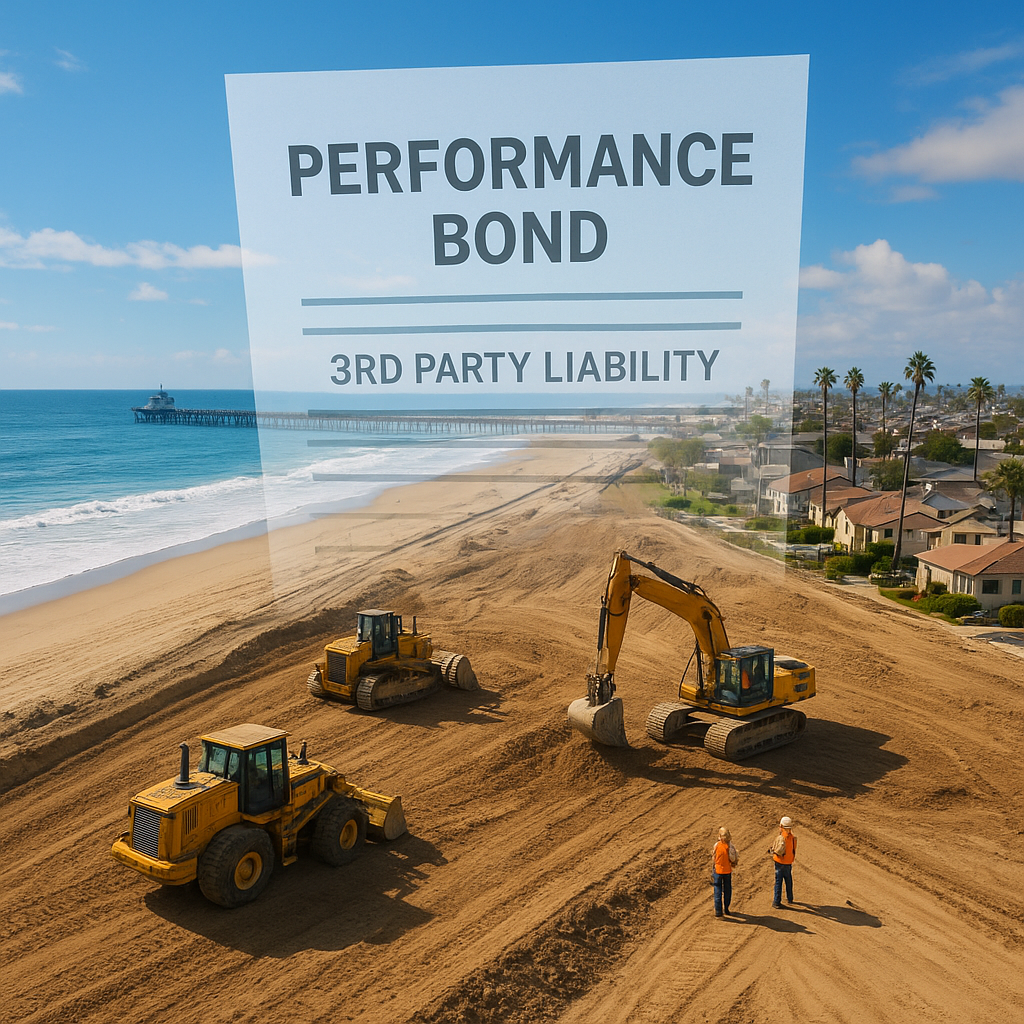
Have you ever wondered what protects a city or property owner when a big earth-moving project hits a snag? Picture this: a grading contractor starts work on a hillside in Seal Beach, California, but halfway through the job they run into financial trouble and can’t finish. What happens next? Without a safety net, the city and residents could be left with unstable slopes, drainage nightmares, and a dusty mess. That’s where a performance bond steps in. It’s a quiet but powerful promise that the job will get done right, even when the unexpected happens.
If you’re a grading contractor working in Seal Beach, or if you’re hiring one, the words “performance bond” and “liability” might pop up in your conversations, contracts, and city paperwork. But what do these terms really mean? And why does the City of Seal Beach care so much about them? Let’s break it all down in plain, everyday language. No confusing legalese, just the real-world story of how these bonds protect people, property, and the smooth, sandy charm of Seal Beach.
What Exactly Is a Performance Bond?
Think of a performance bond as a three-party safety net for construction projects. It’s not insurance, but it acts a bit like a backup plan that guarantees the contractor will complete the work according to the contract. The three parties are simple: the contractor (called the principal), the project owner or city (the obligee), and the bond company (the surety). When a grading contractor buys a performance bond, the surety company is saying, “We believe this contractor can do the job, but if they don’t, we’ll step in.”
This isn’t just a suggestion – it’s often a requirement. For a grading contractor in Seal Beach, a performance bond may be mandatory before you can even break ground on a public project or any private work that the city oversees. The bond ensures that you’ll follow the approved grading plans, manage erosion control, and leave the site stable. If you fail to do that, the bond pays to fix the problem.
How Is a Bond Different From Insurance?
This is a common head-scratcher. Insurance protects you, the contractor. If a sudden rainstorm washes out your equipment, your insurance might cover the loss. A performance bond, on the other hand, protects the city and the property owner. If you walk off the job or your work falls apart, the bond company will either hire someone else to finish it or pay the cost to get the work up to standard. Later, the surety will come to you for reimbursement. Yes, you read that right – you still have to pay them back. A performance bond is a form of credit, not a free pass.
Why Seal Beach Grading Projects Need This Bond
Seal Beach is a coastal gem with unique challenges. Grading here isn’t just about moving dirt. It involves slope stability, proper drainage that won’t send silt into our precious waterways, and protecting neighboring properties from runoff. The City of Seal Beach requires performance bonds as a way to keep the community safe and maintain high standards. When you pull a grading permit, the city often lists a bond amount based on the estimated cost of the work. This becomes a financial guarantee that public roads, sidewalks, and drainage systems won’t be damaged and left unrepaired.
Imagine a contractor grades a lot for a new home, but leaves the slope unprepared. One heavy winter rain, and the hillside starts to slide toward the house next door. Without a bond, the neighbor might have to sue the contractor – a lengthy, stressful process. With a properly issued Seal Beach grading performance bond in place, the city can call on the surety to stabilize the slope quickly, protecting the neighbor and the environment. The contractor faces the financial consequences, but the community doesn’t have to live with an unsafe eyesore.
Third-Party Liability in Plain Words
The phrase “third-party liability” sounds formal, but it’s really about someone who isn’t part of your direct contract getting hurt or suffering property damage because of your work. For grading contractors, third parties could be neighboring property owners, pedestrians, utility companies, or even the city itself if a water main breaks during excavation. Liability coverage often comes from a general liability insurance policy, but here’s where it gets interesting: performance bonds and liability sometimes overlap in everyday talk, but they serve different purposes.
A grading contractor’s performance bond guarantees the completion of the work. It doesn’t directly pay for injuries to a neighbor’s child who wandered onto the site or fix a car damaged by flying rocks. Those incidents fall under your liability insurance. However, the bond can indirectly protect third parties by making sure the grading work is done correctly, which reduces the chance of landslides or flooding that could damage nearby homes. Think of the bond as the shield for the project’s quality, and liability insurance as the shield for accidental harm.
How the City of Seal Beach Weaves Bonds and Liability Together
When you submit grading plans to the city, they’re not just checking your math on cut-and-fill volumes. They want to see that you’re a responsible contractor with the financial backing to do the job and fix mistakes. Often, the city requires both a performance bond and proof of liability insurance before they issue a grading permit. This dual requirement covers two angles: the bond ensures the project meets engineering standards and gets completed, while liability insurance addresses any accidental property damage or bodily injury during construction.
You might hear the term “grading performance bond” used interchangeably with “public improvements bond” or “subdivision bond” in some conversations, but the core idea remains the same. It’s the city’s way of saying, “We’re letting you reshape our land; we need a promise you’ll leave it in safe condition.” For Seal Beach, with its proximity to the ocean and wetlands, even small grading errors can affect flood control and water quality. That’s why the bond isn’t optional – it’s a non-negotiable part of the permit package.
How Much Bond Do You Really Need?
The required bond amount will vary. Typically, the city engineer calculates it as a percentage of the contract price, often 100% for public works, or something like 50% to 100% of the estimated cost for private grading jobs that trigger city permits. The contractor then works with a surety broker to obtain the bond. The cost you pay, called the premium, is usually a small percentage of the total bond amount – often between 1% and 3% for qualified contractors. Your credit score, business financials, and experience all play a role in that rate.
Let’s put this into a real example. Suppose you’re a grading contractor with a job to level a commercial lot in Seal Beach, with a construction cost of $200,000. The city might require a performance bond of $200,000. If your premium rate is 2%, you’d pay $4,000 to the surety for that peace of mind – or rather, for the city’s peace of mind. It’s a cost of doing business, much like buying lumber or paying for fuel. The bond stays in place until the city formally accepts the work and releases the bond, which could be months after the initial completion to make sure slopes and drainage hold up through a rainy season.
Common Questions Grading Contractors Ask About Bonds
Is a performance bond the same as a lien release bond? Not exactly. A lien release bond frees up a property from a mechanic’s lien filed by a subcontractor or supplier. A performance bond focuses on the actual physical work. However, larger projects might involve both.
Do I still need liability insurance if I have a bond? Absolutely. Bonds do not replace commercial general liability insurance. If a boulder rolls off your site and damages a parked car, your insurance handles it. The bond won’t cover that. Many Seal Beach contracts explicitly require you to name the city as an “additional insured” on your liability policy, adding another layer of protection for public property.
What if my business is small and I don’t have a long track record? You might face higher premiums or need a cosigner. Some contractors start by partnering with a larger firm or by building their surety capacity through smaller bonded projects. The “grading contractor 3rd party liability” side also pushes smaller operators to carry solid insurance, which makes them more appealing to surety companies. So investing in good insurance can actually help you get better bonding terms.
The Hidden Benefit: Building Trust
Beyond the paperwork, a performance bond tells the city and your clients that you stand behind your work. It signals that a surety company has vetted your finances and believes you can deliver. For homeowners watching their backyard dream take shape, knowing a bond backs your promise can ease their minds. For a grading contractor in Seal Beach, California, the ability to secure a bond quickly and affordably can open doors to public projects and larger private developments that less-prepared competitors can’t touch.
Think of it like a respected chef earning a Michelin star. It’s a credential that says, “This person knows what they’re doing, and an outside authority has verified it.” While the bond doesn’t guarantee you’ll never hit a buried pipeline or misjudge a soil type, it guarantees that if problems arise, the financial muscle is there to correct them without draining the client’s bank account.
Navigating the Bond Process Step by Step
Getting a performance bond for a grading job in Seal Beach doesn’t have to feel like untangling a knotted rope. Here’s a straightforward path:
- Start early. Don’t wait until the day before your permit review. Bonding takes time, especially if your surety company needs to review your business statements.
- Gather your paperwork. You’ll typically need business financials, a résumé of completed projects, the grading contract or city permit requirements, and possibly personal financial information.
- Work with a knowledgeable bond agent. Look for someone who understands construction surety and California municipal requirements. They can match you with a carrier that likes grading contractors.
- Confirm the bond amount with the city. Sometimes the initial estimate changes after plan review. Double-check so you’re not underbonded.
- Submit the bond to the city. Once issued, the surety will deliver the bond form to the city for approval. After that, you can typically pick up your grading permit.
- Maintain communication. If the project scope changes significantly, talk to the city and your agent. You might need a bond rider to keep coverage valid.
Remember, the bond stays active until the city formally releases it. That release might require a final inspection showing correct compaction, stable slopes, and clean drainage systems. Don’t ghost the inspector after you’ve moved your equipment out – that bond obligation follows you until the paperwork says “done.”
The Bigger Picture: Protecting Seal Beach’s Future
Every grading project, from carving out a foundation for a beachside bungalow to sculpting a new park, reshapes the land. Performance bonds and liability requirements aren’t just bureaucratic red tape. They’re a compact between contractors, property owners, and the community that says, “We can grow responsibly.” For Seal Beach, a city that balances small-town charm with environmental sensitivity, these safeguards help keep neighborhoods safe and hillsides intact long after the machines are gone.
So next time you hear the term “grading performance bond Seal Beach,” you’ll know exactly what’s at stake. It’s not just a stack of papers; it’s a promise. And for contractors, understanding that promise makes you a better partner for your clients and a stronger business in California’s competitive construction world. Whether you’re moving ten cubic yards or ten thousand, the bond and liability combo is there to make sure the ground beneath our feet remains as solid as the word of the person who shaped it.
Leave a Reply