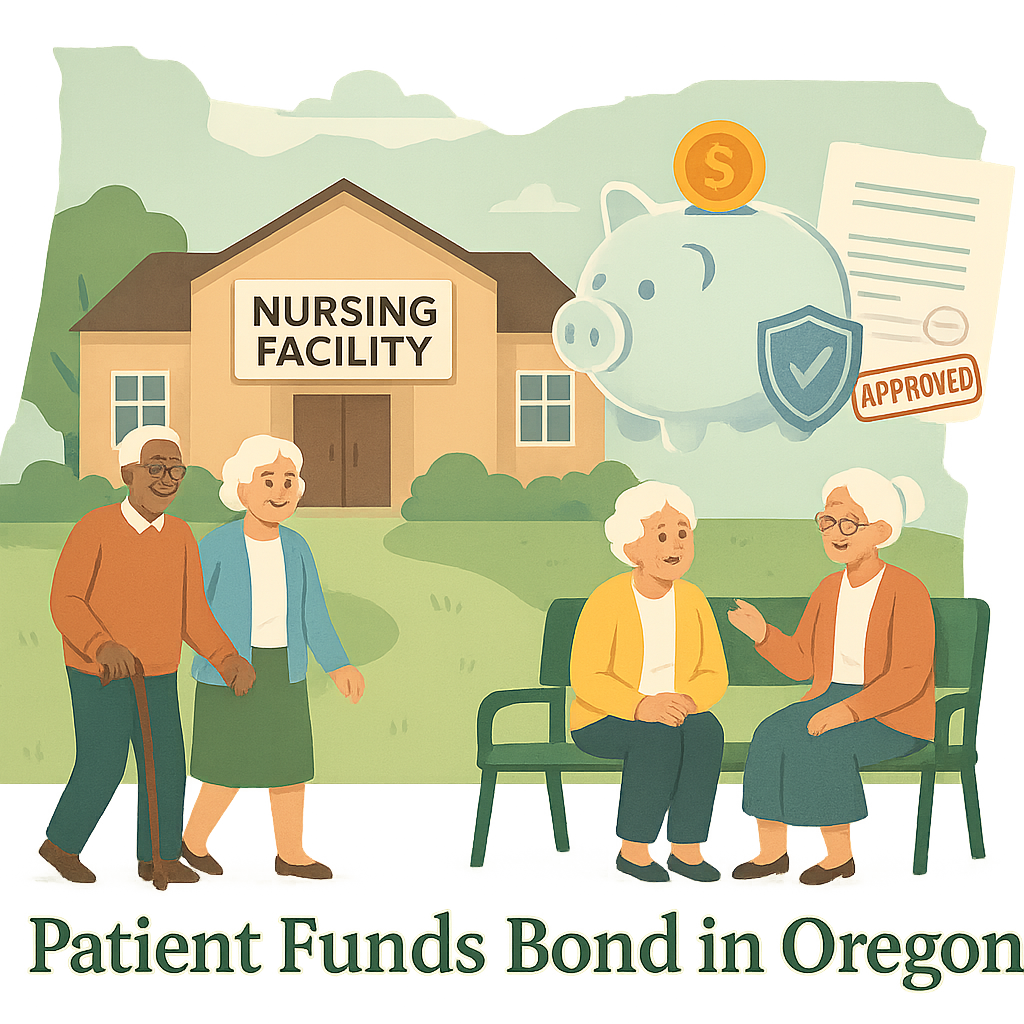
Think about a nursing home resident—someone’s grandmother, grandfather, or beloved family member. Many of these individuals rely on the facility to manage small amounts of personal money for everyday needs. Maybe it’s $50 for a haircut, a little cash for snacks, or funds to buy a birthday gift for a grandchild. Who makes sure that money is handled honestly? In Oregon, that’s exactly where the Nursing Facility Resident Personal Funds Bond comes in. It’s a type of surety bond that protects residents from mismanagement or theft of their personal funds. If you operate a nursing facility in the state, understanding this requirement isn’t just a box to check—it’s a promise to safeguard the dignity of every resident under your care.
What Exactly Is This Bond?
Let’s break it down without the insurance-speak. The Oregon Nursing Facility Resident Personal Funds Bond is a state-mandated financial guarantee. It ensures that if a nursing facility mismanages, loses, or outright steals the personal funds of its residents, there is a pool of money available to make those residents whole.
This isn’t like traditional insurance you buy to protect your own business from a slip-and-fall lawsuit. A surety bond involves three parties:
- The obligee: The State of Oregon, which requires the bond to protect the public.
- The principal: You, the nursing facility owner or operator, who must buy the bond.
- The surety: The company that issues the bond and guarantees payment if you break the rules.
An easy analogy: Think of it like a security deposit for a rental apartment. The landlord doesn’t expect you’ll trash the place, but the deposit is there just in case. Oregon asks you to post this bond so that if a resident’s money goes missing, they aren’t left holding an empty envelope.
Why Oregon Requires This Bond
Residents in nursing facilities are part of a vulnerable population. Many have limited mobility, cognitive challenges, or no family nearby to double-check their finances. Facilities often hold what’s called “resident trust funds” – small pools of personal money deposited by the resident or their family for incidental expenses.
Imagine Mrs. Thompson, an 82-year-old resident who gives the facility $200 to hold for her. She asks the staff to bring her $20 every week for the beauty shop. If the bookkeeper pockets that $200 instead, Mrs. Thompson loses not just money, but a slice of her independence. The state of Oregon says, “That cannot happen without a safety net.”
The bond acts as a financial backstop. It reassures families that their loved one’s pocket money is protected by a binding obligation. Without it, a facility might face no immediate consequence for dishonesty outside of a slow legal process. With the bond, the surety company pays first, then pursues the facility for reimbursement. That speed matters when a resident needs their funds.
Who Needs to Post This Bond?
If you run a nursing facility in Oregon that handles any resident personal funds, you almost certainly need this bond. That includes:
- Skilled nursing facilities
- Intermediate care facilities
- Continuing care retirement communities with nursing components
- Any long-term care facility defined under Oregon Revised Statutes chapter 441
It’s not just for massive corporate chains. Even a small, family-owned residential care facility managing a few residents’ petty cash must comply. The state doesn’t care about the size of your operation. If you touch those funds, the bond requirement applies.
New facilities must secure the bond before they even open their doors, and existing facilities must maintain it without interruption. Lapse in coverage? That’s a quick way to get flagged during an audit by the Oregon Department of Human Services (ODHS).
How Much Coverage Do You Need?
The bond amount isn’t fixed across the board. Oregon regulations typically tie the required bond limit to the average monthly balance of resident funds held by the facility. In many cases, the minimum bond is $10,000, but it can scale higher for larger operations or those holding significant deposits.
Think of it like this: The state wants enough coverage to match the maximum amount you might be holding at any given time. If your facility handles $50,000 in resident personal funds monthly, a $10,000 bond falls far short. Always check with ODHS or your surety bond provider to calculate the correct limit. The magic number is based on your historical average or projected resident trust account balance.
Getting this number right isn’t just about compliance—it’s about genuine protection. Under-insuring means residents could only recover a fraction of what they’re owed if a large theft occurs. Over-insuring modestly is better than falling short.
The Cost of Peace of Mind
Here’s some good news: You don’t pay the full bond amount upfront. You pay a premium, which is a small percentage of the total coverage. For a standard $10,000 Oregon nursing facility resident personal funds bond, a facility with excellent credit might pay as little as $100 to $300 per year. That’s roughly the cost of a nice dinner out, for a year-long safety net.
What determines your premium?
- Personal credit score: This is the biggest factor. Surety companies see a strong credit history as a sign you’re low-risk.
- Business financials: Newer facilities or those with shaky books might see higher rates.
- Prior claims: If you’ve had a bond claim paid out before, expect your premium to climb.
- Bond amount: Larger limits naturally come with higher costs, but still only a fraction of the total.
Even if your credit is less than perfect, specialized surety markets work with higher-risk applicants, though premiums could reach 5% to 15% of the bond amount. The key is to work with a bond specialist who understands Oregon’s niche healthcare requirements.
How to Obtain Your Oregon Nursing Facility Bond
Walking through the process feels a lot simpler than you might think. Most of it can be done online in about ten minutes.
Here’s the typical path:
- Determine your required bond amount. Review your facility’s resident trust fund average balance or consult ODHS guidelines.
- Apply with a surety bond provider. Provide basic business information and your Social Security number for a credit check.
- Receive a quote. Many agencies provide instant online quotes. You’ll see the premium before you commit.
- Pay the premium and sign the agreement. Once paid, the bond becomes active.
- File the bond with the state. The surety typically sends the original bond form directly to ODHS, or you may need to upload a copy to a licensing portal. Don’t skip this step—a bond sitting in your drawer doesn’t satisfy the state.
Pro tip: Keep your bond renewal date on auto-pilot. Diarize it. Most bonds run on an annual term, and letting it lapse even for a day can trigger non-compliance letters, fines, or even jeopardize your license.
Common Pitfalls and How to Avoid Them
Operating a nursing facility means juggling a hundred priorities, from staffing to regulatory inspections. It’s easy to let the bond slip through the cracks. Here are a few mistakes to steer clear of:
- Assuming any insurance policy covers it: Your general liability or professional liability insurance does not replace a surety bond. The bond is a specific requirement. Don’t learn this the hard way during an audit.
- Guessing the bond amount: Underestimating coverage can leave residents unprotected and put your license at risk. Overestimating means you’re paying for more than you need. Always base it on actual fund balances.
- Not updating the bond when circumstances change: If your facility’s resident fund holdings grow significantly, you may need to increase the bond limit. Failing to do so is a compliance violation.
- Treating the bond as an optional add-on: Some facilities mistakenly view it as a “nice to have.” In Oregon, it’s mandatory. No bond equals no legal operation.
- Ignoring a claim: If a resident files a complaint and the surety reaches out, respond immediately. Non-cooperation can escalate the situation and damage future bonding ability.
What Happens If a Claim Is Filed?
A claim on this bond isn’t something anyone wants, but transparency is crucial. Let’s say a resident’s family discovers that $1,200 went missing from the personal allowance account. They lodge a complaint with ODHS, which then may inform the surety company.
The surety investigates. If the claim is valid, the surety pays the resident up to the bond limit. However—and this is vital—the facility must then reimburse the surety for every penny paid out, plus any investigative costs. Yes, it works like a loan you have to pay back. This is why bond claims are so serious. It’s not free insurance; it’s a guarantee you take responsibility for your actions.
Multiple claims can blacklist a facility from ever getting bonded again. No bond means no license. So, the strongest play is to never have a claim by implementing rock-solid internal controls: regular audits, dual signatures on resident trust accounts, and transparent record-keeping.
How This Bond Fits into the Bigger Picture
You might think of this bond as a tiny cog in the massive regulatory machine, but it serves a deeply human purpose. It tells residents and their families, “Your money is safe here.” It forces facilities to treat personal funds with the same seriousness as medication dispensing or fire safety.
In a world where trust is the currency of caring professions, the Oregon Nursing Facility Resident Personal Funds Bond is a tangible demonstration of that trust. Yes, the state mandates it. But the real beneficiaries are the people who call your facility home. When they hand over $50 for a haircut, they shouldn’t have to wonder if it will still be there tomorrow. This bond answers that question before it’s even asked.
Frequently Asked Questions
Is the bond required if we only handle a few dollars per resident?
Yes. The requirement isn’t based on a de minimis threshold. If you manage any resident funds, the bond is generally mandatory. Even small amounts must be protected.
Can I use my existing business insurance instead?
No. A surety bond and an insurance policy are different products. Your business insurance might cover property or liability, but it won’t satisfy the specific Oregon statutory requirement for resident personal funds. You need a dedicated surety bond.
How quickly can I get bonded?
In many cases, instantly. Online applications can provide same-day approval and digital bond issuance. However, if your credit requires additional review, it may take a day or two. Plan ahead so you’re not scrambling before a license renewal deadline.
Does the bond protect facility funds too?
No. The bond is specifically designed to protect resident personal funds held by the facility. It doesn’t cover the nursing facility’s own operational cash or business assets.
What if I close my facility?
You must still account for all resident funds and keep the bond active until funds are fully distributed and the state confirms your closure. Canceling too early can create liability.
A Final Takeaway
Oregon’s Nursing Facility Resident Personal Funds Bond isn’t just bureaucratic red tape. It’s a shield for some of the state’s most vulnerable citizens. For facility owners, it’s an opportunity to walk the walk—proving that you value integrity as much as care. Get the right bond amount, work with a knowledgeable surety provider, and integrate sound financial practices. That way, residents can focus on living their days with dignity, not worrying about whether their pocket money is safe.
Leave a Reply