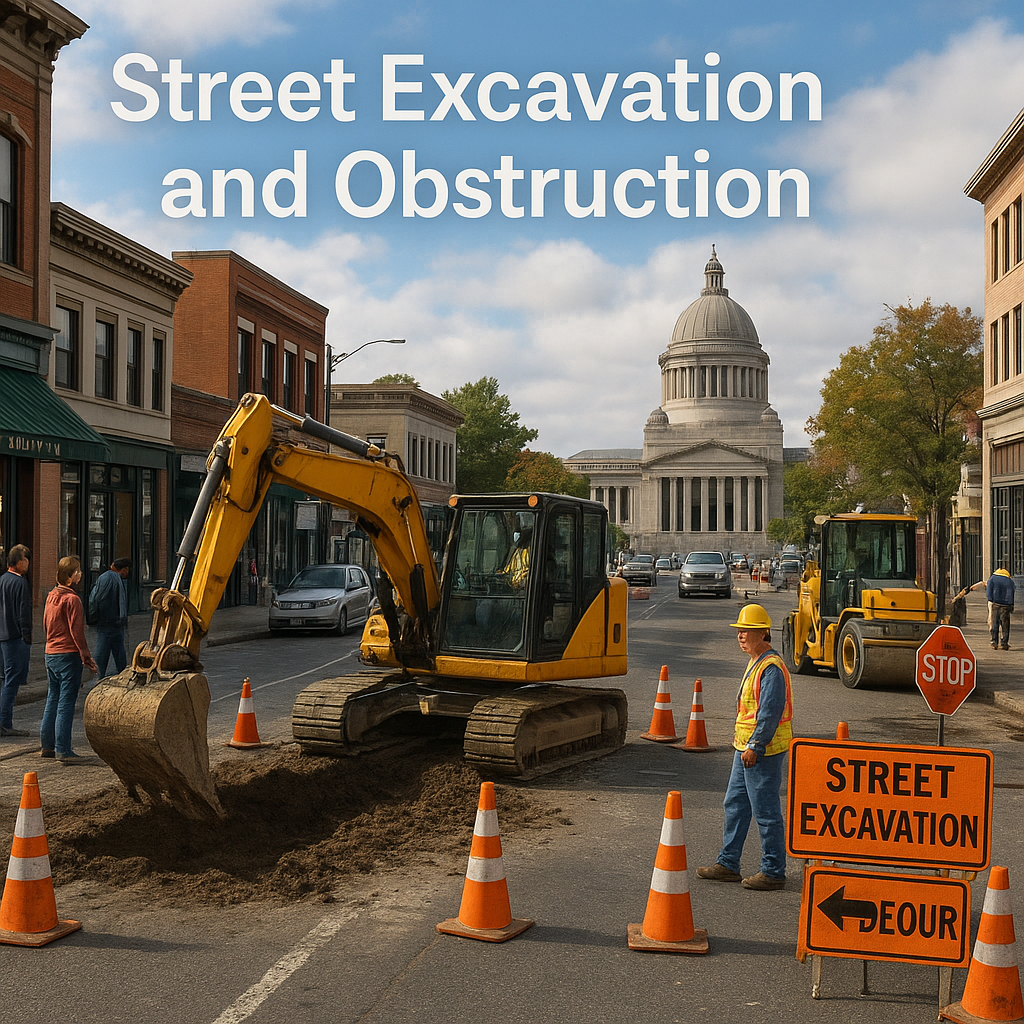
Have you ever watched a construction crew tear up a street in your neighborhood and wondered, “Who makes sure they put it back the way it was?” If you live in Olympia, Washington, the answer often comes down to a small but mighty requirement called the City of Olympia Street Excavation and Obstruction Bond. It might sound like a mouthful, but it’s really a promise that our roads, sidewalks, and public spaces stay safe and well-maintained even after someone digs them up. Let’s walk through what this bond is, why it matters to you, and how anyone from a large utility company to a homeowner taking on a big project can navigate the rules with confidence.
What Exactly Is a Street Excavation and Obstruction Bond?
Picture a security deposit you might pay when renting an apartment. You give your landlord a certain amount of money upfront as a guarantee you won’t trash the place. If you leave the apartment with holes in the walls, the landlord uses that deposit to fix the damage. A street excavation bond works the same way, but instead of protecting an apartment, it protects Olympia’s public right-of-way—the streets, curbs, sidewalks, and alleys we all share.
In simple terms, this bond is a three-party agreement. The City of Olympia (the obligee) requires the person or company doing the digging (the principal) to purchase a bond from a surety company. If the work isn’t completed correctly, or the street isn’t restored to city standards, the city can make a claim on the bond to cover repair costs. It’s a financial safety net that keeps taxpayers from footing the bill for someone else’s sloppy work.
Why Does Olympia Take This So Seriously?
Streets aren’t just strips of asphalt; they’re the arteries of our community. When someone cuts into the pavement to install a water line, repair a sewer, or lay fiber optic cable, the integrity of that surface is compromised. A poor patch job can lead to potholes, sinking pavement, or even dangerous trips and falls. The city’s bond requirement makes sure the responsible party has real skin in the game. If the restoration fails within a set warranty period—often one or two years—the bond money is still there to call on.
Beyond just the road surface, excavations can disrupt utilities, stormwater drainage, and traffic flow. Olympia experiences plenty of rain, and a poorly sealed trench can turn into a miniature swimming pool. The bond acts as a motivator for contractors to do the job right the first time, because they know their work will be inspected and held to a high standard.
Who Needs to Get Bonded?
You might think only giant construction firms deal with this, but the list is broader than you’d expect. The City of Olympia street excavation and obstruction bond is required for anyone who wants to dig into, tunnel under, or obstruct any public right-of-way. This includes:
- Utility companies and their subcontractors installing or repairing gas, electric, water, and sewer lines.
- Telecommunication crews laying high-speed internet cables.
- Plumbers and contractors connecting a new home to the city’s water or sewer system, often across the street or sidewalk.
- Homeowners who are acting as their own general contractor for a project that involves cutting into the street or sidewalk—like building a new driveway approach.
- Special events organizers who may need to temporarily obstruct a street or sidewalk, though some may qualify for a separate obstruction permit with different bonding requirements.
In many cases, if you hire a licensed and bonded contractor, their existing bond will cover your project. But if you’re pulling the permit yourself, the city will ask you to secure that bond before the jackhammers start buzzing.
How Does the Bonding Process Work?
It’s less intimidating than it sounds. Here’s a typical journey from idea to a fully restored street:
1. Plan Your Project and Get a Permit
Before anything else, you’ll need an excavation permit from the City of Olympia. The city will review your plans, check for conflicts with other utilities, and outline the specific restoration standards you must meet. This is where they’ll also tell you the required bond amount.
2. Determine the Bond Amount
Olympia bases the bond amount on the scope of the work. A small residential driveway cut might only need a bond of $5,000 or $10,000, while a major utility trench spanning several blocks could require a bond of $100,000 or more. The city wants enough coverage to fully restore the affected area if things go wrong.
3. Purchase the Bond from a Surety Company
You don’t pay the full bond amount like a deposit. Instead, you pay a premium—usually a small percentage of the total bond, often between 1% and 10%—based on your credit score, business financials, and project risk. For someone with solid credit, a $10,000 bond might cost only $100 to $300. You can shop around, but many local insurance agents in Washington specialize in these municipal bonds.
4. Do the Work and Pass Inspection
With the bond in hand and the permit posted, you can dig. The city will inspect the trench safety, backfill material, and the final pavement patch. If everything meets the mark, great. If not, you’ll need to fix it. The bond stays active during the warranty period.
5. Get Released (Eventually)
After the work passes a final inspection and the warranty period expires without any problems, the city releases the bond. The obligation vanishes, and you’ve successfully checked this task off your list.
What Happens If Someone Skips the Bond or Does a Bad Job?
Let’s say a contractor rushes through a pavement repair, and six months later a massive pothole forms. Neighbors complain, and the city sends an inspector. If the contractor refuses to fix it, the city can file a claim against the bond. The surety company investigates, and if the claim is valid, they pay the city up to the bond’s full amount. Then, the surety turns to the contractor and demands repayment. It’s not free money for the contractor—it’s more like a high-risk loan they absolutely have to repay.
For someone who never obtained a bond in the first place, the consequences are harsh. The city can issue stop-work orders, levy fines, and even place a lien on the property. No one wants a small project to turn into a legal mess, which is why the bond requirement is a wise move for everyone involved.
Common Questions Homeowners Often Ask
We all love a good “this could be you” scenario. Imagine you’re a homeowner in Olympia’s Eastside neighborhood, and you need to replace the old clay sewer line that runs under the street to the main. Your plumber tells you the city requires an excavation bond. You might wonder:
“I’m not a contractor, so how do I get a bond?” Many surety companies will issue a bond for a homeowner acting as an owner-builder. You’ll fill out a simple application, and the premium is often minimal because the project is small.
“Can’t I just add this to my homeowner’s insurance?” Typically not. A street excavation bond is a specific guarantee required by the city, not the same as liability insurance. You’ll need a separate surety bond.
“How long does this take?” You can often get bonded in a day or two. Some sureties even offer instant online approval for smaller bonds.
“What if the city changes the rules halfway through my project?” Once your permit is active and your bond is in place, the requirements at that time generally govern your project. Cities aim to respect that, but it’s always smart to keep in touch with the permit office.
Little-Known Benefits of the System
Sure, bonds feel like just another hoop to jump through, but they create a level playing field. Reputable contractors who do excellent work don’t face unfair competition from low-bid crews that cut corners and vanish when problems arise. The bond also streamlines the city’s response to damage. Instead of lengthy court battles, the city can quickly access funds to fix a hazard. That means safer streets for you, whether you’re driving, cycling, or walking your dog.
Tips for a Smooth Experience in Olympia
If you’re planning a project that involves cutting into a public street or sidewalk, a little preparation goes a long way.
- Contact the City Early: Olympia’s Public Works Engineering Division can tell you exactly what you need. They’re surprisingly approachable, and they’d rather help you get it right than chase you later.
- Work with a Bond Specialist: An insurance agent who knows municipal bonds can compare rates and get you the best premium. Mention it’s for an Olympia street excavation—they’ll know the drill.
- Document Everything: Take before, during, and after photos of the work. If a dispute comes up, you’ll have clear proof of the conditions.
- Honor the Warranty Period: Don’t assume the bond’s job is done once the asphalt cools. Keep an eye on the patch through the seasons. Early attention to a small crack can prevent a full-blown claim.
Wrapping It All Up
The City of Olympia, Washington street excavation and obstruction bond might not be dinner table conversation, but it’s one of those quiet guardians that keeps our city functioning. It makes sure a simple pipe repair doesn’t turn into a never-ending pothole nightmare, and it holds everyone—from nationwide utilities to your local plumber—accountable for the ground beneath our feet. Next time you see fresh pavement on your street, you’ll know that a bond helped make it smooth and lasting.
Whether you’re a contractor getting ready for your next big dig or a homeowner tackling a sewer replacement, understanding this bond removes the mystery and sets you up for a project that ends with a clean, safe street—not a headache. So go ahead, get that permit, secure your bond, and break ground with the confidence that you’re doing right by your neighbors and your city.
Leave a Reply