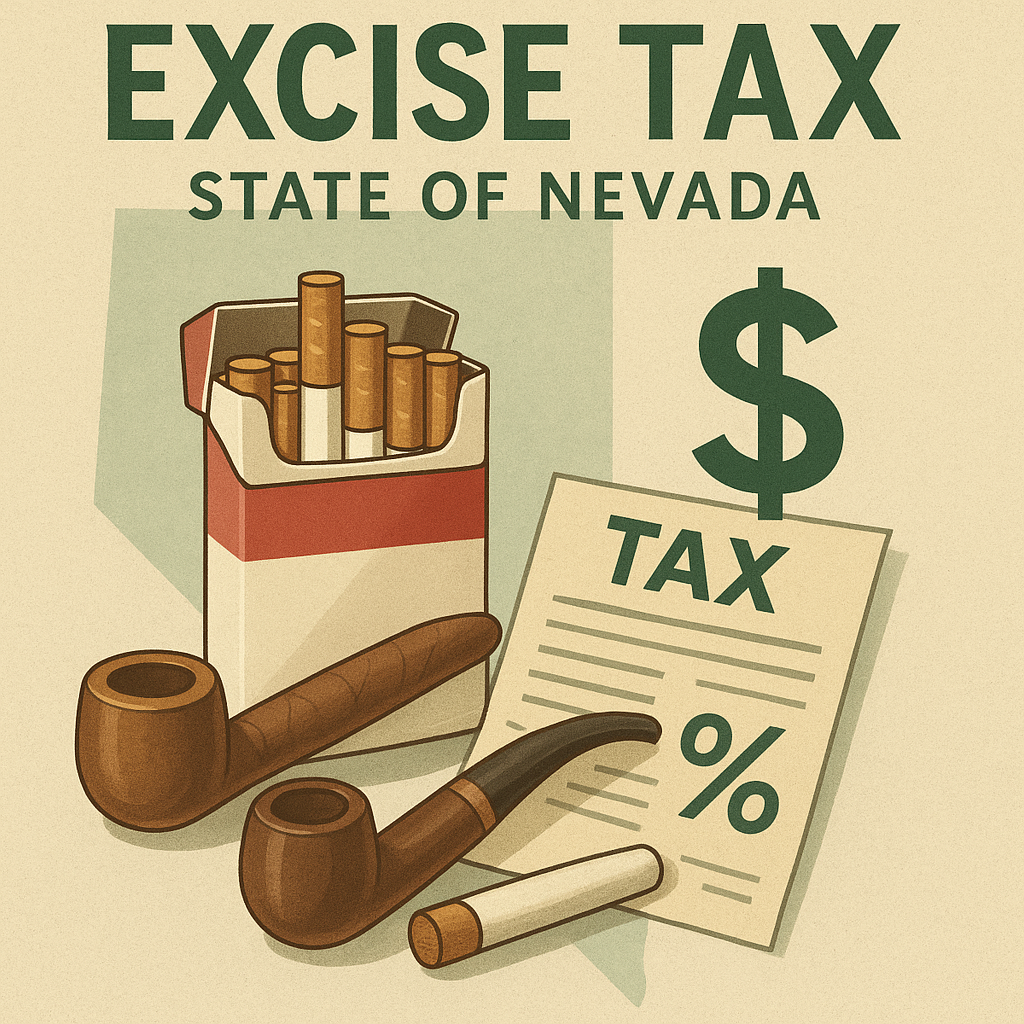
Imagine walking into your favorite convenience store, grabbing a pack of cigarettes or some rolling tobacco. The price includes more than just the product and a standard sales tax — it carries a special excise tax that the business had to handle long before you walked through the door. In Nevada, that process is governed by a specific set of rules, and there is a safety net called a surety bond that keeps everything honest. If you are a wholesaler, distributor, or retailer in the Silver State, understanding the Nevada Cigarette and Other Tobacco Products Tax — and the bond that often comes with it — is essential for staying in business without headaches.
A Closer Look at Nevada’s Tobacco Excise Tax
Nevada imposes an excise tax on cigarettes and other tobacco products under Title 32, Chapter 370 of the Nevada Revised Statutes. An excise tax is simply a tax on a specific good — in this case, tobacco. Instead of being collected at the cash register like a general sales tax, this tax is typically paid upstream. Wholesalers and distributors are the ones who file returns and remit the tax to the Nevada Department of Taxation, though the cost ultimately gets passed along to consumers in the retail price.
You might wonder, why is this separate from ordinary sales tax? Think of it like a toll road. You pay to use that specific road, and the revenue goes toward maintaining it. Similarly, tobacco excise taxes target a particular product category, often for policy reasons like public health, and the revenue helps fund state programs.
The tax applies to more than just traditional cigarettes. “Other tobacco products” can include cigars, pipe tobacco, chewing tobacco, snuff, and even newer alternatives like vaping liquid that contain nicotine. If it’s a tobacco-derived product, chances are it falls under this law.
Why a Bond Is Part of the Equation
If you read through Chapter 370, you’ll notice a requirement that certain businesses must post a bond. This might sound intimidating, but a bond in this context is simply a promise. Think of it as a security deposit in a rental agreement — the landlord holds a deposit in case you break the lease. Here, the state of Nevada is the “landlord,” and they want assurance that tobacco taxes will be paid fully and on time.
Specifically, the Cigarette and Other Tobacco Products Tax Bond guarantees that if a business fails to pay the taxes it owes, the surety company that issued the bond will step in and cover the loss up to the bond’s face value. The business then repays the surety company, not the state. This three-party safety system protects public funds without requiring the state to chase down delinquent taxpayers through lengthy court battles.
Who Needs to Hold This Bond?
Not every corner store that sells cigarettes needs a tax bond of its own. Generally, the bond requirement targets wholesalers, distributors, and sometimes large-scale retailers who bring tobacco products into the state or sell them to other businesses. If you are applying for a cigarette or tobacco products license as a wholesaler or distributor, the Nevada Department of Taxation will almost certainly ask you to secure a surety bond before granting that license. The exact bond amount depends on factors like your projected tax liability and the volume of tobacco products you expect to handle.
Even if you are a smaller retailer, it’s wise to understand the bond because your supplier almost certainly has one. When the system works smoothly, you can focus on serving your customers without worrying about tax compliance upstream.
How the Bond Amount Gets Determined
The state does not pull a random number out of the air. The required bond amount is typically set to cover several months of expected tax liability. For instance, if a wholesaler anticipates owing $10,000 per month in cigarette taxes, the state might require a bond of $30,000 or more. This creates a cushion that can protect the tax revenue even if a business suddenly closes or experiences financial trouble.
It’s a little like car insurance liability limits. You don’t buy coverage based on the total value of all the cars on the road; you pick a limit that can cover a serious accident. Likewise, the bond amount is tailored to the risk your business represents in terms of unpaid taxes.
What Does It Cost to Get Bonded?
One of the most common questions business owners ask is, “Do I have to pay the full bond amount upfront?” The answer is almost always no. A tobacco tax bond is a type of surety bond, meaning you pay a small percentage of the total face value — usually between 1% and 10% — as a premium. That premium is determined by the surety company based on your personal credit, business financials, and experience in the industry. A strong credit profile can land you a premium as low as 1% of the bond amount, while riskier applicants may pay a higher rate. You are never required to put down the entire face amount in cash unless your financial situation is extremely challenging.
For example, if the state requires a $50,000 bond, your out-of-pocket cost could be as low as $500 for the year if your credit is excellent. That’s a manageable expense when you compare it to the peace of mind — and legal compliance — it buys.
Steps to Meet the Nevada Tobacco Tax Bond Requirement
Getting into compliance does not have to be a maze. Here is a straightforward path you can follow:
- Determine your obligation. Check with the Nevada Department of Taxation or review your license application package. They will tell you the exact bond amount needed.
- Gather your paperwork. You’ll typically need business financial statements, a copy of your license application, and sometimes personal financial information for the owners.
- Apply with a surety bond provider. You can go through an agency that specializes in tobacco tax bonds. They will shop rates from multiple surety companies.
- Pay the premium and sign. Once approved, you pay the annual premium, sign the bond form, and the surety company seals it.
- Submit the bond to the state. File the original bond with the Nevada Department of Taxation as part of your licensing process. Keep a copy for your records.
These bonds usually need to be renewed each year. Mark your calendar well before the expiration date, because a lapse in coverage can put your license at risk.
Common Pitfalls and How to Avoid Them
Even well-meaning business owners can stumble. One mistake is underestimating the bond amount needed and then scrambling when the state revises its requirement after reviewing your tax filings. Another is forgetting to renew the bond. If your bond expires without a new one in place, the state can suspend your license, and you may be forced to stop selling or distributing tobacco products until you fix the gap. That can mean lost revenue and a dent in your reputation.
Maintaining open communication with your surety bond agent helps. They can send renewal reminders and alert you if the state changes its bonding regulations. Treat your bond like a vital piece of your business infrastructure — just like your lease or your insurance policies.
Why Nevada Cares So Much About Tobacco Tax Compliance
You might be thinking, “It’s just tobacco — why all the red tape?” The reality is that tobacco taxes generate significant revenue for Nevada. The state uses these funds for public services, from healthcare programs to education. When businesses skip out on paying these taxes, the public trust gets broken, and programs that communities rely on lose critical funding. The bond requirement acts as a financial first responder, making sure the state has recourse without having to chase down every dollar through the court system.
On top of that, tobacco is a heavily regulated product for health reasons. Keeping a tight watch on its distribution helps the state enforce laws around underage sales and product safety. The tax bond is one piece of that enforcement puzzle.
How This Bond Compares to Other Business Bonds
If you’ve ever dealt with a contractor license bond or a motor vehicle dealer bond, the tobacco tax bond will feel familiar. It works on the same principle: a surety company backs your promise to follow the law. The difference lies in the specific obligation — paying excise taxes rather than completing construction work or selling a car with a clean title. So, your past experience with other bonds can actually give you a head start. The application process, the credit review, and the renewal cycle are all very similar.
Real-World Impact: A Quick Scenario
Let’s say a small wholesale business in Las Vegas brings in premium cigars from out of state. They sell them to local smoke shops and lounges. The business applies for its Nevada cigarette and tobacco products license and is told they need a $25,000 tax bond. The owner, with good credit, pays a $375 annual premium. Everything runs smoothly for nine months — then the owner hits a rough patch and falls behind on tobacco tax payments. Instead of the state simply losing that money, the bonding company pays the state up to the $25,000 limit. The wholesaler now has a debt to the surety company, but the public coffers remain whole. Without the bond, that tax shortfall would have become the state’s problem to solve, potentially at taxpayer expense. This example shows how the bond works silently in the background, protecting everyone involved.
What Happens If You Don’t Comply?
Operating without the required bond is not a minor oversight. You risk having your license revoked or suspended. The state can also hit you with fines and penalties on top of the taxes owed. In serious cases, law enforcement could get involved. All that adds up to a business interruption you definitely do not want. If you are even a little unsure about your bonding status, reach out to the Nevada Department of Taxation today. An hour of proactive checking can save you months of pain.
Ready to Navigate Nevada’s Tobacco Tax Landscape?
Understanding the Nevada excise tax on cigarettes and other tobacco products, along with its bond requirement, puts you in the driver’s seat. Whether you are just launching a distribution company or expanding an established retail chain, staying on top of Title 32, Chapter 370 will keep your business compliant and your mind at ease. The next time you see a pack of cigarettes on a shelf, you will know the invisible system of taxes and bonds that made that sale possible — and you might even appreciate the role your own bond plays in that larger picture.
If you have questions about the bond application process, you are not alone. Many business owners find it helpful to talk with a surety bond specialist who understands Nevada’s tobacco regulations inside and out. A conversation could be all it takes to turn a confusing requirement into a simple to-do item on your path to success.
Leave a Reply