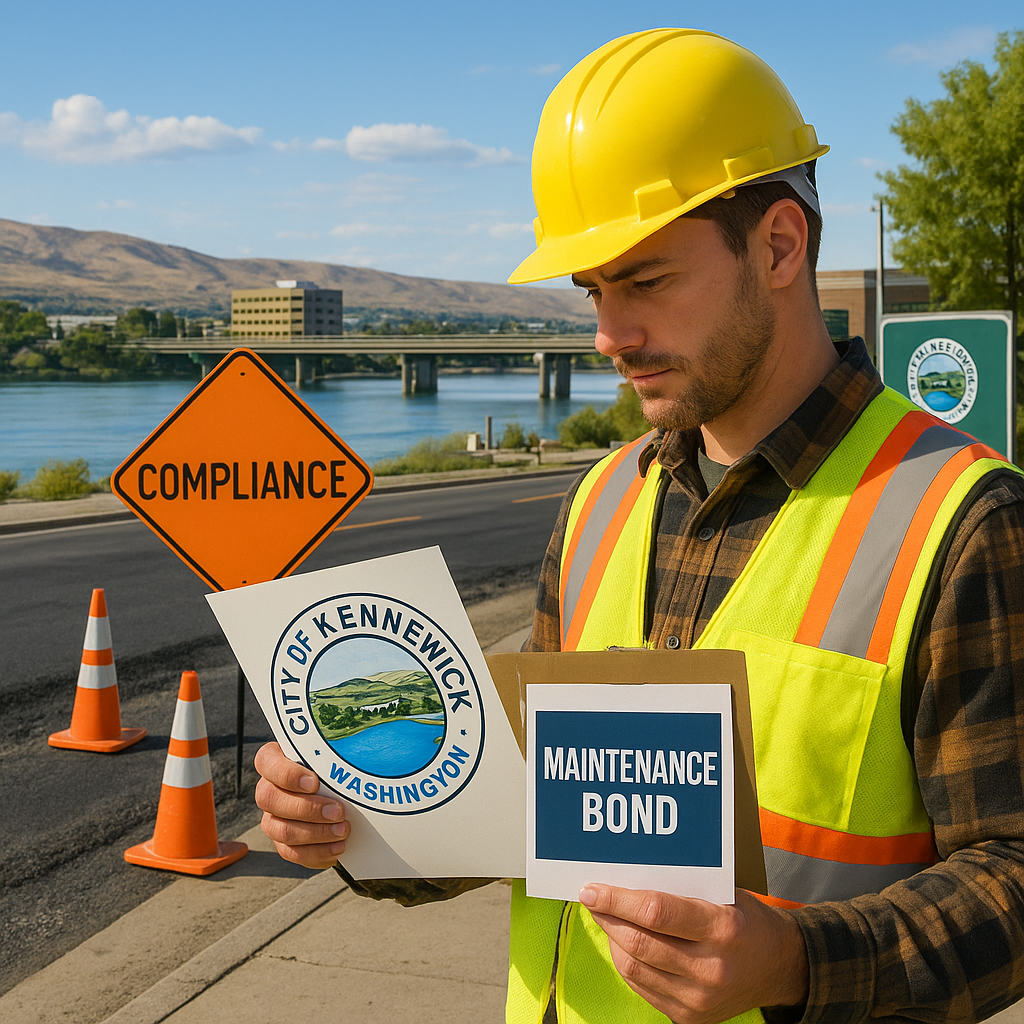
If you’re a street contractor in Kennewick, Washington, you might have heard about the need for a Permit & Maintenance Bond. It sounds like just another piece of paperwork, but it’s actually a powerful safeguard for the community—and a smart way for you to build trust with the city. Let’s break it all down in plain, everyday language so you know exactly what’s required, why it matters, and how to get bonded without a headache.
What Exactly Is a Permit & Maintenance Bond?
Think of a Permit & Maintenance Bond as a three-way promise. The three parties involved are: you (the contractor), the City of Kennewick (the obligee), and a surety company. The bond guarantees that you’ll follow all the rules tied to your street work permit and that you’ll fix any issues that pop up during a set maintenance period after the job is done. If something goes wrong—like a pavement patch failing six months later—the city can lean on that bond to cover the cost of repairs instead of coming after you directly for the money.
It’s not insurance for you. Instead, it’s a safety net for the city and its taxpayers. If you do everything right, the bond just sits there quietly and costs you only the initial premium. But if you don’t, the surety pays the city, and then you have to pay the surety back. So it keeps everyone on their toes.
Why Does the City of Kennewick Require This Bond?
Kennewick takes its infrastructure seriously. When you dig up a street, install utilities, or repave a bike lane, the city needs to know that the public right-of-way will stay safe and functional long after you’ve packed up your equipment. The bond requirement isn’t there to make your life difficult—it’s there to protect everyone who uses that road, from school buses to emergency vehicles.
Before issuing a permit, the city wants a financial guarantee that you’ll complete the work according to code and stand behind it during the maintenance period. Without that bond, taxpayers could end up footing the bill for shoddy workmanship or early failures. By requiring the bond, Kennewick shifts that risk back where it belongs: on the contractor and the surety company.
The Dual Role: Permit and Maintenance
This isn’t two separate bonds rolled into one name by accident. The “permit” side ensures you comply with all permit conditions—things like approved work hours, proper backfill, and traffic control measures. The “maintenance” side kicks in after you finish and typically covers defects in materials or workmanship for a specified window, often one to two years. During that time, if a trench settles badly or asphalt cracks prematurely, the city can call on the bond for repairs. It’s like a warranty backed by a financial institution.
Who Needs a Kennewick Permit & Maintenance Bond?
Generally, any contractor who performs work within the city’s public street right-of-way must secure this bond. That includes:
- Excavation companies cutting into pavement for water or sewer lines.
- Paving contractors resurfacing or repairing road segments.
- Utility contractors placing underground cables or fiber optics.
- Sidewalk and curb installers where the work affects the street edge.
- Any subcontractor directly responsible for work that touches the public right-of-way.
If you’re not sure whether your project falls under this rule, a quick call to the City of Kennewick’s permit office can clear things up. It’s always better to ask early than to hit a roadblock right before breaking ground.
How Does the Bond Protect Both the City and You?
At first glance, the bond might seem like it only protects the city. But think about it: by having the bond in place, you’re demonstrating financial responsibility and professionalism. This can give you a competitive edge when bidding on public projects. The city knows they’re dealing with a contractor who can be held accountable, which reduces their risk and makes your proposal more attractive.
Additionally, the bond gives your clients (like the city) a clear path to resolution if something goes wrong. Instead of ending up in a messy legal battle, the surety steps in, investigates the claim, and arranges for the work to be done. This structured process can actually protect your reputation by resolving issues quickly and fairly, without endless finger-pointing.
What Does a Claim Look Like? (And How to Avoid One)
A claim happens when the city believes you haven’t fulfilled your permit obligations or that a defect has appeared during the maintenance window and you haven’t fixed it. The city files a claim with the surety company, which then investigates. If the claim is valid, the surety pays out up to the bond’s limit—and you’re legally obligated to repay that amount to the surety. That’s why it’s so important to treat the bond seriously: it’s not free money, it’s a loan you must repay.
Avoid claims by:
- Following the permit conditions to the letter. No cutting corners on compaction or materials.
- Documenting your work with photos and inspection reports.
- Responding promptly to any notices from the city during the maintenance period.
- Building a little extra time into your schedule for thorough quality checks before you walk away.
An ounce of prevention here saves you from a mountain of paperwork and potential financial strain later.
How Much Does the Bond Cost?
The bond’s total value, or penal sum, is set by the City of Kennewick—often based on the scope and type of work you do. A typical street contractor might need a bond in the range of $5,000 to $25,000, but larger projects could demand higher limits. However, you don’t pay that full amount. Instead, you pay a premium, which is a small percentage of the bond’s total value, usually between 1% and 5% annually.
Your premium depends on factors like your personal credit score, business financials, and experience. A contractor with strong credit might pay just 1% or 2%, meaning a $10,000 bond could cost as little as $100 to $200 per year. Even with less-than-perfect credit, options exist through specialized surety markets, though the rate will be higher. It’s a manageable expense for the credibility and compliance it provides.
How to Get Bonded: Step-by-Step
The process is smoother than you might expect. Here’s a straightforward path:
- Confirm the required bond amount. Reach out to the City of Kennewick permit office or check their website for current bond thresholds based on your license type or project specifics.
- Gather your paperwork. You’ll typically need your contractor license, business details, and possibly financial statements for larger bonds.
- Contact a surety bond agency. Work with an agency that understands Washington municipal bonds. They’ll shop rates among multiple sureties to get you the best deal.
- Complete the application. You’ll fill out basic information and authorize a credit check. This is usually quick and can be done online.
- Review your quote and pay the premium. Once approved, you’ll pay the premium, and the agency will issue the bond.
- File the bond with the city. The original bond form often needs to be delivered to the Kennewick permit office before your permit is activated. Keep a copy for your records.
Many contractors can get bonded within 24 to 48 hours if their paperwork is in order. The key is starting early so the bond doesn’t delay your project’s kickoff.
Common Questions (and Straightforward Answers)
Is the bond the same as insurance?
No. Insurance protects your business from unexpected losses like accidents or theft. A surety bond protects a third party (the city) and you must repay any claims the surety pays out. They serve completely different purposes.
Can I use a cash deposit instead of a bond?
Some cities allow a cashier’s check or money order as an alternative, but it ties up your working capital. A bond is usually more affordable and keeps your cash free for other needs. Ask Kennewick directly if they accept alternatives and weigh the pros and cons.
What if my bond expires during the maintenance period?
The bond must remain in force for the entire maintenance term. You’ll need to renew the bond annually or confirm that coverage extends long enough. Letting it lapse is a serious violation and can lead to permit revocation or additional fines. Set a calendar reminder well before the expiration date to renew on time.
Why This Matters for Kennewick’s Future
Every time a contractor patches a road correctly and stands behind that work, Kennewick becomes a little more resilient and a little less burdened by repair costs. The bond system creates a chain of accountability that keeps public projects honest and high-quality. For you, it’s not a hurdle; it’s part of being a trusted professional in a community that values reliability.
So, whether you’re a seasoned excavation pro or a new utility installer taking on your first city contract, understanding and securing your Kennewick Permit & Maintenance Bond puts you on solid ground. It’s a straightforward step that opens doors, builds confidence, and keeps our streets smooth for everyone.
Leave a Reply