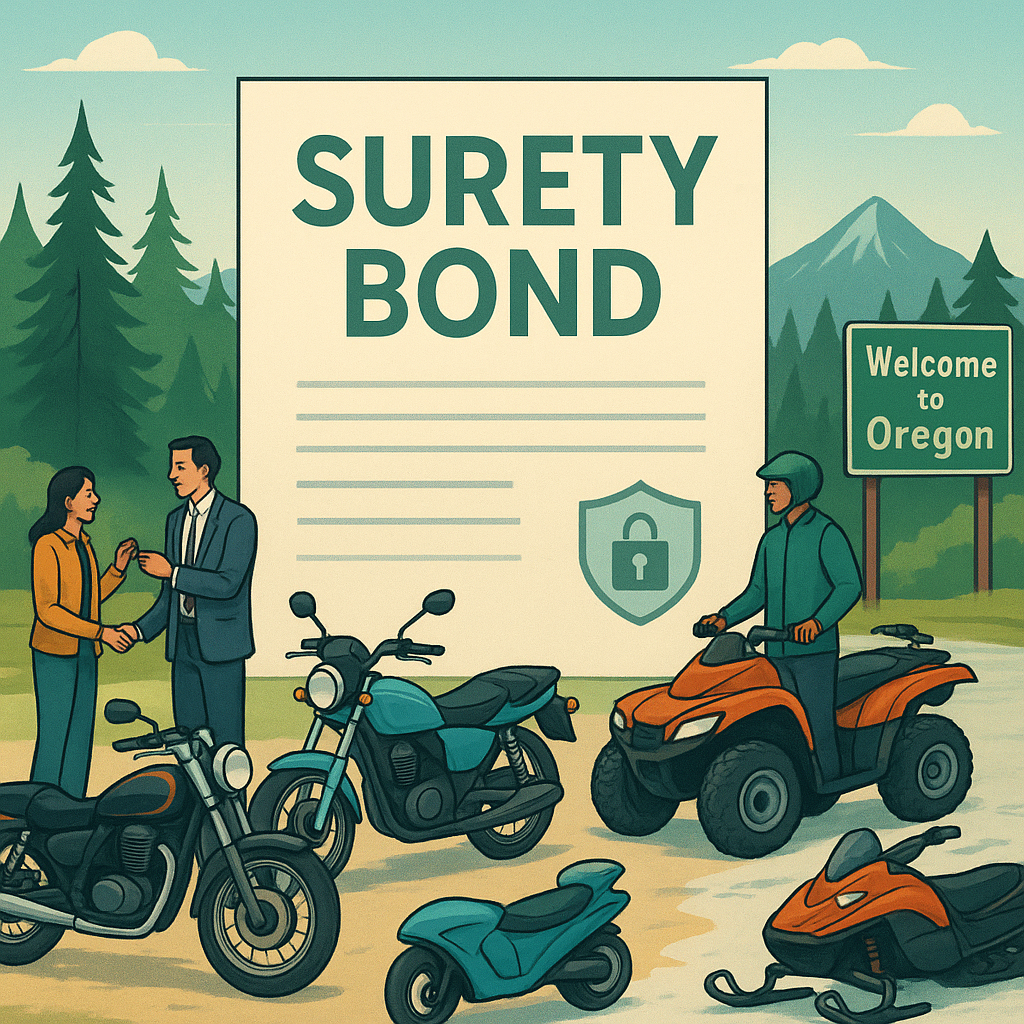
If you’re dreaming of selling motorcycles, mopeds, snowmobiles, or ATVs in Oregon, there’s one piece of paperwork you’ll want to understand right away — the Oregon dealer surety bond. It might sound like just another line item on a long licensing checklist, but it’s actually your golden ticket to building trust with customers and staying compliant with the state. Let’s walk through what this bond really is, why it matters, and how you can check it off your to-do list without any headaches.
What Exactly Is a Motorcycle, Moped, and ATV Dealer Surety Bond?
Think of a surety bond as a promise you make to the state and to your customers. But unlike a pinky swear, this promise is backed by real financial protection. In simple terms, a surety bond is a three-party agreement:
- The Principal: That’s you, the dealership owner who needs the bond.
- The Obligee: The Oregon Department of Motor Vehicles (DMV), which requires the bond as part of your dealer license.
- The Surety: The insurance company that issues the bond and vouches for you.
If your dealership follows the rules, the bond sits quietly in the background. But if something goes wrong — say a dealership fails to provide a title, sells an unsafe vehicle, or commits fraud — a customer or the DMV can file a claim against the bond. The surety would pay out valid claims up to the bond amount, but here’s the catch: you’re ultimately responsible for paying that money back. So it’s not insurance for you; it’s a shield for the public.
Why Does Oregon Require This Bond for Powersports Dealers?
Oregon wants to keep its roads, trails, and public lands free from shady deals. Motorcycles, ATVs, and snowmobiles aren’t just toys — they’re vehicles with titles, registration rules, and safety standards. When a customer hands over thousands of dollars for a new bike or a used side-by-side, they need to know their investment is protected. The dealer bond acts as a financial safety net. It ensures that if a dealer breaks the law or fails to meet contractual obligations, the buyer doesn’t end up holding an empty bag.
This requirement covers all types of dealers handling motorcycles, mopeds, snowmobiles, and ATVs in Oregon. Whether you sell brand-new name-brand bikes or a small collection of used four-wheelers, the state lumps these powersports vehicles together under the same umbrella. The bond tells your customers, “I take my business seriously, and the state has vetted me.”
Who Needs This Bond Specifically?
You’ll need an Oregon DMV dealer surety bond if you’re applying for a vehicle dealer license to sell any of the following:
- Motorcycles (street-legal)
- Mopeds and scooters meeting motor vehicle standards
- All-terrain vehicles (ATVs) and utility task vehicles (UTVs)
- Snowmobiles
- Other off-road recreational vehicles that require titling in Oregon
Even if you’re a small independent shop operating from your garage, the rule still applies. The state doesn’t distinguish between a mega dealership with dozens of vehicles and a one-person operation. If you’re in the business of selling these vehicles, the bond is a non-negotiable part of your licensing.
How Much Does the Bond Cost?
Now for the part everyone wants to know: the price tag. First, it’s important to separate the bond amount from your actual cost. The bond amount is the total coverage limit the state sets. For many Oregon motor vehicle dealers, this number is $20,000 for the first business location. However, specific requirements can vary, so always confirm with the Oregon DMV or a trusted surety bond agency. Some jurisdictions or vehicle types might require different amounts, so a quick call can save you from a last-minute scramble.
Your actual out-of-pocket cost — the premium — is only a small percentage of that bond amount. If you have solid personal credit and business financials, you might pay just 1% to 3% of the total bond. For a $20,000 bond, that could mean $200 to $600 per year. Yes, you read that right: you get the full protection of a $20,000 coverage layer for a few hundred bucks. If your credit is less than perfect, you might pay a higher rate, but many surety companies offer programs for all credit types. The key is to shop around and not just grab the first quote you see.
How to Get Your Oregon Dealer Bond in Three Simple Steps
The process is a lot easier than you might think. Here’s how it usually goes:
- Find a reputable surety bond provider. Look for a company that specializes in Oregon dealer bonds and understands the DMV’s specific language. Avoid general insurance brokers who might treat this as an afterthought.
- Submit a quick application. You’ll provide basic details about your business, personal information, and sometimes a credit check authorization. Many providers offer instant online quotes, so you’ll know your premium in minutes.
- Pay the premium and get your bond form. Once approved, you’ll receive the official bond document. Sign it as the principal and file it with your dealer license application. The DMV needs the original, so don’t attempt to send a photocopy.
Pro tip: Ask your surety company if they can file the bond directly with the Oregon DMV. Some offer this as a free service, which saves you a trip to the post office and a stamp.
Keeping Your Bond Active Year After Year
A surety bond isn’t a one-and-done item. It usually has a term that matches your dealer license period. You’ll need to renew it annually or whenever your license comes up for renewal. Set a calendar reminder a few weeks before expiration so you aren’t caught off guard. A lapse in bond coverage can trigger an automatic suspension of your dealer license — and nobody wants to tell a customer they can’t finalize a sale because paperwork slipped through the cracks.
Renewing is typically simple. You pay the premium for the new term, and the surety sends an updated bond form or a continuation certificate to the DMV. Keep an eye out for any changes in the required bond amount from the state. Regulations can shift, and staying informed will keep you in good standing.
What Happens If Someone Files a Claim Against Your Bond?
Let’s be real: claims are stressful, but they’re also rare. If a customer believes you violated the law or failed to deliver a clean title, they can file a claim with the surety company. The surety then investigates. If the claim is valid, they’ll pay the claimant up to the bond’s limit. But remember, the dealership must reimburse the surety for every penny paid out plus any legal fees. So while the bond protects the public, your own wallet is on the line. The best way to avoid claims? Run your business with transparency, follow Oregon’s vehicle dealer laws to the letter, and keep meticulous records. A little diligence goes a long way.
Common Questions Powersports Dealers Ask About Oregon Bonds
Is this the same as a bond for car dealerships?
Yes and no. The concept is identical, but the category of vehicles differs. Oregon requires surety bonds for all motor vehicle dealers, whether they sell cars, trucks, motorcycles, or recreational vehicles. The bond forms might have slightly different wording depending on the license type, so make sure you’re getting the one that specifically covers motorcycles, mopeds, snowmobiles, and ATVs.
Can I use one bond for multiple locations?
Maybe. The DMV often requires an additional bond amount for each extra sales location. For example, if the primary bond is $20,000, you might need an additional $5,000 bond per extra site. Check with the DMV or your surety agent to structure it correctly. Sometimes a single bond rider can cover all locations with the total required limit.
Does bad credit automatically disqualify me?
Not at all. While good credit helps you lock in the lowest rate, many surety companies offer bonds to dealers with lower credit scores. You might pay a slightly higher premium, but you can still get bonded. It’s a bit like getting a car loan — the terms adjust based on perceived risk, but the road is still open.
Why This Bond Is More Than Just Red Tape
It’s easy to view government requirements as a nuisance. But picture yourself as a customer walking into a powersports dealership for the first time. You’re excited, maybe a little nervous about spending your hard-earned cash. Seeing that the dealer is bonded and licensed by the Oregon DMV gives you a quiet sense of security. That bond helps level the playing field — it tells every buyer that honest dealers welcome accountability, and dishonest ones can’t hide.
For you as a business owner, the bond also sets you apart from unlicensed sellers who pop up on classified ads without any oversight. In a competitive market, that layer of credibility can be the reason a customer chooses your shop over a sketchy online listing.
Ready to Get Your Oregon Motorcycle, Moped, and ATV Dealership Bond?
The journey from application to approval doesn’t have to be a bumpy ride. Start by gathering your basic business information and reaching out to a surety bond specialist who knows Oregon’s rules inside and out. Ask about same-day quotes, electronic filing, and renewal reminders so you can focus on what you do best — matching riders with their perfect machines. With the right bond in place, you’ll be street-legal, trust-ready, and ready to roll.
Leave a Reply