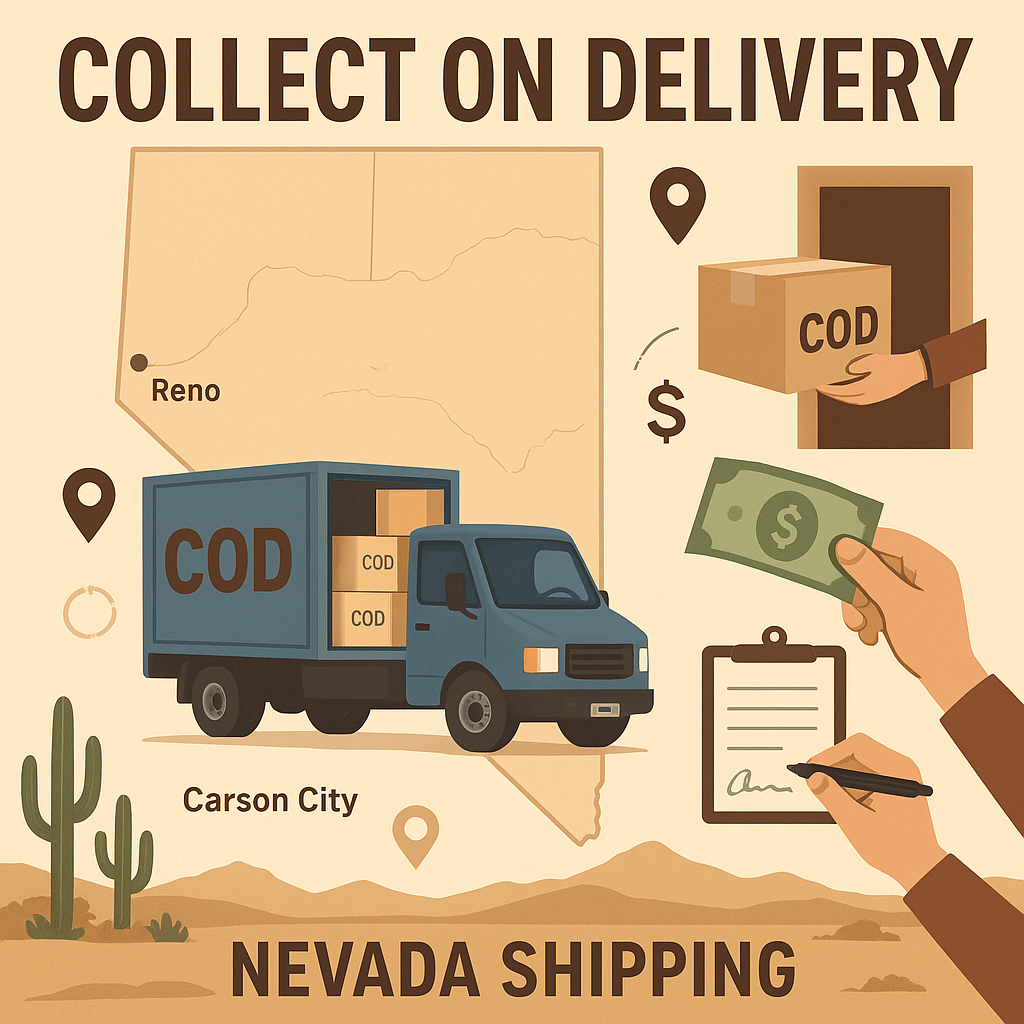
Have you ever shipped a package and wished you could get paid right when the customer opens the box? Or maybe you run a small business in the Silver State and want to offer your customers the safety of paying only after they see the goods. That’s where Collect on Delivery—often called COD—comes into play. But if you’re shipping out of Nevada, there’s a unique rule you need to know about: a special bond that protects everyone involved.
Think of it like a security deposit on an apartment. Before you get the keys, a deposit assures the landlord that you’ll follow the rules. In Nevada, certain shippers who use COD need a similar kind of financial promise. It might sound a little dry, but stick with me. We’ll break it all down into bite-sized pieces, with plenty of real-world examples, so you can navigate these waters like a pro.
What Exactly Is Collect on Delivery (COD)?
Let’s start with the basics. Collect on Delivery is a shipping arrangement where the carrier that delivers the goods also collects the payment from the buyer. The carrier then sends that money back to you, the seller. No waiting for an invoice to be paid weeks later. No chasing down checks. The transaction finishes the moment the package changes hands.
Imagine you own a small pottery studio in Reno. A customer in Elko orders a custom vase worth $200. With COD, the delivery driver hands over the vase and simultaneously collects $200 in cash, check, or sometimes a cashier’s check. That money lands in your account a few days later. It’s a beautiful mixture of trust and convenience.
For buyers, COD reduces the fear of paying for something that never arrives. For sellers, it cuts out the risk of sending an item and never getting paid. In a world where online scams can make people hesitant, COD feels like a friendly handshake that happens long distance.
Why Nevada Loves COD Shipping
Nevada is special. We have booming cities like Las Vegas and Henderson, but also vast stretches of remote towns. Not every home has a reliable internet connection for instant digital payments. Some customers simply prefer cash. Others might not trust a random e-commerce site with a credit card. COD bridges that gap perfectly.
Another reason? Nevada’s economy runs on a mix of tourism, small retail, and growing online businesses. From artisan crafts sold at a weekend market in Carson City to heavy equipment parts headed to a mine near Winnemucca, shippers often move high-value goods. COD lets them serve customers who want the security of seeing the product before money leaves their hands.
But here’s the twist that catches many off guard. In Nevada, if you’re a shipper who regularly offers COD and acts as the carrier—or uses a carrier that collects money on your behalf—you may need a special type of surety bond. Let’s unpack that.
The Nevada COD Bond: A Safety Net for Everyone
You might wonder, “Why on earth does the state care about how I get paid?” Good question. Nevada requires certain shippers and carriers who handle COD transactions to post a surety bond, often called a Nevada Collect on Delivery bond. The reasoning is simple: to protect the public.
Think of a moving company that offers COD. They pick up a household’s belongings, promise to deliver them across the state, and collect payment at the doorstep. What if the mover takes the money and never delivers? Or damages the goods and refuses to make it right? The bond acts as a financial guarantee that if the mover breaks the law or fails to honor the contract, the harmed party can make a claim against that bond to recover their loss.
The Nevada Transportation Authority (NTA) oversees many for-hire motor carriers in the state. For certain types of carriers, especially those that handle household goods or offer COD services, a surety bond is not optional—it’s a ticket to legally operate. Without it, you risk fines, penalties, or being shut down.
Who Needs a COD Bond in Nevada?
Not every e-commerce shop shipping a T-shirt through a big carrier like UPS or FedEx will need one. The bond requirement generally applies to for-hire motor carriers that operate within Nevada and directly collect payments on delivery. If you use a third-party shipping company and they simply drop off a package without handling money, you’re likely in the clear. But if your business picks up items and your drivers collect cash or checks at the customer’s doorstep, pay close attention.
Common examples include:
- Moving companies that transport household goods for individuals.
- Local delivery services that deliver furniture or appliances and accept payment on-site.
- Courier companies that specialize in COD shipments for multiple businesses.
- Freight brokers arranging COD shipments where their client’s driver handles the collection.
If you’re not sure where you fall, contacting the Nevada Transportation Authority directly is a wise first step. They can clarify whether your specific operation triggers the bond requirement. Remember, rules change and every situation is unique.
How Does a Surety Bond Actually Work?
Let’s clear up a common confusion. A surety bond isn’t insurance for you. It’s a three-party agreement: you (the principal), the state or general public (the obligee), and the bonding company (the surety). If you cause a valid financial loss by breaking the rules, the surety pays the harmed party up to the bond amount. But here’s the kicker—you then have to pay the surety back in full. So it acts more like a line of credit than insurance.
In Nevada, the COD bond amount can vary by business type, but a typical requirement is $10,000. You don’t pay the whole $10,000 upfront. Instead, you pay a small percentage—often 1% to 5% of the bond amount—as an annual premium. For a person with good credit, that might be as low as $100 a year. The bonding company looks at your credit score, business financials, and experience to set the price.
The process is usually straightforward:
- Apply with a surety bond provider. You’ll fill out basic info.
- Get a quote, usually within minutes for small bonds.
- Pay the premium and the bond becomes active.
- File the bond with the NTA or keep it on file as required.
Step-by-Step: Getting Your Nevada COD Bond
Ready to hop on the bonding bandwagon? Here’s a clearer path you can follow, even if paperwork makes your head spin.
Step 1: Verify the requirement. Call the Nevada Transportation Authority or visit their website. Tell them about your business model—“I’m a local carrier, my drivers handle COD for artworks.” They’ll tell you which bond form and amount you need.
Step 2: Gather your business information. You’ll need your DOT or MC number (if you have one), your federal employer identification number (EIN), and basic financial details. If your business is new, don’t panic. Even startups can get bonded, though the premium might be slightly higher until you build some credit history.
Step 3: Choose a surety bond agency. Look for a provider that specializes in freight and transportation bonds. They’ll understand Nevada’s quirks and can help you avoid common mistakes. Friendly tip: avoid online forms that look too generic. A human agent can save you hours.
Step 4: Pay your premium and receive your bond. Once you pay, you’ll get an official bond document. Keep a copy in your cab and one in the office. When the state asks for proof, you’ll snap a picture and send it over.
Step 5: Renew annually. Most COD bonds need renewal every year. Set a reminder. Letting it lapse could lead to your operating authority being suspended, and nobody wants that.
Real-World Benefits and Pitfalls of COD for Nevada Shippers
COD can make your business stand out like a neon sign on the Strip. But every bright side has a shadow. Let’s look at both ends honestly.
The Good Stuff:
- Instant trust. New customers are more likely to buy when they can pay after inspecting the product.
- Cash flow boost. You don’t have to wait 30 days for net terms or hope a credit card charge doesn’t get disputed. The carrier collects, and you get paid.
- Wider audience. You can serve unbanked customers or folks who avoid online payments.
- Competitive edge. In Nevada’s bustling small business scene, offering COD can be a deciding factor for a hesitant buyer.
The Challenges:
- High return rates. If a customer refuses the package on delivery, you eat the round-trip shipping cost and still don’t get paid.
- Paperwork headaches. Tracking COD shipments, reconciling cash payments, and dealing with lost checks can eat up your afternoon.
- Fraud risk. A dishonest carrier employee could pocket cash and claim the customer didn’t pay. The bond helps here, but prevention is better.
- Bond cost and compliance. Forgetting to renew the bond could halt your operations just when you’re busiest.
On balance, for many Nevada businesses, the pros outweigh the cons—especially if you take a few smart precautions.
Smart Tips for Smooth COD Operations in Nevada
Let’s imagine you’ve got your bond in place, your drivers are ready, and orders are rolling in. How do you keep things humming along without hiccups?
Train your drivers thoroughly. They are the face of your company at the customer’s doorstep. A simple “Hello! I have your package and here’s your invoice” can set a positive tone. Teach them to count cash carefully and issue a receipt every single time, no exceptions.
Use tracking technology. A good delivery app can mark a package as “paid” the moment money changes hands. This real-time data prevents disputes and lets your back office sleep easier.
Set clear terms with customers. On your checkout page or order form, state exactly what payment forms you accept (cash, cashier’s check, no personal checks above $X). Spell out what happens if the customer isn’t home. A transparent policy saves angry phone calls later.
Keep meticulous records. In Nevada’s regulatory environment, having a paper trail isn’t just good business—it’s essential to defend a bond claim. Store delivery receipts digitally and back them up. If a customer claims they never received their order but your driver has a signed receipt, your bond and your reputation stay safe.
Audit your COD process regularly. Once a quarter, do a spot check. Compare the money your drivers collected against what was deposited. Small discrepancies can balloon into big problems if ignored.
Don’t forget the bond renewal. Set a digital calendar alert. Maybe even automate the payment if your surety company allows it. The tiny effort is nothing compared to the disaster of operating without coverage.
How Does All This Fit Into Your Bigger Business Picture?
You might be reading this as an Etsy seller who packs ceramics in a Reno studio and ships them with a standard parcel carrier. Right now, a COD bond probably feels irrelevant. But as you grow—maybe start your own delivery van to save on shipping costs, or begin handling high-value local deliveries yourself—the Nevada COD bond becomes your shield. It’s a sign of a mature business that follows the rules and protects its customers.
What if you’re a freight broker connecting out-of-state shippers with Nevada receivers? Even if the carrier you hire handles the COD collection, make sure that carrier has its own Nevada bond if required. You don’t want to get tangled in liability because your partner skipped compliance.
Frequently Overlooked Questions
Does a COD bond cover cargo damage? Usually not. The bond covers financial misconduct or failure to remit collected funds. For damaged goods, you need cargo insurance. The two work together like a seatbelt and an airbag—different protections for different scenarios.
Can you get bonded with bad credit? Yes, though the premium can be higher. Some specialty surety agencies work with less-than-perfect credit. You might pay 5% to 15% instead of 1%. But the option exists, so don’t assume you’re locked out.
What if you only do COD once in a blue moon? The rule typically hinges on whether you operate as a for-hire carrier. Even occasional COD services still count if you’re operating commercially. When in doubt, ask the Nevada Transportation Authority—they’ve heard every scenario.
Your Next Steps in the Silver State
Navigating COD services in Nevada doesn’t have to feel like crossing the desert without a map. Now you know that COD is a powerful tool to get paid faster, reach new customers, and build trust. You also understand that a little piece of paper called a surety bond keeps the whole system honest—and that it’s not nearly as scary as it sounds.
Take a few minutes this week to assess your delivery model. Do you or your drivers handle payments at the point of delivery? If yes, reach out to a bonding professional or the NTA. Get your bond sorted, then proudly display that compliance badge. Your customers will feel safer, and you’ll operate with the peace of mind that comes from doing things the right way in the great state of Nevada.
Leave a Reply