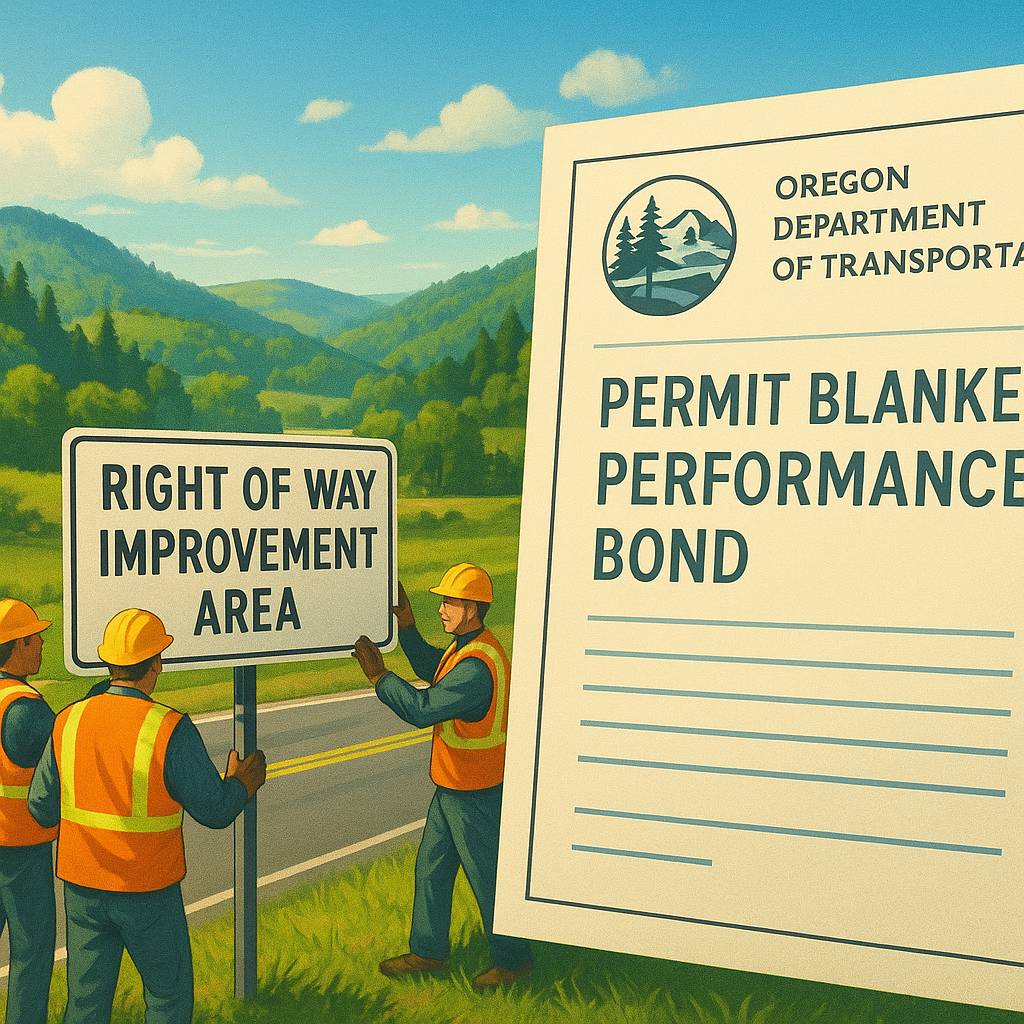
What Exactly Is a Permit Blanket Performance Bond?
Let’s break this down into something we can all picture. Imagine you’re renting an apartment. The landlord asks for a security deposit before you move in. That deposit isn’t a punishment—it’s a promise. If you leave the place spotless, you get your money back. If there’s a big hole in the wall, the landlord uses your deposit to fix it. A permit blanket performance bond works the same way, just on a much larger scale, involving roads, utilities, and public safety.
When a company wants to dig up a street, install a new fiber optic line, or repair a water main along a state highway in Oregon, they don’t just grab a shovel. They need permission from the Oregon Department of Transportation (ODOT). Part of getting that green light often involves securing a bond. A performance bond guarantees that all the work will be done correctly and that the land will be left in the same—or better—condition than they found it.
Why Right-of-Way Work Needs a Safety Net
Think about the space right next to a busy road. That strip of land, the “right-of-way,” belongs to the public. ODOT manages it on everyone’s behalf. Any time someone needs to work there, they’re essentially borrowing public space. That privilege comes with serious responsibility.
Have you ever driven past a construction site and wondered, “Who makes sure they fill in that trench properly, so I don’t hit a pothole six months later?” That’s where the bond steps in. It’s a financial guarantee that the contractor will restore the pavement, replace damaged guardrails, fix disturbed landscaping, and follow all of ODOT’s strict safety standards. If they don’t, the bond covers the cost of hiring someone else to clean up the mess.
The Big Shift from One-Off Bonds to a Blanket Bond
In the past, a contractor had to get a separate bond for every single project—dig here, patch there, bond for each. It was like paying a separate entry fee every single time you visited the gym. Now, picture buying a yearly membership that lets you walk in whenever you need to. That’s the beauty of a permit blanket performance bond.
Instead of wrestling with dozens of individual bonds, a utility company or a regular contractor can purchase one blanket bond that covers all their right-of-way permits with ODOT for a set period, often a year. This single streamlined approach slashes paperwork, saves serious money on bond premiums, and lets essential infrastructure projects move faster. For Oregon, where the ground might thaw in the valley while the mountain passes are still icy, that time saved means better roads and fewer delays.
How a Blanket Bond Actually Works
The process is surprisingly straightforward. A business figures out the maximum amount of exposure they’ll have at any one time across all their open permits. They work with a surety company to issue one bond for that aggregate amount. Every time they pull a new right-of-way permit, the blanket bond automatically extends its protection to that job. ODOT doesn’t have to verify a fresh bond number for every patch of pavement, and the contractor doesn’t have to keep a binder full of individual certificates.
Enhancing Infrastructure Without Cutting Corners
It’s tempting to think of bonds as just bureaucratic red tape. But in reality, this system actively strengthens Oregon’s infrastructure. Here’s why.
Public agencies manage billions of dollars in roads, bridges, and underground utilities. When a third party cuts into a highway to run a sewer line, they’re literally cutting into a public asset. A blanket performance bond signals that the company is financially stable and vetted by a surety. That vetting process itself weeds out fly-by-night operators who might underbid a job, do shoddy work, and disappear without fixing their mistakes.
Because the bond is on the hook for restoration costs, ODOT’s inspection teams can hold contractors to a higher standard without worrying about the state footing the repair bill. The result? Smoother driving surfaces, preserved stormwater systems, and fewer unexpected road closures for emergency fixes down the line.
Who Needs One, and Do You Qualify?
You might think blanket bonds are only for giant construction firms. While it’s true that large gas and electric utilities use them heavily, they’re not the only ones. Any company that frequently performs work in Oregon’s state highway right-of-way can benefit. This includes:
- Telecommunication companies laying 5G fiber optic cable.
- Municipal water and sewer departments that cross state roads.
- Private contractors specializing in traffic signal installation.
- Landscape and irrigation businesses working on median beautification projects.
- Even a small underground boring contractor who handles a dozen small access jobs a year.
If your work is recurring, a blanket bond at a modest annual premium almost always beats paying for multiple single-use bonds. The qualification process looks at your company’s credit history, financial strength, and past experience completing similar public projects. Don’t let that intimidate you. The surety industry exists to write bonds, and a good agent can help you understand where you stand.
The Hidden Value: Faster Turnaround for Critical Repairs
Imagine a winter storm knocks out a critical water main under a state highway. Every hour the road stays closed costs commerce, creates detours, and frays nerves. With a permit blanket performance bond already on file, the water utility doesn’t have to scramble to secure a new bond before starting repairs. They notify ODOT, receive an emergency permit, and break ground within hours. The bond is already there, quietly doing its job in the background.
This speed isn’t just a convenience. It directly protects public health and the local economy. Communities stay connected, firefighters can get to emergencies, and commuters aren’t stuck in traffic tangles because of paperwork paralysis.
The Paper Trail That Actually Helps
A common fear with bonds is getting tangled in claims. In practice, a well-managed blanket bond program encourages better documentation. Because one instrument covers many jobs, companies tend to keep more meticulous records of each permit’s start and end dates, inspections, and final clearance. ODOT benefits from cleaner permitting data, and the contractor benefits from a clear defense against unfair claims. It turns a potential headache into a system of mutual accountability.
Common Questions People Ask
What happens if a contractor doesn’t finish restoration work?
If ODOT determines the restoration is incomplete or substandard, they can file a claim against the blanket bond. The surety company then has an obligation to either pay the state the amount needed to hire a new contractor or step in and arrange the completion. The original contractor still ultimately repays the surety—it’s not a free pass. The bond simply ensures the state doesn’t wait years for a resolution.
Does a blanket bond cover damage to things like fiber lines or gas mains?
Typically, no. A performance bond tied to a right-of-way permit focuses on the restoration of ODOT property—pavement, shoulders, sidewalks, and public right-of-way infrastructure. Damaging a third-party utility line is a separate liability issue handled by insurance. A blanket bond works hand-in-hand with insurance but serves a very specific promise to the Oregon Department of Transportation.
Are local city streets covered under an ODOT blanket bond?
Not automatically. ODOT’s jurisdiction is state highways and interstates. If you’re working on a city street, you’d deal with that city’s permitting rules, which may have their own bonding requirements. Some contractors carry a blanket bond for ODOT work and separate ones for major municipalities like Portland or Salem.
Making Sense of Costs and Duration
Blanket bonds are written for a term, most commonly one or two years. The cost—your premium—is a small percentage of the total bond amount, often between 1% and 3% for well-qualified applicants. So if your bond amount is $100,000, you might pay a few thousand dollars annually. Compare that to paying a similar premium ten or twenty times for individual bonds, and the math becomes a no-brainer for any regular user of the right-of-way.
Renewing is typically simple. As long as the company’s financial picture hasn’t drastically changed and no major claims have disrupted the program, the surety will offer a renewal invoice. It’s one less deadline to panic over in an already chaotic construction schedule.
Quick Steps to Get Your Own Permit Blanket Performance Bond
Feeling ready to simplify your permitting life? The path is calm and clear:
- Talk to ODOT first: Confirm the exact bond amount they require based on the scope and value of your anticipated work. They’ll give you a form or letter.
- Find a surety bond professional: Not all insurance agents handle surety bonds. Look for an agency that specializes in contractor bonds. They’ll walk you through the underwriting questions.
- Gather your financials: The surety will want to see business financial statements, maybe personal credit reports for owners, and a resume of past projects. They’re not trying to pry; they’re assessing your ability to stand behind your work.
- Sign and submit: Once approved, you’ll receive the bond form. Send a copy to ODOT’s right-of-way permitting office and keep the original safely on file.
After that, you’re clear to apply for individual site permits under the blanket coverage. It’s a liberating moment when you realize you’ve traded a mountain of paperwork for a single, powerful document.
Looking at the Bigger Picture
We often take smooth pavement and working underground utilities for granted. But behind every seamless commute, there’s an invisible web of agreements and guarantees keeping things together. Oregon’s permit blanket performance bond is one of those quiet heroes. It encourages responsible development, protects public dollars, and greases the wheels of essential projects.
Whether you’re a contractor frustrated by repetitive bonding hoops or a curious taxpayer wanting to know where your infrastructure dollars go, understanding this tool brings it all into focus. The next time you see a crew working along Highway 26 or Interstate 5, know that a simple financial promise is hard at work under the surface—literally and figuratively—keeping Oregon moving forward.
Leave a Reply