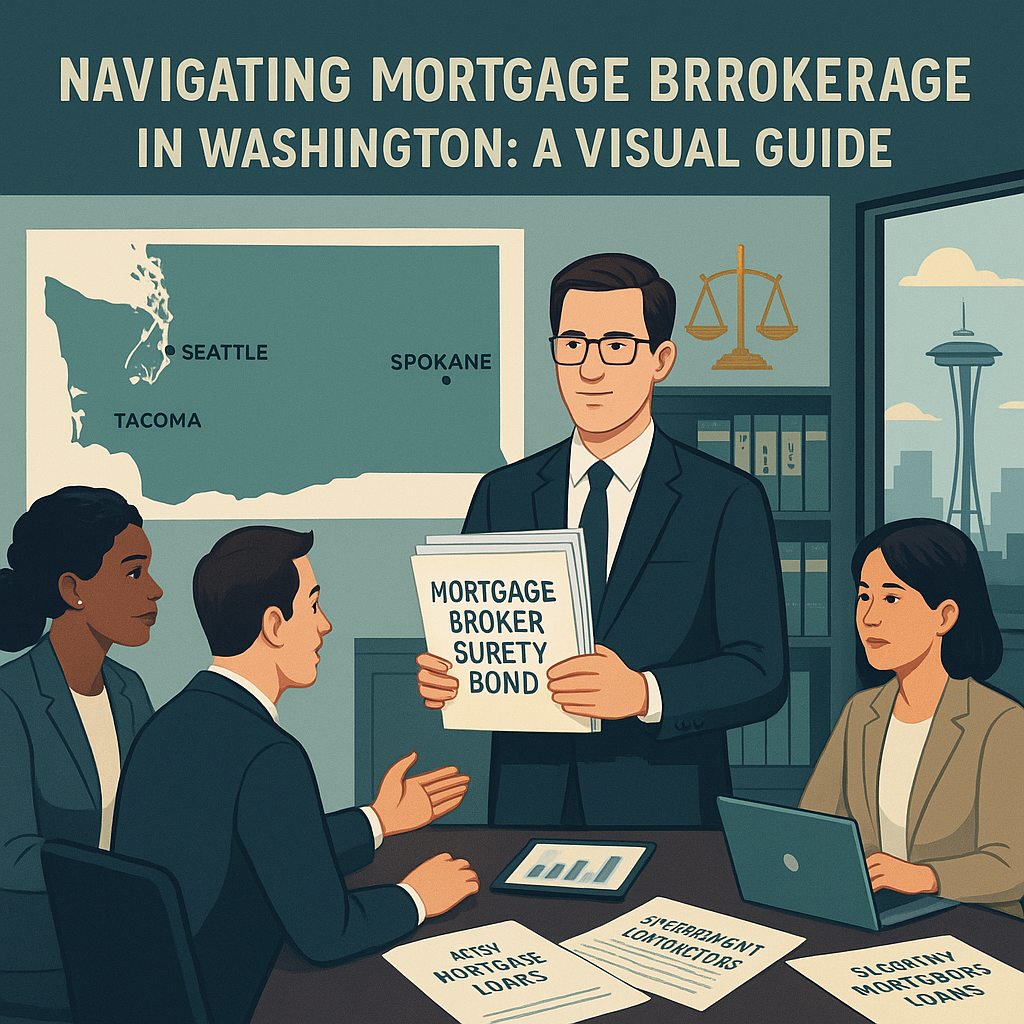
Getting into the mortgage world in Washington State can feel a bit like learning a new dance. You have the steps, the rhythm, and the partner—but there are also rules that keep everyone from stepping on each other’s toes. If you’re an independent contractor loan originator or a broker looking to build a team of independent talent, there’s one piece of the puzzle you can’t overlook: the Washington mortgage broker bond. It’s not just a box to check. It’s the quiet safety net that protects borrowers, brokers, and the entire industry.
You might be asking, “What does a surety bond have to do with how I navigate my day-to-day business?” Plenty. Think of it as the anchor that keeps your brokerage steady while you focus on helping families secure first and second mortgage loans. In this post, we’ll walk through the bond requirement, why it’s special when independent contractors are in the mix, and how you can handle everything without the headache.
What Exactly Is a Mortgage Broker Surety Bond?
Let’s break it down without the legal fog. A surety bond is a three-party promise. The state (Washington’s Department of Financial Institutions, or DFI) requires the bond. You, as the mortgage broker, buy the bond. And a surety company backs it financially. If a borrower loses money because of wrongdoing—say, dishonest practices or a violation of the Mortgage Broker Practices Act—the bond steps in to make things right, up to the bond amount.
It’s not insurance for you, though. The bond protects the public. If a claim is paid, you’re responsible for reimbursing the surety company. So it’s more like a powerful “I promise to play fair” handshake that comes with teeth. For any broker handling first and second mortgage loans, this is mandatory.
Why Washington Has a Special Bond When Independent Contractors Are Involved
Here’s where the navigation really matters. In the Evergreen State, a typical mortgage broker bond is set at $30,000. However, if your brokerage uses independent contractor loan originators—which is an incredibly common and flexible business model—the state bumps that requirement up to $60,000. Why the jump? Independent contractors operate with more autonomy than employees. Although they work under your license, their day-to-day oversight can look different. The higher bond amount creates a bigger cushion for consumers and reinforces accountability for everyone under your roof, even if they’re 1099 originators.
The DFI wants to make sure that no matter who sits across the table from a homebuyer, that buyer is protected during the origination of first mortgage loans, second mortgages, or refinances. So that bond doesn’t just sit in a drawer. It travels with every loan file, every disclosure, and every promise made along the way.
Independent Contractor, Employee—What’s the Real Difference Here?
Good question. An independent contractor loan originator runs their own small business within your brokerage. They often set their own hours, provide their own tools, and work under a contract, not a W-2. Many brokers love this setup because it allows them to grow without the overhead of full employee benefits. Independent originators enjoy the freedom and the chance to earn based purely on performance. But because the control dynamic is different, Washington regulators decided the bond amount should reflect that extra layer of consumer protection.
How to Secure Your Washington Operate Mortgage Broker Business with Independent Contractors Surety Bond
Getting the right bond isn’t a marathon. It usually follows a clear, step-by-step path. Let’s walk through it together.
Step 1: Know Your Bond Amount
First, confirm how much you need. As we mentioned, if you’re operating a mortgage broker business with independent contractors, you’re looking at a $60,000 bond. If your business model changes down the road and you no longer use contractors, you can adjust, but it’s safer to plan for the higher tier if independent originators are part of your growth plan.
Step 2: Check Your Credit and Financials
Surety companies look at your personal credit, business experience, and sometimes your financial statements. They want to know you’re a safe bet. Don’t panic if your credit isn’t spotless. There are programs for all kinds of scores, though the cost might be a little higher.
Step 3: Apply with a Reputable Bond Agency
You can’t just walk into any insurance office. You’ll want a provider that specializes in mortgage broker bonds in Washington. The application is often quick—sometimes just a few minutes online. You’ll provide basic info about your business and the state license. Once submitted, you typically get a quote within hours.
Step 4: Pay the Premium
Here’s a well-kept secret: you don’t pay the full $60,000. You pay a small percentage as an annual premium, often between 1% and 5% of the total bond amount. So if your rate is 2%, your out-of-pocket cost would be around $1,200 per year. That’s a small price to pay for the ability to build a flexible, contractor-based team that handles first and second mortgage loans all over the state.
Step 5: File the Bond with the DFI
Once approved, the surety company sends the bond form directly to the state, or you upload it through the NMLS system. Don’t forget this step. Your license won’t be active until the bond is recorded correctly.
Staying Compliant While You Grow
Navigating the mortgage broker business in Washington with independent contractors means more than just buying the bond. You’ll want to keep your house in order to avoid claims that could cost you later. A few practical habits go a long way.
- Create Crystal-Clear Contractor Agreements: Spell out duties, compensation, and compliance expectations. Everyone needs to know which rules they follow under your license.
- Regularly Audit Loan Files: Spot-check disclosures and documentation on first mortgage loans, second liens, and everything in between. A small mistake can trigger a big problem.
- Stay in Touch with Your Surety Provider: If you expand, add more independent originators, or open a branch, your bond needs might change. Good communication keeps you covered.
- Treat Training as Ongoing: The mortgage industry shifts. State and federal regulations evolve. Keeping your independent team educated protects borrowers and your bond history.
A Day in the Life: How the Bond Works Behind the Scenes
Let’s paint a quick picture. Imagine you run a small broker shop in Spokane. You have three independent contractor loan originators who love helping first-time homebuyers. One of them, Lisa, closes a second mortgage loan that goes smoothly. A few months later, a borrower files a complaint claiming they were misled about fees. The DFI investigates and determines a violation occurred. The bond is there to cover the borrower’s financial loss, up to the $60,000 limit. The surety pays, Lisa and your brokerage are held responsible for repaying that amount, and the public trust stays intact. It’s a tough scenario, but it’s also why the bond exists. It reminds everyone involved to treat every first and second mortgage loan with the care it deserves.
What This Means for Independent Contractors Looking to Join a Brokerage
Are you an originator thinking about making the move to independent contractor status? The bond isn’t something you directly buy, but it absolutely affects you. When a broker hires you under a 1099 arrangement, they must have that $60,000 Washington mortgage broker bond in place. So during your onboarding conversation, ask: “Do you already have the right bond for independent contractors?” A broker who can answer yes right away shows they’re serious about compliance. If they fumble on the question, it might be a red flag.
Also, take a look at the broker’s training and oversight style. Since the bond protects the company and ultimately you indirectly, a well-run shop will have systems in place that make your work smoother—software for tracking first and second mortgage loans, compliance checklists, and regular team huddles. You get the freedom of contracting with the security of a built-in safety structure.
Common Questions We Hear All the Time
There’s always a swirl of curiosity around the whole process. Here are a few answers to the things that pop up most.
“Can I start originating before the bond is approved?” No. The bond must be on file with the DFI and your license must show an active status. Jumping the gun can lead to fines or worse.
“Does the bond cover only first mortgage loans or second mortgages too?” It covers both. The bond’s protection extends to all residential mortgage loan activities you’re licensed to conduct in Washington, including first and second mortgage loans, refinances, and home equity products.
“How fast can I switch my bond if I decide to use independent contractors later?” Pretty quickly. You contact your bond agency, request a rider or a new bond for the higher amount, pay any additional premium, and get it filed. It could be done in a couple of days.
“What if I have a claim? Does that ruin my business forever?” It’s serious, but not the end. You’ll need to repay the surety and might face higher premiums temporarily. The bigger lesson is to tighten processes so it doesn’t happen again. Many brokers bounce back by doubling down on compliance.
Your Next Move on the Washington Mortgage Stage
Whether you’re building a brokerage that thrives with the energy of independent contractors or you’re an originator ready to take the leap into a more autonomous role, the surety bond isn’t a hurdle—it’s the framework that lets you dance freely. The $60,000 Washington operate mortgage broker business with independent contractors surety bond might sound like a mouthful, but it simply represents trust, scaled up for a flexible business model. Handle the paperwork, keep communication open with your team, and remember that every first and second mortgage loan you close is backed by a promise thousands of Washingtonians rely on.
You’ve got the map now. Get your bond, build your crew, and navigate the world of mortgage lending with confidence, one thoughtful loan at a time.
Leave a Reply