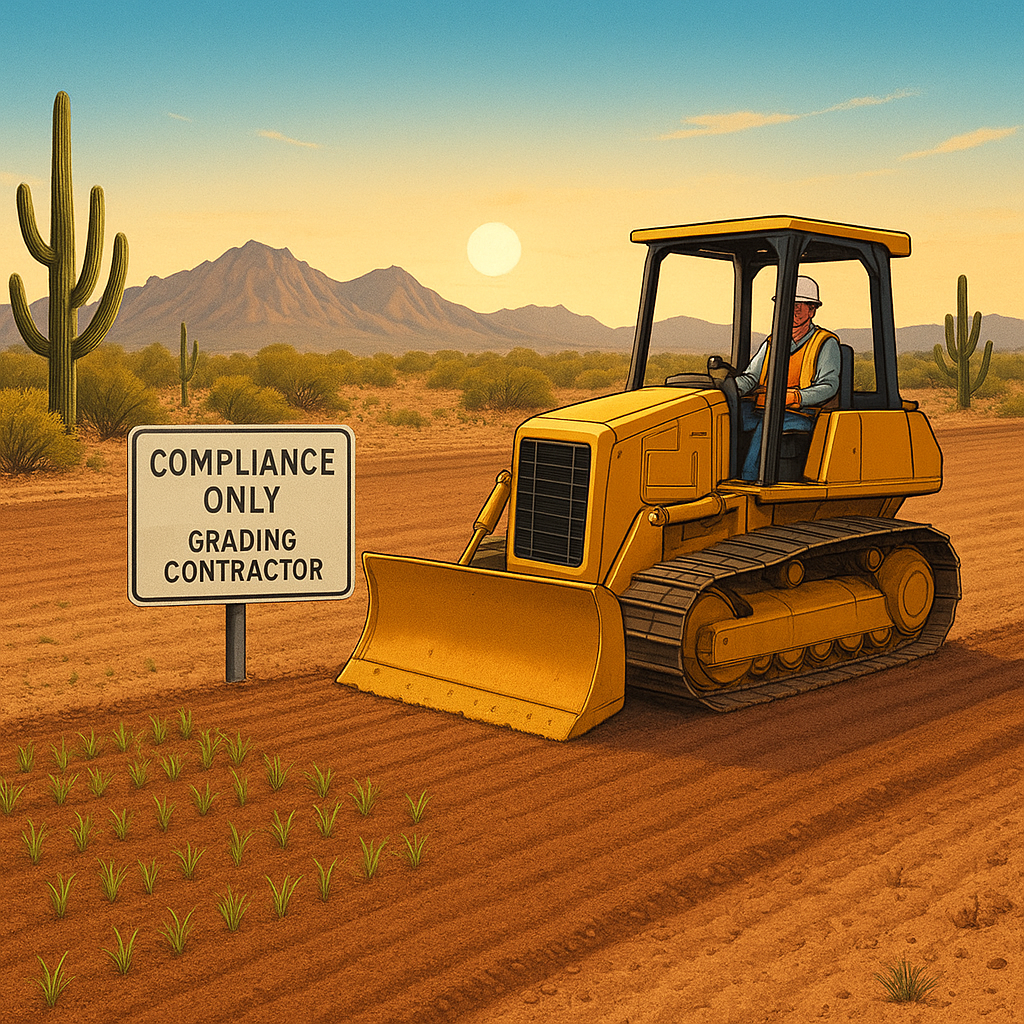
Picture this: you’re finally ready to break ground on that new home, a commercial pad, or a long-planned addition in Pima County. You’ve got your permits, your grading contractor is lined up, and the heavy equipment is on its way. Then the county asks for something that stops you in your tracks — a performance bond for preliminary grading and reseeding. If that phrase sounds like a foreign language, you aren’t alone. But here’s the good news: it’s actually a straightforward safety net, and once you understand how it works, you’ll see it protects everyone — including you.
What Is a Performance Bond for Preliminary Grading and Reseeding?
At its core, a performance bond for preliminary grading and reseeding is a promise. Specifically, it’s a financial guarantee that a grading project will follow Pima County’s rules, and that any disturbed soil will be stabilized and replanted properly. Think of it like a security deposit on a rental home. The landlord holds a deposit to make sure you leave the place in good shape. Here, the county holds the bond to make sure the land is left in the condition they expect — with erosion controls in place and healthy vegetation reestablished.
The Basics of Grading Bonds in Pima County
In Arizona, especially in a desert environment like Pima County, even a small amount of disturbed earth can lead to serious dust, runoff, and damage during monsoon rains. That’s why the county requires a performance bond preliminary grading and reseeding agreement before certain earthwork can begin. This bond isn’t about building a structure; it’s about the temporary disturbance — scraping, cutting, filling — and making sure the site gets put back into a stable, seeded condition. Often, this type of bond is described as a “compliance only” instrument because its sole job is to enforce adherence to the county’s grading ordinance and approved erosion control plan.
Why Pima County Requires This Bond
You might wonder: why does the county care so much about a patch of dirt? The answer lies in the desert’s fragile skin. When the native ground cover is stripped away, the bare soil becomes a magnet for erosion. A single summer thunderstorm can carve deep gullies, send mud flowing onto neighboring properties, and clog storm drains with sediment. The county’s grading permit system, backed by a grading contractor bond Pima County officials can rely on, makes sure someone is accountable for preventing that mess.
Beyond immediate storm damage, there’s a bigger picture. Pima County is committed to protecting air quality, preserving natural washes, and maintaining the region’s scenic character. An unreseeded, abandoned grading site can kick up dust for years. The bond requirement essentially says, “We trust you to do the work, and this bond is our insurance that you’ll finish the reseeding and stabilization, even if something goes wrong.” It shifts the risk from the public — and your neighbors — back to the party doing the grading.
How Does a Performance Bond for Grading Actually Work?
Let’s break it down into a simple three-player setup. Understanding this can remove the mystery around the whole process.
The Three-Party Agreement
Every performance bond preliminary grading and reseeding involves three parties:
- The Obligee: This is Pima County itself. They require the bond and will be the ones to check that the work meets their standards.
- The Principal: That’s you, the property owner, developer, or the licensed grading contractor performing the work. You’re the one who has to get the bond and fulfill the requirements.
- The Surety: The insurance company or bonding agency that issues the bond. They back your promise with financial strength.
The surety doesn’t do the work for you. Instead, it says, “If the principal doesn’t complete the grading stabilization and reseeding in line with the permit, the county can make a claim on the bond, and we’ll pay out up to the bond amount.” After paying, the surety will then seek reimbursement from the principal. So, it’s not a free pass — it’s a serious obligation.
What Happens If You Don’t Follow Through?
Let’s say a grading crew clears a large pad and then, due to funding problems or a contractor dispute, the site sits uncovered for months. The county inspector visits and finds deep rills forming, with no erosion control blankets or seed in sight. The county can file a claim against the bond. Once validated, the surety pays the county the amount needed to hire another contractor to finish the reseeding and repairs. The original contractor or property owner is then on the hook to repay the surety. This process keeps public money safe and ensures the land doesn’t stay a scar on the landscape.
Who Needs This Bond?
The short answer: almost anyone pulling a grading permit in unincorporated Pima County that involves anything beyond minor clearing. Typical situations include:
- A homeowner building a custom home on a sloped lot that needs cut and fill work.
- A developer preparing a subdivision’s preliminary pads while final infrastructure is designed.
- A commercial site contractor doing mass excavation before building foundations.
- A utility company trenching across open desert for new lines and needing temporary stabilization.
If your project triggers the county’s preliminary grading and reseeding permit category, the bond will be a non-negotiable part of your permit issuance. Even if you’re working with a grading contractor who carries their own bond, the county may still require the bond in the property owner’s name or confirm that the contractor’s bond explicitly covers that exact project. Always clarify this early to avoid delays.
How to Get a Performance Bond for Grading and Reseeding in Pima County
Stepping through the bonding process doesn’t have to be painful. With a little preparation, you can secure your Arizona earthwork bond and keep your timeline on track.
Steps to Secure Your Bond
- Confirm the exact bond amount: The county will calculate this based on the disturbed acreage, slope, and the estimated cost to re-stabilize and reseed. It’s often detailed right in the permit conditions.
- Reach out to a surety bond specialist: Not all insurance agents handle these niche contractor bonds. Look for an agency that regularly writes Pima County grading bonds or Arizona development bonds. They’ll know the local requirements inside and out.
- Complete a brief application: For smaller residential projects, the application is often simple and may not even require financial statements. For large commercial earthwork, the surety will want to see your company’s financials, experience, and sometimes a personal credit check.
- Pay the premium: Once approved, you’ll pay a small percentage of the total bond amount — often 1% to 3% for well-qualified applicants. The bond is then issued and provided to Pima County, usually electronically.
- Don’t forget to renew or extend if needed: Some grading bonds run for a set term. If your project’s reseeding hasn’t been accepted by the county by the expiration, you may need to renew the bond. Stay in touch with your surety agent so nothing lapses.
Cost of a Grading Performance Bond and Factors That Affect It
You won’t pay the full bond penalty upfront — you pay a premium, similar to interest on a promise. For a $20,000 bond, a 2% rate means a $400 premium. But what determines that rate? Primarily your personal or business credit, the size and complexity of the grading work, and whether the bond is being written as a compliance only performance bond or a broader guarantee. “Compliance only” language often makes the bond less risky for sureties because it ties strictly to county code, not broader contractor performance. That can sometimes lead to lower premiums. Always ask your bond agent if a compliance-only bond is appropriate for your specific Pima County permit.
Compliance-Only Bonds: A Special Case
You might hear officials or contractors use the phrase “compliance only” when talking about grading bonds. In Pima County, a compliance-only performance bond preliminary grading and reseeding means the surety’s obligation is limited to ensuring the land is graded and reseeded per the approved plans. It does not guarantee that other structures, like retaining walls or driveways, will be built. Its entire focus is on erosion control, drainage, and revegetation. For many property owners and small developers, this is actually a relief — it narrows the scope, lowers the bonding cost, and matches exactly what the county’s grading permit is designed to regulate.
Tips for a Smooth Grading and Bonding Experience
Anyone who has navigated a Pima County grading project will tell you that a little forward planning goes a long way. Here’s how to keep things moving without unnecessary headaches:
- Engage a grading contractor with local experience. A contractor who has already pulled grading contractor bond Pima County knows the inspectors, the required seed mixes, and the timeline for final sign-off.
- Build the bond cost into your initial budget. It’s easy to overlook this line item. Talk to a bond agent early to get a realistic estimate before you finalize your construction loan or cash outlay.
- Document everything as you go. Take dated photos of the site before, during, and after grading. When you broadcast seed and install erosion control fabric, grab a few shots. This evidence makes the final county inspection much smoother.
- Understand the reseeding window. In the Sonoran Desert, seeding often needs to coincide with the monsoon or winter rains to germinate successfully. Pima County may factor this into your permit, so coordinate your work schedule accordingly.
- Stay in communication. If your project hits a delay, notify the county inspector and your surety. Proactive communication can prevent a bond claim and keeps everyone on the same page.
Wrapping your head around the performance bond preliminary grading and reseeding requirement might feel like one more regulatory hurdle, but it’s truly a tool that protects your investment, your neighbors, and the stunning desert landscape we all share. By approaching it as a straightforward financial assurance — one that you can easily put in place with the right help — you’ll be moving dirt before you know it. And when the first green sprouts push up through the straw, you’ll know the bond did its job, and you’ve left the land better than you found it.
Leave a Reply