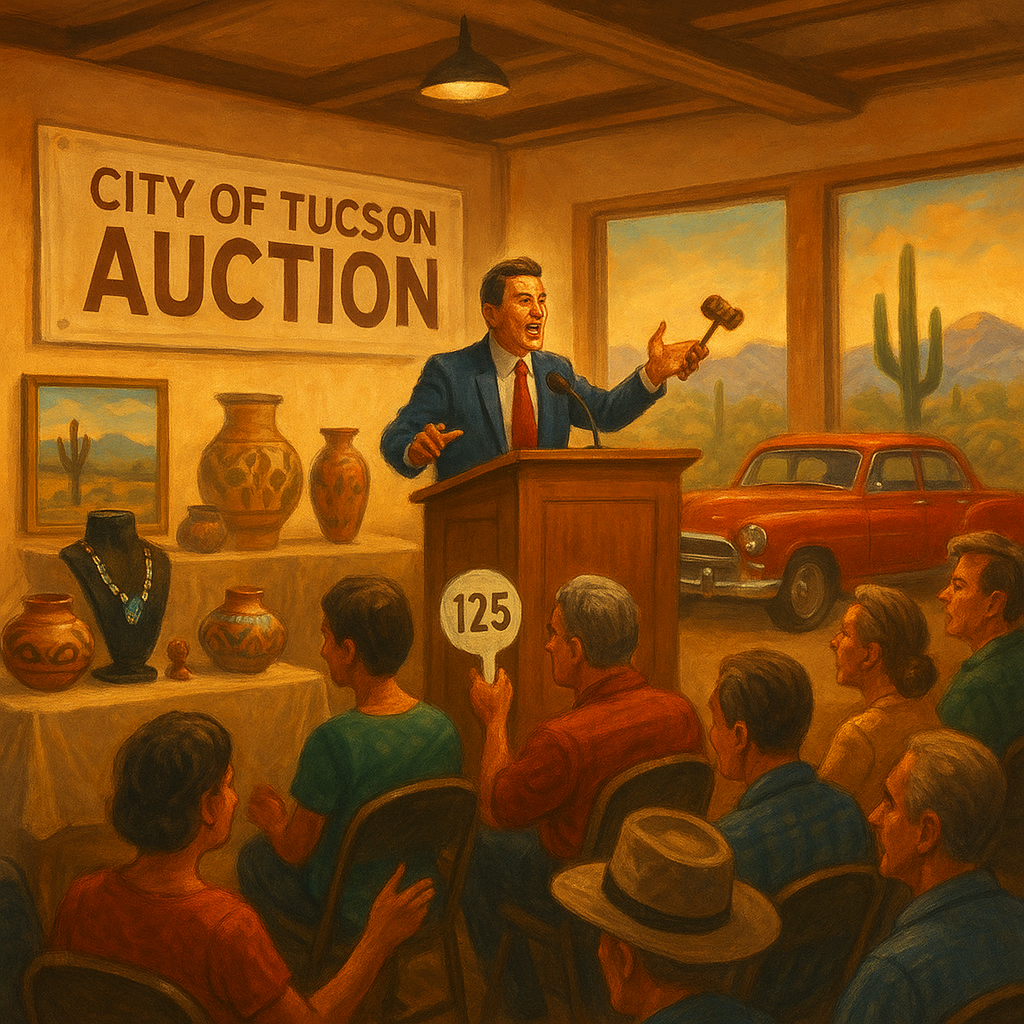
So, you’re thinking about becoming an auctioneer in Tucson, Arizona, or maybe you’re opening an auction house. That’s exciting! It’s a fast-paced world full of unique treasures and lively bidding wars. But before you grab that gavel and start calling out prices, there’s a crucial piece of paperwork you’ll need to lock down: an auction house and/or auctioneer’s bond. If that sounds a bit intimidating, don’t worry. Think of me as a friend breaking it all down in plain, simple English.
What Exactly Is an Auctioneer Bond?
Let’s ditch the legal dictionary for a moment. In the simplest terms, a bond is a promise. It’s a three-party safety net that protects your customers. Imagine you’re hiring a babysitter for the first time. You’d want some reassurance that they’ll treat your kids right and won’t throw a wild party, correct? A bond works a lot like a background check combined with a financial guarantee.
The three parties involved are:
- The Principal: That’s you, the auctioneer or auction house owner who needs the bond.
- The Obligee: The City of Tucson, Arizona. They require you to have this bond to get your license. They’re the ones making sure the rules are followed.
- The Surety: The insurance company that provides the bond. They’re basically vouching for you, saying, “We trust this person will play by the rules, and if they don’t, we’ve got the money to make things right.”
It’s not insurance for *you*. It’s protection for the public and the city. If you make a mistake or, in a worst-case scenario, do something unethical, the bond steps in to compensate the people who were harmed.
Why Does the City of Tucson Require This Bond?
You might be thinking, “I’m an honest person, why do I need to buy a financial promise?” It’s a fair question. The City of Tucson doesn’t require this bond because they assume you’re a bad actor. They require it to uphold a standard of professionalism and to create a safety net for the community. Think of it as a necessary tool to keep the marketplace fair and trustworthy.
Auctioneers often handle extremely valuable items—estate jewelry, classic cars, fine art, or even entire households of possessions. More importantly, you handle other people’s money. When an auction hammer falls, you’re responsible for collecting payment from the buyer and passing it on to the seller, minus your commission. That’s a lot of financial trust placed in your hands. The bond ensures that if you were to mismanage those funds, fail to deliver the goods as promised, or violate a city ordinance, the affected parties have a clear path to recover their losses.
Who Needs an Auctioneer Bond in Tucson?
The requirement isn’t a one-size-fits-all thing only for the fast talkers with a microphone. Generally, if you are applying for a license to operate as an auctioneer or an auction house within the City of Tucson, you will likely need to post this bond. This applies whether you’re running a sleek permanent gallery or holding one-off estate sales in a rented hall. It’s a non-negotiable part of the licensing process. The city wants to know that before you open your doors for business, that safety net is firmly in place. No bond? No license. It’s as simple as that.
How Does the Bond Actually Protect People?
Let’s walk through a practical example. Suppose you’re an auctioneer in Tucson, and a family hires you to sell their late grandmother’s antique furniture collection. The sale goes brilliantly, and you collect $10,000 from the winning bidders. However, life gets messy. Maybe your bookkeeper makes a terrible error, or worse, you face a personal financial crisis and use those funds to pay a pressing bill, promising yourself you’ll pay them back. Weeks go by, and the family keeps calling. “Where’s our money?”
In this scenario, the family doesn’t have to just keep banging on your door and hope things work out. They can file a claim against your auctioneer bond. The surety company will investigate. If the claim is valid, the surety company will pay the family the missing $10,000. Problem solved for the family. Now, here’s the critical part you need to remember: the bond is not a free ride for you. The surety company paid that money on your behalf, and you are legally obligated to pay every single cent back to them. It works exactly like a co-signer on a loan, not a donation.
A Real-World Analogy: Your Financial Co-Pilot
Think of the bond as a very stern, very trusted friend who co-signs your license application. This friend says to the City of Tucson, “I believe in this person. So much so, that if they mess up and cost someone money, I’ll pay it out of my own pocket, and I know they’ll pay me back.” The city trusts your “friend” (the surety company), so they issue you the license. It’s a system built on mutual accountability.
How Much Is an Auctioneer Bond in Tucson?
Now for the great news: you don’t need to have $10,000, $20,000, or whatever the full bond amount is sitting in your bank account. You simply pay a small percentage of the total bond amount as a premium. Let’s say the City of Tucson requires a $10,000 bond. You won’t pay $10,000. You might only pay between $100 and $300 per year for that bond, depending on a few factors.
The primary factor a surety company looks at is your personal credit score. They’re evaluating how reliably you manage your own financial obligations as a window into how you might manage business finances. Other factors can include your years of experience and your professional history. Someone with sparkling credit and a decade of clean business practice will get the best rates. Even if your credit isn’t perfect, there are bond programs designed to help most people get bonded. You might just pay a slightly higher premium.
How to Get Your Tucson Auction House Bond
The process is surprisingly fast and has become incredibly streamlined. You can often get bonded in a matter of minutes without ever leaving your desk. Here’s the typical roadmap:
- Know Your Bond Amount: First, confirm the exact bond amount the City of Tucson requires for your specific license type. This information comes directly from the city’s licensing office.
- Gather Your Info: You’ll need your business details, personal information for a credit check, and your license application number if you have one.
- Choose a Surety Provider: You can work directly with surety companies or, what many find easier, go through a specialized bond agency that shops your application around to multiple sureties to get you the best rate.
- Apply and Pay: Complete a short online application. Once approved, pay the premium, and you’ll often receive your bond form via email immediately.
- File It With the City: The final step is your responsibility. Take that signed and sealed bond document and file it with your other license application materials to the City of Tucson.
Keeping Your Bond in Good Standing
Once you have your bond, the work isn’t over. It’s a living document that needs to stay active. The bond will have an expiration date, and your license depends on it remaining valid. Most bonds are continuous until cancelled with a requirement for an annual premium renewal. Mark the renewal date on your calendar. The surety company will likely send you a reminder, but don’t rely on that. A lapse in your bond coverage can lead to a suspended license in the blink of an eye. You never want to be mid-auction, hammer in hand, only to discover your legal ability to operate has expired.
Also, maintain a rock-solid reputation. A bond protects against claims, but you never want one filed against you. A claim, even a frivolous one that is later denied, can make it harder and more expensive to get bonded in the future. Think of your bond as an emergency brake on a train; you’re glad it’s there, but your entire career is about making sure you never have to pull it.
What If You Operate Without a Bond?
This isn’t a gray area. Operating as an auctioneer or auction house in Tucson without the required license and bond can bring swift and serious consequences. You could face cease-and-desist orders, heavy fines, and a permanent black mark on your professional record that makes getting licensed anywhere else next to impossible. Worse, if a transaction goes south, you are personally and fully liable, without a bond to help resolve the situation. It’s like driving without a seatbelt—everything is fine until suddenly, it’s not, and the stakes are dangerously high.
Wrapping It All Up
Getting your City of Tucson auction house or auctioneer bond is simply the first step in a professional journey that builds public trust. It’s not a hoop to jump through begrudgingly, but a badge of protection for your clients and a sign of your own business credibility. Tell your customers you’re bonded, and you’ve instantly given them a deep breath of relief. It tells them, “My business is regulated, and your assets are safe with me.”
So, take a deep breath. The bonding process is easier and more affordable than it sounds. Get your paperwork in order, secure that bond, file it with the city, and then go do what you love. Curate those collections, read the crowd, and sell those treasures. The bond just makes sure everyone can enjoy the auction with confidence, applauding the winning bids without a worry in the world.
Leave a Reply