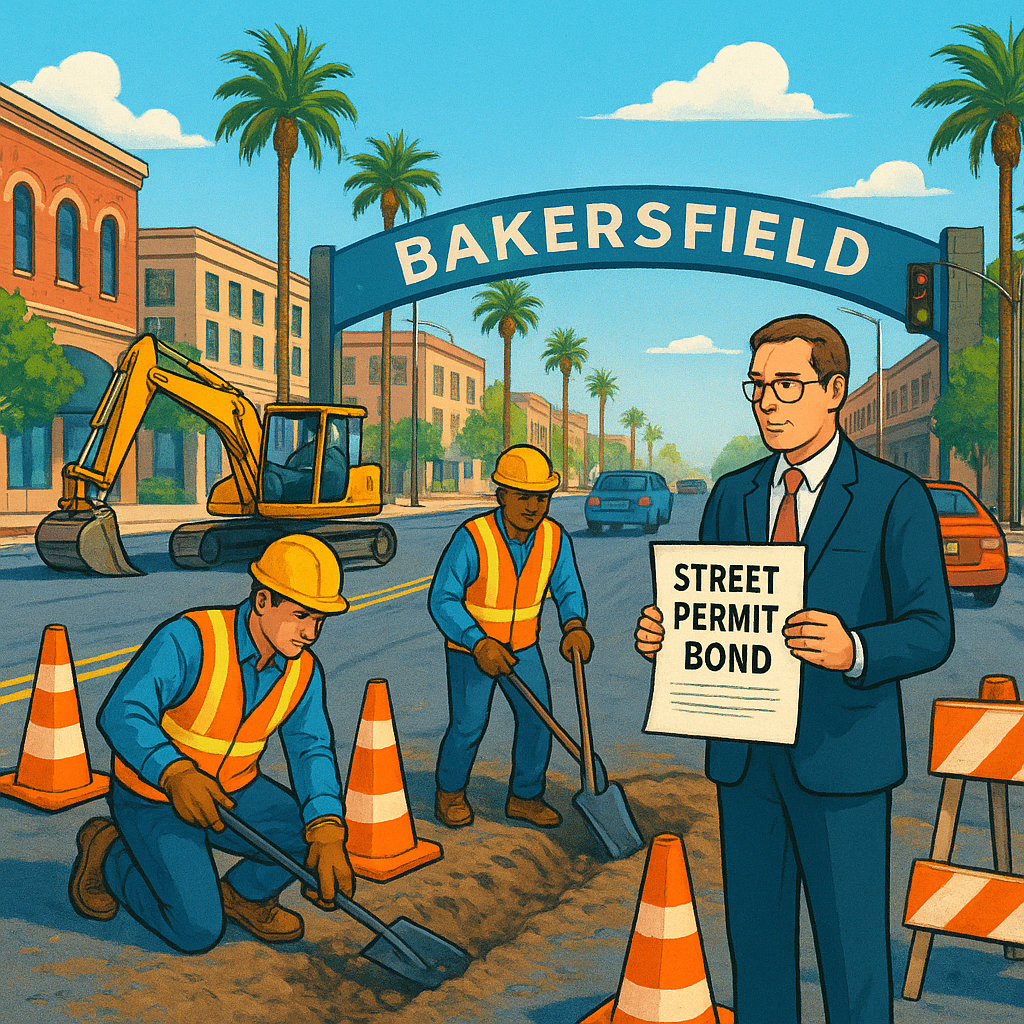
Have you ever seen a construction crew cutting into a freshly paved street and wondered, “Who makes sure they fix it properly when they’re done?” If you’re planning any kind of project in Bakersfield that involves digging into a public road, alley, or sidewalk, you’ll quickly meet a requirement called a street permit bond. It might sound like just another piece of red tape, but it’s actually a straightforward promise that protects our shared spaces. Let’s walk through what this bond is, why Bakersfield asks for it, and how you can get one without the headache.
What Exactly Is a Street Permit Bond?
Think of a street permit bond as a financial safety net. It’s a three-way agreement between you (the contractor or property owner), the City of Bakersfield, and a surety company. You promise to do the work according to city rules, and the bond guarantees that if something goes wrong—like a shoddy patch job or an unsafe trench—there’s money set aside to fix it. It’s not insurance for your business; it protects the city and taxpayers from having to pay for your mistakes.
In Bakersfield, this bond is often specifically called a “street opening permit bond” or simply a street permit bond. Whenever you cut into the asphalt, dig a trench for utilities, or break up a curb, you need a permit. That permit won’t be issued until you’ve posted the required bond. It’s the city’s way of saying, “We trust you, but we also want proof that the repair will last.”
Why Does Bakersfield Require This Bond?
Bakersfield’s roads take a beating from the heat, occasional heavy rains, and constant traffic. When a section is cut open, even for a tiny utility line, the patch is almost never as durable as the original seamless pavement. Over time, poor repairs can turn into potholes, sinkholes, or trip hazards. The city doesn’t want to chase down contractors years later to fix a sinking patch. The bond provides a clear, enforceable channel for forcing repairs or funding the city to hire someone else to do them.
It’s also a fairness tool. Reputable contractors who do great work shouldn’t be undercut by those who cut corners and disappear. By requiring a bond, Bakersfield levels the playing field. Everyone who digs has some skin in the game.
Common Projects That Need a Street Permit Bond in Bakersfield
- Connecting a new home or business to water, sewer, or gas mains.
- Installing or repairing underground electrical conduits.
- Trenching for fiber-optic cable or telecom lines.
- Replacing or widening a driveway apron where it meets the public street.
- Installing new sidewalks, curbs, or gutters along a public right-of-way.
- Any excavation within the city’s street easement.
If your project touches the pavement, the curb, or the sidewalk that the public uses, you can almost bet a bond will be part of the permit package.
How Does the Bond Actually Work?
Let’s say you hire a plumber to run a new water line from the main under the street to your house. The plumber pulls the permit and secures a $10,000 street permit bond. After the work is done, the city inspector checks the trench repair. If the asphalt sinks six months later, the city can make a claim against that bond. The surety company investigates. If the claim is valid, the surety pays the city up to the bond amount. Then—and this is important—the surety comes back to the plumber to recover every penny. So, in a very real sense, the contractor is still paying for the mistake. The bond just guarantees that the money is there instantly when the city needs it.
It’s like having a co-signer on a loan. The city feels secure knowing a deep-pocketed insurance company has vouched for you, but you’re still on the hook for any mess.
Who Needs to Get This Bond—Contractor or Homeowner?
Usually, the licensed contractor pulling the permit will secure the bond in their name. This is part of their cost of doing business. If you’re a homeowner acting as your own builder for a DIY project (let’s say you’re building a new detached garage and need a new driveway approach), the city might require you to post the bond personally. The exact requirement depends on the depth and extent of the street cut. Always ask the Bakersfield Public Works or Building Department what they need before you start. A quick phone call can save you a week of delay.
How Much Does a Street Permit Bond Cost in Bakersfield?
The bond amount is typically set by the city based on the scope of work. A small utility trench might call for a $5,000 bond, while a large subdivision road cut could require $25,000 or more. But here’s the good news: you don’t pay the full bond amount upfront. You pay a premium, which is a small percentage of that total. If you have solid credit and a clean business record, premiums can be as low as 1% to 3% of the bond amount. So a $10,000 bond might cost only $100 to $300 for a one-year term.
Some contractors worry about the cost eating into their profit. Think of it like this: a few hundred dollars buys you a seat at the table for a project worth thousands. And it lets you sleep at night knowing a simple patch won’t turn into a lawsuit later.
Factors That Influence Your Bond Premium
- Bond amount required by the city.
- Personal or business credit score—stronger credit means lower rates.
- Years of experience and past claims history.
- Financial stability of the contractor’s business.
Even if your credit isn’t perfect, there are programs for higher-risk bonds, though the premium might climb to 5% or 10% of the total bond amount. The key is to work with a surety bond agency that knows California municipal bonds well. They can shop around for the best rate.
The Bakersfield Permitting Process in a Nutshell
Walking through the process step by step can make it feel much less intimidating. Picture yourself as a contractor about to install a new sewer lateral.
- Plan your dig. Know exactly where you’ll cut and how you’ll restore the pavement.
- Visit the City of Bakersfield’s Public Works or Building Department. They’ll give you the street opening permit application and confirm the bond amount. Some projects might also need a traffic control plan.
- Secure your bond. Contact a surety bond agency, fill out a short application, and pay the premium. You’ll receive a bond form to file with the city.
- Submit the bond and permit application together. Pay any permit fees. Once approved, you’ll get the green light to start.
- Perform the work and call for inspections. The city will check the base compaction, backfill, and final asphalt patch.
- After final approval, the bond may need to stay active for a maintenance period. Bakersfield often requires the bond to remain in effect for one or two years after completion, ensuring the repair holds up through all seasons.
Don’t let the bond expire early. If you do and a defect appears, the city may not be able to claim, but you’ll still be liable—and might find it harder to pull permits in the future.
Common Mistakes People Make
You can save yourself a lot of trouble by steering clear of these pitfalls.
- Assuming a general liability policy covers street repairs. It doesn’t. Liability insurance covers injury or property damage from your operations, but it won’t guarantee the quality of your asphalt patch. The bond is specifically about the repair.
- Guessing the required bond amount. Always get the number directly from the city. Underinsuring your bond means your permit will be rejected.
- Not maintaining the bond for the required period. If the city expects a two-year warranty on your patch and your bond lapses after one year, you’ll be in breach.
- Forgetting to renew the bond if the project stretches longer than a year. Some permits take time. A bond often has a one-year term, but you can renew it easily if needed.
Real-World Example: The Sunken Trench
Imagine a local telecom company rushed to install new fiber on a busy Bakersfield collector street. They cut a neat trench, backfilled it, and threw down a temporary patch. Weeks turned into months, and the temporary patch began to crumble. Residents complained about the jarring thump every time a car hit the depression. The city inspected, contacted the company, and when no repair happened within the given timeframe, they filed a claim against the company’s street permit bond. The surety paid the city $8,000, which covered a contractor to properly mill and overlay the entire lane. The telecom company then had to repay the surety. Because the bond was in place, taxpayers didn’t foot the bill, and the road was fixed before the next rainy season.
How to Make the Bond Work for You
Rather than seeing the bond as a chore, view it as a marketing asset. When you tell a potential client, “Yes, we’re fully bonded and permitted with the City of Bakersfield,” it signals professionalism. It shows you’re not a fly-by-night operation. You can even keep a copy of your bond certificate on hand to show homeowners and business owners.
If you’re a property owner overseeing a remodel, ask your contractor about their bonding before they dig. Confirm they’ll handle the street permit bond. If they brush off the question, that’s a red flag. A contractor who regularly works in Bakersfield will know the drill and have a surety agent on speed dial.
Getting Your Bond: Where to Start
The easiest path is to reach out to a surety bond agency that understands California municipal requirements. You’ll need basic information: business name, address, owner details, and the bond amount from your permit. Many agencies can issue the bond the same day, sometimes within hours. You’ll get a digital copy to submit electronically, which works well with Bakersfield’s e-permitting options where available.
Remember, the bond is not a recurring nightmare expense. It’s a modest, predictable cost that opens the door to city permits. Each time you take on a street cut project, you simply get a new bond or ensure your existing one covers the specific location and work.
Wrapping It Up
Street permit bonds might seem like technical paperwork, but they boil down to a simple idea: when you dig up a public street in Bakersfield, you promise to leave it as good as you found it. That promise is backed by a financial guarantee. Understanding this process protects your business, your project timeline, and the community’s roads. So the next time you’re planning a sewer tap or a new sidewalk, you can handle the bonding requirement with confidence. Trust us, it’s one of the easiest parts of your whole construction to-do list.
Leave a Reply