Category: Article

Posting articles

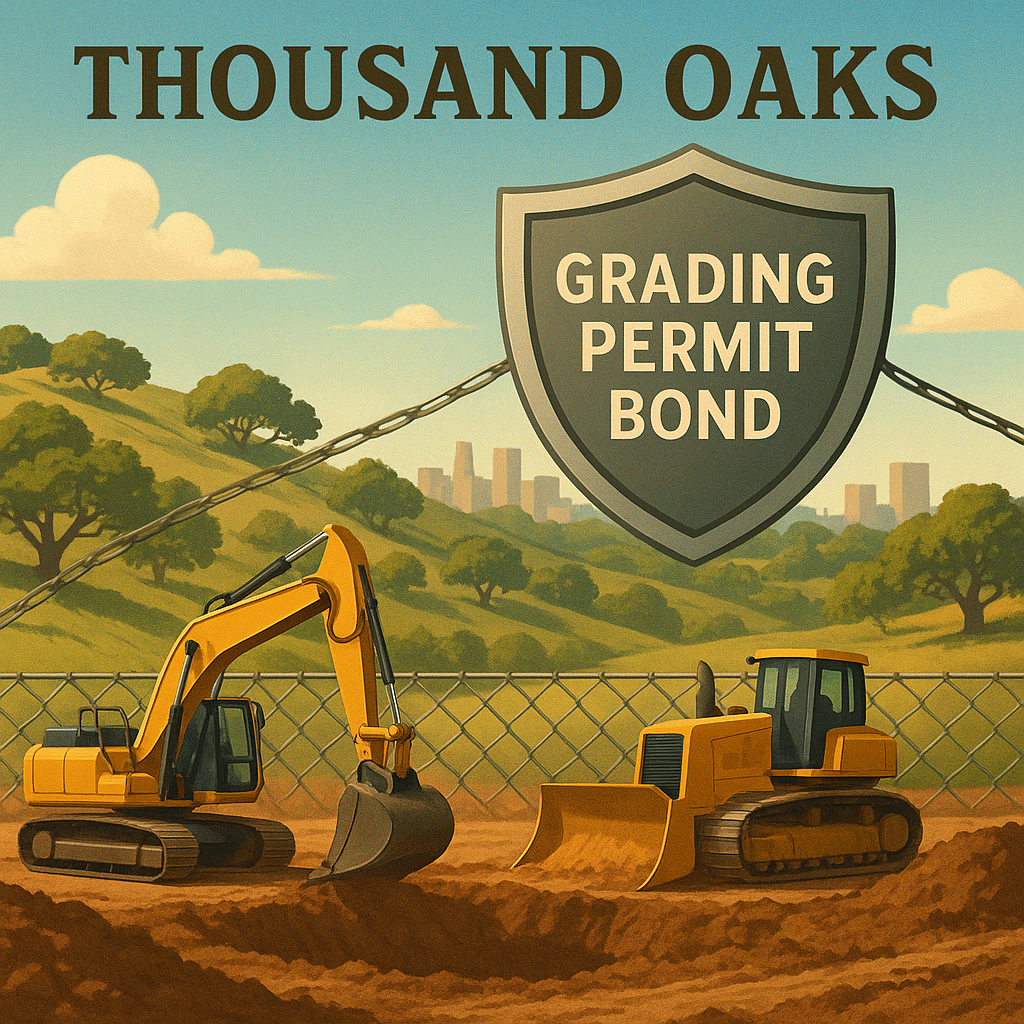
  • Understanding Grading Permit Bond Requirements for Thousand Oaks Excavation Contractors

    If you’re an excavation contractor working in Thousand Oaks, you’ve probably come across the term “grading permit bond” more than once. Maybe you’re bidding on a new project, or the city just handed you a requirement list that includes this bond. It might feel like just another hoop to jump through, but understanding it can save you from a world of headaches down the road.

    Let’s walk through what a grading permit bond really is, why the City of Thousand Oaks requires it, and how it protects you, your clients, and the public. Think of this as a friendly chat over coffee—no confusing jargon, just clear answers.

    What Exactly Is a Thousand Oaks Grading Permit Bond?

    Before we dive into local rules, let’s break it down simply. A grading permit bond is a type of surety bond. If you’ve ever rented an apartment, you’re familiar with a security deposit. A surety bond works a bit like that, but instead of protecting a landlord, it protects the city and the public.

    When the City of Thousand Oaks issues a grading permit, they want a guarantee that you’ll follow all the rules. This includes local building codes, safety standards, and erosion control measures. The bond is a three-party promise:

    • The Principal: That’s you, the excavation contractor.
    • The Obligee: The City of Thousand Oaks, which requires the bond.
    • The Surety: The company that backs your bond financially.

    If something goes wrong—say, improper grading causes damage to a neighboring property or a public road—the bond can cover the costs. It’s not insurance for your equipment or your crew. It’s a safety net for third-party liability and the community at large.

    Why Does Thousand Oaks Require This Bond?

    Thousand Oaks is a beautiful place, with rolling hills and carefully planned neighborhoods. But with all that terrain comes the need for responsible land development. Grading work can dramatically change water drainage patterns, soil stability, and the look of the landscape. The city doesn’t just hand out permits and cross its fingers. They want an enforceable promise that you’ll do the job right.

    By requiring a grading permit bond, the city ensures that:

    • Contractors follow the approved grading plans.
    • Erosion and sediment control measures are in place.
    • Any accidental damage to public utilities, streets, or neighboring properties gets fixed.
    • Taxpayers aren’t left holding the bill for a contractor’s mistakes.

    In other words, the bond ties your professional responsibility directly to your financial accountability. It’s a way of saying, “We trust you, but we also trust this bond.”

    Who Needs a Grading Permit Bond in Thousand Oaks?

    Not every contractor will need one for every job. The bond requirement typically kicks in for projects that involve significant earthmoving. Are you cutting into a hillside to build a foundation? Carving out a new driveway on a steep slope? Preparing a site for a commercial building? Chances are, a grading permit bond will be part of your paperwork.

    The City of Thousand Oaks usually focuses on:

    • Excavation contractors handling projects that alter drainage.
    • Site development teams doing mass grading.
    • Landscape contractors when major recontouring is involved.
    • Utility contractors who need to dig deep trenches in public right-of-ways.

    If you’re unsure, ask the city’s building and planning department. They can clarify whether your specific project triggers the bond requirement. It’s far better to know early than to have your permit application delayed.

    How Does the Bond Protect Against Third-Party Liability?

    Here’s where the rubber meets the road. Grading work doesn’t stop at your property line. If you’re excavating near a neighbor’s fence, an apartment complex, or a busy street, mistakes can spill over in a hurry. Imagine a scenario where heavy rain hits before you’ve stabilized the soil. Mud and debris flow into a neighbor’s yard, clogging drains and damaging landscaping. Or maybe a miscalculation causes a small landslide that buckles a section of sidewalk.

    Without a bond, your business could face a lawsuit. The property owner might come after your insurance, your assets, your reputation. With a grading permit bond, there’s a dedicated pool of money—up to the bond amount—that can be tapped to fix such problems. The city can make a claim against your bond, and the surety company steps in to make things right. Then the surety comes to you for reimbursement. So it’s not a get-out-of-jail-free card; it’s a pre-funded guarantee that keeps projects moving and victims whole.

    Think of it like this: the bond is a promise you won’t let the mess spill over the fence. But if it does, the cleanup crew gets paid without everyone fighting in court.

    How Much Does a Grading Permit Bond Cost?

    One of the most common questions we hear is, “How much is this going to set me back?” The good news: you don’t have to pay the full bond amount upfront. The bond amount—say, $50,000—is the maximum coverage, not your out-of-pocket cost. You pay a small percentage, called a premium, to the surety company.

    The premium depends on several factors:

    • The bond amount required by the city. This can vary from project to project.
    • Your personal credit score. Strong credit often means lower rates.
    • Your business financials. Solid cash flow and experience help.
    • The surety company’s rates. Different sureties price risk differently.

    For contractors with good credit, premiums often range between 1% and 3% of the bond amount. So for a $50,000 bond, you might pay $500 to $1,500 for a one-year term. That’s a small price for the trust and legal compliance it buys you.

    Can You Get a Bond with Less-Than-Perfect Credit?

    Absolutely. Even if your credit history has a few bumps, there are programs designed to help. You might pay a slightly higher premium, but getting bonded is still very doable. Talk to a bond specialist who understands the excavation industry and can shop around on your behalf.

    Steps to Get Your Thousand Oaks Grading Permit Bond

    Ready to check this off your to-do list? Here’s a simple roadmap:

    1. Determine the required bond amount. The City of Thousand Oaks will tell you this when you apply for the grading permit. It might be based on the project’s scope or a set amount in the municipal code.
    2. Gather your business and personal information. You’ll need things like your contractor’s license number, business address, and your Social Security number for the credit check.
    3. Apply with a surety bond agency. You can often do this online in minutes. The agency will present your application to different surety companies to find the best rate.
    4. Pay the premium and get your bond documents. Once approved, you’ll receive a completed bond form. This is what you’ll file with the city.
    5. Submit the bond to the City of Thousand Oaks. Keep a copy for your records—it’s proof you’ve met the requirement.

    It’s that straightforward. No need to stress over stacks of confusing forms. A good bond provider will walk you through each step.

    Common Misconceptions About Grading Bonds

    Let’s clear up a few myths that float around job sites.

    “It’s the same as my general liability insurance.”

    Not quite. Insurance protects you from losses like theft, accidents, or lawsuits. A bond protects the city and third parties from your failure to perform according to permit conditions. They’re two different shields, and you’ll likely need both.

    “The bond covers poor workmanship.”

    Not usually. The bond kicks in for violations of city codes and resulting damage. If your work simply doesn’t look pretty but meets code, the bond may not apply. Always clarify with your bond agent.

    “Once I buy it, I’m done.”

    The bond remains in force for the duration of the permit. If the project extends, you may need to renew. Also, claims can be made years later if hidden damage surfaces, depending on the bond’s terms. Don’t assume it vanishes when you finish grading.

    A Real-World Example to Make It Stick

    Picture a contractor we’ll call Mike. Mike’s crew was grading a hillside lot for a new home in Thousand Oaks. They followed the approved plan, but an unexpected rainstorm hit before the retaining wall was complete. Mud washed onto the street, clogging a storm drain, and some debris damaged a neighbor’s garden wall.

    The city received complaints and sent an inspector. Because Mike had a $25,000 grading permit bond in place, the city filed a claim. The surety investigated, paid to repair the drain and the neighbor’s wall, and then sought reimbursement from Mike. Yes, Mike had to pay the surety back eventually, but the bond kept the situation from turning into a lawsuit that could have cost far more in legal fees and damaged relationships.

    Mike learned a valuable lesson: the bond isn’t a punishment—it’s a tool that keeps small problems from becoming big ones.

    Why Taking the Bond Requirement Seriously Boosts Your Business

    It’s easy to see bonds as red tape. But smart contractors look at them as a credibility booster. When you can tell a client or a general contractor, “Yes, I’m fully bonded and compliant with Thousand Oaks requirements,” you’re signaling reliability. You’re saying you play by the rules and stand behind your work.

    In a competitive market, that trust can tip the scales in your favor. Homeowners and developers want peace of mind. A grading permit bond is one more piece of paper that proves you’re a professional who takes every detail seriously.

    Frequently Asked Questions in Your Shoes

    What happens if I don’t get the bond?

    Your grading permit won’t be issued. No bond, no dirt moving. It’s that simple. Working without the required permit and bond can lead to stop-work orders, fines, and legal trouble. It’s a risk not worth taking.

    How long does it take to get bonded?

    Often, the same day you apply. Many bonding agencies can turn around an application within hours if you have good credit and all the paperwork ready. Don’t wait until the last minute, but know it’s a quick process.

    Can the bond amount change after the project starts?

    It’s possible. If the city decides the scope of work has grown, they might require an increase in bond coverage. Stay in communication with the permitting office so there are no surprises.

    Moving Forward with Confidence

    The City of Thousand Oaks grading permit bond might not be the most glamorous part of your excavation business, but it’s a foundation of trust. It protects your neighbors, the environment, and your reputation all at once. And once you realize it’s just a straightforward business tool, you can get back to what you do best: shaping the land with skill and care.

    So next time a bond requirement shows up on your permit, you won’t see a hurdle. You’ll see a sign that you’re a professional who’s ready to do the job right—and the city knows it.
  • Understanding Tehama County California Compliance for General Contractor Permit Bonds

    What Is a Permit Bond, and Why Does Tehama County Require One?

    Imagine you’re planning a backyard renovation or building a new deck in Red Bluff. You hire a general contractor, they pull a permit from Tehama County, and work begins. But what happens if the contractor doesn’t follow the county’s building codes? That’s where a Tehama County permit bond steps in to protect everyone involved. Think of it as a safety net — not for the contractor, but for the county and, ultimately, for you as a property owner.

    A permit bond is a type of surety bond. It’s a three-party promise between the contractor (the principal), the county (the obligee), and a surety company. When a general contractor obtains a building permit in Tehama County, they may need to post this bond to guarantee that their work will comply with all local codes, ordinances, and regulations. It’s a financial assurance that any violations will be corrected — or that the county will have funds to fix things if the contractor doesn’t.

    In simple terms, the bond says: “If I mess up and don’t follow the rules, the county can use this bond to make it right.”

    Tehama County’s “Compliance Only” Bond Explained

    You might notice the phrase General Contractor – Compliance Only appears right alongside the permit bond requirement. This wording matters because it clarifies that the bond specifically guarantees compliance with county building standards, not other types of performance like finishing on time or sticking to a contract budget.

    Let’s break that down. Some bonds cover a contractor’s entire job performance — materials, workmanship, and timelines. A compliance-only bond is more focused. It reassures Tehama County that your project won’t create safety hazards, encroach on setbacks, or ignore stormwater rules. The bond doesn’t replace your personal contract with the builder; it simply ensures the county’s rules are followed. That’s why it’s called a permit bond — it’s tied directly to the building permit issued by the county.

    How Does a Compliance Bond Protect the Public?

    You might wonder, “If I’m hiring the contractor, why does the county care so much?” Great question. When a general contractor pulls a permit, the work becomes part of Tehama County’s public record. The county has a duty to make sure every structure is safe, properly placed, and built to code — not just for you, but for future owners, neighbors, and the community. If a contractor ignores setback requirements and builds too close to a property line, or fails to reinforce a retaining wall correctly, that mistake can affect drainage, cause erosion, or even create a safety risk for others.

    The compliance bond gives the county a direct financial tool to address these issues without having to chase down an unresponsive contractor. If the contractor won’t fix a code violation, the county can file a claim against the bond. The surety company then investigates and, if the claim is valid, pays to bring the project up to code — up to the bond’s full amount. The contractor is ultimately responsible for repaying that money, but the public and the county never have to wait for a court case.

    Who Needs a General Contractor Permit Bond in Tehama County?

    Not every construction project triggers this requirement. In Tehama County, the permit bond is typically mandated for specific types of work that carry higher risk of non-compliance, such as new home construction, major additions, large accessory structures, or commercial tenant improvements. Sometimes even smaller projects, like decks over a certain height or pools, can fall under the bond rule.

    If you’re a general contractor working in unincorporated areas of the county — places like Cottonwood, Los Molinos, or Gerber — the County of Tehama Building Department is your go-to authority. They will let you know during the permitting process whether a Tehama County permit bond is needed. The county often requires the bond before the permit can be issued, so it’s smart to plan ahead.

    A handy rule of thumb: if the project’s valuation is significant and the work touches structural, grading, or life-safety elements, you’ll likely be asked to post a compliance bond. Even if you hold a California state contractor license, the county may still impose this extra layer of assurance. The bond requirement isn’t about questioning your skill — it’s about giving the local government a predictable remedy if something goes off track.

    How Does the Bonding Process Work?

    Securing a Tehama County general contractor permit bond is simpler than you might think. It usually involves just a few steps:

    • Determine the required bond amount. The county will specify the dollar figure. It might be a flat amount like $5,000 or $10,000, or it could be based on the project’s estimated cost. Always confirm this with the Building Department before you apply.
    • Apply with a surety bond provider. You can go through an agency that specializes in contractor bonds. They’ll ask for basic business information and sometimes run a soft credit check, especially if the bond amount is higher.
    • Pay the premium. You don’t have to pay the full bond amount. Instead, you pay a small percentage — often 1% to 5% of the total bond, depending on your credit and financial profile.
    • Receive your bond form. The surety company issues a bond document that you’ll submit to Tehama County along with your permit application.
    • Keep it active. The bond typically remains in force for the duration of the permit and a set period afterward to cover latent violations. Once the project passes final inspection and the county closes out the permit, the bond can be released.

    It feels a lot like buying an insurance policy, but remember — a bond is not insurance for the contractor. If a claim is paid, the contractor must reimburse the surety company in full. That keeps accountability squarely on the person doing the work.

    What Does a Tehama County Permit Bond Cost?

    Cost is one of the first questions contractors and homeowners ask. The good news? For a compliance-only bond tied to a building permit, the price is often very manageable. Premiums can be as low as $100 for smaller bonds, climbing to a few hundred dollars for larger requirements. The exact number depends on three main factors:

    • The bond amount set by the county. A $5,000 bond costs less than a $15,000 bond.
    • Your credit score. Contractors with good credit usually get the best rates — sometimes as low as 1% of the bond amount.
    • The surety company’s underwriting appetite. Some providers specialize in bonds for contractors and offer competitive pricing even for higher-risk profiles.

    Because these bonds are considered relatively low-risk for sureties (most contractors do comply), the process is quick and affordable. Many contractors roll this cost into the overall project budget. And if you’re a homeowner managing a project and wondering about this fee, it’s perfectly reasonable to ask your contractor about it early on — transparency builds trust.

    Common Scenarios That Trigger a Bond Claim

    Understanding what might cause a claim helps you appreciate why the county insists on this bond. Imagine a general contractor begins framing an addition in a flood zone but doesn’t follow the elevation requirements Tehama County mandates for flood safety. The county inspector catches the error during a site visit. The contractor refuses to make changes, perhaps because it will cost too much to redo. The county can then pursue a claim on the permit bond to cover the expense of bringing the work into compliance.

    Another example: a pool contractor fails to install proper safety barriers as required by Tehama County’s pool code. The homeowner is left with a dangerous situation. While the bond’s primary purpose is to protect the county’s interests, the correction often directly benefits the homeowner. In many cases, the county will use bond funds to hire a different contractor to fix the issue, giving you peace of mind without a legal battle.

    Claims do require documentation — photo evidence, inspection reports, and written notices to the contractor are usually enough for the surety to review. A well-run project rarely sees a claim, but the bond’s existence encourages everyone to stay on the straight and narrow.

    Contractor License vs. Permit Bond: Clearing Up Confusion

    If you’re a general contractor in California, you already know about the $15,000 contractor license bond required by the Contractors State License Board (CSLB). That bond protects consumers against certain violations of state law. So why do you need a separate Tehama County permit bond?

    Think of them as two different shields. The CSLB license bond covers broader issues like poor workmanship or license law violations statewide. The county’s compliance-only permit bond zooms in on one specific project and one set of local rules — building setbacks, grading limits, fire safety, and similar county-level codes. The county doesn’t always have a direct claim on your state bond unless the violation also breaks state law. The local bond fills that gap, giving Tehama County a tool it can use immediately without waiting for state-level processes.

    Many contractors learn that carrying both bonds is simply part of doing business across multiple jurisdictions. It’s a sign of professionalism and local respect.

    How to Keep Your Project Smooth and Bond-Friendly

    Whether you’re a contractor or a property owner, a little preparation goes a long way. Here are some practical tips:

    • Talk to the Tehama County Building Department early. Ask them directly, “Will my project need a permit bond, and if so, how much?” They’re your best source for exact numbers.
    • Choose a bond provider familiar with California municipal bonds. They’ll know the county’s standard form and submission process, reducing back-and-forth.
    • Keep lines of communication open. If a code issue pops up during construction, address it immediately. Most bond claims happen because a small problem was ignored until it became a big one.
    • Document your work. Take photos at every stage, and keep copies of inspection sign-offs. If a dispute ever arises, you’ll have a clear record to show the surety or the county.
    • Finish strong. After final inspection, request a formal closure of the permit. This starts the clock on bond release and officially ends the county’s active oversight.

    Adopting these habits helps you work in harmony with the bond requirement rather than seeing it as a hurdle. It’s yet another tool that makes sure your project adds lasting value, safely and legally.

    What Happens When the Job Is Done?

    Once the construction passes all required inspections, the county will issue a certificate of occupancy or a final sign-off. At that point, the permit is closed, and the bond’s active duty is essentially finished. Some counties require the bond to stay in place for a short “maintenance” period — for example, six months after completion — to cover any latent defects that might surface. Tehama County’s specific rules can vary, so always confirm the exact release conditions with the building official.

    The good news is that the bonding company will cancel the bond or mark it as completed once the county releases it. You don’t have to keep paying premiums forever. If you’re a contractor who frequently works in the county, you might find it more efficient to maintain an annual blanket bond if the county allows it. This can cover multiple permits without needing a new bond each time. It’s worth asking about during your next conversation with the building department.

    Embracing Compliance as a Mark of Quality

    At first glance, a permit bond might seem like just another piece of paperwork. But when you look closer, it’s a powerful signal. A contractor who readily secures a Tehama County general contractor permit bond shows they respect local rules and care about the community’s safety. For homeowners, knowing that such a bond is in place offers a quiet reassurance — a sign that the builder isn’t cutting corners.

    So the next time someone mentions a compliance-only permit bond in Tehama County, you can nod with confidence. It’s not red tape; it’s a promise etched in paperwork, backed by real financial responsibility, standing guard over every nail driven, every wall raised, and every roof secured.

  • Understanding Tulare CA Relocation Permit and Bond Requirements

    Moving a building from one spot to another isn’t something most of us do every day. Maybe you bought a manufactured home and need to get it to your land. Or you’re relocating a historic structure to save it from demolition. If your journey takes you through Tulare County, California, there’s a specific requirement you can’t ignore: you’ll need a relocation permit and, in many cases, a relocation permit bond. Let’s break down what that means in plain English, so you can move forward without the headaches.

    What Exactly is a Relocation Permit in Tulare County?

    Think of a relocation permit as official permission to move something large, heavy, and unusual over public roads. It’s not your everyday moving truck. We’re talking about moving a house, a mobile home, a modular building, or even a large commercial structure. Tulare County, like many counties in California, requires this permit to ensure the move is safe, planned out, and won’t destroy the roads, bridges, or utility lines along the way.

    When you apply for this permit, the county reviews your route, the size and weight of the load, and the timing. They want to know that you’re not going to knock down traffic lights, scrape up pavement, or block a major intersection during rush hour. It’s a common-sense safety check.

    The Bond Requirement: A Promise to Play Fair

    Now, here’s where a lot of people get confused. Along with the permit, Tulare County will likely ask for a “relocation permit bond.” What is that? A bond is not insurance for your building. It’s a three-party promise. You (the mover or property owner) pay a bonding company to guarantee to the county that you’ll follow all the rules and fix any damage you cause. If you don’t, the county can use the bond money to cover repairs.

    Imagine you’re borrowing a friend’s expensive camera. Your friend says, “Sure, but you have to put down a deposit in case you break it.” That deposit is basically what the bond does for the county. It says, “If this move damages our roads or public property, we have a guaranteed way to get it fixed quickly.”

    Why Does Tulare County Require This Bond?

    Moving a massive structure puts a lot of stress on public infrastructure. A truck hauling a wide load might scrape against a curb, crack a sewer line, or hit a sign. The county isn’t being difficult; they’re protecting taxpayers. Without a bond, if you accidentally damage a bridge and then disappear, the county (and its residents) would be stuck with the repair bill. The bond shifts that financial responsibility to the mover, right where it belongs.

    Who Needs to Get This Bond?

    Generally, the person or company doing the physical moving is the one who must secure the bond. It might be a licensed house mover, a mobile home transporter, or a general contractor overseeing the relocation. Sometimes, if you as the property owner are managing the move yourself, the county might require you to post the bond directly. It all comes back to who is responsible for the safety and logistics of the trip. Check with the Tulare County Public Works Department or the permitting office to confirm whose name goes on the paperwork.

    How Does a Relocation Permit Bond Actually Work?

    Let’s walk through a typical scenario. Say you’re moving a single-wide mobile home from a dealer in Visalia to a lot in Porterville. You apply for the permit, and the county says the bond must be $5,000. You don’t pay $5,000 out of pocket. Instead, you buy the bond from a surety company for a small percentage, usually 1% to 3% of that amount. So your actual cost might be as low as $100, depending on your credit and the bond size. The surety company then issues a bond certificate to the county.

    If everything goes smoothly—no damage, no violations—the bond simply expires and you never pay another dime. But if a county inspector finds that your move cracked a road surface causing $2,000 in damage, they can file a claim against the bond. The surety company pays the county up to $5,000, and then comes to you for reimbursement. Remember, you’re ultimately responsible for every penny.

    What Determines the Bond Amount?

    There is no one-size-fits-all number. Tulare County will set the bond amount based on the specific project. They might consider:

    • The weight of the structure and the hauling equipment.
    • The distance traveled on county-maintained roads.
    • The potential risk to bridges, overpasses, and underground utilities.
    • Whether you’ll need to temporarily remove street signs or traffic signals.

    A smaller move over a short, straight route might require a $1,000 bond. A complex relocation of a two-story house through a busy area could require $10,000, $25,000, or more. Always ask the permitting office for their required bond amount before you start shopping for a bond.

    Navigating the Permit and Bond Process Step by Step

    Feeling a bit overwhelmed? Don’t worry. The process is more straightforward than it looks. Here’s a typical path you’ll follow in Tulare County:

    1. Pre-Application Planning

    Before you fill out any forms, talk to the county’s Planning and Building or Public Works department. Describe what you’re moving, where it’s coming from, and where it’s going. They’ll tell you if your project is even feasible and what specific rules apply. They might mention weight limits on certain roads or seasonal restrictions.

    2. Submit Your Route and Details

    You’ll need to provide a detailed route map, load dimensions, and the make and model of the towing vehicle. The county engineer reviews this to ensure no low bridges or sharp curves will become accidents waiting to happen. You might need to get clearance from utility companies if you’ll be near overhead wires.

    3. Get the Bond Amount and Secure It

    Once your route is approved, the county tells you the bond amount. You then contact a surety bond agency (many operate online) and provide your information. The agent quotes you a price, and if you agree, the bond is issued. Make sure the bond form names “County of Tulare” as the obligee—that’s the party protected.

    4. Pay the Permit Fees and Provide Proof of Bond

    Bring or send the original bond certificate to the county along with your permit application and applicable fees. There’s usually a filing fee separate from the bond cost. Once everything is in order, they issue your relocation permit.

    5. Perform the Move and Follow Conditions

    Now the big day arrives. Stick to the approved route and time window. Have flag cars if required. Comply with any special instructions, like covering certain road surfaces with protective mats. After the move, the county may send an inspector to check for damage.

    6. Close Out the Bond

    If no claims are made during the bond’s effective period (often a set number of days after the move), the bond is released. You don’t need to do anything; it just goes away. Keep your documentation in case a question ever arises.

    Common Misunderstandings to Avoid

    A lot of misconceptions float around about permit bonds. Let’s clear up a few big ones.

    “My insurance covers this.” Not necessarily. General liability insurance for a moving company might exclude damage to public roads, or it might have a high deductible. The bond is a separate, specific guarantee required by law. You can’t swap one for the other.

    “The bond protects my building.” No, the bond protects the county. If your mobile home gets scraped during the move, the bond won’t help you. You need your own cargo or property insurance for that.

    “It’s just a suggestion.” Absolutely not. Moving without the required permit and bond can lead to heavy fines, having your load impounded, and even legal action. Do not test the county on this.

    What Could Happen If You Skip the Bond?

    Let’s paint a picture. You decide to move a small shed at 3 a.m. without telling anyone, thinking you’ll save money. A wheel goes off the pavement, ripping up a section of asphalt and snapping an irrigation pipe. A neighbor reports the mess, and a county work crew traces it back to you. Now you face penalties, immediate repair costs (which are often higher than the bond premium would have been), and possible charges for an illegal move. That small bond premium suddenly looks like a bargain.

    The bond system exists because roads are shared assets. When you need to use them in a way that goes beyond normal driving, it’s fair to put a protection in place. It’s not a punishment; it’s a partnership.

    Tips for Keeping Your Move Smooth and Bond Claim-Free

    • Hire experienced movers. Someone who knows Tulare County roads and has moved structures here before is worth their weight in gold. They’ll understand local requirements and potential trouble spots.
    • Walk the route in advance. Physically drive the entire route yourself. Look for low-hanging branches, soft shoulders, and tight turns. Your mover might spot things you miss.
    • Communicate with utility companies. Traffic signals, cable lines, and phone wires can all cause delays or danger. Get the proper temp clearances early.
    • Document everything. Take date-stamped photos of the roads before and after the move. If a pothole was already there, you want proof that you didn’t cause it.
    • Stick to the schedule. If your permit says 9 a.m. to 3 p.m., don’t push it. Being off-schedule can invalidate your permit and your bond coverage.

    Where to Go for More Information

    Rules can change, and every relocation is unique. Your best first step is to call or visit the Tulare County Resource Management Agency or Public Works Department directly. They can point you to the correct forms and give you the most current bond amounts and permit fees. If you work with a surety bond agent, they can also be a helpful guide, as they deal with county requirements daily.

    Moving a building is a big job, but the permit and bond piece doesn’t have to be scary. With a clear understanding of why the bond is there and how simple the process really is, you can check this off your list and focus on the road ahead. A small upfront step today keeps the county happy and your move rolling toward its new destination trouble-free.

  • Understanding Utility Deposit Bonds: A Guide for California Residents

    Have you ever moved into a new apartment or house and gotten a letter from the electric or water company asking for a big deposit before they’ll turn on your service? If you’re nodding your head, you’re not alone. Many California residents face this exact situation, especially when establishing service with providers like the Modesto Irrigation District (MID). But here’s a question: what if you could hang onto that cash and still get your lights turned on? That’s where a utility deposit bond steps in. Let’s walk through what these bonds are, how they work, and why they might be the perfect solution for your wallet.

    What Exactly is a Utility Deposit Bond?

    Think of a utility deposit bond as a financial promise. Instead of handing over a pile of cash to the power or water company, you buy a bond that guarantees you’ll pay your bills. If you don’t, the bond covers the utility company up to a certain amount. It’s a lot like having a cosigner, except it’s a piece of paper from an insurance company, not your uncle Bob. In the world of California utilities, these bonds are sometimes called utility guarantee bonds or utility connection bonds. They serve the same purpose: to replace a cash deposit with a less wallet-draining alternative.

    For residents served by districts like Modesto Irrigation District, this can be a game changer. MID provides electricity and water to parts of Stanislaus County, and like many utilities, they may ask for a security deposit. By using a bond, you satisfy that requirement without parting with your hard-earned savings.

    Why Do Utility Companies Ask for Deposits Anyway?

    Utility companies are in a tricky spot. They provide a service before ever receiving a dime from you. If you don’t pay your bill, they’ve already given you electricity or water they can’t take back. To protect themselves, they often require a cash deposit upfront. This deposit sits in an account and is usually refunded after you’ve shown a good payment history—typically 12 to 24 months later. For a new customer without established credit, or someone with a few bumps in their financial past, that deposit can be steep. We’re talking $200, $400, or even more for commercial accounts.

    For many families, that’s money that could be better used for moving expenses, groceries, or that first month’s rent. This is where a California utility deposit bond shines. It keeps that cash in your pocket while giving the utility the same peace of mind.

    How a Utility Deposit Bond Works in Simple Terms

    Imagine you’re trying to rent an apartment, and the landlord asks for a security deposit equal to one month’s rent. It hurts, right? Now imagine a company offers to guarantee that deposit for you in exchange for a small fee. You pay the small fee, the landlord gets a guarantee, and you move in without breaking the bank. That’s exactly the idea behind a utility deposit bond.

    Here’s the three-part relationship:

    • You (the customer) buy the bond instead of paying a cash deposit.
    • The utility company (like Modesto Irrigation District) is protected if you fail to pay your bills.
    • The surety company (the bond provider) issues the bond and agrees to cover the utility’s loss if you default. If that happens, you’ll owe the surety company back.

    So, you’re not avoiding your bill—you’re just avoiding a large upfront payment. The bond amount typically matches the cash deposit the utility would have asked for. If MID requires a $300 electric deposit, you can often buy a $300 utility deposit bond for a fraction of that cost.

    Who Benefits from a California Utility Deposit Bond?

    Honestly, almost anyone who wants better control over their cash flow can benefit. But certain groups find them especially useful:

    • New residents moving into a Modesto Irrigation District service area. You’re already writing check after check for movers, boxes, and cleaning supplies. A bond lets you skip one more large payment.
    • Small business owners. Opening a café or shop? Commercial utility deposits can be massive. A bond keeps working capital where it belongs—in your business.
    • People rebuilding their credit. If a low credit score means a high deposit demand, a bond can bridge the gap without the utility needing to see a perfect report. Surety companies often judge risk differently than big utility corporations.
    • Landlords or property managers who need to keep utilities on during tenant transitions. A bond can be faster and less hassle than constantly managing cash deposits.

    Even if you have great credit, you might prefer not to park $400 with the electric company for two years. Why let it sit there doing nothing when you could invest it or simply keep it in your emergency fund?

    Modesto Irrigation District and Utility Deposit Bonds: A Closer Look

    Let’s zoom in on a real-world example. The Modesto Irrigation District is a community-owned utility that delivers electricity and water. When you open a new residential account, MID may evaluate your credit and assign a deposit amount. As of this writing, that deposit can reach a few hundred dollars for a standard home. Instead of parting with that sum, you can present a utility deposit bond for MID. The bond must usually meet the exact dollar figure MID specifies, and it has to come from a surety company licensed in California.

    Here’s a practical scenario: Maria just got the keys to her new rental home in Modesto. MID informs her she needs a $350 deposit before they’ll schedule a meter turn-on. Maria checks her bank account—she’d really rather not drain it. She contacts a bond provider, pays around $100 for a one-year $350 bond, and sends the bond documents to MID. The district accepts it, and her power is on by the next business day. Maria’s refrigerator starts humming, and she still has $250 extra in her pocket.

    This ease of use is why terms like “California Utility Deposit Bond” and “Modesto Irrigation District Utility Deposit Bond” pop up more and more in local searches. Residents are realizing they don’t have to accept the cash-only route.

    Are These Bonds Only for Modesto Residents?

    Absolutely not. While MID is a great example, the concept applies statewide. Pacific Gas and Electric, Southern California Edison, Sacramento Municipal Utility District, and many water and irrigation districts accept similar bonds. The bond simply needs to be formatted to the specific utility’s requirements. When you search for “California utility deposit bonds,” you’re tapping into a solution that works from Crescent City all the way down to San Diego.

    How Much Does a Utility Deposit Bond Cost?

    This is the question everyone asks first. The good news: you won’t pay the full bond amount. The premium—your out-of-pocket cost—is usually a small percentage of the bond total. For most residential bonds between $200 and $500, you could pay anywhere from $50 to $150 annually. That’s it.

    Several factors influence the exact price:

    • The bond amount (set by the utility).
    • The bond term. Some are issued for one year, others can be multi-year.
    • Your credit score. Surety companies may check your personal credit. If your score is solid, you’ll pay less. Even with less-than-perfect credit, you can often get approved—maybe at a slightly higher rate.

    For commercial bonds, where the deposit required might be $1,000 or more, the premium scales up accordingly. Still, it’s almost always far less than tying up that full amount in cash. Ask yourself: if you could pay $100 to free up $500, would you do it? For most people, that’s a resounding yes.

    What Happens if You Don’t Pay Your Bills?

    This is the tricky part, and we want to be upfront. A utility deposit bond is not a bill-forgiveness tool. If you fall behind and the utility files a claim against your bond, the surety company will pay the utility what’s owed. Then they’ll come to you for reimbursement. You still owe that money. In a way, it’s like using a credit card to pay a deposit: convenience now, but a debt if you don’t manage your obligations.

    That said, the point of the bond is to help you get service and build a good payment history. Treat the utility like any other critical bill, and you’ll never trigger a claim. After a year or two of on-time payments, the utility might release the requirement altogether, and you can let the bond expire. You never lost the cash deposit—because you never made one.

    How to Get a California Utility Deposit Bond Step by Step

    Getting a bond is often simpler than digging through paperwork to find a 12-month water bill to prove your creditworthiness. Here’s the typical path:

    1. Know Your Deposit Amount. Check the letter or call your utility. They’ll tell you the exact deposit required. For MID, you can verify the amount through their customer service line or website.

    2. Find a Licensed Surety Agency. You’ll want a provider experienced in California utility guarantee bonds. Many bond agencies operate entirely online. Fill out a short application with some basic information about yourself or your business.

    3. Get a Quote and Pay the Premium. The agency will review your application and give you a price. Once you pay the premium, they’ll issue the bond document.

    4. Deliver the Bond to the Utility. This could mean uploading a PDF via the utility’s portal, dropping off a paper copy at a local office, or emailing it to a specific billing department. MID, for example, might require the original bond form with a wet signature. Confirm their process beforehand.

    5. Enjoy Your Service. Take a deep breath and flip that switch. Your account is active, and your savings account is happy.

    From start to finish, the whole thing can be done in under 24 hours for many residential setups.

    Can You Get a Bond with Bad Credit?

    Yes, in most cases. The surety industry understands that people who need a bond often have less-than-ideal credit. That’s part of why the demand exists. While you might pay a higher premium—say, 5% to 10% of the bond amount instead of 1% to 3%—you can still obtain coverage. This inclusive approach makes utility deposit bonds a valuable tool for a wider range of Californians. It’s a more compassionate system than the all-or-nothing cash deposit model.

    Common Misconceptions About Utility Deposit Bonds

    Let’s clear up a few points that often cause confusion.

    • “It’s a monthly subscription I have to keep paying.” Not quite. You pay the premium once per term (usually annually). If the utility still requires a deposit next year, you can renew the bond. If not, you walk away.
    • “The bond improves my credit score.” The bond itself doesn’t report to credit bureaus. However, it helps you avoid a cash drain, which can indirectly help you pay other bills on time. That’s the real credit booster.
    • “All utilities in California must accept bonds.” Many do, but it’s not a universal law. Always confirm with your specific provider. That said, for entities like Modesto Irrigation District, acceptance is standard practice.
    • “The bond amount has to be huge.” The bond amount mirrors the deposit. If the deposit is $250, the bond is $250. No magic multiplier.

    Are Utility Deposit Bonds Worth It for You?

    Only you can decide, but let’s weigh the scales together. On one side, you have a cash deposit: it’s simple, it’s refundable, and there are no extra steps. On the other, a bond: it costs a non-refundable premium, but it leaves your cash intact and can be set up quickly. For someone with a tight moving budget, the bond is often a clear winner. For a well-funded homeowner, the cash deposit might feel like no big deal. Think about your financial landscape today, not a year from now.

    If you live in California and hear “deposit” from your utility provider, especially a notable name like Modesto Irrigation District, pause and consider the bond route. It’s one of those little-known financial tools that can make a big difference in your monthly breathing room.

    Wrapping Up: Your Cash, Your Choice

    Utility service is essential—we can’t live without electricity or water. But the way we secure that service doesn’t have to be stuck in the past. A California utility deposit bond turns a stressful upfront payment into a manageable, low-cost solution. Whether you’re dealing with the Modesto Irrigation District or another utility, you now have the knowledge to explore an alternative that keeps your money where it belongs: with you. Next time that deposit letter arrives, you’ll know exactly what to ask: “Can I use a bond instead?” Because sometimes the best financial move is simply knowing your options.

  • Seattle Enforces New Ordinance on General Contractor Performance Bonds

    So, you’re a general contractor in Seattle—or hoping to become one. You’ve probably heard whispers about a fresh piece of red tape coming out of City Hall. The talk is all about performance bonds and a new municipal ordinance that’s changing the game. If your head is spinning a little, you’re not alone. Let’s break this down together in plain English, no legal mumbo-jumbo attached. By the time we’re done, you’ll know exactly what the City of Seattle is asking for, why they’re asking for it, and how you can stay on the right side of this rule while growing your business.

    Wait, What Exactly Is a Performance Bond?

    Think of a performance bond as a safety net—but for construction projects. It’s not insurance for you, the contractor. It’s a three-way promise between you (the contractor), the city (the project owner), and a surety company. The bond says, “If this contractor doesn’t finish the job according to the contract, the surety will step in and make things right.” That could mean hiring someone else to complete the work or compensating the city for financial losses.

    In everyday terms, imagine hiring a painter for your house. You’d want some guarantee that they won’t take your deposit, paint half a wall, and vanish. A performance bond is that guarantee—just on a much bigger, municipal scale. For the City of Seattle, it’s a tool to protect public funds and ensure public projects get finished.

    The New Seattle Ordinance: What’s Changing for General Contractors

    Seattle has long required bonds for certain public works, but the city recently sharpened its focus on general contractor performance obligations. The new ordinance specifically ties these bonds to the contractor’s promise to perform. It’s not a one-size-fits-all suggestion anymore. It’s a firm rule: if you’re a general contractor taking on city projects, your bond must run directly to the municipality as the obligee. This means the City of Seattle is the named beneficiary, with a clear path to make a claim if things go sideways.

    Why the change? The ordinance formalizes what many contractors already expected, but it also closes loopholes. In the past, some bonds were written in a way that made it tricky for the city to actually collect. Now, the language is crisp. The bond must be a City of Seattle WA Ordinance (Performance Obligations) Bond. When you hear “WACity of Seattle, Washington” in bond circles, this ordinance is exactly what they’re talking about.

    Why Did Seattle Decide to Enforce This Now?

    You might be wondering, “What’s the sudden urgency?” It’s less about sudden and more about steady. Seattle has seen its fair share of contractor defaults, project delays, and half-finished infrastructure work. Each time a project stalls, it’s taxpayers who feel the pinch. The city wanted a stronger, cleaner way to manage risk. By tightening the performance bond ordinance, they’re essentially saying, “We trust you to do the work, but we’re also going to verify that trust through a solid financial backup plan.”

    Another driver is consistency. Before the enforcement push, different departments sometimes asked for different bond forms. Now, everyone is on the same page. If you’re bidding on a Seattle municipal project, you’ll need the same type of bond whether you’re repaving a street in Ballard or renovating a community center in Rainier Valley. It simplifies the process for contractors, too, once you get used to it.

    How Does This Affect Your Day-to-Day as a Contractor?

    Let’s get practical. If you’re a general contractor eyeing public projects in Seattle, this ordinance reaches your desk right at the bidding stage. You can’t just submit a bid and figure out the bond later. You need to show that you can secure a performance bond that matches the contract amount and meets the city’s exact wording. For many smaller contractors, this is the part where anxiety kicks in.

    Here’s the honest truth: getting bonded isn’t always a walk in the park. Surety companies look at your credit, your business financials, your track record, and even your personal assets. The ordinance doesn’t lower those standards—it simply makes the bond mandatory for the project. So, if your financial house isn’t in order, you might face higher premiums or, in some cases, a rejection. This is a wake-up call to treat your contractor business like the serious enterprise it is.

    But here’s the silver lining. Having the bond ready can become a powerful marketing tool. When you tell potential private clients, “Yes, we’re bonded with the City of Seattle,” it signals stability and reliability. It’s like a badge of honor that says you’ve been vetted and trusted with public money.

    Cracking the Code: What “Performance Obligations” Really Means

    The phrase performance obligations can sound like lawyer-speak. Let’s strip it down. When you sign a contract with the city, you’re making a bunch of promises. You promise to complete the work on time. You promise to follow building codes and safety regulations. You promise to pay your subcontractors and suppliers. All those promises bundled together are your performance obligations. The bond guarantees that if you break those promises in a significant way, the surety covers the fallout up to the bond amount.

    Now, does the bond mean you have a free pass to mess up? Absolutely not. If a claim is paid, the surety will turn around and ask you to reimburse every penny. It’s more like a credit line you’re expected to pay back than a magical shield. That’s why it’s crucial to manage your projects carefully, even with a bond in your back pocket.

    What Triggers a Claim Under the New Ordinance?

    A claim isn’t automatic just because the city is unhappy. There are usually clear triggers: abandonment of the project, major delays without a valid excuse, failure to correct defective work after proper notice, or not paying subcontractors leading to liens. The city follows a process, giving you a chance to fix the problem before calling in the bond. So it’s not a “gotcha” system; it’s a structured safety net.

    Who’s Watching the Gate? The Role of the Surety Company

    Behind every performance bond is a surety company putting its own money on the line. These companies aren’t reckless. They conduct a thorough underwriting process—essentially a deep background check on your construction business. They want to see that you have the capacity, experience, and financial strength to finish the job. If they back you, they’re betting you’ll succeed.

    For the City of Seattle, this extra layer of scrutiny is a gift. It filters out underprepared bidders before the project ever breaks ground. For you, it’s a hurdle but also a credential. Once bonded, you’re no longer just another name on a bid list; you’re a pre-qualified contractor with a proven level of financial health.

    Simple Steps to Getting Your Seattle Performance Bond in Order

    Feeling overwhelmed? Don’t be. Break it down into bite-sized pieces:

    • Know the exact bond amount. The city will tell you the required penal sum, usually the full contract value. Don’t guess.
    • Gather your paperwork. Sureties will want business financial statements, personal tax returns (if you’re personally indemnifying), a list of completed projects, and details on the new contract.
    • Work with a bond specialist. Not all insurance agents understand construction bonds. Find one who regularly deals with municipal bonds in Washington state. They can shop your application to multiple sureties.
    • Check your credit. Your personal and business credit scores matter more than you think. Fix any errors before applying.
    • Be transparent. If you’ve had past project hiccups, explain them upfront with a narrative of what you learned. Honesty often earns trust.

    Once the bond is issued, don’t just file it away. Read it. Make sure it says exactly what the Seattle ordinance requires. The bond should clearly run to the City of Seattle, referencing the ordinance or the specific project number.

    Benefits for the Homeowner and Taxpayer

    You might not be a contractor at all—maybe you’re a Seattle resident curious why your city council is making noise about bonds. In a nutshell, this ordinance protects you. When the city repaves your street or builds a new park, they’re using your tax dollars. A performance bond ensures that money doesn’t vanish into a half-dug trench. It keeps projects on track and holds contractors accountable without costly legal battles. In the long run, it can even save money by reducing the number of defective projects that need expensive fixes later.

    Think of it as a consumer protection law, but for city infrastructure. You’d never hire a roofer without some kind of guarantee; the city is doing the same thing, just on a civic level.

    Common Questions Contractors Ask About This Ordinance

    Is this only for huge contracts? Not necessarily. While smaller maintenance projects may not always require a full performance bond, the new ordinance can apply to a wide range of public works. Always check the bidding documents. If you’re unsure, call the city’s contracting office—they’d rather clarify upfront than deal with a non-compliant bid.

    What if I can’t get a bond in time? Then your bid will likely be rejected. The city won’t accept a promise to get bonded later. This is why smart contractors build a relationship with a surety agent before they even find a project to bid on. Pre-qualification is your best friend.

    Does this replace my license bond? No. A general contractor in Washington already needs a license bond with the state. The Seattle performance bond is project-specific and layered on top. You’ll still maintain your state license bond, your liability insurance, and any other required coverage. It’s an added layer, not a swap.

    Staying Ahead of the Curve in Seattle’s Competitive Market

    Look, nobody loves more paperwork. But the contractors who adapt quickly to this ordinance will have a head start. While others scramble at the last minute, you’ll be submitting bid packages with all your documents in a neat row. You’ll also find that the bonding process forces you to keep your business finances in good shape—something that pays off even on private jobs.

    Take a moment to ask yourself: Is my contractor business structured to handle the bonding requirements of today? Am I keeping clean records, or am I hoping for the best? The City of Seattle’s enforcement of the performance obligations bond isn’t a punishment; it’s a leveler. It separates the committed professionals from the chancers. If you’re reading this and already nodding along, you’re probably in the first group.

    Wrapping It All Up

    Seattle’s new enforcement of its ordinance on general contractor performance bonds might sound like a mouthful, but the heart of the matter is simple. The city values accountability, financial transparency, and project completion. By requiring a bond that runs directly to the municipality, they’ve created a clear, enforceable safety net. For contractors, it means embracing the bond as a credential, not a burden. For residents, it means peace of mind.

    The next time you hear “Seattle City WA Ordinance (Performance Obligations) Bond,” you can smile, knowing you’re in on the secret. It’s just a promise, written down and backed up, so everyone can build a better city together.

  • Understanding Spokane’s Relocation Permit Bond Requirement for New Residents

    Moving to a new city brings a mix of excitement and seemingly endless checklists. You have to pack boxes, forward mail, set up utilities—and if your move involves bringing a larger structure with you into Spokane, Washington, there’s one more item you might not expect: a relocation permit bond. It sounds official, maybe a little intimidating, but it is actually a straightforward way to protect the community you’re joining. Let’s walk through what this bond is, who needs one, and how you can check it off your to-do list without breaking a sweat.

    What Exactly Is a Spokane Relocation Permit Bond?

    Think of a relocation permit bond as a promise you make to the City of Spokane. By obtaining this bond, you’re guaranteeing that any structure you move—whether it’s a manufactured home, a mobile home, a tiny house, or even a commercial building—will be relocated according to all local rules and regulations. If something goes wrong along the way, the bond provides a financial safety net for the city.

    It is not insurance for your belongings or the structure itself. Instead, it’s a bond that runs to the municipality. That means the City of Spokane is the protected party. If your move damages a city sidewalk, knocks down a street sign, or leaves debris that the city has to clean up, the bond can be used to cover those costs. You remain responsible in the end, but the bond ensures the city isn’t left holding the bill.

    Why Does the City of Spokane Require This Bond?

    Spokane is a city that values its infrastructure and the safety of its neighborhoods. Moving a large structure down residential streets or through busy intersections isn’t as simple as driving a moving truck. It can put stress on pavement, overhead wires, and underground utilities. The bond requirement acts as a layer of accountability. It encourages property owners and moving companies to plan carefully, pull the right permits, and follow the rules.

    You can compare it to a security deposit on a rental home. The landlord holds that deposit in case something gets damaged. Here, the city requires a bond to make sure any accidental damage to public property gets fixed promptly, without lengthy disputes or taxpayer expense. It’s a practical system that has been adopted by many municipalities across Washington state.

    Who Needs a Spokane Relocation Permit Bond?

    You might assume this requirement only applies to commercial developers or house-moving companies. While they certainly need one, the bond is also required for individual residents. If you’re relocating to Spokane and bringing a manufactured or mobile home with you, you’ll likely need to secure a relocation permit bond. The same goes for someone moving an existing structure from one lot to another within the city limits.

    Here’s a quick snapshot of common scenarios:

    • New residents moving a manufactured home into a Spokane mobile home park.
    • Property owners relocating a tiny home or modular unit onto their land.
    • Builders moving a historic home to a new foundation to preserve it.
    • Businesses relocating a portable office or storage structure across town.

    If your move involves standard household goods in a rental truck, you won’t need this bond. It’s specifically for the relocation of structures that require a special permit from the city’s permitting office.

    How Does the Bond Work in Real Life?

    Every relocation bond involves three parties. The principal is you—the person or company moving the structure. The obligee is the City of Spokane, which requires the bond. The surety is the bonding company that issues the bond and backs it financially.

    Let’s say you’re moving a manufactured home to a new lot. You obtain the bond, pull your relocation permit, and the move begins. If during the process your mover accidentally cracks a section of curb or tears down a low-hanging power line, the city can file a claim against your bond. The surety company would investigate the claim and, if it’s valid, pay the city up to the full bond amount. After that, the surety will look to you for reimbursement, because a bond is essentially a form of credit extended to you. The bond smooths things out for the city, but you are still financially responsible for your actions.

    Bond Amounts and What You Actually Pay

    The City of Spokane sets a specific bond amount based on the type and size of the relocation. This is the maximum dollar figure the city can claim. But here’s the part many people misunderstand: you don’t pay that full amount upfront. You pay a small premium, usually a percentage of the total bond value. For someone with good credit, that premium might be as low as 1% to 3% of the bond amount annually. If the bond is $10,000, your out-of-pocket cost could be just a few hundred dollars.

    Factors like your credit history, the complexity of the move, and the bond amount itself influence the final premium. Even if your credit has a few bumps, specialized surety agencies can often find a program that works for you. The key is to start the conversation early—don’t wait until the moving truck is already on the road.

    How to Get Your Relocation Permit Bond in Spokane

    The process is simpler than it might seem. Most reputable surety bond agencies can walk you through it quickly, sometimes in less than 24 hours. Here’s a typical path:

    • Check with the city’s permitting office. Confirm that your move requires a relocation permit and bond, and ask about the required bond amount. This is your most important first step.
    • Gather your information. You’ll need basic details about the structure being moved, the current and new address, and your personal or business information. Having your permit paperwork handy speeds things up.
    • Contact a surety bond provider. Look for an agency familiar with Washington state and City of Spokane bonds. They can quote your premium and issue the bond electronically in many cases.
    • Pay the premium and receive your bond form. The bond document will be sent to you, and you’ll file it with the city as part of your permit application.
    • Keep a copy for your records. The bond usually remains active until the city releases it, which happens after the move is complete and any required inspections are passed.

    Treat the bond as an extension of your permit. Without it, the city won’t issue your relocation permit, and moving the structure without a permit can lead to fines, stop-work orders, and a stressful legal tangle you definitely don’t want.

    Common Questions (and a Few Surprises) About Spokane Relocation Bonds

    Is This the Same as Homeowner’s Insurance?

    No, they are completely different. Homeowner’s insurance might cover damage to your home or liability for injuries on your property, but it does not satisfy a municipal bond requirement. The relocation bond specifically guarantees your move’s compliance with local ordinances and covers damage to public property. You’ll need both insurance and the bond if you’re relocating a structure.

    What Happens If I Move Without a Bond?

    The City of Spokane takes this seriously. Moving a structure without the required bond and permit can result in costly fines, immediate halt of the move, and potential legal action. Worse, if damage occurs, you would be personally liable without the structured claim process a bond provides. It’s simply not worth the risk.

    Can the Bond Be Canceled Once the Move Is Done?

    Yes, in most cases the bond is only needed until the relocation is complete and the city inspects the work. Once you receive a clearance or the permit is closed, the bond’s obligation is fulfilled. You don’t need to keep renewing it year after year like some other types of bonds. If your move is delayed significantly, you may need to extend the bond, but your surety agent can advise you on that.

    Making Your Spokane Move Smooth and Stress-Free

    Relocating to Spokane—or even just moving a structure across town—should be the start of something positive. The city’s relocation permit bond requirement is there to keep that experience positive for everyone, from the person moving to the neighbor walking their dog along the sidewalk. When you understand the “why” behind the bond, it stops feeling like bureaucratic red tape and starts feeling like a reasonable community safeguard.

    Before you get lost in the chaos of moving day, add one simple line to your planning list: “Check Spokane relocation permit bond requirement.” A quick call to a knowledgeable surety bond professional can clarify the specific bond amount you need, confirm the cost, and have you holding the right paperwork in no time. Then you can get back to the important things—like figuring out where to put the couch and which local coffee shop will become your new favorite.

    Moving always comes with unexpected twists. But a little preparation around the Spokane relocation bond turns one potential headache into an easy, check-the-box task. Welcome to the neighborhood.

  • Sammamish Right of Way: Understanding Surety Bond Requirements for Compliance

    If you’re a contractor, developer, or even a homeowner planning a project in Sammamish, Washington, you might have come across the phrase “right-of-way surety bond” and wondered what it means. You’re not alone. These bonds might sound like a tangle of legal and financial jargon, but they’re actually a straightforward way the city protects public spaces while letting important work move forward. Let’s break it all down in plain English so you can feel confident and prepared.

    What Exactly Is a Right-of-Way Surety Bond?

    Think of a surety bond as a three-way promise. It involves you (the contractor or permit holder), the City of Sammamish, and a bond company. Essentially, you’re promising to follow all the rules when you dig up, repair, or build something in the public right-of-way — areas like sidewalks, streets, utility strips, and alleys. If you don’t hold up your end of the bargain, the bond steps in to cover the cost of fixing things.

    It’s a lot like a security deposit on a rental car. You hope you’ll never need it, but the rental company hangs onto it just in case you scrape a bumper or forget to fill the gas tank. In this scenario, the city is the one holding the deposit, and the bond company guarantees they’ll have money to fix a street or sidewalk if your work doesn’t meet city standards.

    Why Does the City of Sammamish Require These Bonds?

    Sammamish takes pride in its well-kept neighborhoods and public infrastructure. When a project cuts into a freshly paved road or disrupts a pedestrian path, the city wants to make sure everything is restored to its original condition — or better. A surety bond is their safety net. It guarantees that if something goes sideways, taxpayers aren’t left holding the bag for damaged property or incomplete repairs.

    Beyond the financial protection, the bond requirement also encourages quality work. When you know a bond is on the line, you’re naturally more careful about hiring reliable crews, using the right materials, and following city code to the letter. It’s a quiet motivator that keeps community standards high.

    Who Needs a Sammamish Right-of-Way Bond?

    You might assume only giant construction companies need these bonds, but that’s not the whole story. The requirement often applies to a wide range of people and projects, including:

    • Utility contractors installing or repairing gas, water, electric, or telecom lines under city streets.
    • Driveway and sidewalk installers whose work crosses the right-of-way line.
    • Landscapers and irrigation specialists running drip lines or drainage out to the street.
    • General contractors on residential additions or commercial builds that involve curb cuts, trenching, or grading near public property.
    • Homeowners acting as their own general contractor for big projects. In some cases, even a DIY homeowner pulling a permit might need to secure a bond.

    If you’re not sure whether your project triggers the bond requirement, a quick call to the Sammamish Public Works or Community Development department can save you a world of headache. They’re usually happy to explain what’s needed based on your specific permit.

    How Do Surety Bonds Protect the Public?

    Picture this: a contractor digs a trench across a quiet Sammamish lane to install a new water service. The work gets done, but a few months later, the pavement patch sinks, leaving a tire-jolting dip right where kids ride their bikes. Without a bond, the city would have to chase down the contractor, maybe go to court, and in the meantime, residents are stuck with a hazard. With a bond in place, the city simply calls on the bond company to pay for a proper, lasting repair. The bond company later collects from the contractor, but the public doesn’t have to wait or foot the bill.

    In a way, the bond system turns a messy situation into a clean transaction. It provides immediate funds to correct substandard work, keeping Sammamish streets smooth, safe, and looking like they belong in a postcard.

    The Step-by-Step Process to Get Bonded

    If you’ve never purchased a surety bond before, the process might feel unfamiliar. But once you see the steps, you’ll realize it’s quite similar to applying for a smaller, specialized insurance product.

    1. Confirm the Bond Amount and Type

    The City of Sammamish will tell you exactly what kind of bond you need — usually a performance bond, a maintenance bond, or a combination of both. A performance bond covers the construction phase, while a maintenance bond might stay in place for a year or two afterward to guarantee against defects. The bond amount is based on the estimated cost of the work within the right-of-way.

    2. Gather Your Business Information

    Bond providers need to know who you are. This includes your business name, address, years of experience, and details about the project. You’ll also need to share some financial information, because the bond company needs to feel confident you can handle the work and any potential payback.

    3. Shop Around or Work with a Bond Agency

    You can go directly to a surety company or use a specialized bond broker. Many local insurance agencies in Washington offer surety bonds and can walk you through the application. They’ll compare rates from different carriers, much like an insurance agent shops for the best auto policy.

    4. Get a Quote and Pay the Premium

    The premium is the small percentage you pay upfront to activate the bond. If your bond is $10,000, you might pay only $100 to $300 for a one-year term, depending on your credit and experience. Once you pay, the bond agency issues the official paperwork.

    5. File the Bond with the City

    You’ll need to deliver the original bond document to the city’s permitting office. They keep it on file until the project passes final inspection and any required maintenance period ends. Only then does the bond get released.

    How Much Will Your Bond Cost?

    The total bond amount is set by Sammamish based on the scale of your project. A small residential driveway apron might only need a $5,000 bond, while a major utility corridor could require hundreds of thousands in coverage. The premium you pay, however, is a fraction of that face value — typically 1% to 3% for applicants with solid credit and a good track record.

    Several factors influence your rate:

    • Personal or business credit score. Better credit means a lower premium.
    • Financial stability of your company. Bond providers like to see healthy cash flow.
    • Your experience and history. A contractor who’s completed many similar projects without claims gets a better rate.
    • The bond term. Longer terms cost more overall, but the annual rate often decreases.

    Even if your credit isn’t perfect, there are bond programs designed to help. You may pay a slightly higher premium, but you can still get the bond you need to pull your permit.

    What Happens If Something Goes Wrong?

    Let’s say your work doesn’t pass city inspection, or you abandon the project before restoring the street. The city then files a claim against your bond. The surety company investigates to make sure the claim is valid. If it is, the surety pays the city up to the full bond amount. Here’s a key point many people miss: you are ultimately responsible for paying back every penny the surety spends, including legal fees. A bond is not insurance for you — it’s insurance for the public. Think of it as a line of credit you’ll have to repay.

    That’s why communication is your best friend. If you hit a snag — a material shortage, a weather delay, a subcontractor issue — don’t disappear. Stay in contact with the city inspector. Most problems can be solved long before they become bond claims.

    Tips for Staying Compliant and Avoiding Claims

    Compliance doesn’t have to be a high-wire act. A few simple habits can keep your project running smoothly and your bond untouched.

    • Read your permit conditions carefully. Sammamish includes specific requirements for traffic control, erosion prevention, trench backfill, and pavement restoration. Know them before you start.
    • Document your work. Take before, during, and after photos. If a dispute arises, clear pictures are compelling evidence.
    • Schedule inspections on time. Missing a required inspection can delay the entire approval process and raise red flags.
    • Use qualified subcontractors. Remember, you’re still responsible for their work. Vet them as carefully as you train your own crew.
    • Don’t forget the maintenance period. Many bonds require you to stand by your work for one or two years after completion. Address settlement, cracking, or erosion promptly, and you’ll close out that bond without a scratch.

    Common Misconceptions About Right-of-Way Bonds

    We hear a lot of confusion around these bonds. Let’s clear up a few myths.

    “I already have general liability insurance, so I don’t need a bond.” Not true. Insurance protects you against accidents and bodily injury. A surety bond protects the city against incomplete or substandard work. They serve different purposes, and Sammamish typically requires both.

    “Small jobs don’t need a bond.” Every project is evaluated on its own merits. Even a small utility trench can damage a major road. Always check with the city; never assume you’re exempt.

    “The bond covers everything for the whole job.” In reality, bonds have a specific scope and dollar limit. If you cause damage beyond the right-of-way, you could face separate liabilities.

    Where to Go for Help

    The City of Sammamish website is your first stop. Their permitting and public works pages list current bond requirements, forms, and fee schedules. You can also pick up the phone and talk to a real person. City staff deal with these questions every day and can clarify what’s needed for your unique situation.

    For the bond itself, a local surety broker who understands Washington regulations can be invaluable. They’ll help you compare quotes, explain the paperwork, and sometimes even email the bond directly to the city on your behalf.

    Wrapping It All Up

    Sammamish right-of-way surety bonds might seem like one more hoop to jump through, but they serve a purpose we all benefit from. They keep sidewalks level, roads smooth, and utility work up to code without dragging the city into endless legal battles. Whether you’re installing a new gas line or building your dream home, understanding this requirement early keeps your project on track and your stress levels low.

    Next time you hear “surety bond,” think of it as your project’s promise to the community — a promise that you’ll leave things just as good as you found them, backed by a financial guarantee that has everyone’s back.

  • Puyallup Washington Enhances Street Accessibility with New Obstruction Bond Initiative

    Have you ever walked or driven through a neighborhood and spotted a jagged edge where the sidewalk meets the street? Maybe a patch of asphalt was cut open for a utility repair and never quite smoothed out again. That bumpy ride isn’t just annoying — it can be a real safety hazard. The City of Puyallup, Washington, has a thoughtful new answer to that problem: a Street Obstruction Bond initiative designed to keep our public spaces safe, smooth, and accessible for everyone.

    If you’re a contractor, a business owner, or even a homeowner planning a project that might touch a sidewalk, curb, or road, this is something you’ll want to understand. But don’t worry — we’re going to break it all down in plain, friendly language. No jargon, no head-scratching. Just the good stuff that helps you and your neighbors enjoy a better Puyallup.

    The Big Idea: Making Streets Safer and Smoother

    At its heart, the new Puyallup Washington Street Obstruction Bond is about accountability. Imagine you’re baking cookies at a friend’s house. You promise to clean up any spills and wash the dishes before you leave. The friend asks you to leave your favorite spatula with them — just in case you forget and the kitchen stays messy. They’ll give it back once everything is spotless. That spatula is a tiny version of a bond. It’s not a punishment; it’s a gentle nudge to do what you said you would.

    Now scale that up to public streets. When someone needs to dig up a sidewalk, place a large dumpster, or block a lane for construction, they’re “borrowing” public property. The City of Puyallup wants to make sure that after the work is done, the surface is repaired just like new — or even better. The obstruction bond is that promise, backed up with a financial guarantee.

    What Exactly Is a Street Obstruction Bond?

    A Street Obstruction Bond is a type of surety bond required by the City of Puyallup, WA. Think of it as a three-way handshake between you (the person doing the work), the city (which owns the street), and a bond company (the partner that says, “We trust you’ll do it right”). If the work leaves behind a mess, uneven pavement, or an unsafe walkway, the city can use the bond to pay for the repairs. It’s not cash you lose forever — it’s simply a tool that ensures public spaces stay in top shape.

    You might be wondering, “Isn’t this just another fee?” Not exactly. Most fees are spent and gone. A bond sits quietly in the background. As long as you restore the obstruction site to the city’s standards, the bond never gets touched. It’s more like a security deposit you get back after your project passes a final clean-up inspection.

    Why Puyallup Is Rolling Out This Initiative Now

    Puyallup is growing, and with that growth comes more construction, more utility upgrades, and more events that temporarily block sidewalks and curbs. Think about all the fiber-optic internet lines being installed, the water main replacements, the charming street fairs that set up staging and tents. Every time a road or walkway is obstructed, there’s a chance that the surface won’t be put back the way it should be.

    The City of Puyallup’s street obstruction bond initiative is a proactive move. Instead of chasing down contractors or homeowners after a project, the city now has a straightforward, fair system. It’s not about making life harder — it’s about protecting the investments we all share. Smooth sidewalks aren’t just pretty; they’re essential for wheelchairs, strollers, walkers, and kids on bikes. Accessibility is a fundamental right, and this bond helps safeguard it for every resident.

    A Little History: How Past Challenges Shaped the Change

    If you’ve lived in the area long enough, you’ve probably seen it happen. A utility company finishes its work, patches the street, and within a few months, the patch sinks, creating a puddle or a tripping hazard. The city was left footing the bill for those fixes, which meant taxpayer dollars were spent on something that should have been handled by the original project owner. By requiring a Street Obstruction Bond, Puyallup flips that script. Responsibility stays where it belongs, and the community doesn’t have to wait for repairs to be squeezed into an already busy maintenance schedule.

    How the Bond Works: A Simple Breakdown

    Let’s walk through the process as if you’re a local homeowner replacing your water line. It’s not as clunky as it sounds.

    • You Apply for a Permit. Before you or your contractor digs into any public right-of-way, you need a street obstruction permit from the City of Puyallup.
    • Determine the Bond Amount. The city will tell you how much coverage you need. This often depends on the size and impact of the project. Small jobs might need a few thousand dollars in coverage, while bigger construction might require more.
    • Secure the Bond. You contact a bond provider (usually an insurance agent or surety company). Pay a small percentage of the total bond amount as your premium — like paying a modest fee for the security deposit guarantee.
    • Complete Your Work. Get the job done, while following all safety rules. Don’t forget to keep the area clear for pedestrians and drivers as much as possible.
    • Restore and Inspect. Once the work is finished, you put the street, curb, or sidewalk back to the city’s standards. A city inspector will come out to check the work. If everything looks good, your bond obligation is released, and you’re all set.

    If something isn’t right — say the concrete is uneven or the asphalt is crumbling — the city can call on the bond company to step in. The bond company would then cover the cost of hiring another crew to fix the problem. You’d be responsible for repaying the bond company, so it’s in everyone’s best interest to get it right the first time.

    Who Needs to Get a Street Obstruction Bond?

    You might think this only applies to big construction companies with hard hats and heavy machinery. But the reality is broader — and that’s a good thing. Puyallup’s obstruction bond initiative may apply to:

    • Utility Companies: Gas, electric, water, and telecom providers that frequently need to access underground lines.
    • General Contractors: Any project that blocks a sidewalk or lane for building, renovation, or demolition.
    • Homeowners: If you’re installing a new driveway, trenching for a sewer line, or placing a large storage container on the street, you’ll likely need a permit and a bond.
    • Event Organizers: Block parties, festivals, or parades that require temporary street closures often fall under this umbrella too.
    • Moving Companies: When a moving truck or portable storage pod sits in the right-of-way for more than a short while.

    Not sure if your project qualifies? A quick call to the City of Puyallup’s permit office can save you a lot of guesswork. The staff there are real people who want your project to succeed, and they’ll walk you through whether a bond is needed.

    The Ripple Effect: Community Benefits

    When you hear “bond initiative,” it’s easy to think of paperwork and red tape. But let’s focus on what this means for the people who live, work, and play in Puyallup every day.

    Safer Sidewalks and Crossings. Uneven pavement is one of the top causes of trips and falls. By making sure every obstruction site is properly restored, the city dramatically reduces these risks. A grandparent using a walker or a parent pushing a stroller shouldn’t have to play obstacle course just to get to the park.

    Better Curb Appeal. Pretty streets aren’t just for show. Well-maintained public spaces lift property values and make the whole city more inviting. The obstruction bond helps prevent those ugly, half-done patches that can make a neighborhood look neglected.

    Faster, Fairer Repairs. In the past, if a contractor vanished after a job, the city had to scramble for funds and schedule a repair when it could. Now, the bond provides immediate financial backing. Repairs happen sooner, and the responsible party bears the cost, not all taxpayers.

    Why Accessibility Is More Than a Buzzword

    Puyallup takes its commitment to accessibility seriously. The Americans with Disabilities Act (ADA) is the law of the land, but beyond legal requirements, there’s a human side. An uncovered trench or a broken curb can make a street completely impassable for someone using a wheelchair. The obstruction bond ensures that temporary disruptions don’t turn into permanent barriers. When every resident can get to the store, the doctor, or the library without fear, that’s a win for the whole community.

    Your Step-by-Step Guide to Securing a Bond

    Feeling a little overwhelmed? Let’s simplify. Here’s a cheat sheet for getting your Street Obstruction Bond in Puyallup, Washington.

    • Step 1: Talk to the City First. Visit the City of Puyallup’s website or call the community development department. Describe your project clearly. They’ll tell you the exact permit and bond requirements.
    • Step 2: Find a Bond Provider. Most insurance agents can help with surety bonds. You can also ask the city for a list of local companies they’ve worked with. Don’t be afraid to compare quotes — premiums are usually a small fraction of the total bond amount.
    • Step 3: Gather Your Documents. You’ll typically need your permit number, a description of the work, and the total bond amount required. The bond provider will handle the paperwork quickly.
    • Step 4: Submit Proof to the City. Once you have the bond in hand (often in electronic form), send it to the city as part of your permit package. Keep a copy for yourself.
    • Step 5: Do Great Work. Hire qualified professionals, follow all safety guidelines, and aim for a restoration that would make any neighbor smile.
    • Step 6: Schedule the Final Inspection. When the job is done, let the city know. An inspector will check the site. If all is well, the bond is released. If not, you’ll get a clear list of what needs to be fixed.

    It’s a system that rewards careful, quality work and holds everyone to the same reasonable standard.

    Common Questions (And Honest Answers)

    “Is this just a way for the city to make money?” No. The bond isn’t a tax or a hidden fee. The city doesn’t pocket the bond amount. It’s a guarantee that only pays out if something goes wrong. In an ideal world, the bond is never used, and the only cost to you is the small premium paid to the bond company.

    “What if I’m a small-time do-it-yourselfer?” Even small projects can disturb the public right-of-way. If you’re doing the work yourself, you still need a permit and likely a bond. The amounts are typically manageable, and the process exists to protect everyone — including you, from future liability.

    “How long does the bond stay in effect?” Usually, the bond remains active until the city confirms the restoration is completed to its satisfaction. That could be a few weeks or a couple of months, depending on the project. Your bond provider can explain the exact terms.

    A Brighter, More Accessible Puyallup

    Change can feel like a hurdle, but the City of Puyallup’s Street Obstruction Bond initiative is really about one simple thing: respect. Respect for the public spaces we all share. Respect for neighbors who deserve a safe, smooth path. And respect for the work everyone puts into making Puyallup a wonderful place to call home.

    So the next time you see a crew out working on the street, you’ll know that behind that project is a promise — a promise that when the dust settles, our sidewalks, curbs, and roads will be as good as, if not better than, they were before. That’s something we can all get behind, one smooth step at a time.

    If you have a project coming up, don’t hesitate to reach out to the City of Puyallup. Their team is ready to guide you through the permit and bond process with a friendly, human touch. After all, building an accessible future is a team effort — and you’re a valuable part of that team.

  • Puyallup City Earthwork Contractor Bond: Essential Guide for Compliance

    If you’re a clearing and earthwork contractor in the City of Puyallup, Washington, you’ve probably heard the term “performance bond” tossed around. It can sound intimidating — like a secret handshake only big construction companies know. But here’s the truth: it’s simply a promise, backed by money, that you’ll do the job you said you’d do. And in Puyallup, that promise runs directly to the municipality.

    Whether you’re grading a lot, clearing land for a new subdivision, or stabilizing a slope after a rainy winter, the city wants to know the work will be done right. That’s where the Puyallup City Earthwork Contractor Bond comes in. Let’s break it all down in plain English — no legal headaches, no fine print that makes your eyes glaze over.

    What Exactly Is a Puyallup City Performance Bond?

    Think of a performance bond as a safety net. You’re not buying insurance for yourself — you’re buying a guarantee for the city that your earthwork project will be finished according to the approved plans and local codes. If something goes wrong — maybe your company runs into financial trouble, or the work is left incomplete — the bond steps in to cover the cost of fixing it.

    In Puyallup, this bond “runs to the municipality.” That means the City of Puyallup is the protected party. They hold the bond. They can make a claim against it if you fail to meet your obligations. It’s a three-party agreement: you (the contractor), the city (the obligee), and the surety company (the one backing the bond).

    It’s similar to renting an apartment and putting down a security deposit. The landlord holds that deposit in case you damage the unit. Here, the city holds your bond — not to punish you, but to make sure the community’s land and infrastructure aren’t left in a lurch.

    Why Does the City of Puyallup Require This Bond?

    Imagine a contractor starts clearing a hillside for a new housing development. They cut into the slope, but halfway through the job, they disappear. The erosion control measures aren’t finished. Rain washes mud into the streets, clogs storm drains, and destabilizes the neighbor’s property. Now it’s the city — and ultimately the taxpayers — who have to scramble to fix the mess.

    Puyallup has seen enough wet winters and muddy springs to know that incomplete earthwork can lead to serious environmental and safety problems. Requiring a performance bond is the city’s proactive way of protecting itself and its residents. It ensures:

    • The work complies with grading, drainage, and erosion control standards.
    • Public infrastructure like roads and sidewalks stays safe.
    • Neighboring properties aren’t damaged by runoff or unstable soil.
    • The project gets finished, not abandoned.

    For you, the contractor, having that bond in place also signals professionalism. It tells the city, “We’re serious, we’re vetted, and we stand by our work.” It can even give you a competitive edge when bidding on projects.

    Who Needs a Clearing and Earthwork Contractor Bond in Puyallup?

    Not every small landscaping job requires a bond. But if your work triggers a grading permit, a right-of-way permit, or involves significant soil disturbance, the city will likely ask for one. Common projects include:

    • Mass grading for commercial or residential developments.
    • Clearing and grubbing to prepare a site for construction.
    • Excavation and fill operations that change the topography.
    • Stormwater management facilities and retention ponds.
    • Streambank stabilization or erosion repair work.

    The bond amount is typically set by the city based on the project’s scope. You might see a bond that equals 100% to 150% of the estimated cost of the required improvements. Why? Because if things go south, the city needs enough financial backup to hire another contractor and get the job done without dipping into public funds.

    How Does the Bond Process Work from Start to Finish?

    Let’s walk through it step by step. You might be surprised how straightforward it is once you know the roadmap.

    1. The City Determines Bond Requirements

    After you submit your plans and permit application, Puyallup’s engineering or planning department reviews the project. They’ll tell you the required bond amount and the specific obligations you must meet (for example, final grading, erosion control, sidewalk repair).

    2. You Apply for the Bond

    You reach out to a surety bond company or an agency that specializes in contractor bonds. You’ll fill out an application that asks about your business finances, experience, and credit history. The surety wants to know: “Are you capable of finishing this project, and do you have a track record of doing so?”

    3. Underwriting and Approval

    The surety company evaluates your application. If your financials are solid and you have good credit, approval is usually quick — sometimes the same day. If your credit isn’t perfect, you might still get approved but pay a higher premium. We’ll talk about costs in a moment.

    4. You Pay the Premium and Receive the Bond

    Once approved, you pay a percentage of the total bond amount (the premium). The surety then issues the bond paperwork. You file this with the City of Puyallup as part of your permit package.

    5. Project Completion and Bond Release

    You do the work. The city inspects it. When everything meets the standards, the city releases the bond — often backdated or formally closed out. You don’t get the premium back (that’s the cost of the guarantee), but the bond obligation is lifted.

    What Happens If Something Goes Wrong?

    Nobody likes to dwell on worst-case scenarios, but it’s important to understand the stakes. If the city determines you haven’t fulfilled your obligations — say, the site grading is incomplete and erosion is damaging a creek — they can file a claim against your bond. Here’s the typical sequence:

    • The city notifies you and the surety of the deficiency, often giving you a chance to fix it.
    • If the problem isn’t resolved, the surety investigates. They may hire another contractor to finish the work, or they may pay the city the bond amount up to the bond’s limit.
    • Here’s a crucial point: the bond is not insurance for you. The surety will then seek reimbursement from you for every penny they paid out. That means you could be personally on the hook for the full bond amount, plus legal costs.

    So while the bond protects the city, it also keeps you incredibly accountable. It’s a strong motivator to do the job right the first time.

    How Much Does a Puyallup Earthwork Contractor Bond Cost?

    You won’t pay the full bond amount upfront. You pay a premium, which is a small percentage of the total bond value. For most contractors with good credit, that premium ranges from 1% to 3% of the bond amount. So if the city requires a $50,000 performance bond, your premium might be $500 to $1,500 for a one-year term.

    Several factors influence your rate:

    • Credit score: Higher scores get lower rates. Simple as that.
    • Business financials: The surety looks at your company’s balance sheet, cash flow, and profitability.
    • Experience and license history: A clean track record in Puyallup and other Washington cities works in your favor.
    • Bond amount: Larger bonds may require more underwriting scrutiny, but the percentage rate often stays in the same ballpark.

    If your credit is less than perfect, don’t panic. There are surety companies that specialize in bonding contractors with challenges. You might pay a higher rate — maybe 4% or 5% — but you can still get bonded. Many contractors start there, build their business, and graduate to better rates over time.

    Can You Get Bonded Fast?

    Absolutely. If you have your documents in order — business license, contractor’s registration, financial statements — many agencies can turn around a bond within 24 to 48 hours. Some even offer instant online quotes for smaller bond amounts. The key is being prepared and knowing which information the city requires on the bond form (like the exact project name, permit number, and obligee name being “City of Puyallup”).

    What’s the Difference Between a Performance Bond and a Maintenance Bond?

    Sometimes Puyallup will also ask for a maintenance bond after the work is done and the performance bond is released. This is a separate promise that you’ll fix any defects in materials or workmanship for a specified period — often one or two years. Think of the performance bond as the “build it right” promise and the maintenance bond as the “keep it right” promise. Your bonding agency can guide you on whether both are needed for your specific project.

    What If You Skip the Bond?

    Simply put: no bond, no permit. The city won’t issue the grading or right-of-way permit without proof of bonding. Attempting to work without one can lead to stop-work orders, fines, and damage to your reputation. It’s not worth the risk. Plus, if an accident or environmental damage happens and you’re un-bonded, the liability could fall squarely on your business — and potentially your personal assets.

    Frequently Asked Questions

    Do I need a separate bond for each project in Puyallup?

    Usually, yes. Performance bonds are project-specific because the obligations tie directly to the approved plans for that site. However, some contractors with a consistent volume of work in the city might arrange a blanket bond or line of credit with their surety to speed things up. Talk to your bond agent.

    How long does the bond stay in effect?

    Until the city releases it. That happens after final inspection and acceptance of the work. Make sure you follow up and get a formal release notice — you don’t want an old bond hanging over your head.

    Can a subcontractor use my bond?

    No. The bond is in your name and covers your obligations to the city. If you hire subs, they work under your supervision, and you’re ultimately responsible for their performance as it relates to the bond requirements.

    Making the Bond Work for You

    It’s easy to see a bond as another bureaucratic hoop. But try looking at it this way: it’s a tool that builds trust. When the City of Puyallup sees that bond, they know you’re backed by a financial guarantee. Land developers and property owners feel more confident hiring you because they know the city’s requirements are met. That credibility can open doors to larger, more profitable projects.

    Getting bonded is a sign that your business has reached a level of professionalism that deserves recognition. So whether you’re tackling your first clearing job inside city limits or you’ve been pushing dirt around Puyallup for decades, that bond is more than a piece of paper. It’s your handshake with the community, saying, “We’ve got this.”

    If you’re staring down a permit that requires a performance bond, start by reaching out to a reputable surety bond agency that understands Washington’s municipal bonds. They’ll walk you through the numbers, help you gather the right documents, and get you bonded so you can break ground with peace of mind.

  • Understanding Poulsbo City’s Performance and Maintenance Blanket Bond Policy

    If you’ve ever driven through a freshly paved neighborhood in Poulsbo, Washington, and wondered how the city ensures those new roads, sidewalks, and utilities won’t fall apart a year later, you’re asking the right question. Behind the scenes, there’s a financial tool quietly safeguarding your commute: the performance and maintenance blanket bond. Let’s break down what this bond is, why it matters to everyone who lives or works in Poulsbo, and how it keeps our growing city both safe and beautiful.

    What Exactly Is a Performance and Maintenance Bond?

    Think of it as a promise backed by money. When a developer breaks ground on a new project—say, a housing subdivision or a commercial plaza—they often have to dig up public streets, install water lines, or build new sidewalks in the right-of-way. The city needs to know that work will be done correctly and will last. That’s where bonds come in.

    A performance bond guarantees that the contractor will finish the job according to approved plans and city standards. If they walk away or cut corners, the city can use the bond money to hire someone else to complete the work. A maintenance bond kicks in after the project is finished. It covers defects or failures for a set period—often one or two years. So if a new asphalt patch sinks or a retaining wall shifts, repairs are covered without dipping into taxpayer dollars.

    Now, what happens when a developer has multiple small projects scattered across town? That’s where the idea of a blanket bond becomes a clever shortcut.

    The “Blanket” Part: One Bond to Cover Them All

    Imagine buying individual gift cards for every single coffee shop you might visit this year. It’s a hassle, right? A blanket bond works like a reloadable universal gift card. Instead of securing a separate bond for each tiny project—say, patching a section of sidewalk here, laying a short water line there—a contractor or utility company can purchase one blanket bond that covers all similar, lower-risk jobs within a certain timeframe.

    This is especially useful for right-of-way work. The right-of-way is that strip of land along public roads where utilities, sidewalks, and streetlights live. In Poulsbo, lots of routine maintenance, like repairing a sewer lateral or installing fiber optic cable, happens bit by bit. Requiring a brand-new bond for every single permit would slow everything down and drive up costs. The blanket bond streamlines the process while still giving the city a financial safety net.

    How Poulsbo City Uses the Performance/Maintenance Blanket Bond

    Poulsbo, Washington, is a charming city with a mix of historic character and modern growth. As new developments rise and aging infrastructure gets upgraded, the city’s Public Works department keeps a close eye on anything that disturbs the right-of-way. The blanket bond policy is one of its quiet enforcement tools.

    Here’s how it typically works:

    • A contractor or utility company applies for a blanket bond from an approved surety company.
    • The bond is written to the City of Poulsbo, with a coverage amount large enough to address the worst-case scenario across multiple small projects.
    • When the contractor pulls permits for right-of-way work—like patching pavement, installing street signs, or boring under a road—they reference their blanket bond instead of posting a fresh bond each time.
    • The bond remains active for a set length of time, say one year, and covers both the construction phase (performance) and the follow-up period (maintenance).

    This policy doesn’t just benefit big construction firms. Even a local plumber replacing a water service line might tap into a blanket bond. It levels the playing field, making it easier for smaller businesses to compete while still protecting the public.

    Why Right-of-Way Work Deserves Special Attention

    Digging into a street or sidewalk is like borrowing your neighbor’s power tools. You need to return them in the same condition—or better. Right-of-way work is risky because hidden problems can surface months later. Maybe the backfill settles and creates a pothole. Maybe the new curb crumbles after the first freeze-thaw cycle. Without a maintenance bond, the city would be left chasing the contractor, possibly in court, while residents drive over a mess.

    The maintenance portion of the blanket bond acts like a warranty. If something fails within the maintenance window, the city files a claim, and the surety company pays for repairs. It’s a no-nonsense approach that keeps Poulsbo’s streets safe and its finances intact.

    Who Needs One? And What Does It Cost?

    Not every project triggers this requirement. Generally, if you’re a contractor doing recurring right-of-way work for the city, a utility provider, or a developer with a multi-phase subdivision, a blanket bond makes sense. The city may require a performance and maintenance blanket bond before issuing right-of-way permits.

    The cost of the bond itself is a fraction of the total coverage amount. For example, a $50,000 blanket bond might cost the contractor a few hundred dollars a year in premiums. The exact amount depends on the contractor’s credit history, the scope of work, and the city’s risk assessment. It’s an affordable peace-of-mind purchase, much like insurance.

    Benefits for Everyone Involved

    You might hear the word “bond” and yawn, but this little policy packs some real perks for everyday life in Poulsbo.

    For the City

    • Reduces administrative work because staff doesn’t track dozens of tiny bonds.
    • Creates a reliable funding source for repairs if a contractor defaults.
    • Encourages higher-quality work; nobody wants a bond claim tarnishing their record.

    For Contractors

    • Saves time and paperwork with each permit application.
    • Often lowers overall bonding costs compared to buying lots of separate bonds.
    • Builds trust with the city, which can lead to smoother project approvals.

    For Residents and Business Owners

    • Minimizes construction eyesores that linger unfinished.
    • Protects property values by ensuring infrastructure stays solid.
    • Keeps tax dollars from being spent on repairs that should be the contractor’s responsibility.

    It’s a rare win-win-win in municipal policy.

    How the City of Poulsbo, Washington Stands Out

    Many cities require bonds, but Poulsbo’s emphasis on the blanket bond for right-of-way work shows a forward-thinking approach. It says, “We trust you to do good work across multiple jobs, and we’re smart enough to pool the risk.” This flexibility reflects the community’s character—practical, neighborly, and committed to doing things right without drowning in red tape.

    The blanket bond also aligns with Poulsbo’s growth. As more people discover the charm of “Little Norway on the Fjord,” construction activity increases. From the revitalization of downtown to new neighborhoods on the edges, infrastructure work is constant. Having a streamlined bonding process means improvements happen faster, and everyone can get back to enjoying Liberty Bay views or a stroll on Front Street sooner.

    Common Questions People Ask

    Is a blanket bond the same as insurance?

    Not quite. Insurance protects the policyholder from accidents or unforeseen events. A bond protects a third party (the city) from the bondholder’s failure to perform. If a claim is paid, the contractor usually must repay the surety company. So it’s a guarantee, not an insurance payout they can just walk away from.

    What happens if a contractor’s work fails after the maintenance period?

    The bond only covers a specific timeframe, often one or two years after the work is accepted. After that, any repairs become the property owner’s or the city’s responsibility, unless there’s a longer-term warranty as part of the original contract. That’s why the city inspects thoroughly before releasing the bond.

    Can a blanket bond be renewed?

    Yes. Most blanket bonds are renewable annually. This way, active contractors keep their coverage current and can continue pulling permits without interruption.

    Where can I find more information about Poulsbo’s specific requirements?

    The City of Poulsbo’s Public Works or Community Development Department can provide the latest bonding thresholds and application forms. They’re always happy to walk contractors through the process.

    What This Means for Your Next Project

    If you’re planning any work that touches the right-of-way in Poulsbo—maybe you’re a contractor, a developer, or even a homeowner with a big landscaping project that affects the sidewalk—you don’t need to become an expert overnight. But knowing that a performance and maintenance blanket bond exists helps you ask the right questions. You can ask your general contractor, “Are you bonded for this type of work? Does the city accept a blanket bond for this permit?” Those simple queries can prevent headaches down the road.

    For city residents, next time you see a crew fixing a water main or repaving a stretch of Viking Avenue, remember there’s an invisible shield in place. That bond is what gives you the confidence that the job will be finished properly and any oops moments are covered. It’s a clever blend of financial discipline and community care.

    Wrapping It All Up

    The City of Poulsbo’s performance and maintenance blanket bond policy might sound like dry municipal jargon, but it’s actually a thoughtful safety net woven into everyday life. By allowing one bond to cover multiple small right-of-way projects, Poulsbo saves time, cuts red tape, and still holds contractors accountable. Whether you’re a business owner, a curious resident, or someone thinking of building in this scenic Washington town, understanding this policy helps you appreciate the invisible threads that keep the city strong and beautiful.

    So the next time you sip coffee looking out at the marina, or drive past a freshly planted street tree, you can smile knowing a simple promise backed by a bond is standing guard over your quality of life. That’s the Poulsbo way—practical, protective, and always looking out for the community.

  • Understanding Olympia’s Street Excavation and Obstruction Bond Regulations

    Have you ever watched a construction crew tear up a street in your neighborhood and wondered, “Who makes sure they put it back the way it was?” If you live in Olympia, Washington, the answer often comes down to a small but mighty requirement called the City of Olympia Street Excavation and Obstruction Bond. It might sound like a mouthful, but it’s really a promise that our roads, sidewalks, and public spaces stay safe and well-maintained even after someone digs them up. Let’s walk through what this bond is, why it matters to you, and how anyone from a large utility company to a homeowner taking on a big project can navigate the rules with confidence.

    What Exactly Is a Street Excavation and Obstruction Bond?

    Picture a security deposit you might pay when renting an apartment. You give your landlord a certain amount of money upfront as a guarantee you won’t trash the place. If you leave the apartment with holes in the walls, the landlord uses that deposit to fix the damage. A street excavation bond works the same way, but instead of protecting an apartment, it protects Olympia’s public right-of-way—the streets, curbs, sidewalks, and alleys we all share.

    In simple terms, this bond is a three-party agreement. The City of Olympia (the obligee) requires the person or company doing the digging (the principal) to purchase a bond from a surety company. If the work isn’t completed correctly, or the street isn’t restored to city standards, the city can make a claim on the bond to cover repair costs. It’s a financial safety net that keeps taxpayers from footing the bill for someone else’s sloppy work.

    Why Does Olympia Take This So Seriously?

    Streets aren’t just strips of asphalt; they’re the arteries of our community. When someone cuts into the pavement to install a water line, repair a sewer, or lay fiber optic cable, the integrity of that surface is compromised. A poor patch job can lead to potholes, sinking pavement, or even dangerous trips and falls. The city’s bond requirement makes sure the responsible party has real skin in the game. If the restoration fails within a set warranty period—often one or two years—the bond money is still there to call on.

    Beyond just the road surface, excavations can disrupt utilities, stormwater drainage, and traffic flow. Olympia experiences plenty of rain, and a poorly sealed trench can turn into a miniature swimming pool. The bond acts as a motivator for contractors to do the job right the first time, because they know their work will be inspected and held to a high standard.

    Who Needs to Get Bonded?

    You might think only giant construction firms deal with this, but the list is broader than you’d expect. The City of Olympia street excavation and obstruction bond is required for anyone who wants to dig into, tunnel under, or obstruct any public right-of-way. This includes:

    • Utility companies and their subcontractors installing or repairing gas, electric, water, and sewer lines.
    • Telecommunication crews laying high-speed internet cables.
    • Plumbers and contractors connecting a new home to the city’s water or sewer system, often across the street or sidewalk.
    • Homeowners who are acting as their own general contractor for a project that involves cutting into the street or sidewalk—like building a new driveway approach.
    • Special events organizers who may need to temporarily obstruct a street or sidewalk, though some may qualify for a separate obstruction permit with different bonding requirements.

    In many cases, if you hire a licensed and bonded contractor, their existing bond will cover your project. But if you’re pulling the permit yourself, the city will ask you to secure that bond before the jackhammers start buzzing.

    How Does the Bonding Process Work?

    It’s less intimidating than it sounds. Here’s a typical journey from idea to a fully restored street:

    1. Plan Your Project and Get a Permit

    Before anything else, you’ll need an excavation permit from the City of Olympia. The city will review your plans, check for conflicts with other utilities, and outline the specific restoration standards you must meet. This is where they’ll also tell you the required bond amount.

    2. Determine the Bond Amount

    Olympia bases the bond amount on the scope of the work. A small residential driveway cut might only need a bond of $5,000 or $10,000, while a major utility trench spanning several blocks could require a bond of $100,000 or more. The city wants enough coverage to fully restore the affected area if things go wrong.

    3. Purchase the Bond from a Surety Company

    You don’t pay the full bond amount like a deposit. Instead, you pay a premium—usually a small percentage of the total bond, often between 1% and 10%—based on your credit score, business financials, and project risk. For someone with solid credit, a $10,000 bond might cost only $100 to $300. You can shop around, but many local insurance agents in Washington specialize in these municipal bonds.

    4. Do the Work and Pass Inspection

    With the bond in hand and the permit posted, you can dig. The city will inspect the trench safety, backfill material, and the final pavement patch. If everything meets the mark, great. If not, you’ll need to fix it. The bond stays active during the warranty period.

    5. Get Released (Eventually)

    After the work passes a final inspection and the warranty period expires without any problems, the city releases the bond. The obligation vanishes, and you’ve successfully checked this task off your list.

    What Happens If Someone Skips the Bond or Does a Bad Job?

    Let’s say a contractor rushes through a pavement repair, and six months later a massive pothole forms. Neighbors complain, and the city sends an inspector. If the contractor refuses to fix it, the city can file a claim against the bond. The surety company investigates, and if the claim is valid, they pay the city up to the bond’s full amount. Then, the surety turns to the contractor and demands repayment. It’s not free money for the contractor—it’s more like a high-risk loan they absolutely have to repay.

    For someone who never obtained a bond in the first place, the consequences are harsh. The city can issue stop-work orders, levy fines, and even place a lien on the property. No one wants a small project to turn into a legal mess, which is why the bond requirement is a wise move for everyone involved.

    Common Questions Homeowners Often Ask

    We all love a good “this could be you” scenario. Imagine you’re a homeowner in Olympia’s Eastside neighborhood, and you need to replace the old clay sewer line that runs under the street to the main. Your plumber tells you the city requires an excavation bond. You might wonder:

    “I’m not a contractor, so how do I get a bond?” Many surety companies will issue a bond for a homeowner acting as an owner-builder. You’ll fill out a simple application, and the premium is often minimal because the project is small.

    “Can’t I just add this to my homeowner’s insurance?” Typically not. A street excavation bond is a specific guarantee required by the city, not the same as liability insurance. You’ll need a separate surety bond.

    “How long does this take?” You can often get bonded in a day or two. Some sureties even offer instant online approval for smaller bonds.

    “What if the city changes the rules halfway through my project?” Once your permit is active and your bond is in place, the requirements at that time generally govern your project. Cities aim to respect that, but it’s always smart to keep in touch with the permit office.

    Little-Known Benefits of the System

    Sure, bonds feel like just another hoop to jump through, but they create a level playing field. Reputable contractors who do excellent work don’t face unfair competition from low-bid crews that cut corners and vanish when problems arise. The bond also streamlines the city’s response to damage. Instead of lengthy court battles, the city can quickly access funds to fix a hazard. That means safer streets for you, whether you’re driving, cycling, or walking your dog.

    Tips for a Smooth Experience in Olympia

    If you’re planning a project that involves cutting into a public street or sidewalk, a little preparation goes a long way.

    • Contact the City Early: Olympia’s Public Works Engineering Division can tell you exactly what you need. They’re surprisingly approachable, and they’d rather help you get it right than chase you later.
    • Work with a Bond Specialist: An insurance agent who knows municipal bonds can compare rates and get you the best premium. Mention it’s for an Olympia street excavation—they’ll know the drill.
    • Document Everything: Take before, during, and after photos of the work. If a dispute comes up, you’ll have clear proof of the conditions.
    • Honor the Warranty Period: Don’t assume the bond’s job is done once the asphalt cools. Keep an eye on the patch through the seasons. Early attention to a small crack can prevent a full-blown claim.

    Wrapping It All Up

    The City of Olympia, Washington street excavation and obstruction bond might not be dinner table conversation, but it’s one of those quiet guardians that keeps our city functioning. It makes sure a simple pipe repair doesn’t turn into a never-ending pothole nightmare, and it holds everyone—from nationwide utilities to your local plumber—accountable for the ground beneath our feet. Next time you see fresh pavement on your street, you’ll know that a bond helped make it smooth and lasting.

    Whether you’re a contractor getting ready for your next big dig or a homeowner tackling a sewer replacement, understanding this bond removes the mystery and sets you up for a project that ends with a clean, safe street—not a headache. So go ahead, get that permit, secure your bond, and break ground with the confidence that you’re doing right by your neighbors and your city.

  • Bonney Lake WA Enhances Infrastructure with Street Restoration Project

    Have you ever driven through a neighborhood and noticed fresh pavement where utility work was done? That smooth, black strip of road didn’t happen by accident. Behind every street cut is a promise—one that ensures the road gets put back together the right way. In Bonney Lake, Washington, that promise is called a Street Restoration (Single Permit) Bond. If you’re a contractor, a homeowner planning a project, or just someone who cares about local infrastructure, this is a topic worth understanding.

    Let’s break it down in plain English. No confusing legal talk. Just the facts you need to feel confident about how street restoration bonds work in Bonney Lake.

    What Is a Bonney Lake Street Restoration Bond?

    Think of a street restoration bond as a security deposit for public roads. When a contractor digs into a street or sidewalk to reach water lines, sewer pipes, or fiber optic cables, the city wants a guarantee. They need to know the road will be repaired to its original condition—or better. The bond is that guarantee.

    In Bonney Lake, this specific bond is often called a Single Permit Bond because it covers one specific project. It’s tied to the right-of-way permit you pull from the city. The bond ensures that if the contractor doesn’t complete the restoration properly, the city has funds to step in and fix it without dipping into taxpayer money.

    Why Does Bonney Lake Require This Bond?

    You might be wondering: Why can’t the contractor just promise to do a good job? Well, the city has learned over time that a handshake isn’t always enough. Small mishaps can turn into big problems—potholes, sinking asphalt, drainage issues. These aren’t just annoyances; they can damage vehicles, cause accidents, and lead to expensive long-term repairs.

    By requiring a right-of-way bond, the City of Bonney Lake protects everyone. Residents get peace of mind. Contractors show they’re responsible. And the city maintains safe, attractive streets without a budget shortfall if a job goes wrong.

    Who Needs a Street Restoration Bond in Bonney Lake?

    This bond isn’t for every single project. It applies when you or your contractor need to excavate within the public right-of-way. That includes streets, sidewalks, curbs, and sometimes even the strip of grass between the sidewalk and the curb. Common examples include:

    • Installing a new water service line from the main to a house.
    • Repairing a broken sewer lateral under the road.
    • Trenching for gas, electric, or telecommunication lines.
    • Adding a new driveway approach that crosses a sidewalk.

    If you’re a homeowner hiring a contractor for this kind of work, the contractor typically handles the bond as part of the permit process. But if you’re a DIY-savvy homeowner pulling a permit yourself, you might need to secure the bond directly.

    How Does the Bond Protect the City and Its Residents?

    Imagine a scenario: A utility company digs across Main Street to fix a leak. They fill the trench and lay temporary asphalt. Months later, that patch sinks three inches. Now every car that drives over it feels a jarring thud. The city notifies the contractor to come back and fix it, but they’ve gone out of business or simply refuse.

    Without a bond, the city would have to pay for a new restoration out of its own pocket—money meant for parks, police, or other services. But because a Bonney Lake street restoration bond was in place, the city can file a claim. The bonding company pays out the cost to hire a different contractor to permanently repair the road. The original contractor is still on the hook to repay the bonding company, so there’s a strong incentive to get it right the first time.

    What Happens During the Restoration Process?

    Understanding the steps makes the whole thing less mysterious. After the underground work is done, the permit holder restores the street in layers. Typically, this means compacting the backfill material, applying a base layer of asphalt, and then—after some time to let settlement happen—installing the final cap of pavement. The city inspects at various stages to make sure everything meets standards.

    The bond usually remains in effect for a set period after the final restoration, often one to two years. This warranty period ensures that if a defect shows up down the road (literally), the contractor is still responsible.

    Common Defects Inspectors Look For

    • Depressions or “birdbaths” that hold water.
    • Cracks wider than a certain threshold.
    • Uneven joints between old pavement and new.
    • Damaged curbs or gutters that weren’t fixed.

    How Much Does a Single Permit Bond Cost?

    Contractors often ask about price first. The good news is a single permit bond is generally very affordable. The bond amount—the maximum the city can claim—is set by Bonney Lake based on the scope of work and the area being disturbed. A small trench might require a $5,000 bond, while a large intersection rebuild could be $25,000 or more.

    However, you don’t pay the full bond amount. You pay a premium, which is a small percentage of that total. For most contractors with decent credit, the premium might be as low as 1% to 3% of the bond amount. So a $10,000 bond could cost just $100 to $300 for the entire permit duration. That’s a small investment to start a project that could be worth thousands—or millions—of dollars.

    Can a Homeowner Get This Bond?

    Yes, but it’s slightly different. Most homeowners aren’t in the business of digging up streets regularly, so surety companies don’t have a track record to evaluate. You might need to provide personal information like a credit check or even collateral in some rare cases. That’s why most Bonney Lake residents leave this step to the licensed and bonded contractor they hire. If you’re determined to do it yourself, a local insurance agent who specializes in surety bonds can guide you through the process.

    Benefits Beyond the Pavement

    On the surface, a bond feels like just another bureaucratic hoop to jump through. But look closer. This system encourages higher quality work. Contractors know they’ll be held accountable months later, so they’re careful from day one. That means fewer traffic cones, fewer bone-rattling potholes, and a longer life for Bonney Lake streets overall.

    Also, the bond requirement levels the playing field. Reputable contractors who stand by their work aren’t undercut by operators who cut corners and disappear. It’s a win for quality.

    Steps to Get Your Bonney Lake Street Restoration Bond

    If you’re ready to move forward, here’s a simple roadmap:

    • Contact the City of Bonney Lake Public Works Department. They’ll tell you exactly what bond amount is needed for your specific project and what permit forms to fill out.
    • Reach out to a surety bond agency. Provide them with the bond form from the city, your business details (or personal details if a homeowner), and the bond amount.
    • Get a quote and pay the premium. The agency files the bond directly with the city or gives you the original document to submit with your permit application.
    • Pull your permit and start work. Keep your restoration timeline in mind—inspections are part of the deal.
    • Once the final inspection passes and the warranty period ends, the bond is released. You don’t need to renew it unless you have another project.

    What If a Claim Happens?

    Nobody wants a claim, but it’s smart to know the landscape. If the city determines your restoration failed and you don’t correct it in a timely manner, they’ll notify the surety company. The surety investigates, and if the claim is valid, they’ll pay the city. Then they’ll come to you for reimbursement—including any legal fees. That’s why it’s crucial to respond to city notices immediately and fix any deficiency before it escalates to a claim.

    A Little Piece of Mind for the Whole Community

    So next time you see a crew digging up Bonney Lake streets, you’ll know a bit about what’s happening behind the orange cones. The Street Restoration (Single Permit) Bond isn’t just paperwork. It’s a vital tool that keeps our infrastructure sturdy, our budgets intact, and our neighborhoods looking sharp.

    Whether you’re planning a project or just curious about how your city works, understanding these little-known protections makes you a more informed resident. And when everyone does their part, Bonney Lake stays the beautiful, well-kept place we all enjoy calling home.

  • Revitalizing Bonney Lake: Upcoming Street Restoration Projects in Washington

    Have you ever wondered what keeps our roads smooth and safe after construction crews dig them up? If you live in Bonney Lake, Washington, you might soon notice fresh pavement, upgraded utilities, and smoother rides on familiar streets. But here’s the thing no one talks about: before any shovel hits the ground, contractors have to promise they’ll fix everything properly. That promise often comes in the form of a street restoration bond, especially when multiple permits are involved. Let’s unpack what that means for you, your neighborhood, and the future of our city.

    What Exactly Is a Street Restoration Bond?

    Think of a street restoration bond as a security deposit for public roads. When a contractor, utility company, or developer needs to dig into a city street—maybe to repair a water main, install fiber optic lines, or connect new sewer services—they’re required to restore the road to its original condition (or better) once the work is done. The bond is a financial guarantee. If the contractor does a poor job, or if they vanish without finishing, the city can use that bond money to hire someone else to fix the mess. You won’t be left staring at a pothole for months.

    In Bonney Lake, the process gets a little more interesting when multiple permits are pulled. Instead of posting a separate bond for each tiny project, a contractor can secure a single street restoration (multiple permits) bond. This blanket bond covers several jobs over a set period. It’s a more efficient, streamlined way to handle things—both for the city and for the companies doing the work.

    Why Bonney Lake Is Investing in Street Revitalization

    Bonney Lake is growing. New families, businesses, and community spaces are calling this corner of Pierce County home. With growth comes the need to upgrade aging infrastructure and make room for modern utilities. You’ve probably noticed more construction signs, lane closures, and fresh asphalt patches around town. These aren’t random projects; they’re part of a coordinated effort to revitalize our streets and underground networks.

    But every single cut into the pavement is like a small wound. If it’s not repaired correctly, water seeps in, freezes, expands, and creates cracks that spread like spiderwebs. A street restoration bond makes sure that the “healing” process is done right. The city’s public works department can inspect the repair and, if it falls short, dip into the bond funds without costing taxpayers a dime.

    How the Multiple Permits Bond Works in Plain English

    Let’s break it down with a simple analogy. Imagine you’re lending your car to several friends for different errands. You could ask each friend for a small damage deposit, but that’s a lot of paperwork. Instead, you ask one responsible friend to post a larger deposit that covers all trips. If anyone damages the car, you use that deposit to fix it. That’s exactly what the multiple permits bond does. A contractor puts up one bond, which covers all their permitted street cuts for a year (or another agreed-upon term). The city holds that bond as insurance.

    This setup is especially helpful for utility providers who might need to access multiple locations for routine maintenance. Pacific Northwest weather can be tough on underground pipes, and quick repairs are essential. With a pre-existing blanket bond, they can get permits faster and start fixing problems without delay—all while protecting the public’s investment in the roadway.

    Who Needs This Bond?

    Not every project requires a bond of this size, but for those doing extensive work in the public right-of-way, it’s mandatory. Typical bond holders include:

    • General contractors handling infrastructure upgrades
    • Utility companies (gas, electric, water, telecom)
    • Developers building new subdivisions that tie into city streets
    • Plumbers and excavation specialists doing multiple small repairs across the city

    If you’re a homeowner planning a simple sewer line replacement on your property that barely touches the street, you might not need a multiple permits bond. But for anyone who regularly digs into Bonney Lake’s pavement, this bond is a non-negotiable ticket to work.

    What the City of Bonney Lake Requires

    Bonney Lake, like many Washington cities, follows municipal codes that outline right-of-way restoration standards. The multiple permits bond amount is set by the city based on the scope and frequency of work. It’s not a one-size-fits-all figure. The city’s engineering or public works department reviews the contractor’s anticipated projects and calculates a bond that adequately covers potential restoration costs.

    Why does this matter to you? Because when the bond is in place, the city has leverage. That means the patched-up rectangle on your morning commute won’t sink three inches after the first rainstorm. If it does, you can report it, and the city will enforce the bond terms. No more playing phone tag with a contractor who’s already moved on to the next job.

    How These Projects Affect Daily Life in Bonney Lake

    Let’s be real: construction is inconvenient. Detour signs, orange cones, and the rumble of heavy machinery can test anyone’s patience. But temporary headaches lead to long-term gains. Upcoming street restoration projects aim to:

    • Improve driving surfaces and reduce vehicle wear and tear
    • Enhance pedestrian safety with better curb ramps and crosswalks
    • Upgrade stormwater drainage to prevent flooding
    • Repair or replace aging utility lines before they fail catastrophically

    The multiple permits bond ensures these improvements aren’t followed by premature deterioration. When a contractor knows their bond is on the line, they’re far more likely to compact the soil correctly, lay asphalt at the right temperature, and meet all specifications. It’s a built-in quality control mechanism.

    What Happens If Something Goes Wrong?

    Imagine a scenario: a fiber optic company cuts into a residential street to lay cable. They patch it up, but six months later, the patch starts crumbling. You call City Hall. The public works inspector comes out, determines the restoration doesn’t meet standards, and notifies the contractor. If the contractor doesn’t fix it within a set time, the city files a claim against the bond. The surety company that issued the bond pays out the necessary amount, and the city hires a qualified crew to do the job right. The contractor then has to repay the surety company—so they’re financially motivated to get it right the first time.

    This process protects everyone. You get a properly repaired road. The city maintains its infrastructure. Even the contractor benefits by building a reputation for reliability. In the long run, these bonds keep Bonney Lake’s streets safer, smoother, and better looking.

    The Bigger Picture: Revitalizing Bonney Lake

    Street restoration bonds are just one piece of a larger puzzle. Bonney Lake has been steadily investing in its future, and you can see it in the fresh sidewalks, updated parks, and well-maintained public spaces. The multiple permits bond program encourages responsible development by holding contractors accountable. It also speeds up administrative processes—contractors can secure one bond and then focus on delivering quality work across multiple job sites.

    If you’re a business owner or developer considering projects in the area, understanding this bond requirement is key. It’s not a hurdle; it’s a partnership with the city that says, “We want you to succeed, and we want our streets to stay beautiful.” For residents, it’s a behind-the-scenes assurance that their tax dollars aren’t wasted on shoddy repairs.

    Frequently Asked Questions

    How long does a multiple permits bond last?

    Typically, these bonds are set for a one-year term, but they can be tailored to match the duration of the permits. Renewal processes are straightforward if the contractor continues to work within the city.

    Is this the same as a performance bond?

    Similar, but not exactly. A performance bond covers an entire construction project. A street restoration bond specifically guarantees the repair of right-of-way areas that were disturbed. Sometimes both types of bonds may be required for larger developments.

    Can a homeowner request to see proof of a contractor’s bond?

    Absolutely. If you’re hiring someone to do work that crosses into the public right-of-way, ask for their bond information. Reputable contractors will have no problem sharing it. You can also verify with the city that the bond is active and sufficient.

    Final Thoughts: Smooth Roads Ahead

    Next time you drive down a fresh stretch of asphalt in Bonney Lake, remember the invisible safety net that helped make it happen. The street restoration (multiple permits) bond might sound like bureaucratic jargon, but it’s really a promise—a promise that our community won’t be left to deal with subpar work. It’s a system that encourages efficiency, holds contractors accountable, and keeps our city moving forward, literally.

    So, the next time you see a backhoe digging into your street, don’t just groan. Picture the bond paperwork that guarantees the road will look brand new once the work wraps up. Bonney Lake is on the rise, and with smart safeguards like these in place, the journey will be a lot smoother for all of us.

    Have you noticed any recent street restorations in your neighborhood? How did they hold up through our rainy winter? We’d love to hear your stories. After all, these projects aren’t just about asphalt and concrete—they’re about the places we call home.

  • Bellingham WA Implements Annual Street Obstruction Bond for Safer Roads

    Have you ever driven down a freshly paved road only to see it torn up a few weeks later for utility work? It can be frustrating—especially when the patch job leaves behind a bumpy, uneven surface. The City of Bellingham, Washington, knows this struggle all too well. To keep streets smooth and safe for everyone, they require an annual street obstruction bond. But what exactly does that mean? And why should residents, contractors, and business owners care?

    In this post, we’ll walk you through everything you need to know about the Bellingham WA street obstruction bond. You don’t need a law degree or a construction background to understand it. Think of it like a safety deposit for the roads you drive on. Let’s dig in—pun intended.

    What Is a Street Obstruction Bond, Anyway?

    Imagine you’re renting an apartment. The landlord asks for a security deposit. If you take great care of the place and leave it spotless, you get your deposit back. If you put a hole in the wall, the landlord holds onto that money to fix the damage.

    A street obstruction bond works the same way, just with city streets instead of an apartment. When a contractor, utility company, or even a homeowner digs into a public right-of-way—think cutting open the road to fix a water pipe or install fiber optic cables—the city wants a guarantee. They need to know that the street will be restored to its original condition, or better, once the job is done.

    This bond is a financial promise. It says, “I will follow the rules, do the work properly, and put the pavement back the way I found it.” If the work is shoddy or the street sinks months later, the city can use the bond money to cover repairs. It’s a simple concept with a big payoff: safer roads for everyone.

    Why Does Bellingham Require an Annual Bond?

    Bellingham is a growing city with a lot of moving parts. Construction projects pop up regularly—new housing developments, sewer upgrades, gas line replacements. The city’s Public Works Department has a tough job: balancing progress with protecting public infrastructure.

    Requiring an annual street obstruction bond does a few important things:

    • Protects taxpayers: Road repairs can cost a fortune. If a contractor does a lousy patch job and disappears, the city—and its residents—shouldn’t have to foot the bill. The bond covers those costs.
    • Encourages quality work: Knowing their bond is on the line pushes contractors to follow Bellingham’s strict restoration standards. Nobody wants a claim against their bond.
    • Streamlines the permitting process: Instead of buying a separate bond for every single project, contractors can secure one annual bond that covers all their permitted work throughout the year. It saves time, paperwork, and headaches.

    So while the term “obstruction bond” might sound like bureaucratic jargon, it’s really just common sense. It keeps everyone accountable.

    Who Actually Needs This Bond?

    You might think only massive construction firms need to worry about street obstruction bonds. But the requirement casts a wide net. If your project involves any excavation, cutting, or work that disturbs the surface of a city street, alley, sidewalk, or even the grassy right-of-way strip, you’ll likely need a right-of-way permit—and that permit calls for a bond.

    Typical candidates include:

    • General contractors building new driveways or subdivisions.
    • Utility companies running gas, electric, water, or sewer lines.
    • Telecommunication crews installing fiber internet or cable TV.
    • Plumbers or excavation specialists hired to repair a broken sewer lateral.
    • Homeowners overseeing a major landscaping project that cuts into the public right-of-way (though in some cases, the hired contractor carries the bond).

    Does that mean you, as an everyday resident, need to run out and buy a bond? Unlikely, unless you’re personally managing a project that tears up the street. But it’s great to know why the orange cones and temporary patches show up—and why they should be fixed right.

    The Annual Advantage: One Bond for the Whole Year

    Here’s where Bellingham’s approach gets clever. Some cities require a bond for each individual obstruction permit. Imagine buying a separate insurance policy every time you drive to the grocery store. It would be a logistical mess. The annual street obstruction bond replaces that chaos with a single, yearly safety net.

    With an annual bond, a contractor puts up a set amount of money (or a surety bond for a set amount) that covers all their permitted street work for an entire calendar year. It stays in place as long as they remain compliant. If they complete all restorations to the city’s satisfaction, the bond continues smoothly into the next year. If a problem occurs, the city can draw from the bond to fix the road, and the contractor must replenish the bond amount.

    This system benefits everyone: contractors save on administrative costs, the city spends less time tracking multiple bonds, and residents see more consistent, high-quality road restorations.

    How Much Does the Bond Cost?

    The dollar figure isn’t set in stone; it depends on the scope of work the contractor typically handles. Bellingham’s Public Works Department determines the bond amount based on factors like typical project size, roadway classification, and how much damage restoration might cost in a worst-case scenario. The goal is to have enough coverage to fix major failures but not to price small operators out of the market.

    Contractors often work with a surety company to secure the bond. The actual out-of-pocket cost is usually a small percentage of the total bond amount—similar to paying an insurance premium. And because it’s annual, the cost spreads out over months of work, making it a manageable business expense.

    The Step-by-Step Process: From Permit to Perfect Pavement

    Wondering how this all fits together? Let’s trace the journey from idea to restored roadway.

    1. Plan the project: Whether it’s a sewer repair or a new cul-de-sac, the contractor maps out exactly where and how they’ll cut into the street.
    2. Apply for a right-of-way obstruction permit: The contractor submits plans to the City of Bellingham, detailing the work zone and restoration approach.
    3. Provide proof of bond: The annual street obstruction bond must be on file and active before the permit is issued. If not, the permit gets delayed.
    4. Complete the work with care: The contractor excavates, makes the necessary repairs or installations, and then follows strict backfilling and paving standards. Bellingham has very specific requirements for compaction, asphalt thickness, and curing time.
    5. Pass inspection: City inspectors check the restoration. Is the patch smooth? Are there any depressions? Does the asphalt match the adjacent surface?
    6. Release or retain the bond coverage: For an annual bond, this step is ongoing. If all work passes, the bond stays healthy. If deficiencies pop up, the city notifies the contractor. Unresolved issues lead to a bond claim, where the city hires a third party to fix the work and recovers the cost from the bond.

    It’s a cycle designed to keep Bellingham’s roads looking and feeling great, one project at a time.

    Real-Life Benefits for Drivers and Pedestrians

    You might be reading this as a driver who’s tired of dodging potholes. So what’s in it for you? A lot, actually. Here’s how the annual street obstruction bond translates into a better daily commute:

    • Smoother rides: Properly restored road cuts don’t turn into wheel-banging divots after a rainy winter. The bond helps enforce high standards.
    • Fewer surprise repairs: When a utility company knows their bond is on the line, they’re far less likely to slap on a cheap temporary patch and hope nobody notices.
    • Faster project turnaround: The streamlined annual bond process means permits get issued quicker. Projects finish faster, so lane closures and detours shorten.
    • Protected investment: Roads are expensive public assets. The bond safeguards that investment, keeping property values stable and maintenance costs down.

    Common Questions (and Friendly Answers)

    We get it—bonds and permits can feel overwhelming. Here are some questions people often ask, unpacked in plain English.

    “Is a street obstruction bond the same as insurance?” Not quite. Insurance protects the contractor if something accidental happens, like damaging a neighbor’s mailbox. The bond specifically guarantees that the road restoration work will be done right. They work together, but they’re not interchangeable.

    “What happens if a contractor doesn’t fix a sunken patch?” The city won’t just shrug it off. They’ll issue a notice to the contractor. If the issue isn’t resolved, the city files a claim against the bond, uses those funds to hire another crew, and the original contractor faces consequences—possibly losing the ability to pull permits in Bellingham.

    “Can a homeowner get an annual bond instead of their contractor?” Typically, the licensed contractor performing the work secures the bond because they’re the ones signing off on the permits. A homeowner doing a small DIY project within the right-of-way would still need a permit, but the city may handle the bonding requirement differently. Always check with the Public Works permitting desk first.

    Staying on the Right Side of the Bond

    For contractors, avoiding bond claims means avoiding stress and extra costs. Here are a few practical tips:

    • Know Bellingham’s restoration standards by heart. The city publishes detailed specs. Don’t guess—measure compaction, use the right asphalt mix, and pay attention to trimming edges cleanly.
    • Communicate with inspectors early and often. A quick conversation before you pour the final layer can catch issues while they’re cheap to fix.
    • Don’t let temporary patches linger. Permanent restoration should happen as soon as weather and project phasing allow. Delays invite failures and complaints.
    • Document everything. Photos, compaction reports, and material tickets create a paper trail that protects you if a dispute arises.

    Beyond the Bond: A Culture of Safer Streets

    At its core, Bellingham’s annual street obstruction bond isn’t about red tape—it’s about community pride. Every smooth lane, every even sidewalk, and every intersection free of puddles reflects a shared commitment to quality. The bond is just one piece of the puzzle, joining inspections, training, and public feedback to create a safer, more livable city.

    Have you noticed a road restoration gone wrong near your home? Now you know that the city has a mechanism to make it right. And if you’re a contractor, you can see the annual bond as more than a requirement; it’s your reputation wrapped up in a financial guarantee.

    Wrapping It All Up

    The next time you see a crew cutting into a Bellingham street, you’ll know the hidden layer of protection sitting behind the orange cones. The City of Bellingham’s annual street obstruction bond is a smart, streamlined way to hold everyone accountable, protect taxpayer dollars, and keep roads safe and pleasant to travel on. Whether you’re a business owner, a resident, or just someone who appreciates a well-maintained pavement, it’s a system worth understanding.

    Thinking about a project that might require a bond? Reach out to the City of Bellingham Public Works Department. They can walk you through the current bond requirements, permit fees, and restoration standards so your next project starts on solid ground—and ends with a street that looks brand new.

  • Understanding Bellevue’s Landscape Installation Assurance Device Bond Requirements

    So, you’re a landscaping contractor in Bellevue, Washington—or maybe you’re thinking about becoming one. You’ve probably heard something about a “Landscape Installation Assurance Device Bond” and wondered, “What in the world is that, and do I really need one?” Don’t worry. You’re in the right place. This bond might sound like a mouthful, but it’s actually a straightforward way the City of Bellevue keeps things safe, clean, and reliable for everyone. Let’s break it all down together, piece by piece, in plain, everyday English.

    What Exactly Is a Landscape Installation Assurance Device Bond?

    Imagine a promise backed up by a financial safety net. That’s essentially what this bond is. At its core, a Landscape Installation Assurance Device Bond is a specific type of surety bond required by the City of Bellevue for landscaping contractors. It guarantees that any landscape installation work involving particular “assurance devices” — things like backflow prevention assemblies, irrigation system components, or other water-protection equipment — will be done correctly and according to the city’s strict codes.

    If the work isn’t up to par, the bond provides a way for the city (and sometimes property owners) to seek financial recourse. Think of it less like insurance for you and more like a shield for the public. The bond protects the city and its residents from shoddy workmanship or code violations that could lead to contaminated water supplies or damaged municipal systems.

    Why Does the City of Bellevue Require This Bond?

    Bellevue isn’t asking for this bond just to make your life complicated. There’s a very good reason behind it: public health and safety. Landscaping work often connects directly to a building’s water supply through irrigation lines, sprinklers, and decorative water features. Without proper installation, harmful chemicals, fertilizers, or even bacteria could flow backward into the drinking water system. That’s a risk no city wants to take.

    Backflow prevention devices are the unsung heroes here. They act like one-way gates for water, allowing it to flow out but slamming shut if pressure changes try to push it back in. Bellevue wants absolute assurance that these gates are installed flawlessly. The bond acts as your professional word, made even stronger with a financial guarantee.

    Beyond water safety, the bond also ties into the city’s broader efforts to protect infrastructure. Incorrectly installed irrigation systems can leak, cause erosion, or even undermine sidewalks and roads. By requiring this bond, Bellevue makes sure contractors have a real stake in getting every detail right the first time.

    The “Compliance Only” Label

    You may see this bond described as “Landscaping Contractor – Compliance Only.” That’s an important distinction. It means the bond’s sole purpose is to enforce compliance with Bellevue’s local regulations and municipal code. It’s not a blanket performance bond that covers every aspect of a landscaping project. Instead, it zeroes in on the specific devices and installations that impact public water systems and city infrastructure. Knowing this narrow focus can help you avoid confusion when bidding on projects or talking with clients.

    Who Needs to Get This Bond in Bellevue?

    If you’re a landscaping contractor who will be installing, repairing, or modifying any “assurance device” within Bellevue city limits, you almost certainly need this bond. This applies whether you’re a sole proprietor running a small lawn care business or a large commercial landscaping company. The requirement is tied to the type of work, not the size of your crew.

    Common scenarios that trigger the bond requirement include:

    • Installing a new backflow prevention assembly as part of an irrigation system.
    • Upgrading or replacing old sprinkler control valves that tie into a potable water line.
    • Working on landscape features like fountains, ponds, or drip systems that connect to the municipal water supply.
    • Any project where your work touches the point where landscaping water and drinking water could potentially mix.

    If you’re uncertain whether your specific project falls under this rule, a quick call to the City of Bellevue’s permit office or a conversation with a surety bond specialist can clarify things. Better to ask beforehand than to risk fines, delays, or license issues down the road.

    How Does the Bond Actually Work?

    A surety bond isn’t a dense legal mystery. It’s a three-party agreement, and understanding the roles makes everything click. Here’s who’s involved:

    • The Principal: That’s you, the landscaping contractor. You’re the one who buys the bond and promises to follow the rules.
    • The Obligee: The City of Bellevue. They’re the party requiring the bond and the ones protected by it.
    • The Surety: The company that issues the bond and stands behind your promise financially.

    Here’s a familiar analogy: think of renting an apartment. You, the renter (principal), give a security deposit (the bond) to guarantee you’ll follow the lease terms. The landlord (obligee) holds that deposit as protection against damage. If you leave the place a mess, the landlord can use the deposit to fix things. If you leave it spotless, the deposit remains untouched. In this case, the surety provides the financial backing so the city doesn’t have to trust your promise alone.

    If a problem arises—say a backflow device fails inspection because it was installed incorrectly—the city can file a claim against the bond. The surety then investigates. If the claim is valid, the surety pays the city up to the full bond amount. However, here’s the key difference from insurance: you’re ultimately responsible for that payout. The surety will come back to you for reimbursement, including any legal fees they incurred. That’s why doing things right from the start is so crucial.

    How Much Does a Bellevue Landscape Bond Cost?

    Great news: you don’t need to pay the full bond amount out of pocket. The bond amount is set by the city (you’ll want to verify the current required amount with Bellevue’s municipal code or permit office, as it can change). What you pay is a small percentage of that total, known as the bond premium. Typically, premiums range from about 1% to 5% of the bond amount for well-qualified contractors.

    Several factors influence your exact premium:

    • Your personal credit score and financial history.
    • Your business’s experience and track record.
    • The total bond amount required by Bellevue.
    • Any previous claims on bonds you’ve held.

    For example, if Bellevue requires a $10,000 bond and the surety quotes you a 2% rate, you’ll pay just $200 for the year. That’s a small price to keep your business compliant and your reputation spotless. Many contractors bundle this bond with their annual license renewal to keep everything simple.

    Steps to Get Your Bond Quickly

    Navigating the process for the first time might seem daunting, but it’s actually quite streamlined. Here’s a simple roadmap:

    1. Confirm the Required Bond Amount. Contact the City of Bellevue’s Development Services or check the official city website. The amount might vary based on the scale of work you do.
    2. Find a Reputable Surety Agency. Look for a provider familiar with Washington state bonds and specifically Bellevue’s requirements. Many agencies can issue bonds entirely online within hours.
    3. Complete a Short Application. You’ll typically provide basic business and personal information. For smaller bond amounts, underwriting is often instant and doesn’t require mountains of paperwork.
    4. Pay Your Premium and Get Your Bond Form. Once approved, you’ll pay the premium and receive the official bond document.
    5. File the Bond with the City. The original signed bond usually needs to be submitted to the City of Bellevue as part of your contractor registration or before pulling certain permits. Your surety agency will guide you on exactly where to send it.

    What Happens If You Don’t Have This Bond?

    Skipping this requirement isn’t a clever cost-saving move—it’s a fast track to trouble. Operating without the necessary bond can lead to:

    • Denial of permits or city approvals for your landscaping projects.
    • Fines and penalties that quickly outstrip the cost of the bond.
    • Suspension or revocation of your local business license or contractor registration.
    • Damage to your professional reputation that’s hard to repair.

    Plus, without a bond, you leave yourself personally exposed. If a backflow mishap causes contamination, the financial fallout could be catastrophic. A bond provides a structured, manageable way to address issues without risking your entire livelihood.

    Real-World Peace of Mind

    Let’s paint a quick picture. Suppose you install a beautiful new drip irrigation system for a Bellevue homeowner. Everything looks perfect. But six months later, a sudden pressure surge sends fertilizer-laced water backward into the neighborhood water main because a backflow preventer wasn’t sealed properly. The city traces the problem back to your installation. With a valid bond in place, the city can tap those funds to fix the issue and sanitize the affected pipes quickly. The property owner doesn’t foot the bill out of pocket, and while you’ll have to repay the surety, the crisis is contained. Without the bond, you’d be dealing with lawsuits, angry regulators, and a very damaged name.

    Common Questions Answered

    Is this bond the same as general liability insurance?

    No, they’re completely different animals. General liability insurance protects you if someone gets hurt or property gets damaged because of your work. The Landscape Installation Assurance Device Bond protects the city and the public by guaranteeing your compliance with specific installation codes. It’s a promise, not a shield for accidents.

    Can I use one bond for multiple cities?

    Typically, no. This bond is required by and worded specifically for the City of Bellevue. If you work in Redmond, Kirkland, or Seattle, they may have their own bond requirements. Always check with each municipality. Some surety agencies may help you manage multiple bonds under one roof, though.

    Does the bond cover all my landscaping work?

    Not at all. As a compliance-only bond, it’s laser-focused on the correct installation of assurance devices like backflow preventers, as detailed in Bellevue’s codes. Standard landscaping tasks such as planting, mulching, or hardscaping unrelated to water device installation aren’t under the bond’s umbrella.

    Taking the Next Step

    Understanding Bellevue’s Landscape Installation Assurance Device Bond requirements puts you ahead of the pack. You’re no longer in the dark about why it exists, who needs it, and how simple it can be to obtain. The bond isn’t a bureaucratic hurdle to fear—it’s a mark of professionalism that tells the city and your clients, “I stand behind my work, and I care about doing things right.”

    Ready to move forward? Grab the city’s current bond amount, reach out to a trusted surety bond provider, and secure your bond in less time than it takes to mow a lawn. Keep Bellevue’s water safe, let your landscaping artistry shine, and build a business that lasts—one properly bonded project at a time.

  • Understanding the Importance of Restoration Performance Bonds in Bainbridge Island

    Have you ever strolled through the charming streets of Bainbridge Island, admiring a beautifully restored building or a freshly repaired seawall, and wondered who makes sure those projects get finished right? The answer often rests on a small but mighty tool: a restoration performance bond. If you’re a general contractor, a property developer, or simply a curious island resident, understanding how these bonds work can save you from headaches, financial losses, and projects that drag on forever.

    Let’s break it down in plain language. No confusing legal jargon, no fine print that requires a magnifying glass. Just a friendly conversation about why the City of Bainbridge Island WA requires restoration performance bonds and how they protect everyone involved.

    What Exactly Is a Restoration Performance Bond?

    Think of a restoration performance bond as a promise with a financial backbone. When a general contractor agrees to take on a restoration project—say, repairing a historic waterfront structure or restoring a public park pathway—the city wants a guarantee that the work will be completed according to the plan, on time, and without cutting corners. That guarantee comes in the form of a bond.

    The bond is a three-party agreement. The contractor (you) is the principal. The City of Bainbridge Island is the obligee—the one requiring the promise. And a surety company is the third party that backs the promise with money. If the contractor fails to perform, the surety steps in to either fix the problem or pay the city so someone else can finish the job. In the world of Bainbridge Island City WA restoration performance bonds, the bond runs directly to the municipality, meaning the city holds the rights to make a claim.

    Why Bainbridge Island Puts So Much Emphasis on These Bonds

    Bainbridge Island isn’t just any city. It’s a place where natural beauty and tight-knit community values blend with historic significance. Restoration work here often involves sensitive areas: shoreline access points, century-old buildings, protected green spaces, and infrastructure that sits close to Puget Sound. A poorly executed job isn’t just an eyesore—it can cause erosion, environmental damage, or safety hazards that affect the whole island.

    By requiring a restoration performance bond, the City of Bainbridge Island WA ensures that the contractor has skin in the game. It’s a way of saying, “We trust you, but we’re also prepared.” This bond protects taxpayers from footing the bill for a botched project and keeps the island’s unique character intact. For general contractors, holding this bond is like wearing a badge of reliability. It tells clients and city officials that you’re serious about your work and financially stable enough to back your promises.

    A Safety Net, Not a Punishment

    Many people hear the word “bond” and think of handcuffs or jail. A restoration performance bond is the opposite—it’s a safety net. Imagine walking a tightrope over a crowd. The bond is the net below. You’re confident you won’t fall, but if a sudden gust of wind (or an unexpected supply chain issue) knocks you off balance, the net catches you and the people below. In construction terms, that “fall” could be a contractor declaring bankruptcy midway through restoring a historical landmark. The bond catches the city so the project doesn’t become a permanent skeleton.

    Who Needs a Restoration Performance Bond in Bainbridge Island?

    If you’re a general contractor bidding on public restoration projects or any work that touches municipal property, you’ll almost certainly need a bond. This includes:

    • Restoring parks, docks, or boardwalks.
    • Repairing or rehabilitating city-maintained buildings.
    • Working on stormwater systems, creek restorations, or shoreline stabilization.
    • Any project where the city issues a permit that requires a performance guarantee.

    The bond requirement is typically spelled out in the project contract or the city’s municipal code. Even smaller, private restoration jobs might require a bond if they involve public right-of-way or if the property is part of a historic district. Always check with the city’s planning department. And remember, the bond runs to the Municipality—meaning the City of Bainbridge Island is the protected party, not the property owner (unless the city is also the owner).

    How Does the Bond Process Work for a General Contractor?

    Getting bonded is simpler than you might think. Here’s a step-by-step look at what happens behind the curtain.

    1. Determine the Required Bond Amount

    The city will tell you how much coverage you need. This dollar figure is called the penal sum. It’s often a percentage of the total project cost, maybe 50% or 100%. For example, a $200,000 shoreline restoration might need a $200,000 bond. You don’t pay that full amount upfront—only a small premium.

    2. Apply Through a Surety Agency

    You’ll contact a surety bond company or an independent agent who specializes in contractor bonds. They’ll look at your credit score, business financials, and experience. For most established contractors with decent credit, approval happens quickly, often within a day.

    3. Pay the Premium and Receive Your Bond

    The premium is usually 1% to 5% of the bond amount. So that $200,000 bond might cost you $2,000 to $10,000 annually, depending on your financial strength. Once paid, you receive the official bond form. You file it with the city to satisfy the requirement, and you’re ready to start work.

    4. What If Something Goes Wrong?

    Hopefully, you finish the project beautifully and the bond simply expires. But if you can’t perform—perhaps due to illness, cash flow problems, or a natural disaster—the city files a claim. The surety investigates. If the claim is valid, the surety may hire a replacement contractor to finish the restoration, or pay the city the bond amount up to the penal sum. Be aware: you’re ultimately responsible to repay the surety for any payout. The bond is not insurance for the contractor; it’s a guarantee for the city.

    What Does the Bond Cost the City or Taxpayers? Absolutely Nothing

    Here’s a point that often makes people smile. The City of Bainbridge Island WA doesn’t pay a cent for these restoration performance bonds. The contractor covers the entire premium. So the community gets a strong layer of financial protection without adding a line item to the budget. It’s one of the most cost-effective risk management tools the city uses. Taxpayers rest easy knowing that a stalled restoration project won’t become a drain on public funds.

    Real-Life Example: The Historic Pergola Project

    Let’s paint a picture. Suppose the city hires a contractor to restore a beloved wooden pergola in a downtown park, a structure dating back to the 1920s. The contractor gets halfway through, then encounters severe rot that doubles the material costs. Without a bond, the contractor might walk away, leaving a gutted pergola and a pile of lumber. The city would have to scramble for funds to hire someone else, and the park stays closed longer.

    With a restoration performance bond in place, the city notifies the surety. The surety assesses the situation and either provides the contractor with financial help to finish (if the problem is temporary) or hires a new contractor to complete the restoration. The pergola gets reopened on schedule, and the island’s historical charm stays intact. The bond absorbed the shock.

    How This Bond Boosts Your Business as a General Contractor

    Maybe you’re a contractor wondering if the bonding requirement is just another hurdle. Look at it as a marketing advantage. When you can proudly say you’re bonded for City of Bainbridge Island WA restoration work, you instantly separate yourself from the fly-by-night operators. Homeowners and commercial clients see that you’re pre-vetted by a surety company and trusted by the municipality. It builds confidence before you even set foot on the job site. Plus, many public projects are impossible to bid on without this bond, so it opens doors to steady, lucrative work.

    Common Questions About Bainbridge Island Restoration Bonds

    Is a restoration performance bond the same as a contractor license bond?

    No. A contractor license bond is typically required to get your business license and protects against code violations or poor workmanship broadly. A restoration performance bond is project-specific and guarantees completion of that exact restoration job according to the contract. The city might require both, but they serve different purposes.

    How long does the bond coverage last?

    The bond remains in effect until the city formally accepts the completed work and releases the bond. Some bonds include a maintenance period—for instance, one year after completion to cover any defects that pop up. Always read the terms. Don’t assume the bond disappears the moment you lay the last stone.

    What if I have a small restoration job inside a private home?

    If the project doesn’t involve the municipality or public property, the city likely won’t demand a bond. But a smart homeowner might still ask for one to protect their investment. You can offer a private performance bond to give your client peace of mind, which again elevates your professionalism.

    Quick Tips for Contractors Applying for a Bond

    • Keep your credit in good shape. A score above 650 often gets you the best rates.
    • Gather your business financials. Sureties love to see consistent profitability and adequate working capital.
    • Build a relationship with a bond agent. They can guide you through the paperwork and help you secure bonds faster in the future.
    • Don’t wait until the last minute. Bonding can take a few days, so factor it into your bid timeline.

    Protecting the Island’s Future, One Bond at a Time

    At its heart, a restoration performance bond for the City of Bainbridge Island WA is about trust, accountability, and preserving the island’s soul. It ensures that restoration work—whether on a historic landmark, a popular trail, or a critical seawall—gets done right, without burdening residents or leaving scars on the landscape. The next time you walk past a freshly finished project and notice how seamlessly it blends into the island’s natural and cultural tapestry, there’s a good chance a bond stood quietly behind the scenes, making it all possible.

    If you’re a general contractor ready to take on restoration projects in this beautiful corner of the Pacific Northwest, reach out to a knowledgeable surety professional. Get the right bond in place, and you’ll not only meet the city’s requirements—you’ll become a trusted partner in keeping Bainbridge Island vibrant for generations to come.

  • Jefferson County Boosts Septic Systems with Washington Certified Plumbers Compliance

    A New Focus on Septic Safety in Jefferson County

    If you live in Jefferson County, Washington, you already know that septic systems are the unsung heroes of daily life. They handle everything that goes down your drains, quietly protecting your family’s health and the stunning natural beauty around us. But what happens when these systems aren’t installed or maintained correctly? The results can be messy, expensive, and harmful to the environment. That’s why Jefferson County is putting a fresh emphasis on working with Washington certified septic plumbers who carry the right compliance bond. It’s not just about paperwork—it’s about peace of mind.

    You might have heard the terms “certified,” “bonded,” or “compliance only” tossed around and wondered what they really mean for your home. Maybe you’re planning a new build, replacing an aging tank, or just want to make sure your next repair is handled by someone who truly knows the local rules. Whatever your situation, understanding the role of the Jefferson WA certified septic plumbers bond puts you in the driver’s seat. Let’s break it down in plain, everyday language—no confusing jargon, just the stuff that matters.

    What Exactly Is a Washington Certified Septic Plumber?

    Think of a certified septic plumber as a specialist who has gone through extra training and testing specifically for septic systems. While a general plumber can fix a leaky faucet, a certified septic professional understands soil conditions, tank sizing, drain field design, and the specific health codes that keep groundwater clean. In Washington State, becoming certified means the plumber has proven they know both the technical side and the legal side of the job.

    When you hire someone with that certification, you’re not just guessing that they know how to connect pipes. You’re getting a person who must follow state and Jefferson County regulations to the letter. This reduces the chance of a failed inspection, a backed-up system, or a costly surprise down the road. Simply put, certification is your first clue that the person digging in your yard respects the science behind what they’re doing.

    The Septic Plumbers Bond: More Than Just a Piece of Paper

    Now let’s talk about the “bond” part—specifically the Jefferson WA certified septic plumbers bond. A bond is like a financial promise. The plumber or sewer contractor purchases this bond from a surety company. If the contractor breaks local laws, cuts corners, or fails to meet compliance standards, the bond offers a way for affected homeowners or the county to be compensated. It’s a safety net that protects you and your community.

    You can compare it to car insurance, but with a twist. Instead of covering accidents on the road, this bond covers failures to follow the rules. Let’s say a contractor installs your septic tank too close to a well, ignoring county setback requirements. That mistake could contaminate your drinking water. Because the contractor is bonded, there’s a financial path to help correct the problem, even if the contractor’s business has closed up shop. That’s a comforting thought, isn’t it?

    Compliance Only: What That Label Really Means

    You might see “Plumber and Sewer Contractor – Compliance Only” on a license or bond certificate. That phrase trips up a lot of people, so let’s clarify. A compliance bond doesn’t guarantee that the work itself will be flawless or that your system will last 30 years. Instead, it guarantees that the contractor will comply with all applicable state and local regulations while performing the work. In other words, the bond focuses on playing by the rules—obtaining permits, following Jefferson County codes, and respecting environmental protections.

    Why does this distinction matter? Because it means Jefferson County is serious about enforcing standards that keep our waterways clean and neighborhoods safe. When a plumber operates under a compliance bond, they’re legally obligated to stay current on code changes and perform work that passes inspections. If they stray, the bond can be used to address regulatory violations. For you, the homeowner, that translates to fewer headaches when it’s time to sell your property or renew a septic permit.

    How Jefferson County Benefits from Emphasizing Certified, Bonded Contractors

    Jefferson County isn’t just dotted with dense forests and stunning shorelines—it’s also home to many properties that rely entirely on septic systems. One poorly installed system can leach bacteria and nitrates into the soil, eventually reaching groundwater, streams, or even Puget Sound. By boosting requirements for certified plumbers and their compliance bonds, the county creates a strong defense against pollution that could harm shellfish beds, salmon runs, and our own drinking water.

    There’s a ripple effect here. When septic work is done right the first time, emergency repairs drop. County inspection staff can focus on proactive checks instead of chasing problems. Property values stabilize because potential buyers feel confident that the septic system won’t be a financial landmine. And homeowners sleep better knowing their system meets or exceeds modern health standards. Think of it as an invisible shield woven by proper training and accountability.

    A Real-World Analogy: Why Compliance Matters

    Imagine you’re baking a complicated cake for a big celebration. You have a recipe—that’s the county code. You can try to eyeball the measurements, ignore the oven temperature, and swap ingredients. The cake might look okay on the outside. But when you slice into it, you find a gooey, undercooked mess. A certified baker follows the recipe because they know the science. The compliance bond is like having a promise from the baker: “I will follow the recipe exactly, and if I don’t, there’s a way to make it right.” Your septic system is that cake. Skimp on the recipe, and the mess stays hidden until it’s too late.

    Questions to Ask Before Hiring a Septic Contractor

    Empowering yourself starts with asking the right questions. When you’re comparing contractors for a septic installation, repair, or inspection, don’t be shy. A reputable professional will welcome these conversations. Here are a few to put on your list:

    • “Are you a Washington certified septic plumber, and can you show me your credentials?” Ask for a license number you can verify through the state.
    • “Do you carry a Jefferson WA certified septic plumbers bond, and is it specifically a compliance bond?” Request proof of bond and confirm that it’s current.
    • “How do you handle permits and inspections for Jefferson County?” A knowledgeable contractor will walk you through the entire process, not bypass it.
    • “Can you provide references from recent projects on similar soil types?” Local experience matters because soil conditions here can vary widely.
    • “What happens if something doesn’t pass inspection?” Their answer should reflect accountability, not finger-pointing.

    Taking ten minutes to ask these questions can save you untold stress. A contractor who hesitates or gets defensive is a red flag. The goal is an open, transparent partnership where you both want the same outcome: a safe, legally compliant septic system.

    Steps You Can Take to Verify a Contractor’s Bond and Certification

    The state of Washington and Jefferson County make it relatively easy to check a contractor’s standing. Here’s a simple pathway you can follow without needing a law degree:

    Step 1: Visit the Washington State Department of Labor & Industries website. They maintain a searchable database of licensed plumbers. Enter the contractor’s name or license number to see their status and any disciplinary actions.

    Step 2: Confirm bond details. Ask the contractor for their bond number and the surety company’s name. You can often verify this online or by making a quick phone call. A compliance bond used for a Plumber and Sewer Contractor in Jefferson County should clearly state its coverage amount and purpose.

    Step 3: Check with Jefferson County Public Health. They oversee septic system permits and can tell you if a contractor is in good standing locally. They’re also a great resource for understanding what codes apply to your property.

    Step 4: Read reviews and talk to neighbors. While not an official verification, local word-of-mouth gives you insight into reliability and cleanup habits. A contractor who respects your property is also more likely to respect the regulations.

    Why the “Compliance Only” Bond Is a Homeowner’s Silent Partner

    At first glance, a bond that only covers regulatory compliance might seem limited. After all, wouldn’t you prefer a bond that also fixes shoddy workmanship? Here’s the hidden value: when a septic contractor follows all codes, the result is almost always high-quality work. Codes exist to prevent failures, protect health, and ensure longevity. So a compliance bond becomes a powerful motivator for the contractor to get it right from the start. Plus, if a code violation does occur—like building without a permit or ignoring a required inspection—you have a financial safety net without jumping into a lengthy lawsuit.

    Think of the compliance bond as the container holding everything together. It wraps your project in a layer of accountability. Yes, you’ll still want a solid contract and perhaps warranties for materials and labor. But the bond is what keeps the contractor honest about permits, setbacks, and environmental safeguards. In a place like Jefferson County, where our natural resources are so precious, that layer is worth its weight in gold.

    Bringing It All Together: A Healthier Jefferson County Starts at Home

    Every time a certified, bonded plumber completes a septic job in compliance with Washington State and Jefferson County rules, the whole community wins. Cleaner groundwater, fewer emergency repairs, and stronger property values aren’t just abstract benefits—they directly affect your quality of life. Next time you’re faced with a septic project, big or small, remember that you have the power to choose a professional who carries the Jefferson WA certified septic plumbers bond and proudly stands behind it.

    Our county’s beauty, from the Olympic Mountains to the Salish Sea, depends on thousands of small decisions made by homeowners just like you. By insisting on certified and bonded contractors, you become part of a movement that values smart, responsible growth. So go ahead—ask the questions, check the bond, and take that extra step. Your septic system will thank you, and so will your neighbors downstream.

  • Understanding Washington State Motor Vehicle Wrecker Bond Requirements

    So, you’re thinking about opening a motor vehicle wrecking yard in Washington, or maybe you’re already running one and heard about something called a “wrecker bond.” It might sound like one more piece of red tape, but don’t worry—you’re in the right place. We’re going to break it all down in plain English, so you’ll walk away knowing exactly what this bond is, why the state requires it, and how you can get yours without a headache.

    What Is a Washington Motor Vehicle Wrecker Bond, Anyway?

    Let’s keep it simple. A Washington Motor Vehicle Wrecker Bond is a type of financial promise. Think of it as a three-way handshake between you (the wrecker), the state of Washington, and a surety company. The bond guarantees that you’ll follow all the state rules for dismantling, scrapping, and recycling vehicles. If you don’t, and someone gets hurt financially because of it, the bond can cover the losses up to a certain amount.

    You might hear it called a WA vehicle wrecker bond, an auto wrecker surety bond, or a dismantler bond. They all mean the same thing. The most important detail to remember? Without this bond, you can’t get—or keep—your motor vehicle wrecker license in Washington.

    Who Needs This Bond in Washington State?

    If your business involves buying, selling, or dealing with vehicles that are at the end of their road, you’re likely on the hook. The Washington State Department of Licensing (DOL) requires a bond from:

    • Motor vehicle wreckers (scrap yards, dismantlers)
    • Hulk haulers who transport junk vehicles
    • Scrap processors handling vehicle shredding and recycling

    Not sure if this applies to you? A good rule of thumb: if you’re handling vehicles that will never hit the road again and you need a license from the DOL, plan on getting a bond. It’s part of the licensing package, just like filling out the forms and paying the fees.

    Why Does Washington Require a Wrecker Bond?

    Picture this: Someone brings their old sedan to your yard. You pay them cash, strip the usable parts, and crush the rest. A few months later, a problem pops up. Maybe the vehicle still had a lien on it, and the legal owner never gave permission to scrap it. Or perhaps you forgot to properly report the destruction, causing a mess with the title history. In those moments, the bond steps in like a safety net.

    The state doesn’t want consumers, lienholders, or even the government itself to be left holding the bag. The bond helps protect:

    • Consumers who sold a vehicle that shouldn’t have been demolished.
    • Lenders and lienholders whose financial interest in a vehicle was ignored.
    • The state by ensuring wreckers follow title-destruction and record-keeping laws.

    In short, the bond is your way of saying, “I’ll play by the rules, and if I slip up, there’s a fund to make things right.”

    How Does the Bond Actually Work?

    Let’s unpack the three-party relationship we mentioned earlier. Every surety bond has:

    • The Principal – That’s you, the motor vehicle wrecker. You’re buying the bond and promising to obey the laws.
    • The Obligee – The Washington State Department of Licensing. They require you to have the bond to protect the public.
    • The Surety – The insurance-like company that backs the bond financially. They say, “We trust this business to do the right thing, but if not, we’ll pay valid claims initially.”

    Here’s where it gets interesting. If someone files a legitimate claim against your bond—let’s say a bank proves you scrapped a car with an active loan—the surety may pay out up to the bond amount. But here’s the catch: you’re ultimately responsible. The surety will come to you for reimbursement for every penny they paid, plus any legal costs. So, it works a lot like a credit line, not an insurance policy that protects you.

    How Much Does a Washington Wrecker Bond Cost?

    The magic number you’ll hear most often is $10,000. That’s the required bond amount set by the state. But don’t panic—you won’t need to scrape together ten grand out of pocket. What you actually pay is just a small percentage of that total, called the bond premium.

    Typically, for a $10,000 Washington motor vehicle wrecker bond, you can expect to pay something in the range of $100 to $300 per year. The exact cost depends on a few personal factors:

    • Your personal credit score
    • Your business financial history
    • Any past claims on bonds you’ve held

    If your credit is solid, you might lock in a rate as low as $100 annually. Even with some bumps in your credit history, special bond programs can often get you covered, though the premium may be a bit higher. It’s a small price to pay for being able to legally run your wrecking business.

    What If I Have Less-Than-Perfect Credit?

    You’re not alone. Many wrecking yard owners face this question. The good news is that surety bond companies aren’t all looking for perfect scores. Some specialize in helping business owners with bruised credit. You may pay a higher premium—maybe up to 5% or 10% of the bond amount—but that still gets you licensed. The key is to work with a bond agency that knows the Washington wrecking industry and can shop your application around to the right markets.

    How to Get Your Washington Motor Vehicle Wrecker Bond

    The process is a lot easier than you might think. Here’s a straightforward path:

    1. Find a reputable surety bond provider. Look for an agency that specializes in commercial bonds or has experience with motor vehicle wrecker bonds in Washington.
    2. Complete a short application. You’ll provide basic business details and some personal information. The underwriter will do a quick credit check.
    3. Get a quote. Within minutes to a few hours, you’ll know exactly what your premium will be.
    4. Pay the premium. Once you pay, the bond is issued immediately. You’ll receive a bond form to file with your license application.
    5. Submit it to the DOL. The bond needs to be on file before your license becomes active.

    Pro tip: You usually have the option to pay for the bond annually or sometimes multi-year. If you’re happy with the rate, a multi-year approach can save you from annual headaches and renewal fees.

    Keeping Your Bond Active: Simple Rules

    A bond isn’t a one-and-done deal. It needs to stay active as long as you hold the license. Here’s what you need to remember:

    • Pay your premium on time. If the premium lapses, the surety will cancel the bond and notify the DOL. Your license could be suspended.
    • Follow the law. Any valid claim against your bond can make you a high-risk client. Even if you reimburse the surety, your future premiums could skyrocket.
    • Update personal details. If your business name or address changes, let your bond provider know so the bond reflects the correct information.

    What Happens If You Operate Without a Bond?

    Think of the bond as the lock on your front door—you might get away without one for a while, but when trouble comes, you’ll regret it. Operating a wrecking yard without a required surety bond can lead to:

    • Immediate suspension or revocation of your license
    • Fines and penalties from the state
    • Legal liabilities if a claim arises and you have no bond to cover it
    • A damaged reputation that can sink your business

    The risk simply isn’t worth it. Getting bonded keeps you on the right side of the law and shows customers, banks, and the DOL that you’re serious about your responsibilities.

    Real-Life Example: The Bond in Action

    Let’s walk through a quick story. Imagine you run a small wrecking yard in Spokane. A customer tows in a pickup truck, signs the ownership papers, and you pay them $800. A month later, a credit union calls. They have a lien on that truck, and the loan was never paid off. The customer had no right to sell it. The credit union files a claim on your bond for the remaining loan balance of $3,500. Because you followed procedure and had your bond in place, the surety investigates and pays the claim up to the bond limit. You then reimburse the surety. Sure, it stings, but because you were bonded, you avoided a costly lawsuit and kept your license. The bond did its job.

    Frequently Asked Questions About Washington Wrecker Bonds

    We hear a lot of the same questions, so let’s tackle them head-on.

    Is a wrecker bond the same as insurance?

    No. Insurance protects your business from things like fire, theft, or accidents. A bond protects the public and the state from your failure to follow the law. And as we explained, you must pay the surety back for any claim they pay out.

    Can I use cash or a certificate of deposit instead of a bond?

    Washington typically requires a surety bond, but in some special circumstances, the DOL might allow other forms of security. You’d need to check directly with the department. However, a bond is almost always the cheapest and simplest path.

    How long does it take to get bonded?

    Many agencies can issue your bond the same day you apply, sometimes within hours. A straightforward application with good credit can be done in under 30 minutes.

    Wrapping It All Up

    Getting your Washington State motor vehicle wrecker bond doesn’t need to be scary or confusing. Think of it as an essential part of your business toolkit—something that protects not just the state, but also your credibility and livelihood. It’s a small annual cost that unlocks the door to a fully licensed, compliant wrecking operation.

    Ready to take the next step? The process is quick, and once your bond is in hand, you can focus on what you do best: giving vehicles a proper farewell and keeping Washington’s recycling wheels turning. If questions pop up along the way, a knowledgeable bond professional can guide you through every detail, so you never have to go it alone.

  • Understanding VA Fiduciary Bonds for Veterans and Their Custodians

    When a veteran cannot handle their own financial affairs due to illness, injury, or advanced age, the Department of Veterans Affairs steps in to help. Often, that means appointing a responsible person—a legal custodian—to manage their VA benefits. But with that responsibility comes a big question: how do we make sure the veteran’s money is safe? That’s exactly where a VA fiduciary bond comes into the picture. You might have stumbled across terms like “VA appointed fiduciary bond,” “Washington legal custodian bond,” or “bond of legal custodian – Department of Veteran Affairs.” They all refer to the same protective tool. Let’s unpack what it is, why it matters, and how it creates a safety net for everyone involved.

    What Exactly Is a VA Fiduciary Bond?

    In simple terms, a VA fiduciary bond is a type of surety bond required by the Department of Veterans Affairs. Think of it as a three-way promise. The legal custodian (the fiduciary) promises to handle the veteran’s funds honestly and responsibly. A bonding company promises to cover any financial losses if that promise gets broken. And the VA, along with the veteran, is the party protected by the whole arrangement. This bond is not insurance for the fiduciary; it’s a shield for the veteran. If the worst happens and money goes missing or gets misused, the bond can step in to make things right—up to a set dollar amount.

    In legal documents, you’ll often see this labeled as the “Bond of Legal Custodian – Department of Veteran Affairs” or the “Secretary of the Department of Veterans Affairs Legal Custodian Required of Veteran (VA) Appointed Fiduciary Bond.” While the name is a mouthful, the concept is refreshingly straightforward: accountability, backed by a financial guarantee.

    Why Does the VA Require This Bond?

    Managing another person’s money is a serious trust. The VA Fiduciary Program exists to protect veterans who are unable to manage their own benefits due to mental or physical limitations. When the VA appoints a fiduciary—often a family member, a close friend, or a professional custodian—they want an extra layer of security. The bond does a few crucial things:

    • It holds the fiduciary to a high standard. Knowing a bond is in place encourages careful recordkeeping and honest reporting.
    • It gives the veteran peace of mind. A veteran (and their loved ones) can rest easier knowing their money is protected against fraud, theft, or gross mismanagement.
    • It protects taxpayer dollars. VA benefits are public funds meant for the veteran. The bond helps ensure those dollars are used as intended—for housing, medical care, food, and other personal needs.

    Without a fiduciary bond, a veteran might have no practical way to recover lost funds if a custodian mishandles them. The bond fills that gap beautifully.

    Who Is a Legal Custodian (VA Appointed Fiduciary)?

    You might hear the terms “legal custodian,” “VA appointed fiduciary,” and “fiduciary” used interchangeably. They all mean the same thing: a person or organization legally authorized by the VA to receive and manage benefit payments on behalf of a veteran. These custodians step in when the VA determines a beneficiary is incompetent, meaning they cannot manage daily financial decisions without help.

    Common examples include:

    • A devoted adult child handling a parent’s VA disability compensation.
    • A spouse managing a veteran’s pension after a life-changing accident.
    • A professional fiduciary or attorney appointed for someone without close family.
    • A bank or trust company serving as a corporate custodian.

    Every one of these fiduciaries, with very few exceptions, must secure a legal custodian bond before they can start receiving funds. The amount is set by the VA based on the value of the estate and the monthly benefit amount.

    How Does the Bond Protect Veterans?

    Picture this: An elderly veteran relies on monthly benefits that are sent to a legal custodian. The custodian is supposed to pay the veteran’s rent, buy groceries, and cover medical copays. One day, the family notices bills going unpaid, even though the benefit money clearly arrived. After investigating, they discover the custodian used the funds for personal expenses. What happens next? The veteran, the VA, or an authorized representative can file a claim against the VA fiduciary bond. The surety company will then investigate. If the claim is valid, the surety pays the amount of the loss—up to the bond’s full value—directly to the veteran or the VA. Afterward, the surety will seek reimbursement from the fiduciary who caused the loss. In this way, the bond acts as an immediate financial cushion while still holding the wrongdoer accountable.

    It’s a lot like a security deposit on a rental apartment. The landlord doesn’t keep your deposit for no reason, but if you damage the property, the deposit covers the repairs. Here, the bond represents a pot of money set aside just in case something goes wrong.

    The Bonding Process: Step by Step

    If you’ve been asked to become a VA legal custodian, the bond requirement might sound intimidating. But the process is much simpler than it seems. Here’s a typical journey:

    Step 1: Receive notice from the VA. You’ll get official paperwork indicating that you’ve been appointed fiduciary and must provide a bond. The VA will specify the required bond amount—say, $50,000 or $100,000—based on the veteran’s assets and income.

    Step 2: Contact a surety bond provider. You’ll work with an agency that specializes in Washington legal custodian bonds for the Department of Veterans Affairs. They understand the VA’s exact requirements.

    Step 3: Complete a short application. The bonding company will ask for basic personal information and, for larger bond amounts, may run a credit check. Don’t worry—this is routine. For most family fiduciaries, approval is fast and straightforward.

    Step 4: Pay the premium. You don’t have to pay the entire bond amount. Instead, you pay a small percentage, often between 1% and 3% of the total. So a $50,000 bond might cost as little as $500 a year. The premium depends on your credit strength and financial history.

    Step 5: Submit proof of bond to the VA. The bonding company will issue a bond form meant specifically for the “Secretary of the Department of Veterans Affairs.” You’ll forward this to your VA field office. Once approved, you can officially start managing benefits.

    Common Questions About VA Fiduciary Bonds

    Is a bond always required?

    In almost all cases, yes. The VA may waive the bond requirement if the fiduciary is a federally insured financial institution or under extremely limited circumstances. For family members and other individual custodians, expect to provide a bond.

    Who pays for the bond—the veteran or the fiduciary?

    Generally, the fiduciary pays the premium out of their own pocket. However, the cost can sometimes be reimbursed as an administrative expense of the estate if the VA approves it. Be sure to ask your VA representative about current guidelines.

    What happens if a claim is made against my bond?

    A claim doesn’t mean an automatic black mark, but it does trigger an investigation. If you’ve done everything correctly, you have nothing to fear. If a mistake occurred, the surety pays the loss and then looks to you for repayment. This reimbursement obligation is why it’s so important to keep meticulous records.

    Can I get a bond if my credit isn’t perfect?

    Yes. Many surety companies offer bonds to fiduciaries with less-than-perfect credit, though the premium might be slightly higher. The goal is to get you bonded so the veteran’s care can begin without delay.

    A Simple Analogy to Make It Stick

    Think of a VA fiduciary bond as a safety net under a trapeze artist. The artist (the legal custodian) is doing their best to perform well—paying bills, managing investments, submitting reports. The net (the bond) is there just in case they slip. The veteran watching from below knows that even if a mistake happens, they won’t crash to the ground. Instead, the net catches them and makes sure they keep getting the support they deserve. It’s not about mistrust; it’s about responsible planning.

    Why This Matters for Families Across the Country

    When a family member steps up to serve as a legal custodian, love and duty often drive the decision. But finances can get messy fast. Unclear boundaries, poor recordkeeping, or unexpected emergencies can put a veteran’s money at risk. The Washington legal custodian bond—and its equivalent in every state—bridges the gap between good intentions and real-world protection. It transforms a handshake promise into an enforceable, professionally backed commitment. For the veteran, it’s a tangible reminder that their government and their family are working together to keep them safe. For the fiduciary, it’s a clear framework that guides their behavior and reassures them they’re doing things by the book.

    Keeping Everything on Track

    Once the bond is in place, the fiduciary’s job doesn’t stop. They must keep detailed records of every dollar spent on the veteran’s behalf and submit regular accountings to the VA. The bond remains active year after year, typically requiring an annual renewal premium. As the veteran’s estate changes, the VA may adjust the bond amount. Staying in communication with both the VA and your surety bond provider makes the whole process seamless.

    It’s also worth noting that the bond works alongside the fiduciary’s legal duties. It does not replace the need for honesty, good judgment, or compliance with all VA regulations. Instead, the bond adds a powerful incentive to get everything right—because failing to do so carries serious financial consequences.

    Final Thoughts on VA Fiduciary Bonds

    A VA appointed fiduciary bond might sound like obscure paperwork, but in reality it’s one of the most compassionate tools the system offers. It honors the veteran’s service by creating a circle of protection around their benefits. Whether you’re a family member stepping into the role of legal custodian for the first time, or a veteran’s advocate looking for clear information, understanding the bond helps you see the bigger picture. It’s not just about regulations—it’s about safeguarding dignity, independence, and trust. So, if a VA fiduciary bond is on your to-do list, take a deep breath. You’re not facing a bureaucratic hurdle; you’re helping build a secure foundation for someone who has already given so much.

  • Understanding Benton PUD Energy Conservation Contractor Bond and Its Importance

    Have you ever wondered what stands between a homeowner and a contractor who doesn’t finish the job? Or who, in the process of sealing air leaks and upgrading insulation, accidentally damages your property or causes an environmental hazard? That’s exactly where a little-known safety net steps in — the Benton PUD Energy Conservation Contractor Bond.

    If you’re a contractor eyeing energy-efficiency projects in Washington’s Benton County, or a homeowner about to green-light a weatherization upgrade, this bond is built around your peace of mind. Let’s unravel what it is, why it matters, and how it quietly protects everyone involved.

    What Is a Benton PUD Energy Conservation Contractor Bond?

    Think of a surety bond as a three-way promise. You have the contractor (the principal), the Benton Public Utility District, or PUD (the obligee), and a surety company. The bond guarantees that the contractor will play by the rules — following local laws, building codes, and PUD regulations — and finish the job properly. If they don’t, the bond provides a financial remedy.

    Specifically, the Benton PUD Energy Conservation Contractor Bond is tailored for contractors who perform work under programs aimed at reducing energy consumption. This might include installing insulation, upgrading heating and cooling systems, replacing windows, or performing air sealing. Essentially, any energy-saving measure that the PUD supports, promotes, or funds.

    But there’s a twist. This bond often carries a special label: Environmental Contractor – 3rd Party Liability. That means it doesn’t just protect the PUD; it also extends a layer of financial responsibility toward members of the public whose property or health might be impacted during the project.

    Who Needs This Bond and Why?

    If you want to perform energy conservation work under Benton PUD’s programs, you’ll almost certainly need this bond before you can pick up a tool. The PUD won’t let you into the program without it. It’s a non-negotiable badge of trust.

    But why is a bond required in the first place? Imagine you’re a homeowner and a contractor accidentally dislodges asbestos insulation while drilling, leaving harmful fibers in the air. Or picture a situation where improper refrigerant handling from an old air conditioner pollutes the soil. Without a bond, you’d be left chasing the contractor for repairs, medical bills, or environmental cleanup costs — a stressful, often fruitless battle. The bond ensures there’s a dedicated fund to make things right, quickly.

    Peeling Back the Layers: Environmental Contractor with 3rd Party Liability

    That mouthful — “Environmental Contractor – 3rd Party Liability” — is actually your strongest ally. Here’s how it breaks down:

    • Environmental Contractor: This acknowledges that energy conservation work often overlaps with environmental risks. Disturbing old insulation, lead paint, mold, or even refrigerants can trigger serious health and environmental concerns.
    • 3rd Party Liability: “Third party” means anyone who isn’t the contractor or the PUD. That’s you, the homeowner. Your neighbors. Even a passerby. If the contractor’s actions cause bodily injury, property damage, or environmental harm to a third party, the bond can step in to cover verified losses.

    A simple analogy: think of this bond like a well-stocked first aid kit in your car. You hope you never need it, but when an accident happens, you’re incredibly grateful it’s there. The bond is pre-funded, regulated, and ready to help without forcing you into a drawn-out legal fight.

    How the Bond Protects Homeowners and the Community

    You might be asking, “Isn’t this just more paperwork for the contractor?” And yes, it adds a step. But that step translates into real-world protection for everyday people.

    Ensuring Work Gets Done Right

    The bond isn’t a magic wand, but it does set a powerful tone. Contractors know that shoddy work can trigger a claim, which hurts their reputation and their wallet. It’s a strong incentive to follow best practices for energy-efficient retrofits, clean up responsibly, and communicate honestly with customers.

    A Financial Cushion for Unexpected Damage

    Let’s say a contractor installing new weather stripping accidentally breaks a historic stained-glass window. Or during a crawl space encapsulation, heavy equipment cracks a foundation. The bond’s third-party liability coverage can cover repair costs, saving you from courtroom dramas and out-of-pocket losses.

    Environmental Safety Net

    Energy conservation often bumps into older homes with lurking hazards. Lead paint, asbestos, or even improper disposal of old refrigerators can contaminate soil or groundwater. The environmental contractor bond component specifically addresses cleanup and remediation expenses. That’s a big deal — environmental cleanups can run into tens of thousands of dollars.

    What Types of Projects Fall Under This Bond?

    You’ll spot this bond on a wide range of jobs that align with Benton PUD’s mission of cutting energy waste. Some common examples include:

    • Weatherization programs that seal air leaks and add insulation.
    • Duct sealing and HVAC upgrades to boost efficiency.
    • Heat pump installations and replacements.
    • Window and door retrofits.
    • Smart thermostat installations as part of a broader energy audit.
    • Envelope improvements that may involve minor demolition or material removal.

    In each case, the potential for unintended damage or environmental exposure exists. The bond helps ensure any contractor tackling these jobs carries a responsibility that extends beyond a handshake.

    How Much Does This Bond Cost?

    Contractors often worry about the price tag. The good news is that you don’t pay the full bond amount upfront. The PUD sets a required bond amount — say, $10,000 or $25,000 — but you only pay a small percentage, known as the premium. Premiums typically range from 0.5% to 3% of the total bond amount, depending on your credit score, business financials, and experience.

    So, if the bond is $15,000 and you qualify for a 1% rate, your annual cost could be as low as $150. That’s an accessible hurdle that filters out unqualified operators and demonstrates your commitment to doing business the right way. Think of it as a badge of professionalism that costs less than a fancy tool set.

    Steps to Get Your Benton PUD Energy Conservation Contractor Bond

    Ready to secure your bond? The process is straightforward. Most contractors can lock it in within a day or two.

    1. Confirm Your Bond Requirement: Reach out to Benton PUD directly. They’ll tell you the exact bond amount and the specific classification you need, such as Environmental Contractor – 3rd Party Liability.
    2. Apply With a Reputable Surety Provider: Look for a company experienced in contractor bonds in Washington state. You’ll fill out a short application covering basic business info and personal credit history.
    3. Receive Your Quote: Once the surety reviews your application, you’ll get a premium quote. If you have solid credit, approval is typically instant.
    4. Pay and Receive Your Bond Form: After payment, you’ll receive the official bond document. File it with Benton PUD according to their instructions. Keep a copy for your records.
    5. Renew Annually: Most bonds renew every year. Stay on top of it to avoid a lapse that could pause your projects.

    Common Misconceptions About Contractor Bonds

    Let’s clear up a few foggy spots. Some folks confuse a surety bond with insurance. They aren’t the same animal. An insurance policy protects the contractor’s own business from risks like theft or liability claims. A bond, on the other hand, protects the public and the PUD from the contractor’s failure to meet obligations. And if a claim is paid out, the contractor must reimburse the surety — it’s a form of credit, not a free money pool.

    Another misunderstanding: the bond covers poor artistry. It does, but only up to the penal sum. It’s not a bottomless warranty. Homeowners should still vet contractors, check references, and maintain clear contracts. The bond is a powerful backstop, not a substitute for due diligence.

    Why This Matters for Washington’s Clean Energy Future

    Benton PUD’s energy conservation programs are a cornerstone of the region’s push toward sustainability. Every home that gets properly sealed, every outdated heater replaced with an efficient heat pump, shrinks the community’s carbon footprint. But those gains evaporate if the work is done carelessly or leaves behind a trail of damage. The bond requirement reinforces quality, protects public health, and ensures that the push for a greener future doesn’t come at the expense of individual households.

    For contractors, carrying this bond declares, “I stand behind my work, and I’m accountable to the community I serve.” That’s a compelling message when you’re handing out estimates.

    Practical Example: A Claim in Action

    Imagine a crew replacing old attic insulation under a Benton PUD rebate program. During removal, they discover vermiculite insulation contaminated with asbestos. Instead of stopping and notifying specialists, they disturb it heavily, releasing fibers throughout the home. The family faces health risks and needs professional abatement costing $12,000. The contractor’s general liability policy might argue it’s an environmental exclusion. But because the bonded contractor carries an Environmental Contractor – 3rd Party Liability bond, the homeowners can file a claim directly against that bond. The surety investigates and, if valid, pays out up to the bond limit to cover cleanup and temporary relocation costs. The homeowners breathe easier — literally.

    Your Questions Answered

    We’ve already touched on many details, but here are quick answers to the questions buzzing in your mind:

    • Does every energy conservation contractor in Benton County need this bond? Only those participating in programs administered by Benton PUD. If you work independently on private projects outside PUD incentives, you may not need this specific bond, though local licensing rules still apply.
    • Is the bond the same as a license? No. It’s a financial guarantee that complements your contractor license. You’ll likely need both to operate legally within PUD initiatives.
    • How long does a claim take? The surety company investigates promptly, often within weeks. Complexity and documentation availability will affect the timeline, but the process is designed to be much faster than litigation.

    Wrapping It All Together

    The Benton PUD Energy Conservation Contractor Bond — especially when it serves as an Environmental Contractor bond with 3rd Party Liability — is far more than red tape. It’s a shared commitment to safe, reliable, and responsible energy upgrades. For homeowners, it’s the quiet assurance that a well-intentioned efficiency project won’t spiral into a nightmare. For contractors, it’s the mark of a credible professional who values trust over shortcuts.

    Next time you flip a switch and enjoy the comfort of an energy-efficient home, remember the invisible safety net that helped make it possible — without any drama. And if you’re stepping into that role as a contractor, securing this bond isn’t just a requirement; it’s your handshake with the community.

  • Understanding Washington State Aircraft Dealer License Bond Requirements

    So, you’re thinking about selling airplanes in Washington State. That’s an exciting business, whether you’re dealing with sleek single-engine crafts or high-performance private jets. Before you get too far into your business plan, though, there’s one crucial piece of the puzzle you’ll need to understand: the Washington Aircraft Dealer License Bond. It might sound like just another piece of complicated paperwork, but in reality, it’s a straightforward promise that protects everyone involved. Let’s break it all down in a way that’s easy to digest.

    What Exactly Is an Aircraft Dealer License Bond?

    Think of a bond as a safety net, not for you, but for your customers and the state of Washington. Legally speaking, it’s a three-party agreement. But in everyday terms, imagine you’re borrowing your neighbor’s power washer. You might give them a small security deposit as a promise that you’ll return it in perfect shape. The bond works similarly. It’s a financial guarantee that you will follow all the state’s rules when selling aircraft. If you don’t, the bond provides a way to make things right—up to a certain amount.

    The bond is not an insurance policy for your business. It’s a guarantee to the state and the public that you’ll play fair. If a valid claim is paid out, you, the dealer, must reimburse the surety company for every penny. So, while you pay for the bond, its entire purpose is to protect others.

    Why Does Washington State Require This Bond?

    Imagine buying a plane and later discovering the seller didn’t actually have the right to sell it, or that the paperwork was riddled with hidden issues. That’s a financial and legal nightmare. Washington’s bonding requirement, found under RCW 47.68.250, exists to prevent exactly those kinds of situations. It helps ensure that aircraft dealers operate honestly and professionally.

    The state Department of Licensing (DOL) uses this bond as a regulatory tool. It essentially says, “We trust you to do the right thing, but if you don’t, there’s a fund available to help the harmed party.” This builds consumer confidence in an industry where transactions often involve six-figure sums. For you, holding a valid bond signals to buyers that you are a legitimate, trustworthy business, not someone operating out of a hangar with no accountability.

    A Real-World Scenario

    Let’s say a buyer hands you a deposit for a classic Cessna. You promise to hold the aircraft until the funds clear, but you accidentally sell it to another buyer first. The original buyer is now out of a plane and their money is tied up. They can file a claim against your Washington aircraft dealer bond to recover their financial loss. Without the bond, that buyer might have to go through a lengthy, expensive court battle with no guaranteed outcome. The bond provides a smoother, more certain path to resolution.

    Who Needs a Washington Aircraft Dealer Bond?

    The requirement is pretty clear. If you’re applying for a new aircraft dealer license in Washington, you must file a surety bond before your license is issued. This applies whether you’re planning to sell new or used aircraft. It also covers businesses that only broker deals between buyers and sellers. If you’re already a licensed dealer and it’s time to renew, you’ll need to have a current bond on file with the state, covering the full license term.

    Even if you’re just a small-scale dealer who might sell one or two planes a year, the rule typically applies. The state doesn’t differentiate based on sales volume when it comes to the bond requirement. It’s a blanket requirement designed to protect any customer who walks onto your lot or clicks on your listing.

    How Does the WA Aircraft Dealer Bond Actually Work?

    Three parties are always involved in this type of bond:

    • The Principal: That’s you, the aircraft dealer buying the bond.
    • The Obligee: The Washington State Department of Licensing, which requires the bond.
    • The Surety: The insurance company that backs the bond financially.

    When you purchase the bond, you’re entering a contract. You promise to comply with all applicable Washington State laws, rules, and regulations related to selling aircraft. The surety promises the state that if you break that promise and cause financial harm, they’ll pay for damages, up to the bond’s penal sum. And you, in turn, promise the surety that if they have to pay out a claim, you will pay them back in full.

    The required bond amount is $20,000. That doesn’t mean you have to pay $20,000 to get bonded. It means the bond provides up to $20,000 in total coverage for any valid claims made against it.

    How Much Does the Bond Cost?

    This is where many dealers breathe a sigh of relief. You don’t pay the full $20,000 bond amount. Instead, you pay a small percentage called the premium. For a Washington aircraft dealer license bond, that premium is usually between 1% and 5% of the total bond amount.

    So, if you have excellent credit and solid business financials, your annual premium might be as low as $200. If your credit is a bit rocky, the premium could be higher, perhaps $600 to $1,000 per year. Even in tougher cases, specialized surety programs exist, though they might require a higher percentage. The key takeaway is that you are paying a fraction of the face value, not the whole $20,000.

    What Factors Affect Your Bond Premium?

    When you apply for a surety bond, the company isn’t just looking at you as a business owner; they’re evaluating the risk that you won’t be able to repay them if a claim occurs. The main factors they consider include:

    • Personal Credit Score: This is the single biggest factor for most small and mid-sized dealers. A score above 700 often unlocks the best rates.
    • Business Financial History: Established businesses with strong balance sheets and cash flow may get preferential pricing.
    • Industry Experience: A dealer with years of clean history in aviation is seen as less risky than a brand-new entrant.
    • Past Bond Claims: If you’ve had claims on bonds in the past, expect higher rates.

    How to Obtain Your Aircraft Dealer License Bond

    The process is simpler than you might think. Most reputable surety bond agencies let you complete everything online in a few minutes. Here’s a typical path:

    1. Gather Your Information: You’ll need your business name, address, social security number, and possibly basic financial details.
    2. Request a Quote: You can do this through a dedicated surety agency or sometimes through your insurance broker. Many agencies provide instant online quotes.
    3. Review and Pay: Once you get a quote you’re happy with, you pay the annual premium. The surety then issues your bond form.
    4. File with the State: You’ll receive the official bond document with your company’s name on it. Submit this to the Washington State Department of Licensing along with the rest of your license application. Don’t forget to sign the bond.

    It’s a good idea to keep a copy for your records and mark your calendar for the renewal date. Letting your bond lapse can mean an automatic suspension of your dealer’s license, which could halt sales immediately.

    Can You Get a Bond with Poor Credit?

    Absolutely. Having less-than-perfect credit doesn’t bar you from becoming an aircraft dealer. It just changes the pricing. Several surety companies specialize in “high-risk” or non-standard bonds for individuals with credit challenges. The premium might be higher, and you might be asked to pay a larger percentage up front, but approval is often possible. The key is to work with an agency that has access to multiple markets, not just one standard carrier.

    Quick Tips to Save Money on Your Bond

    • Keep an Eye on Your Credit: Improving your personal credit score even by a few points can bump you into a lower pricing tier.
    • Bundle with Other Insurance: If you already have an aviation insurance policy for your business, ask your agent about bond options. Sometimes loyalty discounts apply.
    • Work with a Bond Specialist: A company that focuses on surety bonds, especially for aircraft dealers, will often know which carriers are hungriest for your type of business and can find you the best deal.
    • Avoid Claims At All Costs: A single claim can spike your renewal premium dramatically. Resolve any buyer disputes informally whenever it is safe and legal to do so.

    Frequently Asked Questions

    Is the bond the same as insurance?

    Nope. Insurance protects your business from risks like fire, theft, or liability. The bond protects the public and the state from your potential misconduct. If the surety pays a claim, they’ll come to you for full repayment, whereas insurance doesn’t require you to pay back a covered claim.

    How long does my bond coverage last?

    The bond is typically issued for a one-year term that must stay active as long as your license is valid. You’ll need to renew it annually. Sometimes you can get multi-year options for a small discount, but that depends on the surety carrier.

    What happens if someone files a claim against my aircraft dealer bond?

    First, don’t panic, but take it seriously. The surety company will investigate to see if the claim is valid. If it is, they will pay the harmed party up to the $20,000 limit. They will then demand that you reimburse the full amount. If you fail to pay, they can take legal action against you. It’s always best to communicate openly with your surety and try to resolve the complaint before it turns into a formal claim.

    Ready to Take Off?

    Securing your Washington aircraft dealer license bond isn’t a barrier; it’s a stepping stone that proves your business is built on trust. Think of it as a signal to every potential customer walking into your showroom or browsing your inventory online. It tells them, “I stand behind my work, and the state of Washington confirms it.”

    Take a few minutes today to shop around for a quote. With premiums starting at just a couple of hundred dollars for well-qualified dealers, it’s one of the most affordable ways to lock in your credibility and get one step closer to selling those beautiful machines that dot our Pacific Northwest skies. Clear skies and smooth transactions await.