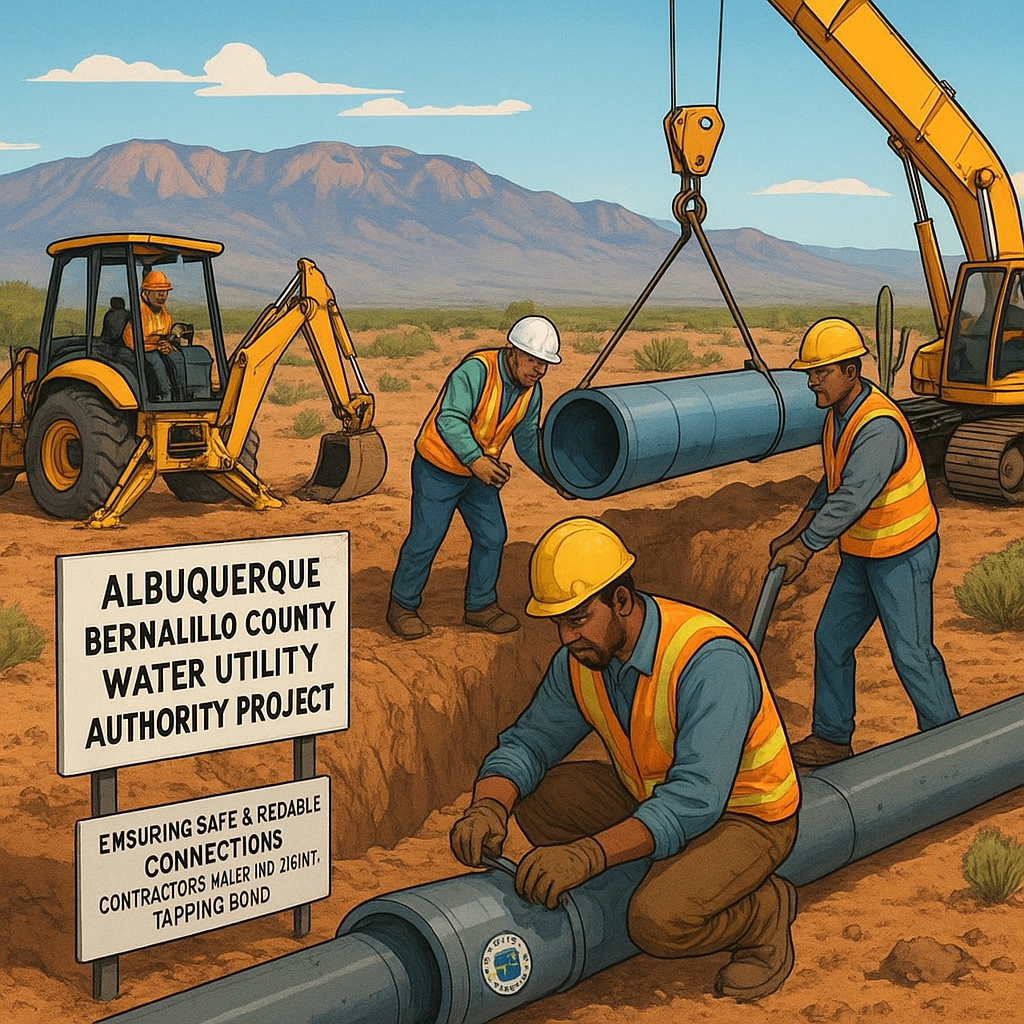
What Exactly Is a Water and Sewer Tapping Bond?
Imagine you’re a contractor about to cut into a city water main. One wrong move could flood a street, damage underground utilities, or leave a neighborhood without clean water. A Water and Sewer Tapping Bond is the financial safety net that protects everyone against those kinds of expensive mistakes. Specifically, we’re talking about the Albuquerque Bernalillo County Water Utility Authority Contractor’s Water and Sewer Tapping Bond. It’s a specific type of surety bond that guarantees contractors follow local rules and pay for any damage they cause while tapping into public water and sewer lines.
But this isn’t just any bond. It’s a third-party liability bond. That means the bond isn’t protecting you, the contractor. It’s protecting the Water Utility Authority and the public from your work. Think of it like a promise backed by cash: “If my crew messes up, there’s money set aside to fix it.” If you’re bidding on jobs in Albuquerque or Bernalillo County, you’ll see this requirement pop up on permit applications. Without it, your work can’t legally start.
Why Does the Albuquerque Bernalillo County Water Utility Authority Require This Bond?
Public water systems are delicate. A single bad tapping job can introduce sediment into drinking water, crack aging pipes, or cause a sinkhole two blocks away. The Water Utility Authority isn’t just being cautious; they’re safeguarding public health and millions of dollars in infrastructure.
When a contractor obtains a tapping permit, the Authority trusts them to follow precise specifications. The bond reinforces that trust. It steps in when a contractor fails to restore a trench properly, damages a fire hydrant, or causes a cross-connection. Without the bond, the city would have to foot the bill upfront and then chase down the contractor—a process that can take years. The bond ensures immediate funds are available to make the situation right. For local contractors, carrying this bond is also a badge of professionalism. It tells the Authority, “I understand the responsibility, and I’m financially prepared for it.”
Understanding Third-Party Liability: Who’s Protected?
Liability can be a confusing topic. Let’s boil it down. A third-party liability bond, like the Water and Sewer Tapping Bond, has three sides:
- The Principal: That’s you, the contractor buying the bond.
- The Obligee: The Albuquerque Bernalillo County Water Utility Authority, who requires the bond.
- The Surety: The bonding company that issues the bond and guarantees payment.
If your work damages a water main and the Authority has to dig up the street for emergency repairs, they’ll file a claim against your bond. The surety company investigates and, if the claim is valid, pays the Authority up to the bond amount. You’re then responsible for reimbursing the surety. It’s not insurance for you—it’s a line of credit you’re extending to protect the city and its residents. This setup means the taxpayer never bears the burden of contractor errors. That’s why this bond is non-negotiable.
Who Needs This Bond? A Quick Look at Contractors
You might think this only applies to huge plumbing companies. Not true. Any contractor physically cutting into a water or sewer line within the Authority’s jurisdiction needs coverage. That includes:
- Underground utility contractors installing new service lines for homes or businesses.
- Excavation crews exposing and connecting to live mains.
- Irrigation and landscaping professionals who tap into water lines for large sprinkler systems.
- Fire suppression contractors connecting fire hydrant lines.
Even if you’re a one-person operation, if your permit application asks for a Contractor’s Water and Sewer Tapping Bond, you must provide it. It’s not optional, and the bond amount is usually set by the Authority based on the scope of your typical project. For many small to mid-size contractors in Albuquerque, the required amount falls between $10,000 and $25,000. Checking with the Authority’s engineering department before you pull a permit is always wise.
How Does a Tapping Bond Work in Real Life? (A Practical Example)
Let’s walk through a scenario. Imagine you’re a contractor, Martin, hired to connect a new restaurant to the sewer main. You get your permit, buy the required Albuquerque Bernalillo NM Contractor’s Water and Sewer Tapping Bond for $15,000, and start digging. During the process, your backhoe accidentally nips a nearby telephone duct bank, but you don’t realize it. A week later, a rainstorm causes that damaged conduit to flood a community center’s basement. The city investigates and links the damage to your tap location.
Here, the Water Utility Authority and the affected property owner could file a claim against your bond. The surety company would step in, cover repairs up to the $15,000 limit, and then come to you for repayment. Without the bond, you’d face lawsuits, repair bills, and possibly losing your contractor’s license. The bond acts as a controlled ringfence. It contains the problem, ensures the city gets fixed quickly, and keeps your business reputation from taking a fatal hit.
What’s the Cost? Breaking Down Premiums
You’ll be happy to hear you don’t pay the full bond amount upfront. For a $15,000 bond, you don’t hand over $15,000 in cash. Instead, you pay a small premium, usually a percentage of the total bond amount. For contractors with good credit, that premium often ranges from 1% to 5%. So a $15,000 bond might cost you between $150 and $750 per year.
What determines your exact rate? Several factors:
- Your personal credit score. Stronger credit generally means lower premiums.
- Your business financials. Surety companies look at your stability and experience.
- Your claims history. If you’ve had bond claims before, you’ll pay more.
- The bond amount required. Higher limits naturally lead to higher premiums, though the percentage may not change much.
For small contractors just starting out, even a $250 premium can feel like a barrier. But think of it as a cost of doing business—similar to a license or insurance. Many bond agencies offer multi-year deals that lower your annual cost if you can pay upfront for two or three years. It’s an easy way to shave off a few percentage points.
How to Get Your Water and Sewer Tapping Bond in Albuquerque
The process is smoother than you expect. You don’t need to drive downtown and wait in line. Most bonds can be purchased online in minutes. Here’s the typical step-by-step:
- Know your required amount. Check your permit paperwork or call the Water Utility Authority to confirm the exact bond amount you need.
- Gather your info. You’ll need your business name, address, contact information, and your social security number for a credit check.
- Apply with a surety bond agency. Many agencies specialize in contractor bonds and know the exact Albuquerque/Bernalillo County requirements. You fill out a short online application.
- Get a quote. Within a few hours (sometimes instantly), you’ll receive a premium quote based on a soft credit inquiry.
- Pay and receive your bond. Once you pay the premium, the agency emails you the bond form. You’ll sign it as the principal and file it with the Water Utility Authority along with your permit application.
Keep digital and physical copies. The Authority needs the original bonded document. You can often have the bond agency mail it directly to the Authority to save you a trip. Renewal is annual, and agencies typically send reminders. Don’t let it lapse—working without a valid bond can get your permits pulled mid-project.
Common Misconceptions About Tapping Bonds
Let’s clear up some confusion that often floats around job sites and contractor forums.
“My general liability insurance covers this.” No, it doesn’t. General liability might cover accidental damage to property, but it doesn’t satisfy the Authority’s specific bonding requirement. The bond is a separate obligation that guarantees permit compliance. You can’t substitute one for the other.
“I only need it once.” The bond stays in force for a set term, usually one year, and covers all tapping work you do during that period under the permit. If you do tapping work year-round, you keep the bond renewed annually. It’s not a one-and-done thing per project.
“The bond protects me if the city damages my equipment.” It doesn’t. Remember, this is a third-party bond that protects the Authority and the public. It offers zero protection for your tools, your vehicles, or your lost profits. For that, you’ll want contractor’s equipment insurance and business interruption coverage.
“I can get a bond with bad credit.” Yes, you can, but with some caveats. Surety companies offer bonds to contractors with less-than-perfect credit, but the premium percentage will be higher. Instead of 1%, you might pay 5% or even 10%. Some programs won’t check credit at all for very small bond amounts, but expect to pay accordingly. It’s still cheaper than not working.
The Key to Growing Your Contracting Business
A Water and Sewer Tapping Bond isn’t just a bureaucratic hurdle. It’s a tool. When you proudly display your bond number on a permit application, you signal to general contractors, developers, and homeowners that you’re a legitimate professional who follows the rules. That’s a competitive advantage. Many bid opportunities in the Albuquerque area require proof of bonding upfront. If you already have it, you can respond to requests faster than competitors who scramble at the last minute.
Plus, bonding teaches you risk management. Knowing that any claim will stick with you financially encourages more careful practices. After a few years of clean claims history, your premiums drop, and larger bonding capacity becomes available. That opens doors to bigger, more profitable municipal projects. What starts as a simple $10,000 tapping bond can be the foundation of a serious government contracting portfolio.
If you’re new to all this, reach out to a local surety agent who understands the Bernalillo County Water Utility Authority’s forms. They can walk you through the exact language needed, help you bundle seasonal bonds, and possibly save you money. You focus on the pipe wrench; let them focus on the paperwork.
Ready to Secure Your Bond? A Few Final Thoughts
No contractor enjoys dealing with paperwork, but the Albuquerque Bernalillo County Water Utility Authority Contractor’s Water and Sewer Tapping Bond is one of those essential pieces that keeps your business moving. It’s affordable, straightforward to obtain, and it protects the community you serve. When you frame it that way, it feels less like a tax and more like a professional handshake with the city.
Before you pull your next tapping permit, double-check your bond status. Is it active? Does the dollar amount match the current requirement? If not, updating it now prevents a frantic scramble at the permit counter. For the price of a modest dinner out, you buy a year’s worth of trust and compliance. And in a place like Albuquerque, where water is precious, that trust is worth every cent.
Leave a Reply