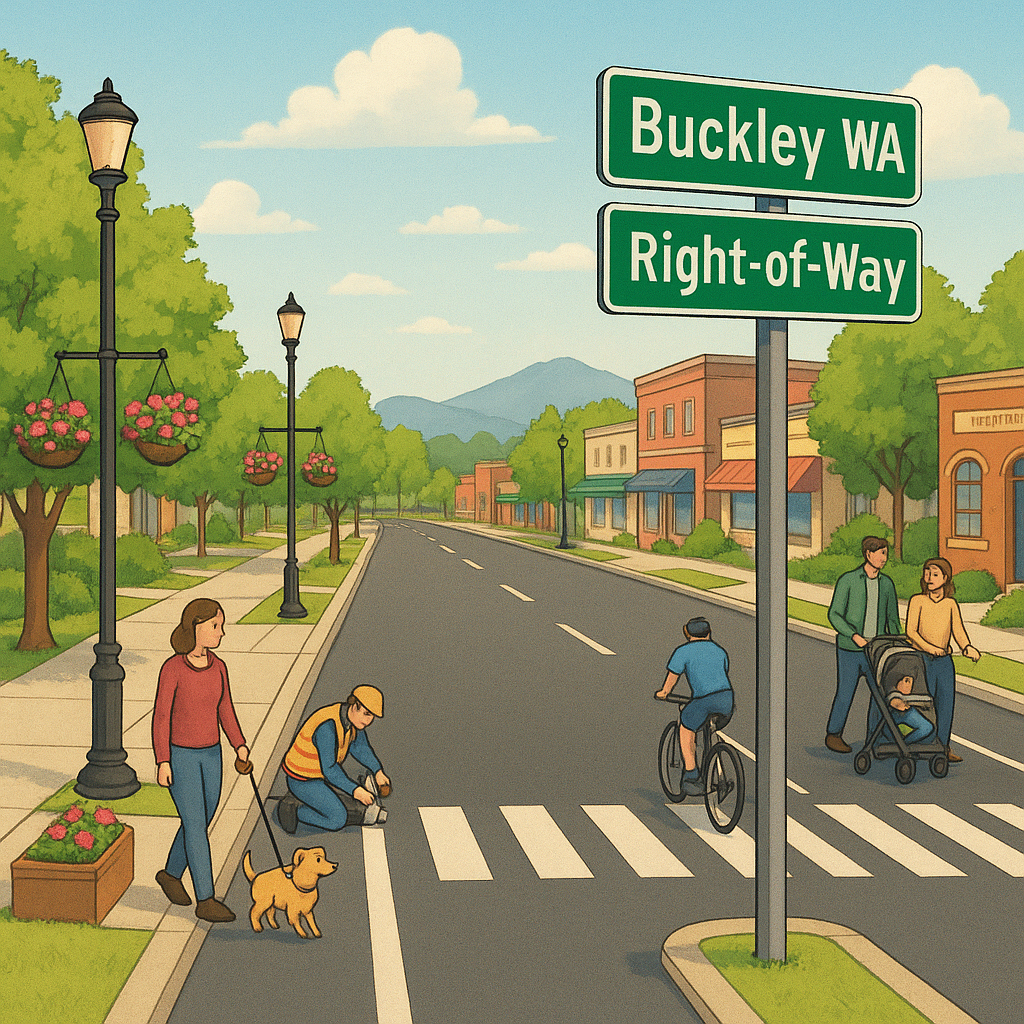
Have you ever driven through a freshly paved neighborhood and thought, “I hope it stays this nice for years”? The City of Buckley, Washington, is making sure that dream becomes a reality. With the rollout of the Right-of-Way Improvements Maintenance Bond, Buckley is taking a proactive step to protect its roads, sidewalks, and shared spaces long after the construction crews pack up and leave. Let’s break down what this means for you, your morning walk, and the future of this lovely city—in plain, everyday language.
Getting to Know the Right-of-Way: It’s More Than Just a Strip of Grass
Before we dive into bonds and improvements, let’s clear up what a “right-of-way” actually is. Think of it as the public’s front yard. It’s the area between your property line and the street—often that strip of grass, the sidewalk, the curb, and the underground utilities like water and sewer lines. The city manages this space so that everyone can travel safely and enjoy a well-kept neighborhood.
Now, right-of-way improvements are the upgrades and repairs made to that space. We’re talking about concrete sidewalks, decorative streetlights, bike lanes, storm drainage systems, landscaping, and even accessibility ramps. When a new subdivision or commercial project pops up, the developer usually puts these improvements in place. But the real question is: who makes sure they last?
What Exactly Is a Right-of-Way Improvements Maintenance Bond?
Imagine you’re renting an apartment. You pay a security deposit upfront, promising you won’t trash the place. If you leave a hole in the wall, the landlord uses that deposit to fix it. A maintenance bond works almost the same way, but for public infrastructure. It’s a financial guarantee—a kind of three-way promise—between the city, the developer, and a bonding company (the surety).
When a builder constructs new right-of-way improvements, they must secure this bond. It stays in place for a set period, often one to three years after construction is complete. If a sidewalk crumbles too soon, a streetlight flickers out, or a newly planted tree doesn’t make it through summer, the city can call on that bond. The bonding company then steps in to cover the cost of repairs, making sure taxpayers don’t get stuck with the bill. In Buckley, this tool has become a quiet hero of smart growth.
Why Buckley Chose to Prioritize This Bond
The City of Buckley isn’t just a dot on a map; it’s a community that values its small-town feel while welcoming thoughtful progress. With new homes and businesses arriving, the need for a safety net grew. The right-of-way improvements maintenance bond means every curb, gutter, and parkway planted along our streets meets a higher standard of durability. Instead of hoping things hold up, the city now has a firm financial backstop.
This isn’t about making life harder for builders. It’s about raising the bar so that everyone benefits—residents get lasting quality, the city protects its budget, and conscientious developers earn trust. Think of it as a quality stamp that says, “We stand behind our work.”
How the Magic Works: A Step-by-Step Peek
You don’t need a law degree to understand the process. Here’s the simple flow:
- Project Approval: A developer submits plans to build or improve a right-of-way. The city reviews them and says, “Great, but we need a maintenance bond.”
- Securing the Bond: The developer works with a surety company to purchase the bond. The cost is based on the project’s scale, similar to an insurance premium.
- Construction & Inspection: The work gets done. City inspectors check that everything meets specifications before signing off.
- Maintenance Period: For the next one to three years, the bond stays active. If something fails due to faulty materials or poor workmanship, the city files a claim.
- Repairs Kick In: The surety either has the original contractor fix the problem or pays the city to hire someone else. No drawn-out debates, no dipping into the general fund.
It’s a protective bubble that nudges everyone toward getting it right the first time. After all, nobody wants to redo a sidewalk in the rain because they skipped a step two years ago.
Real-Life Scenarios Where the Bond Shines
Let’s make this tangible. Picture a new housing development off Ryan Road. The builder installs a beautiful strip of concrete walkway and a row of maples. Eighteen months later, after a harsh winter, several sections of the sidewalk have sunk, creating tripping hazards. Without a maintenance bond, the city might have to choose between an expensive repair project or a band-aid fix. With the bond in place, the developer’s surety covers the correction. The walkway gets lifted and leveled, and morning joggers stay safe.
What about a commercial plaza? The owner puts in a fancy stamped concrete crosswalk and some decorative bollards. During the maintenance window, the bollards start to lean, and the crosswalk color fades badly. The city doesn’t send a stern letter and hope for the best—it activates the bond. The result? A quick refresh that keeps the shopping district looking sharp, which helps local businesses and property values.
These aren’t hypotheticals. They’re the everyday reality of protecting public spaces. Buckley WA’s maintenance bond transforms “we’ll see” into “we’re covered.”
What This Means for You, the Resident
You might not think about bonds when you’re grabbing your mail or walking the dog, but you feel their impact. Well-maintained right-of-way improvements mean:
- Safer streets and sidewalks: Fewer cracks to trip on, smoother stroller rides, and better-lit paths at night.
- Pristine green spaces: The landscaping along our roadways stays alive and lush, not brown and neglected.
- Higher property appeal: Consistent upkeep in public areas lifts the entire neighborhood’s curb appeal.
- Smart use of your tax dollars: Rather than fixing someone else’s shoddy work, the city can invest in parks, community events, and future improvements.
It’s like having a warranty on the neighborhood itself. And honestly, who doesn’t love a good warranty?
Does This Slow Down Development?
That’s a fair question. Some might worry that adding a bond requirement makes Buckley less business-friendly. In practice, the opposite is true. Many reputable contractors already expect to stand behind their work. The bond simply formalizes that promise. It levels the playing field, discouraging those who might cut corners and undercut quality builders. For developers who take pride in their projects, the bond is just another box to tick—and a badge of reliability they can mention to future clients.
Buckley’s approach sends a message: Quality isn’t optional; it’s guaranteed. That kind of reputation attracts families and businesses looking for a place where details matter.
Behind the Scenes: The City’s Perspective
For the City of Buckley, the maintenance bond is a financial safeguard and a planning tool. Imagine the public works department juggling dozens of newly finished streets and utility corridors. Without bonds, inspectors would have to chase down builders months after the fact, often with mixed results. The bond streamlines accountability. It creates a clear, non-confrontational path to getting things fixed. Paperwork might sound dull, but when it prevents a pothole from becoming a lawsuit, it becomes pretty exciting.
The bond also helps Buckley plan its long-term infrastructure budget. Knowing that new right-of-way improvements are covered during their most vulnerable early years means city resources can be directed toward older roads, emergency repairs, or fresh playground equipment. It’s a forward-thinking shield that keeps the city nimble.
How the Bond Complements Other City Efforts
The right-of-way improvements maintenance bond doesn’t exist in a bubble. It works hand in hand with Buckley’s broader commitment to sustainable growth. The city has been gradually upgrading its downtown core, improving drainage in older neighborhoods, and adding pedestrian-friendly features. When a newcomer builds a sidewalk that connects to these upgraded systems, the bond ensures that link stays strong. It’s a chain of quality that extends from Main Street to the newest cul-de-sac.
Have you noticed the new decorative streetlights along certain stretches? Or the freshly striped crosswalks by the schools? Those projects likely have a maintenance period backed by this bond. You can walk, bike, or drive with the quiet confidence that someone’s watching out for the long game.
Common Questions (And Simple Answers)
Is this bond something I need to buy as a homeowner? Not at all. This is strictly for developers and contractors building public right-of-way improvements. You won’t receive a bill for the sidewalk in front of your house unless you’re the one installing it as part of a new construction project.
What happens if a tree planted in the right-of-way dies? If it’s within the maintenance period and the cause is tied to faulty installation or neglect by the developer, the bond covers replacement. Mother Nature’s extremes have limits, but good workmanship is expected.
How long does the bond last? The length varies by project type and city agreement, typically one to three years after final acceptance. That’s enough time for seasonal shifts and normal use to reveal any hidden flaws.
Buckley WA Right-of-Way Improvements Maintenance Bond: A Small Phrase with Big Impact
By now, you can see that this bond is far more than bureaucratic fine print. It’s a promise etched in concrete, greenery, and asphalt. It represents the City of Buckley’s commitment to thoughtful expansion—where beauty and function hold hands for years to come. The next time you roll down a smooth residential street or appreciate the tidy row of shrubs along the avenue, remember there’s a quiet guarantee humming beneath the surface.
Infrastructure can feel invisible when it’s working. It’s those moments of failure—the wobbly wheel, the twisted ankle—that make us notice. Buckley is betting on prevention rather than reaction. And with the Right-of-Way Improvements Maintenance Bond firmly in place, that bet is looking like a sure win for everyone who lives, works, or plays here.
Curious about upcoming projects or want to know if a specific improvement in your area is covered? Stop by a city council meeting or check the public works page on Buckley’s website. Community input keeps these programs sharp. So, what street in Buckley would you love to see get a little extra love? Maybe it’s already on the list, backed by a bond that means business.
Leave a Reply